DIY file guide befuddlement...

Status
Not open for further replies.
Joined
Jan 18, 2010
Messages
217
Happy New Year BF!

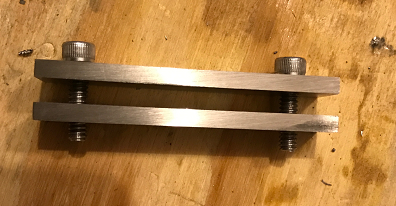
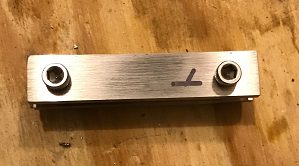
I ended 2016 w/an attempt to make a file guide. I researched how others made file guides, but wanted to make this appropriate for my skillset (the 2 pin/2 cap-head bolts implementation confused me). I got a tap/die set from the pawn shop and tapped my first screw holes -- something I always considered "advanced" -- it was oddly rewarding to have tackled this. I shaped 2 pieces of 1084 and drilled 2 5/32" holes and tapped them with #10-24. I know i mixed up the measurement system, but i read that this should work, and it did (although it could be a contributor to my problem?). I HT (water quenched) and tempered. I feel like these pieces for a tall order for my bernzomatic, but they went non-magnetic. a file "skated" across them, but its really unclear how effective the HT was. On to the problem...

it's a struggle to get them to lock down on to a blade. in fact, i haven't been able to do it. i think the cap-head is locking into the top piece thus prohibiting the screws from bringing up the bottom piece to meet the blade. there was some warping from HT, but i ground them flat and am able to screw them together without a blade. I'm thinking that i need to screw out the threads on the top piece, so that the cap head pulls the top piece down, and leave the threads in the bottom piece. thoughts?
yK8TWQ8.png

top view

wlxkWrh.png

side view
 
No threads on the top piece. The bolt should spin freely but snugly in the top.
 
Thanks Willie71, should i try and bore out the existing hole considering i HT it?
 
Thanks Willie71, should i try and bore out the existing hole considering i HT it?

You could try. The options are carbide bits, or anneal, bore, then reharden. I have a few carbide burrs in different sizes for mistakes such as this. They're $20-30 each though. Maybe a diamond drill from the tile section of the hardware store?
 
Thanks Willie!

What is the purpose for the pins in the standard file guides i'm seeing? Also, is it soldered to 1 side?
 
Thanks Willie!

What is the purpose for the pins in the standard file guides i'm seeing? Also, is it soldered to 1 side?

The pins keep the faces parallel. The top is either soldered, or peened.
 
I would probably just make a new top piece if possible. Drill your hole for the threaded part of your bolt so there is no play left to right. Then use a forstner bit to countersink the head of the bolt to ensure no play. The forstner will unsure that the bottom part where the head of the bolt meets the guide is flat. If you want to add alignment pins make sure they are perfectly straight before soldering and peening.

Sent from my SM-N915V using Tapatalk
 
I would probably just make a new top piece if possible. Drill your hole for the threaded part of your bolt so there is no play left to right. Then use a forstner bit to countersink the head of the bolt to ensure no play. The forstner will unsure that the bottom part where the head of the bolt meets the guide is flat. If you want to add alignment pins make sure they are perfectly straight before soldering and peening.

Sent from my SM-N915V using Tapatalk

I'm not sure if there is a translation error or what, but a forstner bit is for woodworking. Perhaps you meant a counterbore. I also think you meant "insure", not unsure.
 
Thanks Willie!

What is the purpose for the pins in the standard file guides i'm seeing? Also, is it soldered to 1 side?

Next time first drill hole for bolt and make thread on one .Tighten them and NEXT drill precise hole for pins .Insert pins and after that step sand flatten and parallel both piece and HT :thumbup:
 
I'm not sure if there is a translation error or what, but a forstner bit is for woodworking. Perhaps you meant a counterbore. I also think you meant "insure", not unsure.
Yes Stacy, thanks for the correction. I did mean counterbore, too many years of woodworking. And yes insure is correct. My phone likes to change my wording whenever it wants!

Sent from my SM-N915V using Tapatalk
 
You could also stick a piece of the same thickness blade stock on the other side of the screws to even the clamping force, keeping everything parallel.


Hard to say just looking at it, but it looks like you bolt heads are going to get in the way of you file.
 
Last edited:
You could also stick a piece of the same thickness blade stock on the other side of the screws to even the clamping force, keeping everything parallel.


Hard to say just looking at it, but it looks like you bolt heads are going to get in the way of you file.

Have you used one of these before? I think you need to understand the mechanics involved before giving advice.
 
I would probably just make a new top piece if possible. Drill your hole for the threaded part of your bolt so there is no play left to right. Then use a forstner bit to countersink the head of the bolt to ensure no play. The forstner will unsure that the bottom part where the head of the bolt meets the guide is flat. If you want to add alignment pins make sure they are perfectly straight before soldering and peening.

Sent from my SM-N915V using Tapatalk

Thanks Bartlett. I think one of my issues is that I was using leftover stock from knives. It's just not thick enough to allow for a counter-bore. Maybe i'll buy some tool steel on my next order and rework these. so close...yet so far away! :)
 
let us know how you make out. i think the hardest part of making these is the fit , so there is no slop. i have a jantz model and a bruce bump model. the bump is much more precise. i think you should finish the one you started, i use the cheaper one for rough stuff, and the nice one for the finer stuff. the faces will eventually get gouged and the cheap one helps the nice one last longer. if you cannot get rid of the threads in the top piece, you could try removing the threads on the bolt only as thick as the top piece is so it will be free spinning with a file.
 
let us know how you make out. i think the hardest part of making these is the fit , so there is no slop. i have a jantz model and a bruce bump model. the bump is much more precise. i think you should finish the one you started, i use the cheaper one for rough stuff, and the nice one for the finer stuff. the faces will eventually get gouged and the cheap one helps the nice one last longer. if you cannot get rid of the threads in the top piece, you could try removing the threads on the bolt only as thick as the top piece is so it will be free spinning with a file.

will do john, thanks. i'd LOVE the bruce bump model, but i'm learning that my skills don't warrant the price yet :)
 
Shamu, I used a guide similar to the one you are making out of 1/4" 1084 for my first 50 knives. It wasn't perfect, but it helped as I was learning. I have a bump guide, and it's perfect. The carbide faces don't wear much at all, and the alignment is perfect. Being stainless, it doesn't rust when dunking the blade either. Save up your money, as the file guide is an indispensable tool for a knifemaker. What you are doing is good enough for now, but the real deal is worth the price.
 
Have you used one of these before? I think you need to understand the mechanics involved before giving advice.

I have. But it was the kind that clamped to the spine, which is how I answered. I don't know why there would be concern with keeping the plates parallel with pins with the tang type. Pardon the misunderstanding.
 
I have. But it was the kind that clamped to the spine, which is how I answered. I don't know why there would be concern with keeping the plates parallel with pins with the tang type. Pardon the misunderstanding.

I don't think you get how these work. Can you please post some pics of your completed knives, so we can see what level of experience you are at? You have been giving a lot of advice, and much of it has been inconsistent with what many of us know and do.
 
let us know how you make out. i think the hardest part of making these is the fit , so there is no slop. i have a jantz model and a bruce bump model. the bump is much more precise. i think you should finish the one you started, i use the cheaper one for rough stuff, and the nice one for the finer stuff. the faces will eventually get gouged and the cheap one helps the nice one last longer. if you cannot get rid of the threads in the top piece, you could try removing the threads on the bolt only as thick as the top piece is so it will be free spinning with a file.

I glued two piece of HSS-E steel with epoxy , file can even not scratch them .
 
Status
Not open for further replies.
Back
Top