- Joined
- May 18, 2005
- Messages
- 23,139
When people ask "do you really need to baton wood?"
Why not answer that question with another question: "do you really need to go in the woods?"
Certainly there are many folks who live out their entire lives in an urban environment. Why leave the city at all? Just go to the park if you want to see a tree.
Better to have the ability to baton wood should you chose to, than find yourself up Poo River with a brittle POS knife that cannot even handle getting whacked with a stick, when a real "need" might arise.
The bottom line is, any quality fixed blade can handle batoning. If it breaks, then it was not a quality blade, it was a piece of crap.
As to the wedge argument- You can use wooden wedges to split a log, but it is far less efficient than batoning a large knife. you have to make the wedges, and then baton the wedges which inevitably mushroom and splinter. Takes many times the time and effort of simply batoning with a knife.
Why not answer that question with another question: "do you really need to go in the woods?"
Certainly there are many folks who live out their entire lives in an urban environment. Why leave the city at all? Just go to the park if you want to see a tree.
Better to have the ability to baton wood should you chose to, than find yourself up Poo River with a brittle POS knife that cannot even handle getting whacked with a stick, when a real "need" might arise.
The bottom line is, any quality fixed blade can handle batoning. If it breaks, then it was not a quality blade, it was a piece of crap.
As to the wedge argument- You can use wooden wedges to split a log, but it is far less efficient than batoning a large knife. you have to make the wedges, and then baton the wedges which inevitably mushroom and splinter. Takes many times the time and effort of simply batoning with a knife.


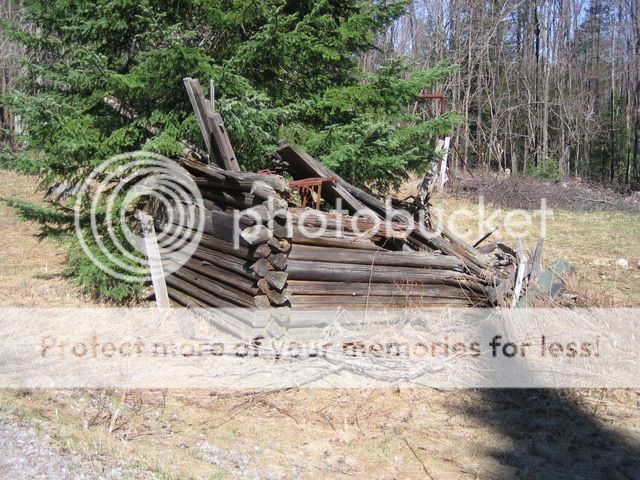
 20 years ago it was intact including the roof.