Duke Vs Woodsman Vs Campknife

emoney2277

Gold Member
Joined
Feb 14, 2014
Messages
1,480
Hello everyone, I haven’t posted in a while but am a regular lurker. It’s nice to see a lot of the same faces (user names haha) from a long time ago. I hope everyone has been well.
Andy, I’m happy to see you doing so well and continuing to grow and share your knowledge. I’ve been eye balling Fiddleback U for a while now and almost have the wife convinced:)
That out of the way, I’m currently carrying a 3” knife, usually a hiking buddy, a small axe, and a large folding saw on some of my jaunts and no matter how hard I try I just can’t get into using the axe. I’d rather have a large knife.
With that in mind, I was considering the Duke, Woodsman, and Camp Knife. I’ve only owned the Woodsman out of the 3 and I liked it but I didn’t know if the lack of belly would be a hindrance in this role. Does anyone have experience with all 3 that they would like to share? This knife will mostly be processing wood, chopping and batoning. Weight is not a huge concern since it’s replacing an axe.
Any input from the community would be appreciated.
 
I agree, the camp sounds like what you want to replace axe like functions. It's pretty large, so I'm not sure it would get much use other than large stuff- but the same could be said for the axe. Of the 3, keeping all out on a table at camp, I'd bet the Duke would see the most use over the course of the day. I guess it also depends on what other knives you were carrying.

Trackrock201620-M.jpg
 
This is pretty much what I was thinking. The Camp seems to be preferred for chopping but it would almost have to be paired with a smaller knife, whereas the Duke or Woodsman would probably be more versatile and could be used alone if desired.
I appreciate the input. Does anyone know if the eBay seller Volley Knives is reputable? He has a ton of Fiddlebacks, I was thinking he may be a forum member?
 
I’ll just leave this here. I’ve never dealt with him. Search liukang or liukang187


Last edited:
Hello everyone, I haven’t posted in a while but am a regular lurker. It’s nice to see a lot of the same faces (user names haha) from a long time ago. I hope everyone has been well.
Andy, I’m happy to see you doing so well and continuing to grow and share your knowledge. I’ve been eye balling Fiddleback U for a while now and almost have the wife convinced:)
That out of the way, I’m currently carrying a 3” knife, usually a hiking buddy, a small axe, and a large folding saw on some of my jaunts and no matter how hard I try I just can’t get into using the axe. I’d rather have a large knife.
With that in mind, I was considering the Duke, Woodsman, and Camp Knife. I’ve only owned the Woodsman out of the 3 and I liked it but I didn’t know if the lack of belly would be a hindrance in this role. Does anyone have experience with all 3 that they would like to share? This knife will mostly be processing wood, chopping and batoning. Weight is not a huge concern since it’s replacing an axe.
Any input from the community would be appreciated.
I've had all 3, multiples of them, and I say for what you outline go with the Camp Knife.

The Woodsman is one of my fav Fiddlebacks, mainly due to the blade profile. And is awesom at lots of woodsman things, but chopping isn't one of them because it lacks the forward mass, it tapers from the plunge line to the point.

The Duke has less of a point, so a little more forward mass, and does okay at light chopping, but nothing too big.

The Camp knife, while having very little point, has awesome forward mass for chopping, and it has a multi-position handle on which you can choke up for control of the blade just forward of the handle for camp cooking at need, or drop back to the rear swell to take full advantage of the blade's mass in chopping.

And your Hiking Buddy will have your point and all your fine detail covered

For wahtever it's worth, that's my two cents anyway.
 
Thanks for all the input! I actually decided to go with a Fiddleback 12” machete and it’s worked very well for me so far! Since I carry a silky saw and a small knife it fills the chopping role great and I can leave it strapped to my pack instead of on my person. Thanks again everyone! Happy Thanksgiving!
 
Thanks for all the input! I actually decided to go with a Fiddleback 12” machete and it’s worked very well for me so far! Since I carry a silky saw and a small knife it fills the chopping role great and I can leave it strapped to my pack instead of on my person. Thanks again everyone! Happy Thanksgiving!
I don't blame you, it's a great choice, light and functional. Had it been one of the isted options I might have chose it, the Camp knife just has more mass and great blade profile and weight distribution for biting deep in chopping.
 
You've been well guided here. The Camp knife is designed for heavy chopping and firewood processing. The Duke is capable at this as well and much lighter to carry. The Woodsman is much lighter and faster, its more of a do-all.

FYI, The Forager should be on this list as well. It should be situated between the Camp and Duke for firewood processing.
 
You've been well guided here. The Camp knife is designed for heavy chopping and firewood processing. The Duke is capable at this as well and much lighter to carry. The Woodsman is much lighter and faster, its more of a do-all.

FYI, The Forager should be on this list as well. It should be situated between the Camp and Duke for firewood processing.
Can you help us non-knife designers understand the design of the forager and similar profiles better? To me (very much a non expert) it seems that the swedge type shape of the spine of the blade would be a hindrance to batonning wood. It looks like it would damage whatever you are striking the knife with. Is the shape of this particular part of the blade for penetration or is it to give the blade more heft at the front for chopping or both?
Respectfully, E
 
Last edited:
Can you help us non-knife designers understand the design of the forager and similar profiles better? To me (very much a non expert) it seems that the swedge type shape of the top of the blade would be a hindrance to atoning wood. It looks like it would damage whatever you are striking the knife with. Is the shape of this particular part of the blade for penetration or is it to give the blade more heft at the front for chopping or both?
Respectfully, E
It's not made for batoning, it's made for foraging.

In my view, from my experiences, I've only handled a fewm not used them, the forward mass combined with the tapered tang means forwarded weight distribution. So it would be great for clearing brier vines and small limbs from ones path, while moving through a fallow field where there would be much in the way of foods and medicinal plants to forage. And the tip of the swedge would be great for opening seed pods etc. without risking damage to the hand by using the actual point.

The only reason the one in the Friday drop is still there is because it's Christmas and my money is limited, and what money I have to work with is being invested in building a new and better graphic arts business, after my other one was killed in 2020, and I had other priorities to focus on at the time.
 
Last edited:
the swedge type shape of the spine of the blade would be a hindrance to batonning wood. It looks like it would damage whatever you are striking the knife with.
It will damage whatever is being used as a baton, but for me the baton is essentially the last, or near the last, piece of fire wood anyway

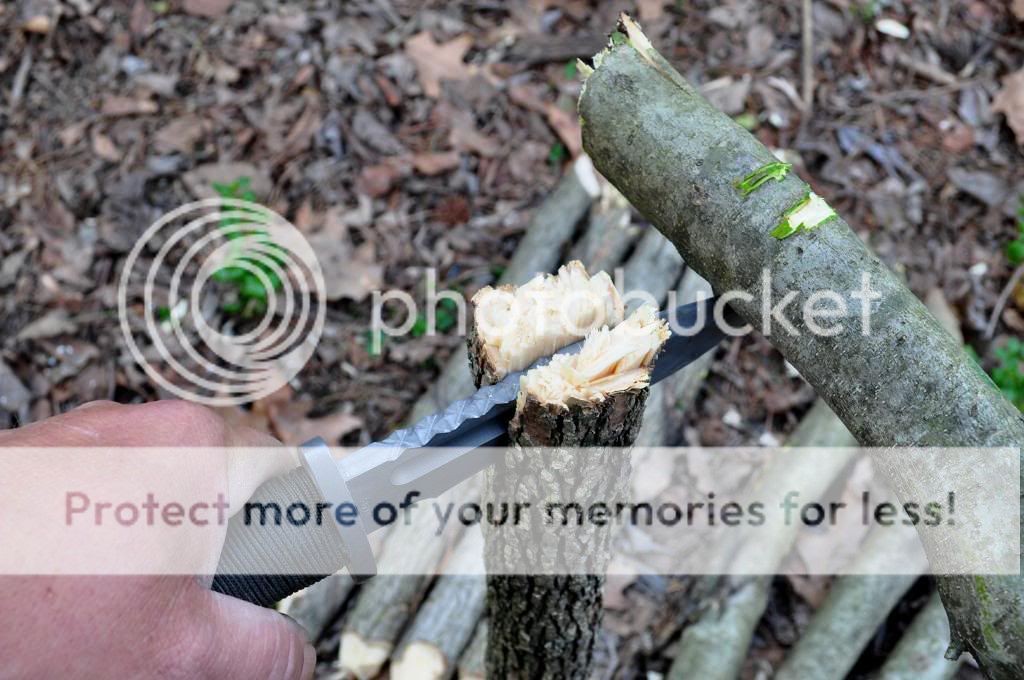
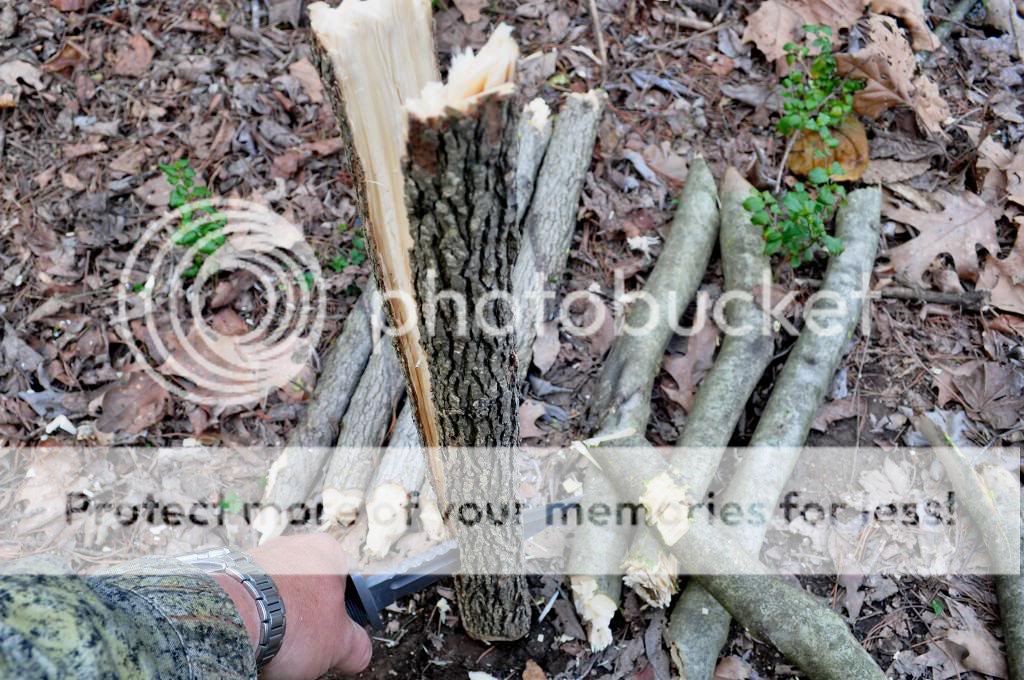
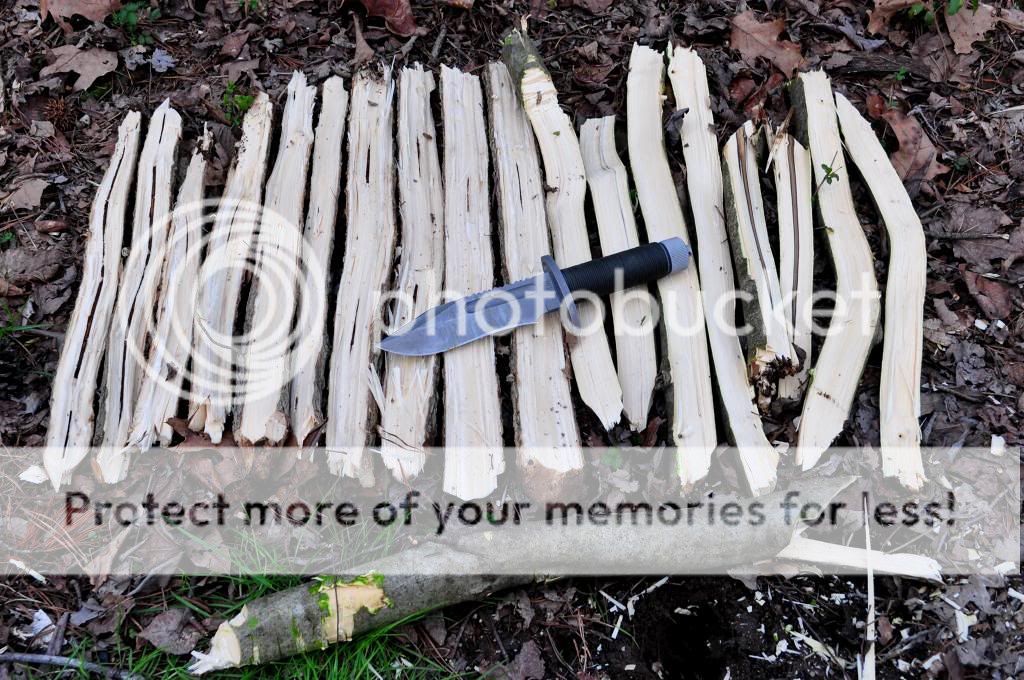
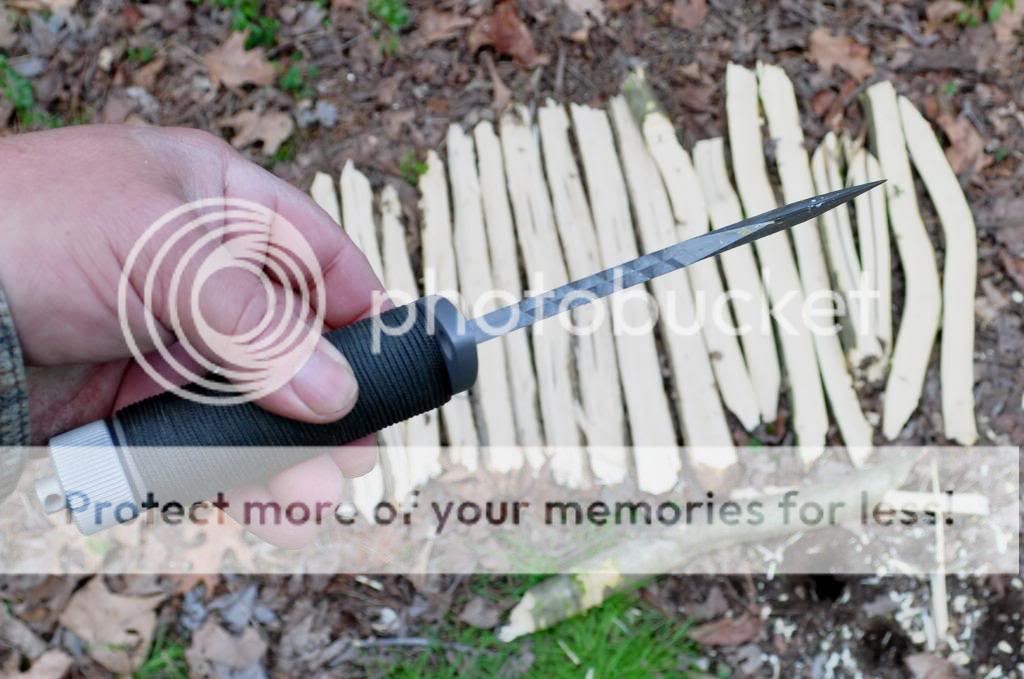
These images suck because photobucket and I parted ways in 2019 when new owners went nuts with hosting membership prices, and Newt Martin's Caiman I was reviewing is definitely not a bushcraft knife with the sharpened swedge, but you can see the knife and the baton both survived quite a bit of batonning. With the Forager I'd just try to strike the hump where there is more steel in the blade, not the tip
DSC_3140-vi.jpg


DSC_3144-vi.jpg


DSC_3166-vi.jpg


DSC_3171-vi.jpg


.
 
Can you help us non-knife designers understand the design of the forager and similar profiles better? To me (very much a non expert) it seems that the swedge type shape of the spine of the blade would be a hindrance to batonning wood. It looks like it would damage whatever you are striking the knife with. Is the shape of this particular part of the blade for penetration or is it to give the blade more heft at the front for chopping or both?
Respectfully, E

You are correct that that swedge on the Forager, though unsharpened, would cause more damage to the baton than the flat spine of the Camp Knife, but so what. First thing I do with my baton once I'm done batonning is burn it. Like Mist said, its lighter and faster for clearing brush, etc, but its still a chopper.
 
Back
Top