Dyed Wood - What do you like/hate ?

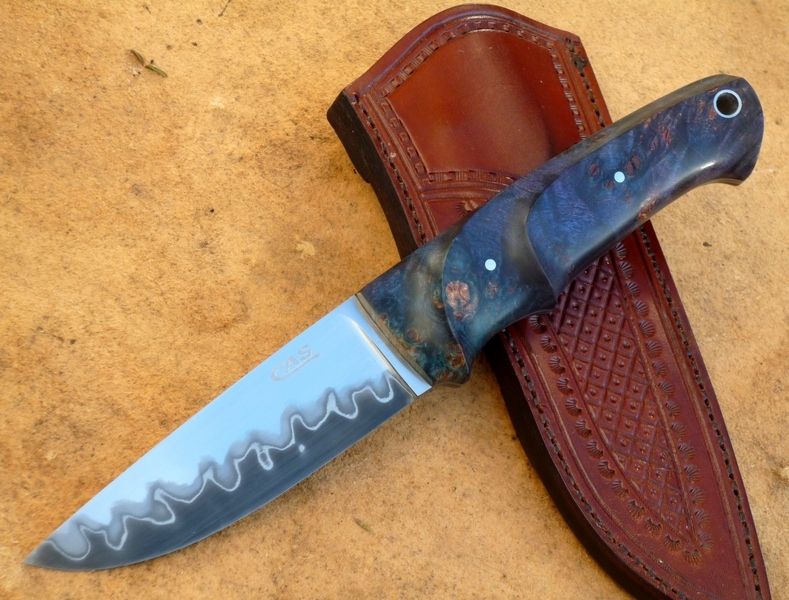
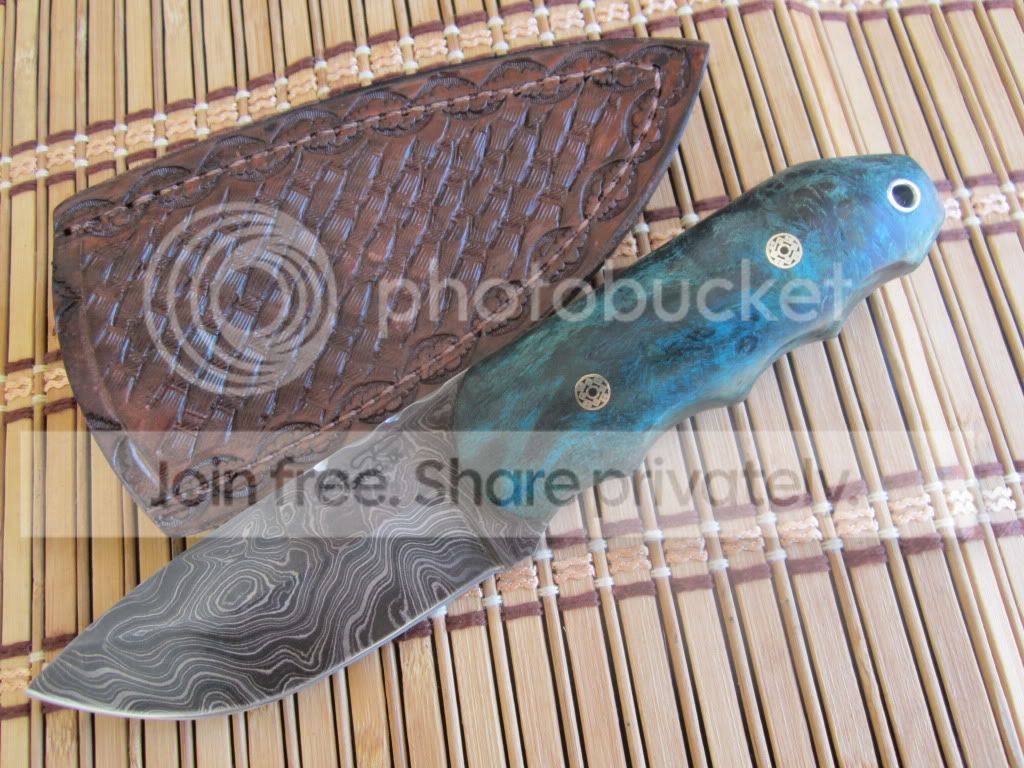
Bigleaf maple burl in green and blue. Much better color & contrast in hand

dyedmaple.jpg


Edit; I kept resizing this pic 'cause it was HUGE, now ya can hardly see it! :confused::o
- maybe just delete......
 
Last edited:
The same thing could be done on a knife using non stabilized wood.

Your cousin has a cool job! Yup, that was my point. I do not know why it's so difficult to get a good red with stabilized wood, but it can be done, we've seen it. Maybe it's just luck, I've also seen the yucky pinks people are talking about.
 
For the most part, I think dyed wood usually looks really tacky.

Not always... but usually.

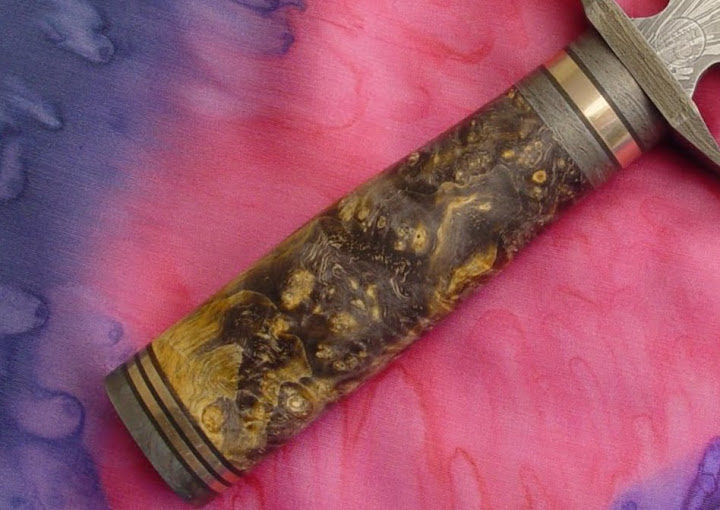
I got some double dyed box elder from Mike Ludeman several years ago (some gold/black, some brown/black I think) that was awesome, most of the people who saw the knives I put it on thought it was some kind of stone.

And since when did red become a more girlie color than purple?!?!?!?!? :eek:

;)
 
The only dyed woods I've bought are darkish greens for the camouflage look. I've darken up woods with browns, but otherwise I'm into au natural.
 
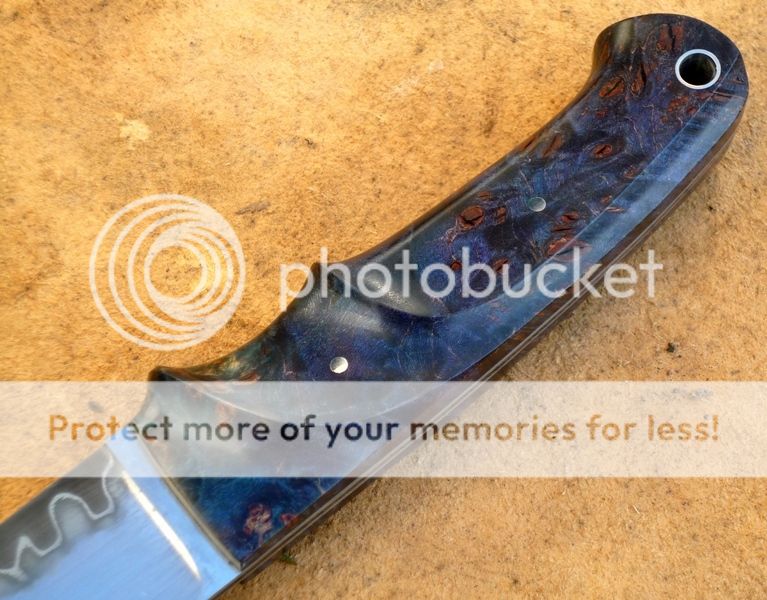
At first I wasn't going to dye any burl blue but a few people asked for it.
I went ahead and asked K&G to dye some dark blue all the time knowing it wouldn't look good.
Shows what I know.

This is a knife with Dark Blue Maple Burl that Claudio made and is putting in the mail for me.
I feel like a kid at Christmas time waiting for it to arrive.

B.jpg

E.jpg
 
The guys who said that it is a surface dye are correct.
My cousin is the head guy for Yamaha's custom shop.
1st of all for quilted maple they want the pure white pieces.
They apply an aniline dye to the surface of the top plate. Repeating coats until they get the look they want.

The same thing could be done on a knife using non stabilized wood.

Due to the chromatographic affect wood fiber has on dye, experienced professional luthiers add dye to the finish and not directly to the wood. This eliminates unevenness.

Dyes do not gain strength with mere soaking time, but by increasing the amount of dye base vs. carrier vehicle. In other words, if the results of using 1 oz of dye to a pint of water (or alcohol or other solvent vehicle) is to weak for one's liking use more dye base like 2 or 3 oz per pint. Many good books available on dye and tinting processes. "Stains" and "Dyes" are not the same process just for general info.
 
Due to the chromatographic affect wood fiber has on dye, experienced professional luthiers add dye to the finish and not directly to the wood. This eliminates unevenness.

Larry, If you see this,
I am curious if adding the dye to the finish would prevent the resist that happens with some of the off color areas in maple?
 
I'm still waiting for my dyed wood ordered to come back from IA. I sure wish I had an opinion. ;)
 
Larry, If you see this,
I am curious if adding the dye to the finish would prevent the resist that happens with some of the off color areas in maple?

Absolutely. That's why the dye is added to (generally) a lacquer base spray finish. Many folks spray lacquer over a shellack seal coat.
 
Box elder is my favorite wood hands down. It is like a chameleon; it has many different looks.

Basic black goes with most anything even though I like other colors and combination's of colors.

DSC00770.JPG
 
I love it if it's done right, and the wood grain is accentuated by it. The color CONTRAST from the wood to the pins (and the steel) is important too.. For example Purple handle with stainless pins.. not nearly as nice as purple with gold colored pins (brass). The same goes for green with gold, orange and black.. certain colors just mix well together, and you see them in a variety of things. Check out www.prsguitars.com for some of the nicest wood finishes I've ever seen (big proponent of PRS guitars btw :P ).. but the color combos and the wood grains are some of what I want to see on knife handles.
 
Back
Top