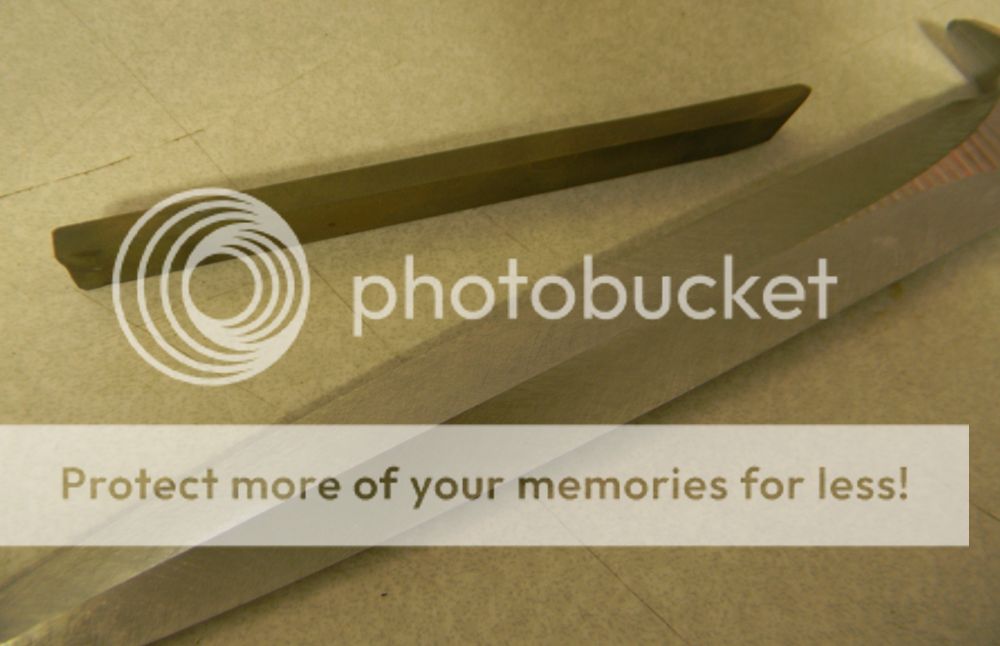
EDM stones

Joined
May 29, 2004
Messages
399
I have been reading about EDM stones and I would like to try them out to improve my finish work. I find them for sale in a number of different grits as well as dimensions. I have not seen any that are wider than 1" or thicker than 1/4". How fragile are they? Do I use them on the flat or use an edge? What dimensions/grits would be most useful for finish work? Any feedback would be appreciated. Thanks, Steve B
 
I have been reading about EDM stones and I would like to try them out to improve my finish work. I find them for sale in a number of different grits as well as dimensions. I have not seen any that are wider than 1" or thicker than 1/4". How fragile are they? Do I use them on the flat or use an edge? What dimensions/grits would be most useful for finish work? Any feedback would be appreciated. Thanks, Steve B

I now use 1 x 1/4 in 320 and 400. A little quicker than the 1/2 x 1/4 I originally used. What I do is just start rubbing the corner and it flattens down to an angled surface. I find that they work well with any liquid you would normally use for sanding, be that cutting oil, WD 40, Windex or what have you. I have been using WD 40 of late.
 
First, I'd like to clarify, they're not all really "EDM stones", they're die makers stones. They're used to rub off EDM scale, but they've been around a lot longer than the EDM process. We all call them EDM stones, but what you really want are the die makers stones.

I like the N grade die makers stones at Falcon tool. Billy Mace Imel turned me onto these and they work great. Think of it as a self sharpening sanding stick. You file or grind them to shape. They cut faster than sand paper because they stay sharp and they don't roll over edges or detail as bad as paper. I start with 220 and go up to 800, then drop back to 400 paper.

I like 1/4" X 1/2" but some folks use much larger stones than that.

You have to keep them wet and flushed or they load up and don't cut as well. A lot of folks would use something like WD40 or windex, but I like the diamond thinner oil they sell.
 
rubbing out cutter marks on a milled dagger, the center ridge stays crisp...

stoning.jpg~original
 
I have some that I got from a friend, they are blue and say edm on them, actually I have a mix of different shapes and sizes and colors.. Anyway is that the best way to use them Nathan, with a small chisel ground in on the end and just use that small surface? I tried using them flat just like I do with my normal sanding bar and they seems to load up very fast, I had to spray the windex directly on the stones a bunch of times to flush out the metal in order to unclog it fairly often. I acually went back to my sandpaper (rhynowet) as it seemed sharper, and instead of having to spray the stone with 5 or so direct squirts of windex (it was wasteful and messy for me lol) I could just switch to a fresh section of paper. I really hope I was using them wrong because I love the idea of using them for crisp clean bevels, and the fact that I thought it would be faster than paper since it stays "sharp."

~Paul

My YT Channel Lsubslimed

 
Last edited:
I've been thinking about getting a set of stones for awhile and keep forgetting. Seems a sure sight easier than using sandpaper wrapped around a stick!
 
I have some that I got from a friend, they are blue and say edm on them, actually I have a mix of different shapes and sizes and colors.. Anyway is that the best way to use them Nathan, with a small chisel ground in on the end and just use that small surface? I tried using them flat just like I do with my normal sanding bar and they seems to load up very fast, I had to spray the windex directly on the stones a bunch of times to flush out the metal in order to unclog it fairly often. I acually went back to my sandpaper (rhynowet) as it seemed sharper, and instead of having to spray the stone with 5 or so direct squirts of windex (it was wasteful and messy for me lol) I could just switch to a fresh section of paper. I really hope I was using them wrong because I love the idea of using them for crisp clean bevels, and the fact that I thought it would be faster than paper since it stays "sharp."

~Paul

My YT Channel Lsubslimed

You might be using a hard EDM stone. A softer more friable stone cuts faster and with less pressure. Shape the end with a coarse file or on your grinder. Keep it wet, but you do want to build up a slurry.
 
You might be using a hard EDM stone. A softer more friable stone cuts faster and with less pressure. Shape the end with a coarse file or on your grinder. Keep it wet, but you do want to build up a slurry.
Excellent point about the friable stones. The do build up some "mud" quickly. What I do is keep a little bit of sandpaper handy in the same grit as the stone. I that a few straight pulls with the sandpaper after your your passes with the stone clears up everything and lets you see any remaining larger grit/cross hatch scratches more clearly
 
You might be using a hard EDM stone. A softer more friable stone cuts faster and with less pressure. Shape the end with a coarse file or on your grinder. Keep it wet, but you do want to build up a slurry.

Ok that would make sense. So are you saying that that "is" the way they are supposed to be used? I mean with a chisel ground on one end and just use that small surface. It seems like that's the way I only seen them used. Or do they work just as well if you use them the the flat, say a 1/4" x 1" stone, would it work as nicely if I just laid the flat 1" side of the stone on the bevel and worked it the same way as if I was using a sanding bar, or do they not cut as nicely on the larger surface areas?

I think I gonna order some from that Falcontool site. I'm curious if they could actually replace the use of sandpaper, at least when doint the bevels, any thoughts of this? Also, do the coarser stones work nicely for gettinf rough grinding marks out, say 120 grit belt?

I want to get 100, 150, 220, 320, and 400 "grit" stones, the "N series", but I'm curious to know if they are only used with a chisel cut on one end to decide the size stone I want to buy. Thanks :)

~Paul

My YT Channel Lsubslimed
 
I quite often use cheap waterstones for blade work. About the same thing.
 
I originally bought a sample pack from Falcon Tool. Good gent there answered dumb questions and gave great advice. I tried about everything they make but settled on the HA series and bought mostly 1/4" x 1". They're hard structured and they hold their shape well on steel but still cut reasonably fast. You can look up the series details on their website. I use the HA in100, 150, 220, 320 and lube with Falcon's own diamond thinner/stoning oil or CoolTool II. Both work great.

Everybody uses them differently - I wouldn't get hung up on that aspect. In the end you will have to experiment to find out what works best for you. They have some quirks and weaknesses. They can leave a nice flat crisp geometry but the final surface appearance generally stinks and the oil/swarf is a mess that can take some adjustment if you're used to using say windex and paper. Sucks some of the fun out of it.

They do make a synthetic ruby stone that is intended to be used dry. These cut stupid fast but are really friable and lose their shape too quick to be useful to me.

In the end I use them most often as sanding bars along with Rhynowhet. They handle the abuse and stay dead flat while the texture grabs paper way better than steel or wood. Also you can shape the edge radius to suit your plunges etc. The narrow 1/2" stones are better for swedges and ricasso surfaces IME.

They are cheap so buy and try.
 
I
......but the final surface appearance generally stinks .
Exactly!!! That is why I mentioned hitting the flats with some paper of the same grit to see what you actually had under all of that ugly cloudy haze.;)
 
Back
Top