etcher materials list

Barry Clodfelter

Knifemaker / Craftsman / Service Provider
Joined
May 29, 2007
Messages
579
I have built an etcher using the plans from Chris Crawford and it seems to work well. However the materials list said to use felt and that was all there was just felt. No size or weight or nothing else to go on. Can someone expand on that just a little? What kind of felt, maybe even where to get it.
 
My etch-o-matic uses a thin felt pad about 1.6 mm (.063")thick and a cover of the same stuff, you just need it thick enough to hold the etchant.
Richard
 
Just playing with it I used a piece of old tee shirt. It cut the metal and also the shirt. Now just have to fine the felt.
 
I tried some little 2x2 cotton make up pads the wife had and they worked just as good. I don't use that type anymore but I thought I would share that.
Just a thought.
 
Thanks Rusty. One other thing I just thought of....I am using the etchant from Radio Shack and it is pretty thick, does it need to be thinned down?
 
why not use the pcb etchant? I was thinking of using it... what volt is your etcher putting out? I use a 12 volt cell phone charger with salt water and a little cotton and it worked ok. I was wanting a deeper etch that why I was thinking of using the pcb.,. maybe I will
find a higher voltage instead..
 
Babbing felt used to line blankets works great and can be found in any fabric store including my local Wally World.
 
There's absolutely no need to use ferric chloride (PCB etchant) to etch with an electro etcher. For one, it gasses off when you pass current through it, and you don't want to breath those fumes. And really, it's just WAY overkill as it's a pretty strong acid.

Simple salt water will do you just fine for carbon and stainless steels. I used to use a touch of vinegar, but stopped doing that when I had some discoloration. Let the current do the work. All the etching fluid needs to be is conductive, and good old salt water will do just fine. Not to mention, ferric chloride must be hell on stencils!

I tried making a felt marking pad for the Crawford etcher, but I found that it just worked better for me to use q-tips in an alligator clip. I dip the end of the q-tip in salt water and dab off the excess, clip the alligator clip at the top of the wet cotton, and touch the wet cotton end located below the clip to the stencil. My method involves repeated short "dabs" of the q-tip to the stencil/steel. This allows plenty of gassing off and prevents heat build up. I just work evenly over the entire stencil, flip to AC and do the same (with a clean q-tip), and then I'm done. That just worked the best for me overall, but I know a lot of makers who use the felt marking pad.

--nathan

 
Last edited:
There's absolutely no need to use ferric chloride (PCB etchant) to etch with an electro etcher. For one, it gasses off when you pass current through it, and you don't want to breath those fumes. And really, it's just WAY overkill as it's a pretty strong acid.

Simple salt water will do you just fine for carbon and stainless steels. I used to use a touch of vinegar, but stopped doing that when I had some discoloration. Let the current do the work. All the etching fluid needs to be is conductive, and good old salt water will do just fine. Not to mention, ferric chloried must be hell on stencils!

I tried making a felt marking pad for the Crawford etcher, but I found that it just worked better for me to use q-tips in an alligator clip. I dip the end of the q-tip in salt water and dab off the excess, clip the alligator clip at the top of the wet cotton, and touch the wet cotton end located below the clip to the stencil. My method involves repeated short "dabs" of the q-tip to the stencil/steel. This allows plenty of gassing off and prevents heat build up. I just work evenly over the entire stencil, flip to AC and do the same (with a clean q-tip), and then I'm done. That just worked the best for me overall, but I know a lot of makers who use the felt marking pad.

--nathan
I do the q-tip thing as well. The PCB enchant is ACID and should not be used with this type set up.
100_1269.jpg


100_1264.jpg
 
...Not to mention, ferric chloried must be hell on stencils!...

--nathan

You are right about it being rough on stencils! I think there were eight stencils on the sheet from Ernie and I figured I would waste 2 or 3 learning how to use the etcher. So far only one is toast. I'll give salt water a try. Thanks!!
 
Rusty are you using vinegar and salt instead of water and salt? Or mixing vinegar in the salt water?
 
You should not be using any acids (or basic 'acids') with your etcher at all. No FeCl no vinegar, etc

An electro chem etcher works using electric current through an electrolyte (a salt water) The stencils are not meant to be used with anything other than a simple electrolyte. One stencil can make hundreds, if not thousands, of marks if used right.

A simple table salt water solution (NaCl + H20) works fine for most people for many purposes. Specialized electrolytes work better for certain steels / stainless steels. I buy my electrolytes from tustech (they make my stencils too) A good electrolyte will give you a much better etch than just plain salt water, but the salt water works well enough if you get the ratio right.
 
Oh, and as for felt, you can just pick up some white felt at your fabric store for like 6 bucks for a yard of the stuff that's 54 inches wide, and it'll work fine. I use white because then it's easier to tell when you need to replace the felt (the etched out metal will embed in the felt)

The felt is to hold the electrolyte (you just want it damp, not dripping) and to catch the etched away metal (it is pulled up, through the stencil, and into the felt by the current)
 
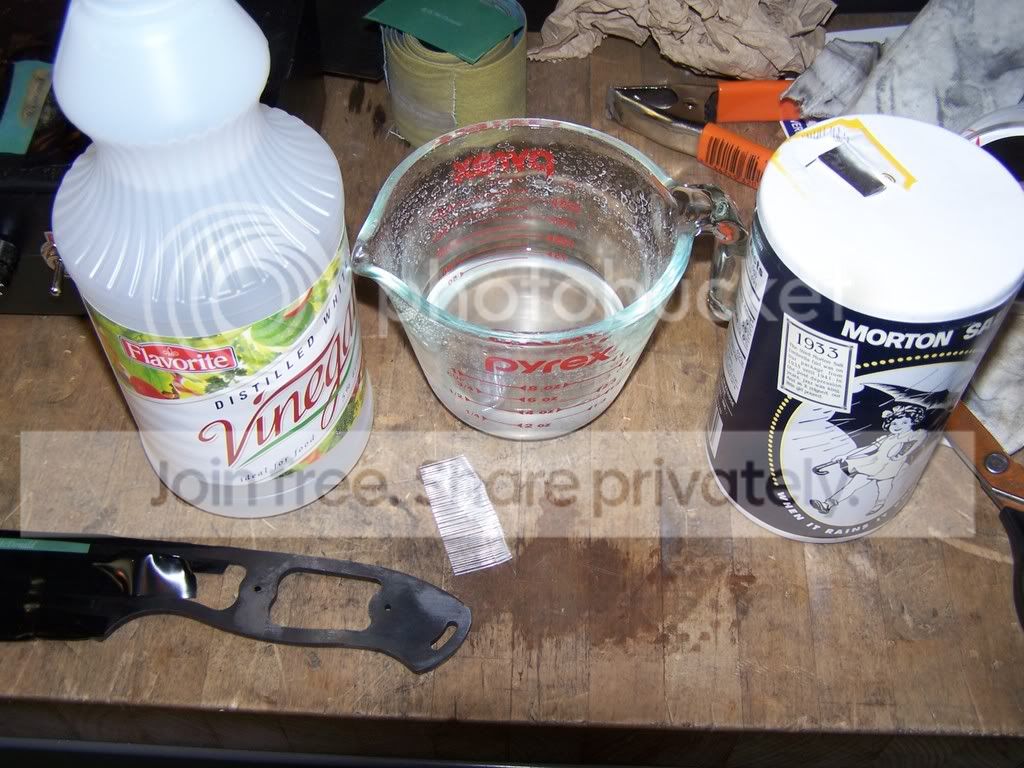
I use vinegar and salt and have been for a couple of years now, I usually get about 25-30 etches out of one stencil. Works on everything from O1 and D2 to The stainless I use for my slip joints CPM154cm and ats34. regular old distilled vinegar is only 5% acid not really enough acid to mess things up, just enough to help with the etching. The thing is, is that it is DISTILLED, which means most of the crap has been taken out of the liquid, such as lime, and calcium that cake things up that's why I add salt Oh and its cheap! .75$ cheap.
 
I use Sham-Wow, work better on the etcher than anywhere else, I think I have a 500 lifetime supply all for 19.95.
 
Back
Top