Etching Damasteel

Joined
Dec 5, 2005
Messages
12
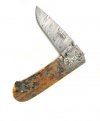
I finished the heat-treated Damasteel blade I'm working on by etching with a stainless steel pickling paste, made by Avesta. Three applications, left on for 10 or so minutes, washed and neutralized with baking soda. This will be a kitchen knife and my concern was to get a good etch without leaving any deposits or coloration on the blade. I like the results and the paste was left over from some StSt welding projects I had done several years ago. I tried the paste on the blades of some hand-forged basket hilt cutlasses I made (they looked fairly cheesey with polished blades). The 5160 aged marvellously.The paste works great, and my guess would be SOMEBODY else has tried it and might agree. My two cents worth anyway.........
 
Hi Kevin :) I've made quite a few blades using Damasteel ( awesome material :thumbup: IMHO ) and have experimented with many different etchants. I've never heard of Avesta Pickling Paste. It sounds interesting. How about posting some pics of the results ;) :D
 
Hello David,
Pickling paste is very often applied to the heat affected zone on stainless steel weld joints. If I were a chemist I could explain the logic and the process, I'm the Welder, so I learned the need for it long ago.It prevents corrosion(rust). Stainless or better said : corrosion resistant steel will stain, corrode/rust very quickly under the right circumstances. Strong alkalye compounds will cause almost instant staining on even good quality knife steel. Many years ago I discovered ATS 34 and 440c are not very rustproof until after heat-treating. A friend and knifemaker uses a super-saturated table salt solution to mark his name on blades. Acid or alkalye, if it is strong enough it will do something. I tried to scan my blade last night but the image has poor resolution. I'll send the scan, for what it's worth. I call the design a Sheffield Hunter. Usually I put more curve into the knife but when you try and maximize the Damasteel, something has to give. I'll try to get a better picture soon to show the detail. Tried to attach the picture, didn't work, I'll send it to your personal E-mail.
Kevin
Kevin
 
Interesting about the pickling paste.

For Damasteel, I like the lighter, brighter look you get from Hydrochloric (pool) acid. I use it full-strength. Here's an example:


(BTW, the bolsters are carbon damascus etched with Ferric Chloride and vinegar. You can do the blade in this too, but it results in a dark look.)
 

Attachments

  • IMG_0060.jpg
    IMG_0060.jpg
    23.8 KB · Views: 78
Hello Mr. C
I suppose if I had had a jug of electrolyte or pool acid I would have tried them too. Your very nice folder looks to have been a three steel mixture, it has a range from light through mid to dark coloration. Just after I had decided to try the pickling paste, a colleague gave me a bottle of circuit board etchant and some resist, both stick on transfer type and also a bottle of liquid. I'll try them next. I haven't checked yet to see if Damasteel produces a 3 or perhaps a four steel mixture, but I am certain there are craftsmen out there that do. I am going to do some serious research into Damascus makers and compile a list over the next while. It would be great to have contacts that produce their own, other than larger steel producers. I'll head back to your site now and have a better look.
KME
 
Hello Mr. C
I suppose if I had had a jug of electrolyte or pool acid I would have tried them too. Your very nice folder looks to have been a three steel mixture, it has a range from light through mid to dark coloration. Just after I had decided to try the pickling paste, a colleague gave me a bottle of circuit board etchant and some resist, both stick on transfer type and also a bottle of liquid. I'll try them next. I haven't checked yet to see if Damasteel produces a 3 or perhaps a four steel mixture, but I am certain there are craftsmen out there that do. I am going to do some serious research into Damascus makers and compile a list over the next while. It would be great to have contacts that produce their own, other than larger steel producers. I'll head back to your site now and have a better look.
KME
Thanks Kevin,:)
The blade is the 2-steel Damasteel. The bolsters are Bob Eggerling mosaic damascus which does have several steels involved.

If you have scraps, I would suggest you try the pool acid and the Ferric Chloride. They produce different results and I've found using the pool acid requires a much better finish (600 paper minimum--preferably 1500 if you want a clean satin look) or it'll show the scratches. It does have a brighter look, which I like in a pocket knife.
Good Luck!:thumbup:
 
I use the Avesta material at work as well for cleaning welds but I find it is very aggressive and if left on the recommended 20 minutes it will pickle back to the matte white finish that you see on the raw stainless pipe.

Try it for a few minutes at first then repeat, that way you can sneak up on the finish you want instead of going too far too fast.
 
Hello George,
I was happy to see your post(s) and your name in the forums. I had the pleasure of meeting you and Carol when I was down in Mississauga a few years back,right about this time, 2003 I think. I would have given my left leg to spend the day visiting. You shared a tip with me I have used since then with great sucess. Thank-you. You are right about the Avesta paste, it is very aggressive, any bright or brushed finishes often required refinishing at the weld zone after pickling. In the Pressure Vessel shop I apprenticed in, the steel vessels and pipe runs were sandblasted before heads and flanges were welded on, hydro-tested and then pickled to remove scale, (I would guess with hydro-chrloric acid). Funny....... , work boot soles were always rather gummy and fell off the leather uppers rather quickly. The idea to give the paste a try on knives came along somewhat by accident. I use a paint pen to mark names on blades once the handles are in place. After welding some stainless, I wiped the wet acid brush across a polished ATS-34 blade. The name written in paint acted as a mask and the outlying area etched to a soft satin finish. However, I went back to bead-blasting to get a satin finish, less grief than playing with caustic stuff. Take care !
 
Well the next time you are in townKevin be sure to build more time into your schedule for a visit. Last time was too short.
 
Back
Top