
I decided to try something I have not seen suggested around here for making handles glossy and "wet" looking. Instead of using CA glue which can give you a headache and is expensive in some places I replaced it with pledge floor polish with "future" shine , also known as future floor polish.
Future is non toxic , acrylic , and easy to use (it even smells nice)
I First took my handles all the way up the rhynowet grits from 600-2500
Here is a picture of a fully sanded knife all the way up to 2500 grit.
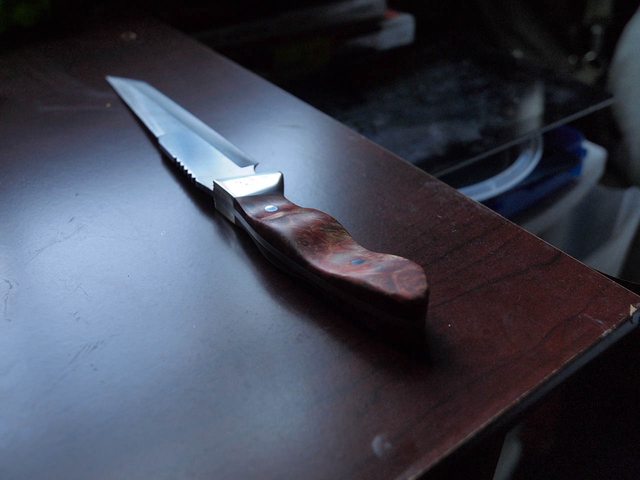
As you can see , the handles are dull looking despite being very nice figured stablized wood.
Next I began to apply the future floor polish. Its tricky to work with because it dries pretty quickly , so you wont be rubbing this back and forth dozens of times or you will get clumpy globs. I went with 2 wipes in the same direction down the handle to make sure there was no debris from the first wipe.
I let this dry for 30 minutes (its usually dry in around 5-10 minutes but I like to be safe) And I begin using green strop paste (0.5 micron) and begin hand buffing the handle with a microfiber cloth. Once the green tint from the paste is gone , i take a CLEAN microfiber cloth and buff again to a shine.
You may or may not want the first coat to include a light abrasive like 2500 grit paper to level out the finish a little bit more. I chose not to do this because the finish is very thin with just one coat.
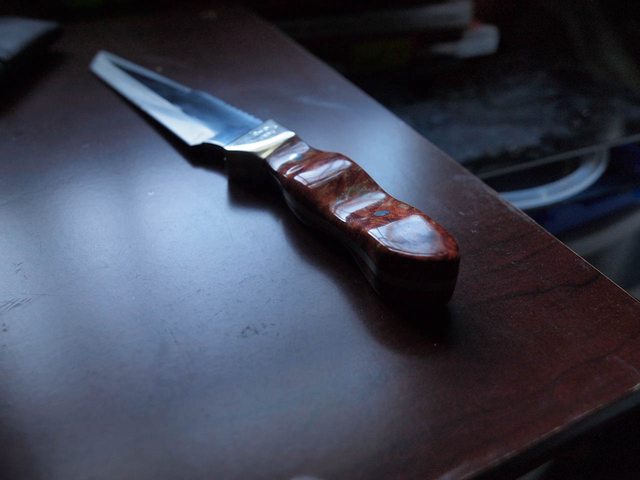
I then repeat with multiple coats (i went with around 4-5 in this picture) until I feel its thick enough to protect the knife well enough.
Here is what the finish looks like
I wanted to share this with you because I have not seen anybody use future in knifemaking but more importantly wanted some feedback from more experienced makers on how this finish stands up to other ones. I hope some of you more experienced guys will give this a try , future floor polish is very easy to find , but in comes in alot of different names and brands.
So far these are the things I dont know
1. I dont know how it handles up to a buffing wheel
2. I dont know how durable it is with extended use , but it seems durable enough to me .
Future is non toxic , acrylic , and easy to use (it even smells nice)
I First took my handles all the way up the rhynowet grits from 600-2500
Here is a picture of a fully sanded knife all the way up to 2500 grit.
As you can see , the handles are dull looking despite being very nice figured stablized wood.
Next I began to apply the future floor polish. Its tricky to work with because it dries pretty quickly , so you wont be rubbing this back and forth dozens of times or you will get clumpy globs. I went with 2 wipes in the same direction down the handle to make sure there was no debris from the first wipe.
I let this dry for 30 minutes (its usually dry in around 5-10 minutes but I like to be safe) And I begin using green strop paste (0.5 micron) and begin hand buffing the handle with a microfiber cloth. Once the green tint from the paste is gone , i take a CLEAN microfiber cloth and buff again to a shine.
You may or may not want the first coat to include a light abrasive like 2500 grit paper to level out the finish a little bit more. I chose not to do this because the finish is very thin with just one coat.
I then repeat with multiple coats (i went with around 4-5 in this picture) until I feel its thick enough to protect the knife well enough.
Here is what the finish looks like
I wanted to share this with you because I have not seen anybody use future in knifemaking but more importantly wanted some feedback from more experienced makers on how this finish stands up to other ones. I hope some of you more experienced guys will give this a try , future floor polish is very easy to find , but in comes in alot of different names and brands.
So far these are the things I dont know
1. I dont know how it handles up to a buffing wheel
2. I dont know how durable it is with extended use , but it seems durable enough to me .


