Experiment - Making Buckeye Black and Blue.....I hope

I have a friend in CA who harvests a lot of buckeye - he swears by yogurt and kefir to get the coloring. I'm excited to see how these turn out!

For this next batch I am going to try the yogurt treatment.
If it doesn't turn out I can always blame Aaron.

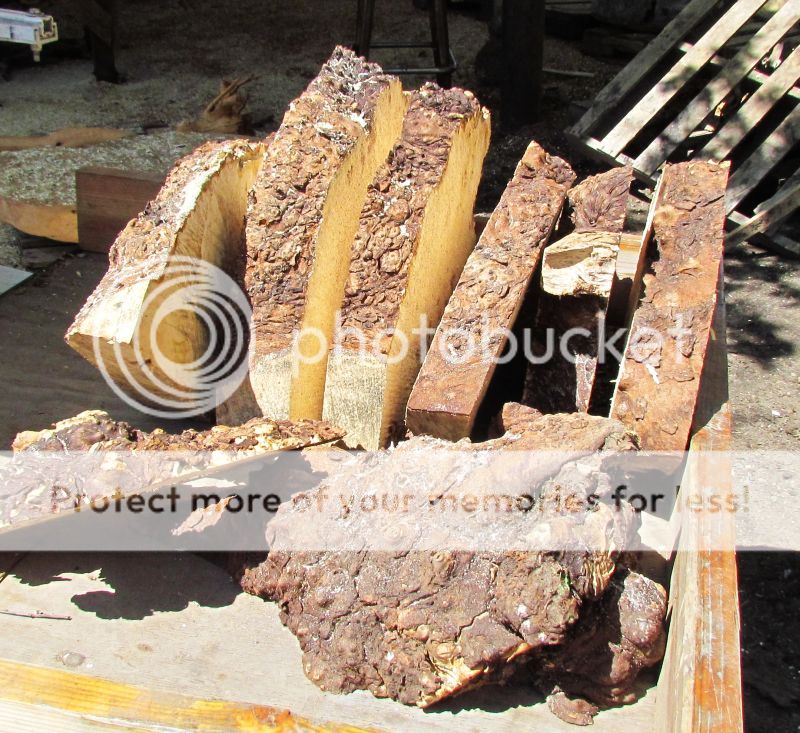
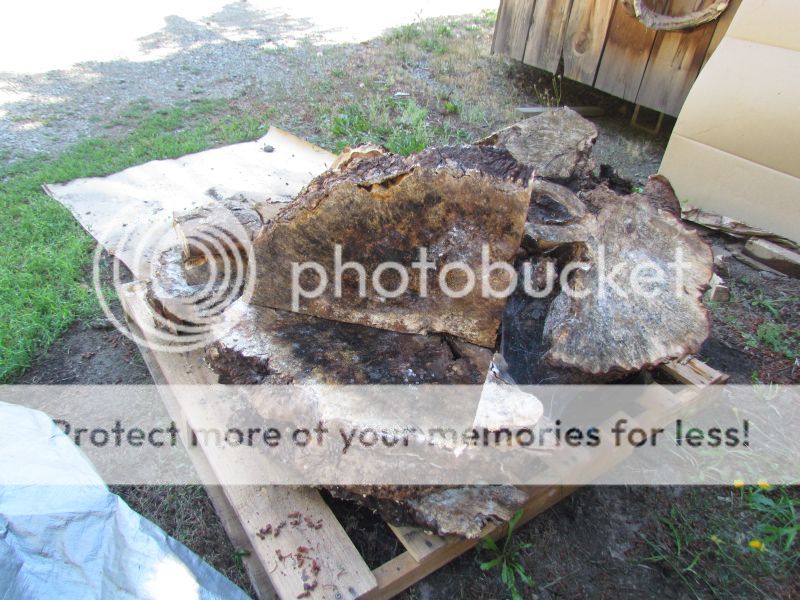
This piece is about double the size of the chunk I used for the cornmeal batch.
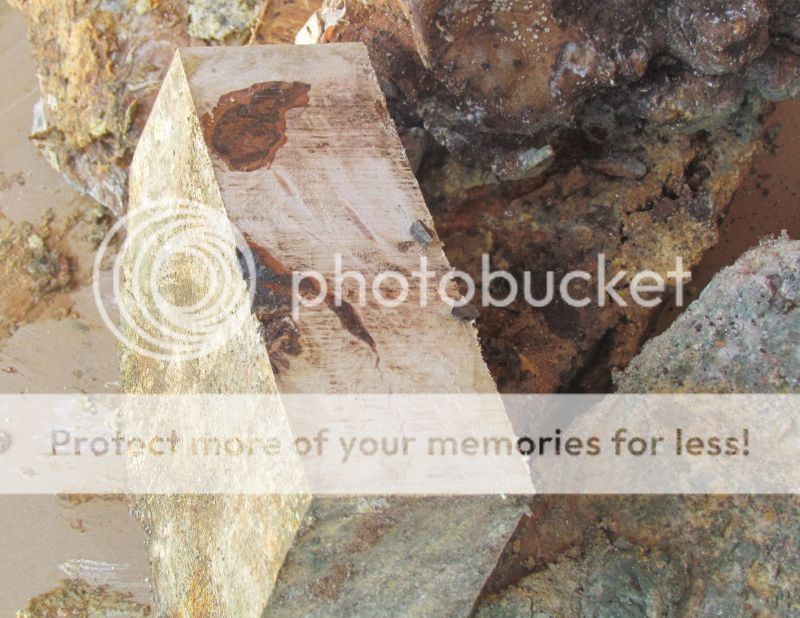
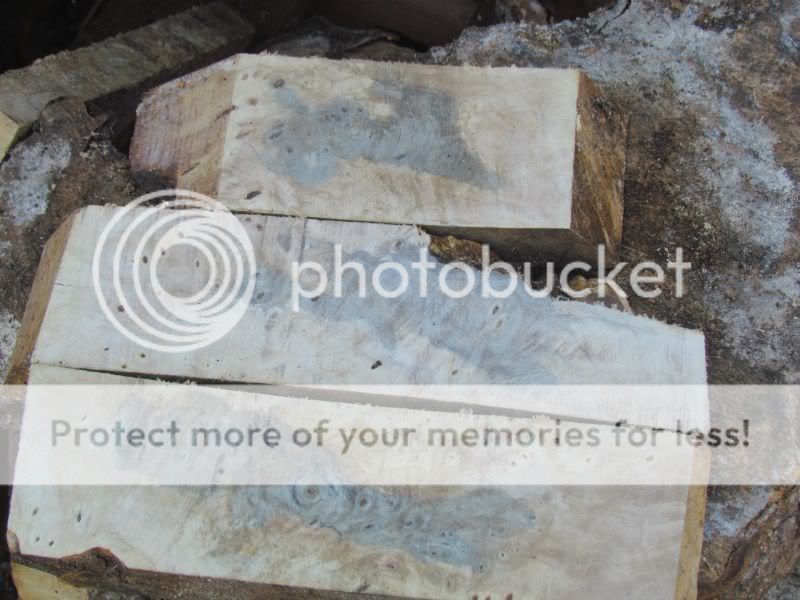
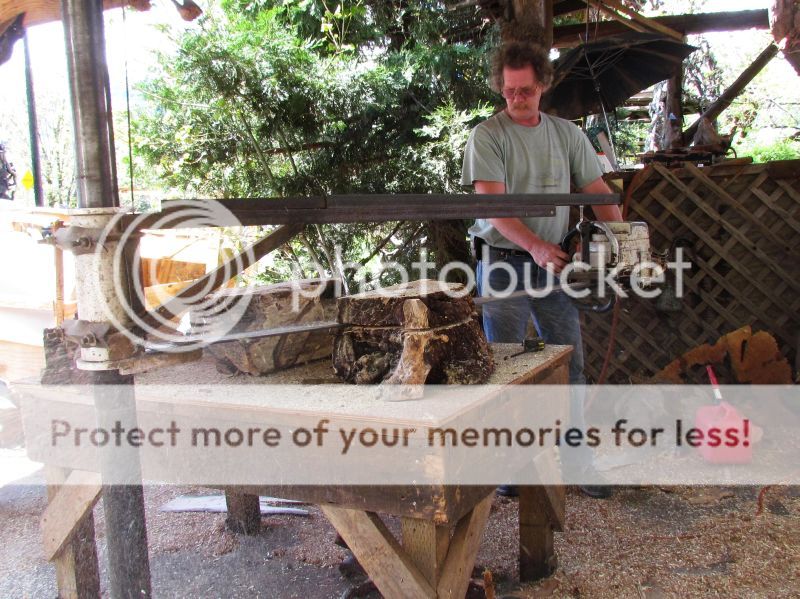
So I had one of the guys cut it into slabs on the pole mill.
a.jpg

b.jpg


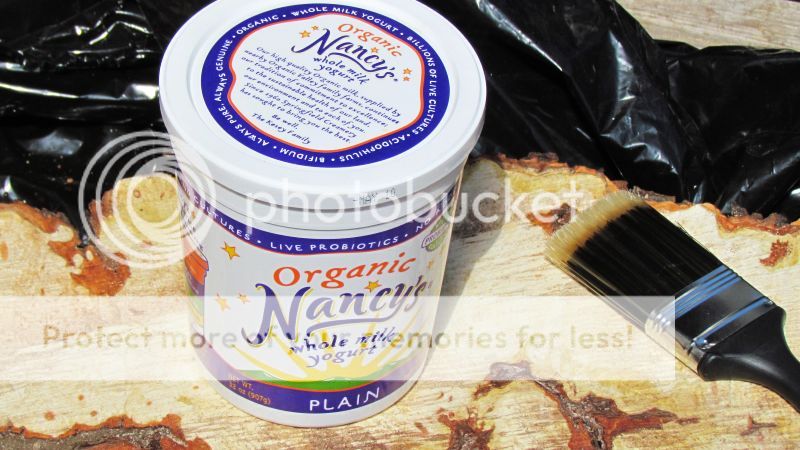
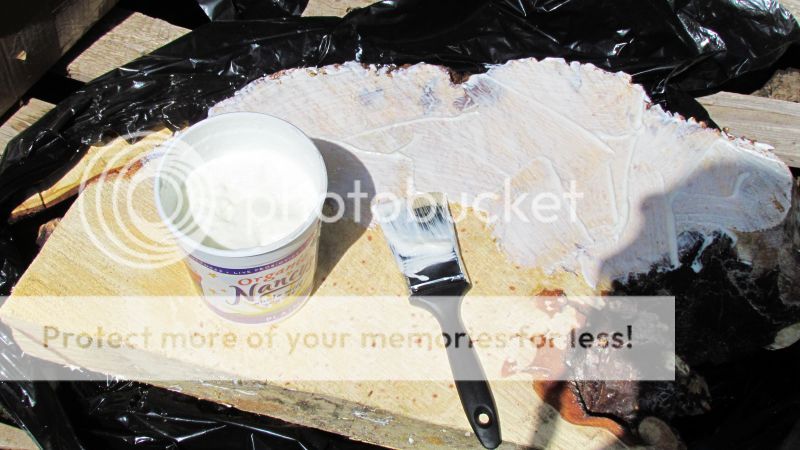
Now for the yogurt.
c.jpg


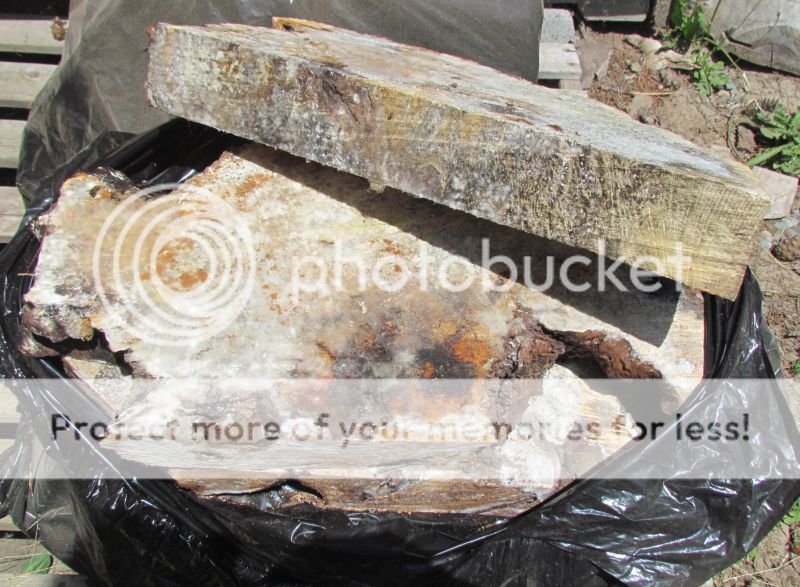
I used a paint brush and painted on a thick coat of yogurt on both sides of the slabs.
d.jpg


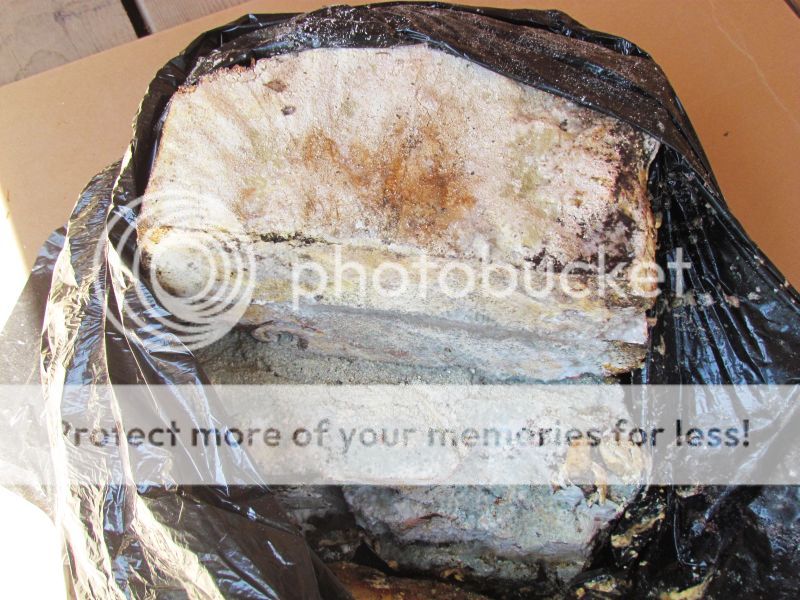
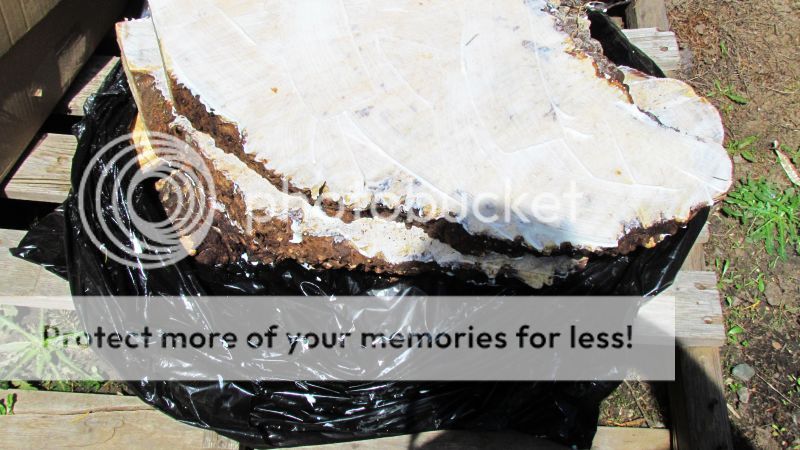
I stacked the slabs face to face inside a couple black plastic bags.
e.jpg


Now I placed the bags in a spot where they will have exposure to sunlight for most of the day.

f.jpg
 
It's like BBQ for wood. A little secret sauce and more patience than I have. Well, hmmmmm....it takes me a year per knife.....

Looking forward to seeing what happens. You are a pretty awesome pusher of wood. You're making me want to grab some cash, jump in the car and come visit!
 
Yes - every time Mark posts pics of his playground it makes me want to come check it out. Only a couple more months to go here in OR and I don't know if I'm going to get a chance unfortunately... Mark, we missed you at the OKCA show!

Keep the pics coming!
 
And it smells disgusting!
This is the corn meal batch.
be001.jpg

be002.jpg


Next I will scrape off the gunk and cut a piece to see what is inside.

When I cut a piece of the corn meal batch, not encouraging.
No new color inside.
be003.jpg


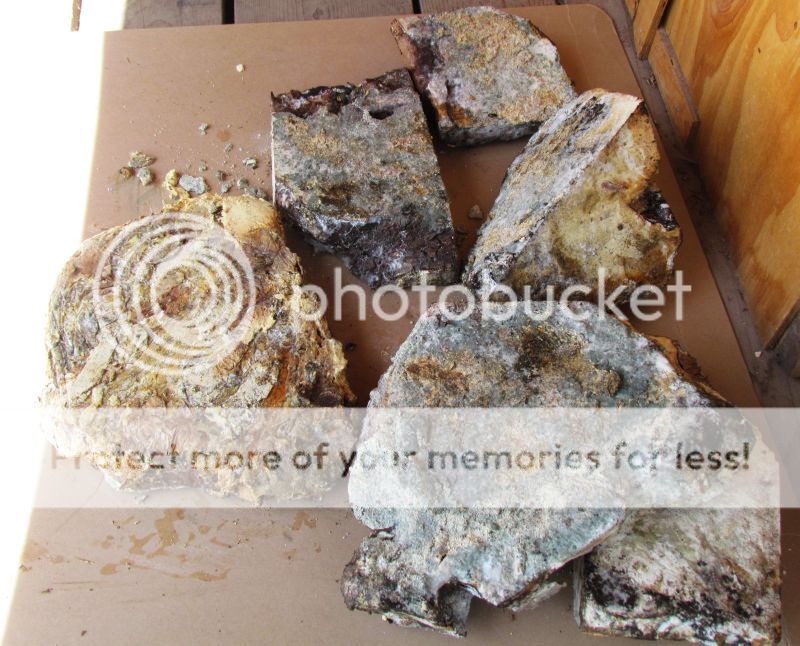
Next I opened the yoghurt batch.
It was growing as well but did not have the bad smell like the corn meal.
be004.jpg


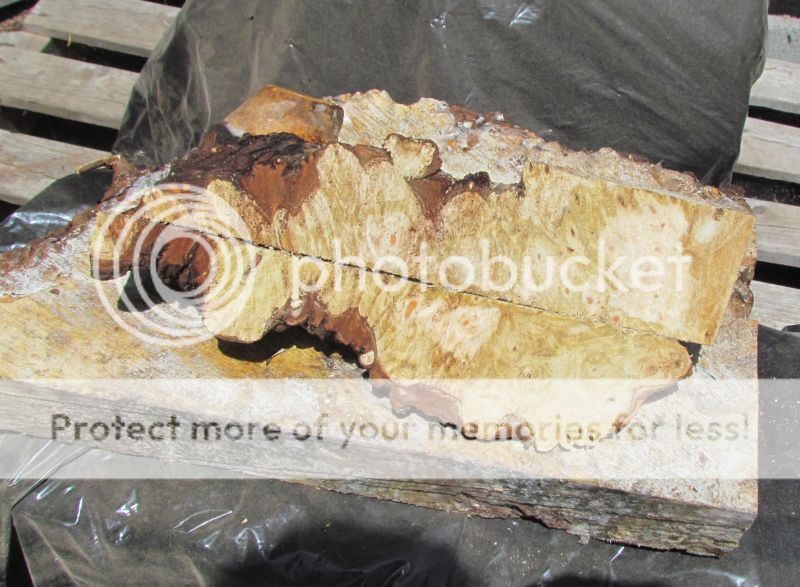
When I cut it I saw some color starting to spread inside.
Looks kind of olive green right now. Who knows what it will evolve into.
be005.jpg
 
Mark,
Take one of those pieces and give it to the burl yard guys to steam the heck out of. See what the heat does to it.
 
The fungus that causes buckeye to color up is different than normal spalting fungus. It also does not turn the wood punky.
The way it was explained to me is;
The wanted fungus lives in the bark of the buckeye and spreads into the wood.
As long as the wood has not dried out it continues to live and spread throughout the wood.

I know you are experimenting with a couple of the old wives tales, but why don't you get some fresh bark and chop it up very fine and add it to the mix or just sprinkle the bark between the stacked up slabs?

Maybe you take a sample of the bark to a local university and talk a botanist into figuring out just what kind of fungus it is? Maybe they can tell you exactly how to grow it.

The place where you get the burls, think they would let you do an experiment on a small burl still on the tree? Drill a small hole into a small burl and put some of the bark into the hole and then seal it up. Maybe the fungus will grow with the burl. I talked to a guy that does this to the trees on his property and he said that it works out well. When he cuts them, they are in good shape but have the spalted look to them. He was using a couple different types of mushrooms to do this.
 
Mark,
Take one of those pieces and give it to the burl yard guys to steam the heck out of. See what the heat does to it.

I think I might give that a try.

Railrider's comment "Maybe you take a sample of the bark to a local university and talk a botanist into figuring out just what kind of fungus it is? Maybe they can tell you exactly how to grow it." Sounds like a good idea as well.

I am able to buy the big whole burls for considerably less money than the big slabs that are already colored up. If I can work out a viable process it would make sense for me to get a lot more buckeye. I have gotten the drying process figured out where I can dry it reasonably quick without checking or the eyes opening up too much.

As with many things, I tend to figure out all the wrong ways first.
 
railrider,
The burls on California Buckeye are the root burl. It is underground. The tree doesn't look like more than a bushy clump of saplings, but can have a 4 foot root burl. All the usable wood is below ground.

This is the case for many of the handle burls. Those ugly knots and lumps on the side and branches of trees are often of no knife related use. They are tumors, and different from the denser and more flamboyant root burls.
Thuya ( Two-Yuh) burls can be nine feet across, and weigh thousands of pounds.

Mark will correct me if I am wrong about this, as he sees far more uncut burls than I do.
 
As with many things, I tend to figure out all the wrong ways first.
Reminds me of my favorite line from Fukuoka's The One Straw Revolution: An Introduction to Natural Farming and no till agriculture. He spent his life developing sustainable rice cultivation. The line went something to the effect of, "I probably know more about how not to grow rice than anyone in Japan."

The yogurt looks promising. I miss my milk cows. :sorrow: I'd have been able to fix you up with unpasturized organic sweet milk, butter milk, sour milk, yogurt or kefir!

I like the compost ideas too. Some of us biodynamic/organic farmers play(ed) around with manipulating the biomass content and condition to move the humus in different directions. You can push the microorganism flora and fauna to be predominantly bacterial or predominantly fungal. I was mostly after the bacteria. Indeed tea made from bacterial rich compost can sometime effectively displace fungus that adversely effect crops (powdery mildew, tomato blight, etc.)

As for fungal rich compost, it can be quite dramatic. The mycelia rhizome can become extremely active and visually apparent throughout the heap. Increasing carbonaceous matter (ligneous "woody" stuff) was usually part of the equation, and or, part of the reason for wanting to enlist fungal rich composts such as when turning in and assimilating cover crops. Minimal disturbance of the heap was also part of the equation, unlike when promoting bacterial activity when you might turn the heap multiple times to speed them along (and upset the fungal development.)

Can you tell I miss farming? Thanks for sharing your cultivation efforts with us!
 
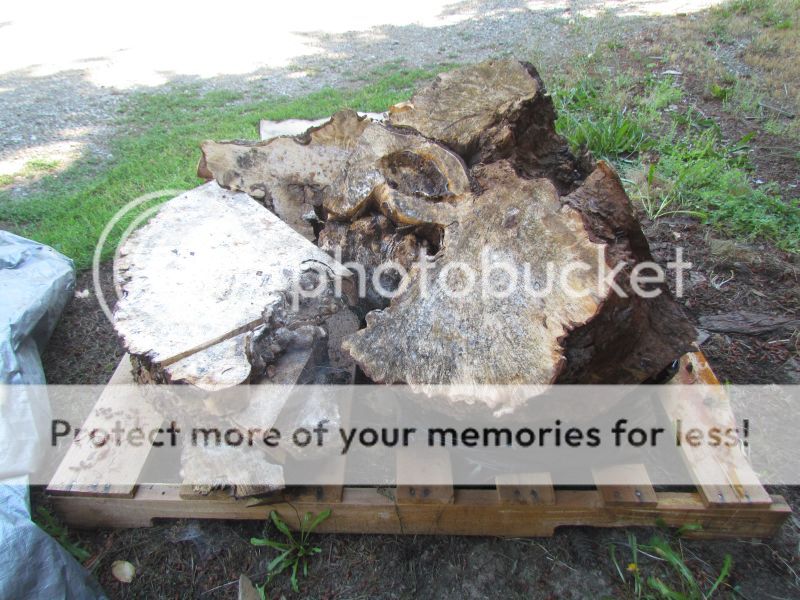
Here I pulled the tarp off the Buckeye to see how it is doing.
bb001-1.jpg

Pretty good looking on the outside.
bb002-1.jpg

Cut up one of the smaller pieces to see what is inside. Finally some blue!
bb005.jpg

Now I am covering it back up for another month or so. That way the blue can spread and get darker.
 
Looks good. Hope it works out like you wanted.

A couple of weeks back I as talking with a guy that used to clear out areas in the woods for some reason. He said that when they were done, they would mix up egg whites with water and put it into a spray bottle. Before they left, they would spray down the whole area. Where ever they sprayed the mix, the fungus would grow back very quickly and thicker than when they started clearing the area. Maybe this would work out for you. I am thinking about trying it with some spalter cherry I have and put it along side some that is not spalted.
 
This thread is interesting as I have two large slabs of buckeye burl about 5' diameter and 3" think. We are trying to keep it from turning black and blue and having a hell of a time. Every two weeks we douse it with a 50/50 mixture of Chlorox and H2O. So far...not real successful...this stuff wants to be black and blue......
 
Have a thought about temperature too.

What temp is this normally growing at?
Relatively cool woodlot temperatures are a long way away from that garbage bag in the sunlight.

And see if you can control, or at least measure and record the humidity levels.

As suggested above, if you know the exact fungus, you can find out the conditions it grows best in.

Mushroom farmers may also give you some tips.
 
Most of the buckeye burls come from roughly 20miles east of me in the low foot hills of the San Joaquin valley, which is at 300-500' elevation, and at latitude 38* N, hot dry summers, cold arid winters, with a 4-6 week green season we faintly call spring. Mediteranian climate, olives, stone fruit, an dairy cattle are all common in this area. Summer humidity levels are 15-50%, but late winter gets thick fog, I mean thick. 100% humidity, 50*F daytime highs and above freezing overnight lows. Fungus season is late February, through early May.

I guess this might help you determine how to best farm the fungus you want, but I think I might just drive out there and talk to some land owners I know to see if they'll let me dig one up. These trees line the roads like weeds there.


-Xander
 
Got em around here too. 4,000 to 5,000 ft elevation though and fortunately we don't get the fog of the San Joaquin. Thanks Mark, very informative post. Who da thunk it. I'll keep watching this one very interesting.
 
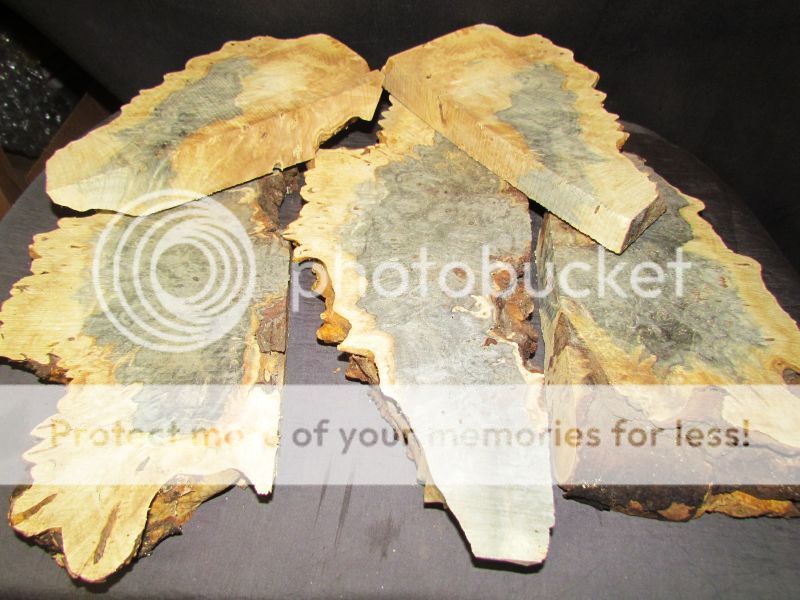
Looking pretty blue now.
Time to start cutting blocks so I can dry them and get them stabilized.
004-8.jpg
 
Back
Top