
Failed forced patina.

KnuckleDownKnives

Time to make the doughnuts..
Joined
Feb 12, 2015
Messages
1,715
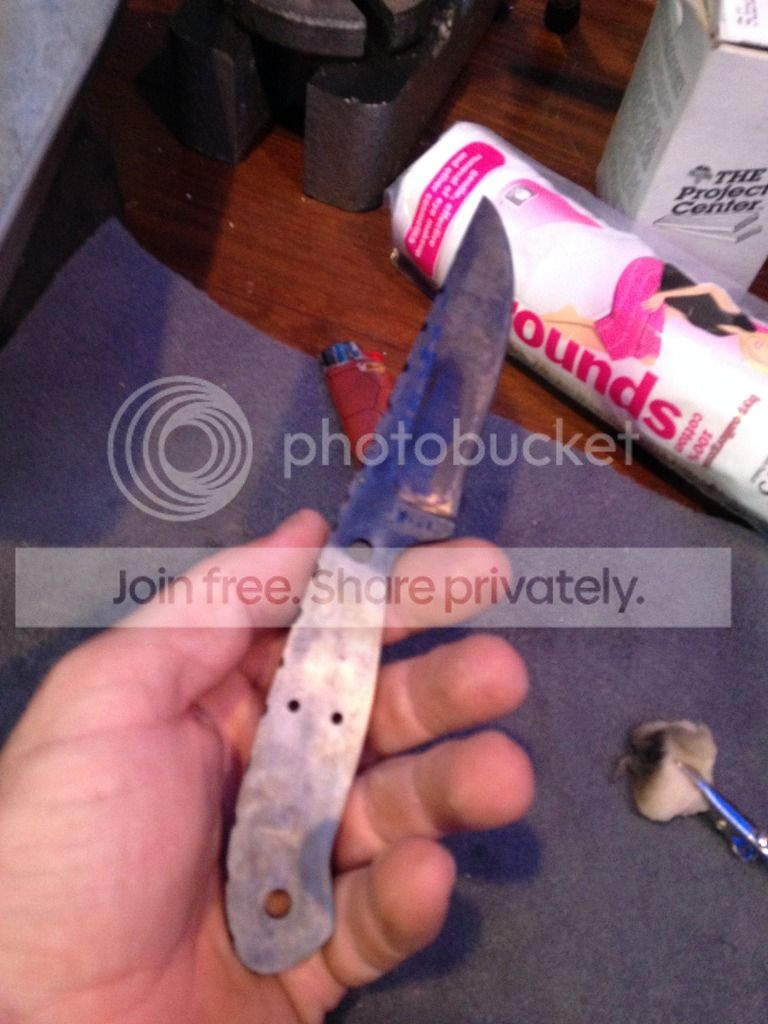
So I gave it a shot this weekend and had TERRIBLE results on a 1084 blade. I followed this this thread for directions. Any ideas why it might have failed? I used Heinz apple cider vinegar which was said to give a better darker color as you can see I didn't get that. The image was after 2 hours of vinegar application. It wouldn't even seem to color the handle area at all where it's not hardened.
 
did you shake the vinegar and then heat it before soaking the blade? Did you make sure the blade was totally oil free before soaking?
 
did you shake the vinegar and then heat it before soaking the blade? Did you make sure the blade was totally oil free before soaking?

Yes, yes and yes. Cleaned with acetone and heated to boil and left warmer heat on at just below boil. Thermo said 200* + -..
 
That's a stumper for me. I have had hit or miss results with forced patina with vinegar. I used a quick dip in 50/50 FC last time I did this and it worked well.
 
That's a stumper for me. I have had hit or miss results with forced patina with vinegar. I used a quick dip in 50/50 FC last time I did this and it worked well.

That's what i'm gonna try for the next one is FC. Wish I could find it locally. Just thought of something, I'm gonna try a PH test on the vinegar to see maybe it's a bad bottle or something. Only thing I can think of.
 
Yeah, last time I went there it took me an extra 2 hrs to get to it since the hurricane washed the road out. I'll have to wait a couple months till they fix the road.
 
Once you have your vinegar patina, finish it off by dabbing mustard on the blade and leaving for an hour or so, then clean it, and dab (don't wipe it on, dab it on) cold bluing on the blade. Rinse, wipe down, and shine up to whatever pleases you. You will have a blade that looks like a well cared for 80 year old blade. hat happened to your blade is fine, the vinegar simply followed your grind, imho.
 
Last edited:
Thanks David. That looks great. I'll try that on one I have in mind. The one that failed I was hoping for a solid dark color. Ended up sanding it off.
 
Your dark areas are where the heat treat and quench transformed the steel. The tang is lighter because that part of the steel didn't transform.
 
One reason may be you said you cleaned with acetone then treated. try scubbing with dawn dish washing liquid and hot water after that. Towel dry the blade while its still hot and you won't have water spots. Then don't touch the blade with your fingers untill you're done. also a finer finish will give better results.

This blade is 1084 and was colored with mustard and gun blue left applied for 24 hours

attachment.php
 
Could possibly be decarb as well, if you haven't cleaned up all the decarb it'll look like that.
 
The difference between the spine and the rest of the blade makes me question how you ground the bevel . Did you use an old worn out belt ? If so you might have smeared the steel in the bevel but not the spine .The smeared steel will certainly react differently to the etch. I learned that a long time ago - smearing a fully hardened high carbon, high tungsten tool steel !!
 
It still looks rough ground to me. Try hand sanding to 400 and then try the forced patina. I have better luck with Apple Cider Vinegar heated up on the grill if you're not going to use FC.
 
Your dark areas are where the heat treat and quench transformed the steel. The tang is lighter because that part of the steel didn't transform.

transformed the steel meaning it didn't harden properly in the lighter area?
 
transformed the steel meaning it didn't harden properly in the lighter area?

It's not hardened like the edge and blade are. He probably used a 2 brick forge and got the blade and edge up to proper heat but not the tang where it was probably held with tongs or pliers.

Kind of like edge quenching a blade, there's a distinct line between the hardened steel and the softer spine.
 
Have only tried it a few times but for a "French Gray" finish I use navel jelly now made by locktight. Acetone clean and swab over blade uniform and it produces a nice uniform gray. Found out about his when I used it to remove some rust from a blade and then did a bit of research. Navel Jelly is readily available at your hardware store. Hope this helps.
 
By the way, you can make ferric chloride with common muriatic acid (pool supply) and hydrogen peroxide.
 
Back
Top