Bone covers remind me of the little girl in Longfellow's poem:
There was a little girl,
Who had a little curl,
Right in the middle of her forehead.
When she was good,
She was very good indeed,
But when she was bad she was horrid.
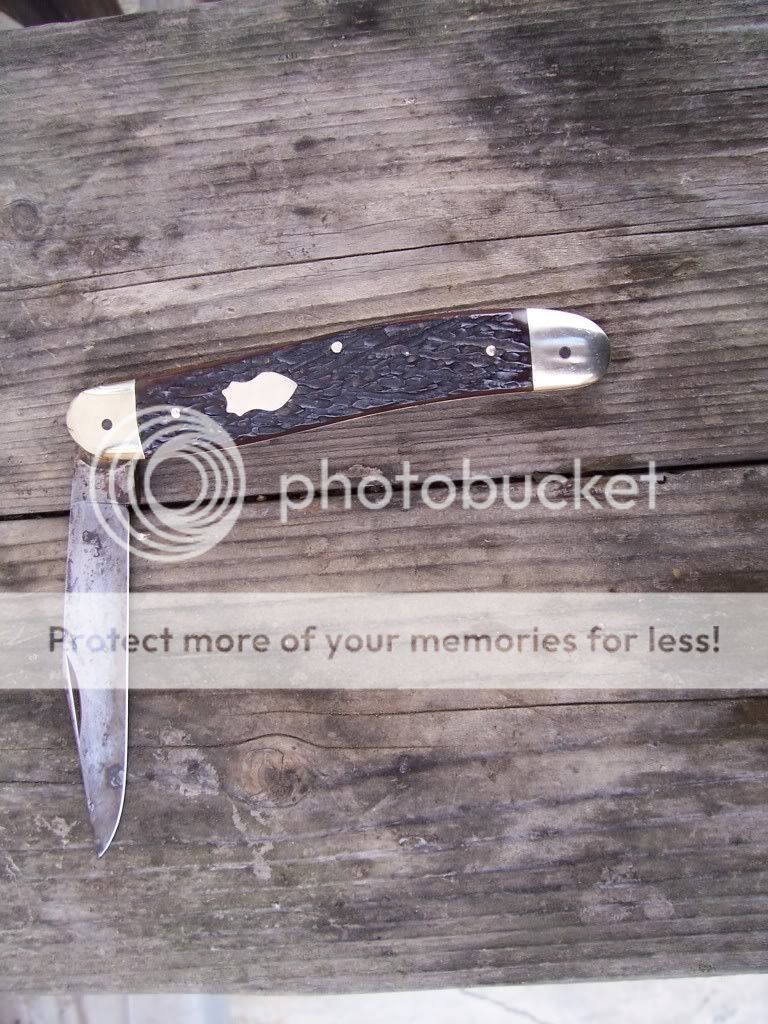
Bone done well is food indeed, but the combination of getting both dye and jigging correct, not only in themselves but in application to a specific pattern, leaves much more room for human error than with other natural materials such as stag and wood. Sometimes "horrid" happens. The latter still need to be skillfully selected, cut, and fitted to specific knives, but I've seen far fewer knives in the Horrid category with these materials than with misbegotten, poorly executed bone.
For in-hand feel and (almost most fail-safe) classic visual appeal, ebony is my favorite.
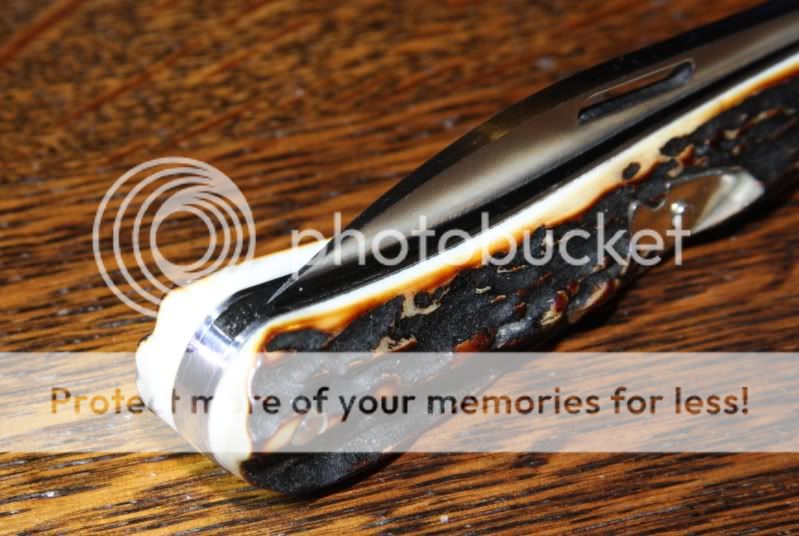
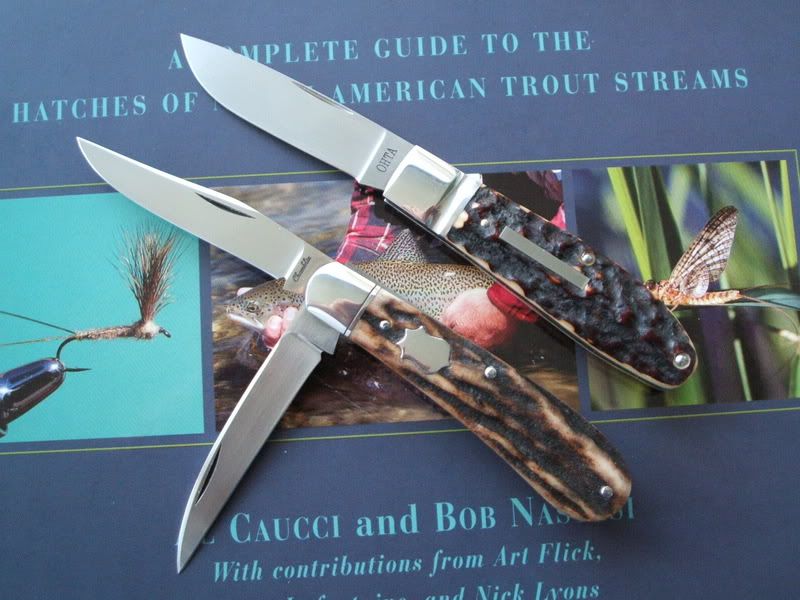
From me, stag straddles the field between ebony and bone-- it warms (and wears) to the hand, and cut (and fitted) well is appealing (and almost always interesting) visually.
Finally, I appreciate the variety possible with bone. It's my third-favorite in-hand, but with the right color and/or cut? Ooh la la.
(The uniformity of the jigging on the white owl precludes Perfection, but it's well-proportioned to the pattern and the Autumn Gold coloration covers a multitude of sins. Or maybe just one.)
The Horsecut Antique coloration and jigging on this barlow continues to blow me away:
If I understand correctly, it predates GEC's doing their own bone/jigging. If I were they, I'd saddle up and chase down whomever did this jigging (and variegation of color) for them, and
larn.
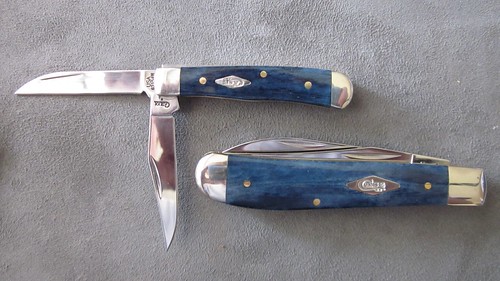
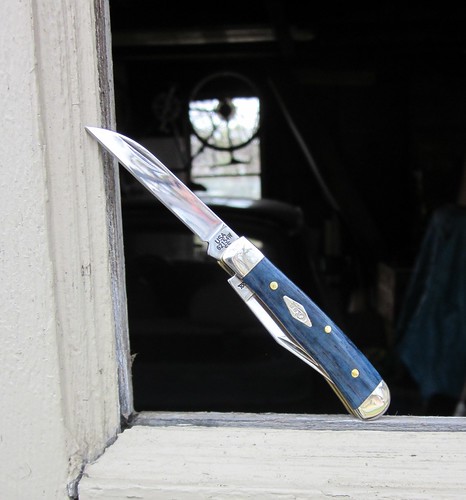
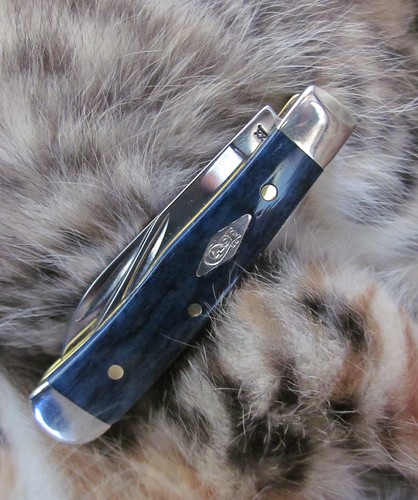
But of course, bone need not be jigged to reach perfection:

~ P.



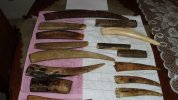
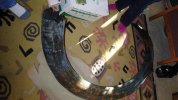
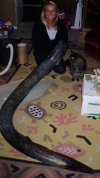
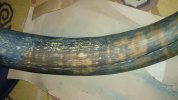
 and ram's horn on Sardinian traditionals...


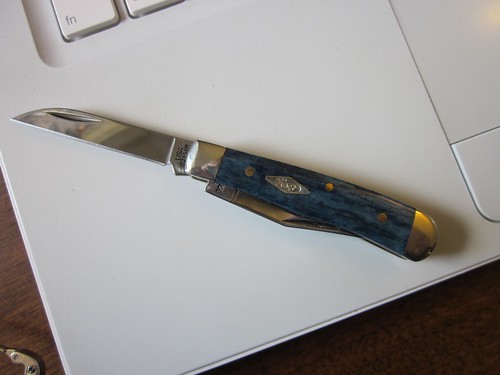


 What knives other than Traditionals offer such vast choice of handles?