
Feibings dyed maple question.

Joined
Sep 28, 2005
Messages
4,527
I've made a Fokos of sorts out of a mining hammer and curly maple, as a back up to my Crawford Survival Staff, as I'm planning on letting a friend use my staff when we go hiking later this year. As I'm a red fanatic, and to match the Crawford Staff, I dyed the handle red with Feibings alcohol based dye. My problem is that I can't seem to get the dye to stop coming off on my hands. It's been dyed for more than two years, but wears off on my hands fairly rapidly. I've tried Tru-Oil, sno-seal and min wax paste wax (I believe). As soon as it gets wet the colours come off especially easily. I'm curious if I'm not leaving enough tru-oil on the surface, or not using enough wax, or I'm not sure. The paste wax seemed to do the trick, but I guess it wears off, the area near the head is starting to turn a bit pink from loss of dye. Is there a trick I'm missing to set the dye, or just a thicker set of coats of Tru-oil without as much steel wool between coats?

Here is the item:
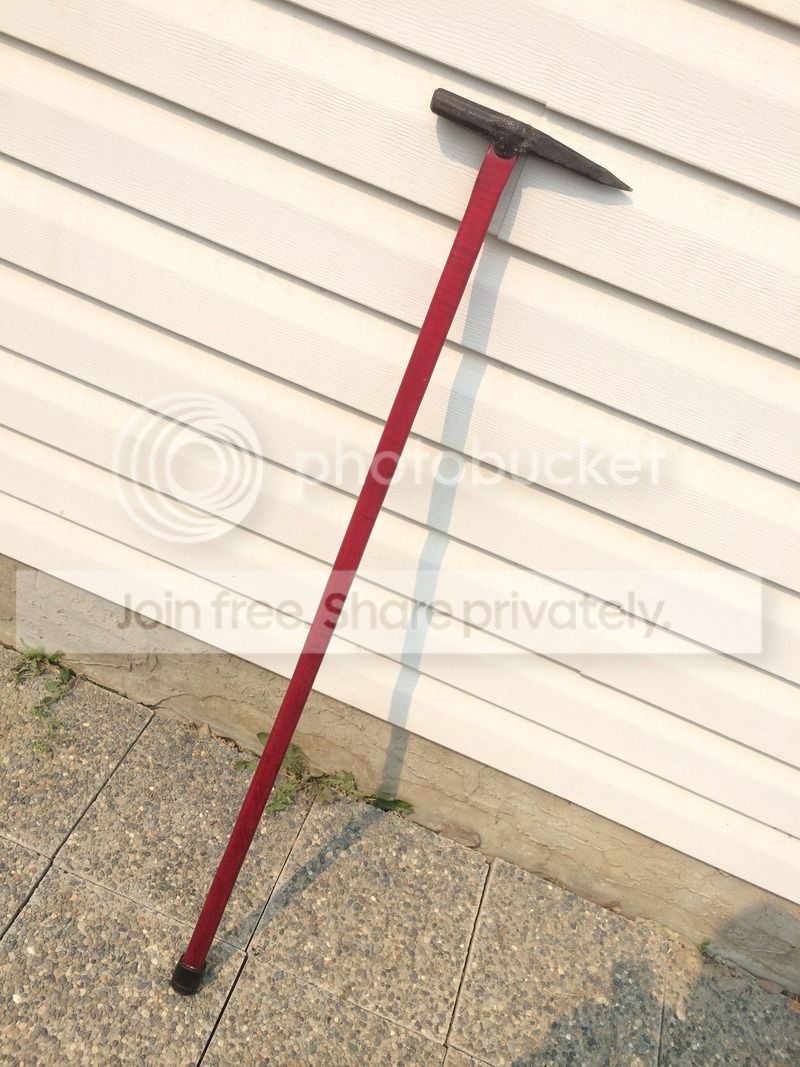
878CDF78-CBAE-4AEA-8887-DDDDA9297E53_1.jpg


Sorry, photobucket is acting up and I can't pull up any other pictures. I did a quick search, but the dye questions I've seen are for stabilized dyeing or leather dye.

Thanks for any help!
 
Last edited:
Several things are probably going on:
1) The dye you used is a leather dye, not a wood dye. While people use them interchangeable in some cases, it isn't exactly a good idea.
2) You probably put on a very heavy amount of dye and didn't wipe off the excess. This left a layer of dried dye on the surface.
3) To add to the above problem, the dye is alcohol based. This makes it easier to clean up and thin, but also allows a certain amount of water solubility. Your wet hands will dissolve some dye and get stained.

Dyes go on wood best in a thinned condition. Build up the depth of color by repeated applications. Red is one of the hardest colors to get a deep color on in wood.
Use a dedicated wood dye for a hard use outdoors tool. A wall plaque could be dyed with shoe polish, but a climbing axe needs a tough finish.
Use a finish made to work with the dye type used. In most cases, try and use the finish made by the same manufacturer as the dye.


I would suggest you sand the handle down well with 400 grit paper, and steel wool it hard. Then wipe off with denatured alcohol well to remove excess dye. Steel wool again and then dye with a wood dye ( if needed), followed by a good finish like Danish oil, Minwax, Deft, etc.. Apply the finish following directions, which usually say to wipe off all excess. On heavy use handles I like to wet-sand in the first two coats, wiping off all excess, and then apply a coat or two more with the standard directions. Allow all coats to dry at least overnight before sanding and applying the next coat.
 
Thanks Stacy. I did multiple thin coats over a couple of months, with light steel wool sanding between leaving at least a few days to ensure drying, to build up gradually like a tung oil finish. I was told that the Leather dye was the best choice to bring out the chattoyance in the maple, but apparently that was erroneous information. I was also told dying with stabilization was out of the realm as it renders wood brittle and I'm unsure if there is length restrictions preventing use anyways.

Are there any particular wood dyes to look for/properties to be aware of?

It has been a fun project so far, I've learned a lot and will keep learning on this one apparently!
 
Last edited:
Back
Top