What you want is clean steel. Solvents almost always leave a residue. Wassh well and rinse in hot water as Karl suggests.
About the streaks:
When the acid reacts with the steel, gas bubbles form. These slide up the blade surface and "scrub" the black oxide off. This area etches deeper and the final result is streaks. The way to get a more even etch is to take the blade out one every minute or two and rinse well, wipe off with a clean paper towel, and put back in the FC. This will also make the etching go faster, as it keeps the steel exposed and removes the black oxide crud.
If you do a long etch without occasionally moving the blade, you can even get grooves in the surface.
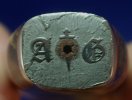
My friend, Don Agee, uses this bubbling situation to his advantage when doing his makers mark. He finishes the handle, and then applies a resist in the shape of his logo to the brass, nickel, mokume, or damascus, butt cap. He then tapes around it with electrical tape ( to keep the FC away from the handle). He puts the butt in the FC just deep enough to immerse it. With the bubbles having no vertical surface to slide up, they sit there and get larger, eventually getting big enough to roll sideways and escape. While they are sitting on the brass, no etching happens in that tiny spot. He etches for a good long time, and the brass eats away as much as 1/16". This leaves his logo raised up with the background a moonscape of tiny craters. It looks like he carved his logo in for hours with a ball burr. I attached a photo of the effect. Some are much neater than tis shot, but this is what I had in my files.


 Also I check every 5-10 minutes and scrub the blade down with 1500 or finer sandpaper. If you are rinsing in vinegar you are introducing another etchant on to the blade. Kill the Fecl with ammonia or just spray it down with windex. Ammonia is cheaper.