Field Sharpening

Joined
Aug 26, 2006
Messages
3,799
thought i would toss together a post on field sharpening gear, since it is somewhat important for us knife knuts...;)

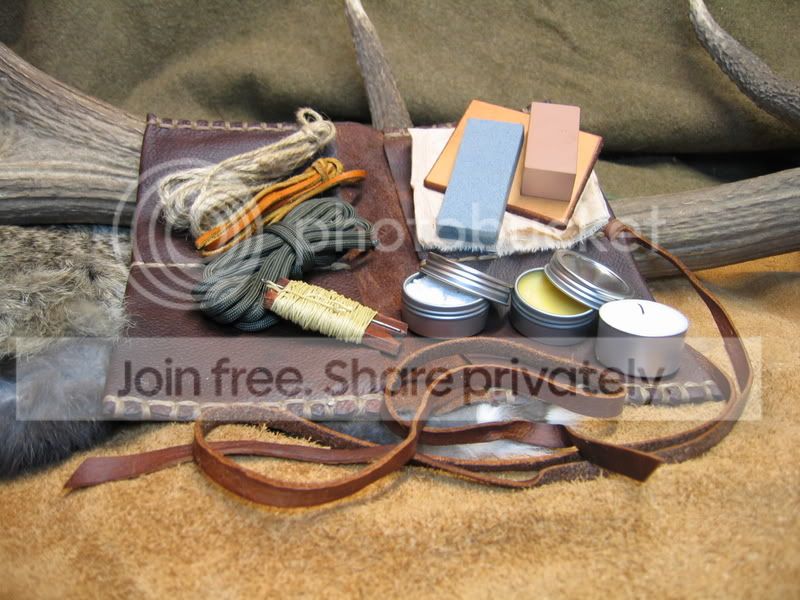
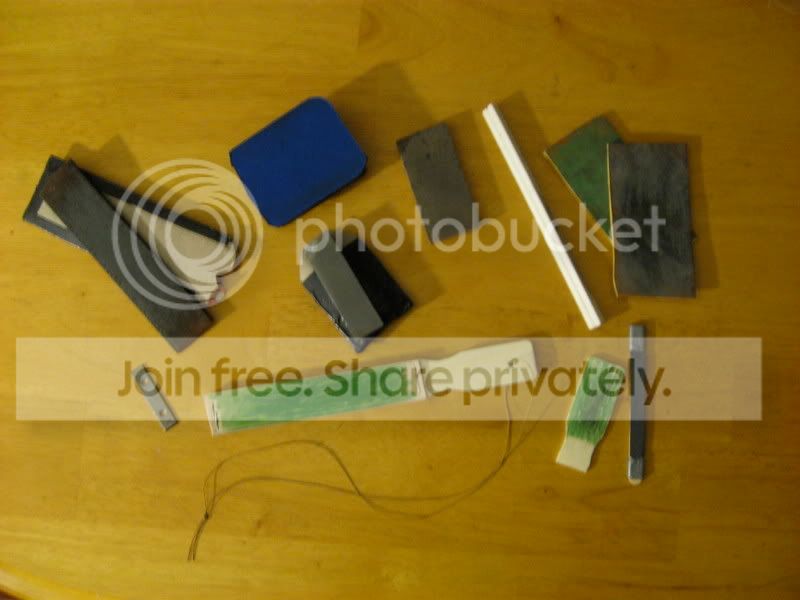
here is a collection of things that i would call "field sharpeners";
IMG_1072.jpg


we have all manner of things in different grit leves;
strops in different grits
sandpaper apparatuses
stones
ceramic dealie
carbide blade

the strops are all pretty self explanatory. you load them with compound and strop your blade on it.
IMG_1076.jpg


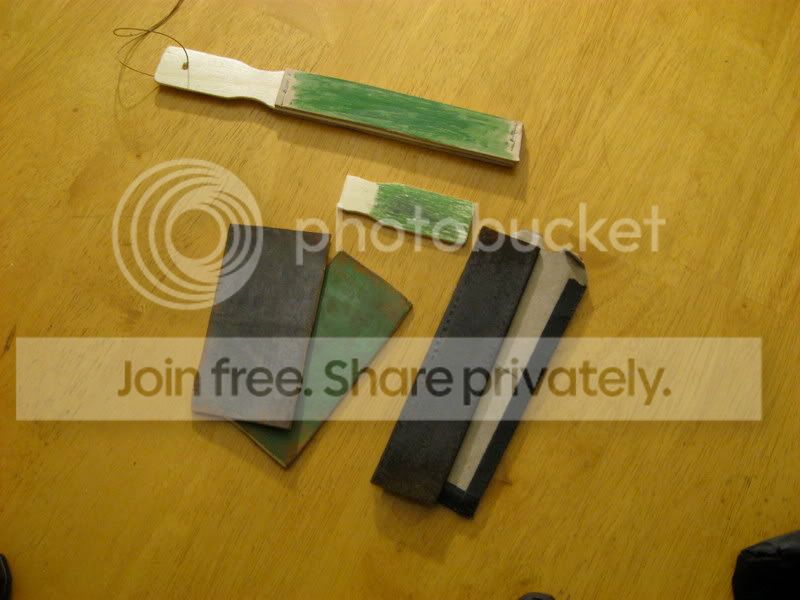
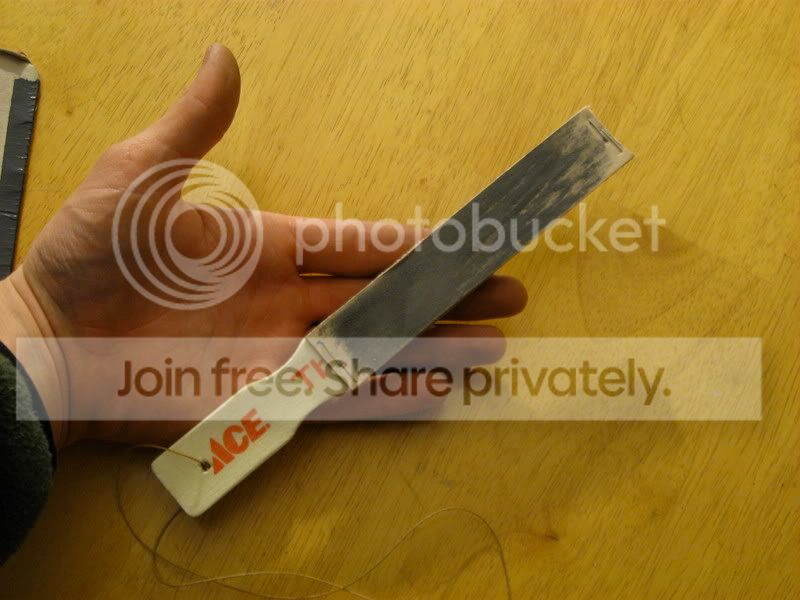
but, i was playing around with minimal size strops, for packing, and came up with the fairly common short double sided strop...
IMG_1077.jpg


the end of a painstick simply loaded with compound. works best on small blades, but with patience you could use it on bigger things. also takes more precision because it is rather firm...
IMG_1081-1.jpg


IMG_1080.jpg


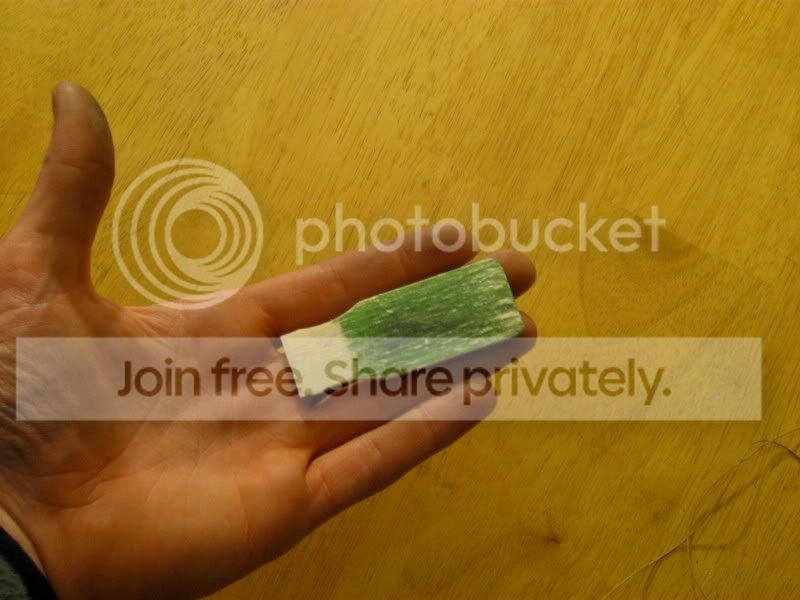
pieces of leather loaded with compound. these are good to carry if you are carrying something like a gouge, heavily recurved blades, or hook knives. you can simply pinch the sides together to form a curve for you to strop on...

IMG_1079.jpg


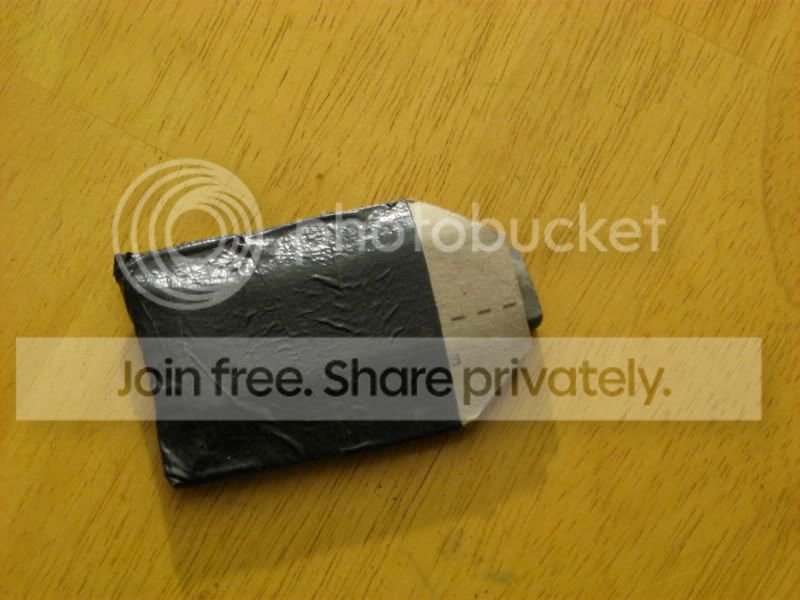
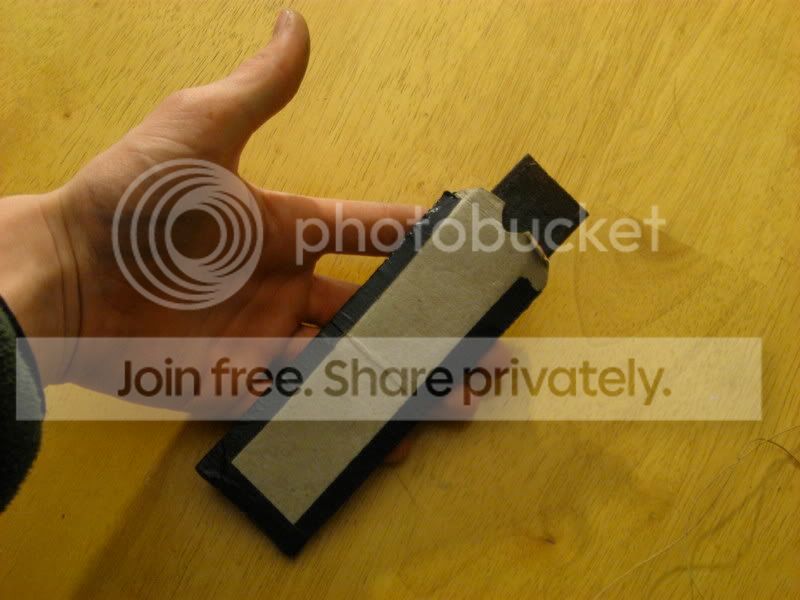
i carry this piece of belt (was my second ever leather strop) in a cardboard slip to keep compound out of my pack.
IMG_1078.jpg


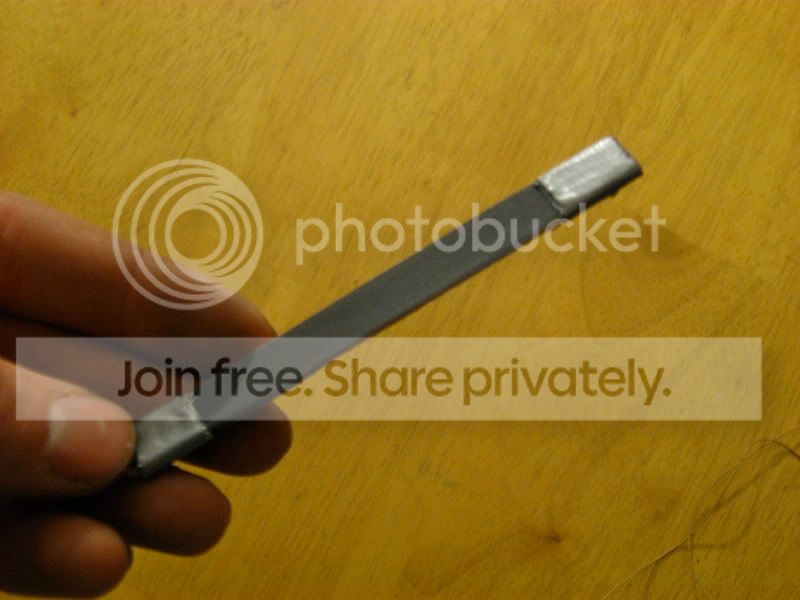
next up we have the sandpaper type of setups. these are what i consider intermediate level sharpeners. this crosses over with the coarse stropping compound. these actually sharpen (vs maintain an edge in good shape) so are better for longer term situations where you are more likely to need to actually sharpen.

as simple as sandpaper duct taped to a popsicle stick;
IMG_1082.jpg


or as complicated as a the altoids tin sharpener which i've shown around before (credit to rescueriley for the awesome idea);
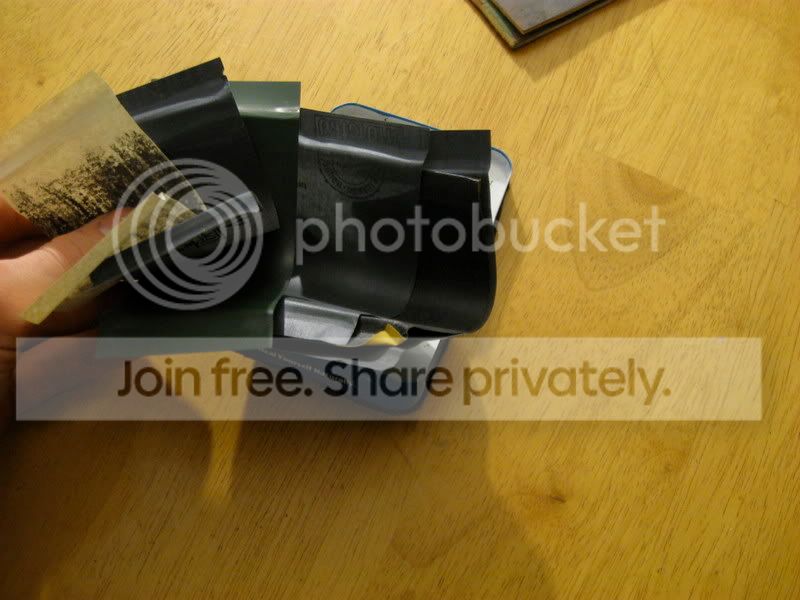
IMG_1074.jpg
 
IMG_1075.jpg

the great thing about the tin sharpener is that you can carry any grit you want, and a whole lot of it. i carry several sheets each of 400, 800, 1200, and a sheet or two of 0.5 micron film (the same grit as my strops) for a full range of sharpening capability. you could even equip this with coarser paper to take care of more heavily damaged edges.

next up we have the "stones"-flat, solid abrasives. these can be simple and inexpensive or very nice and pricey.

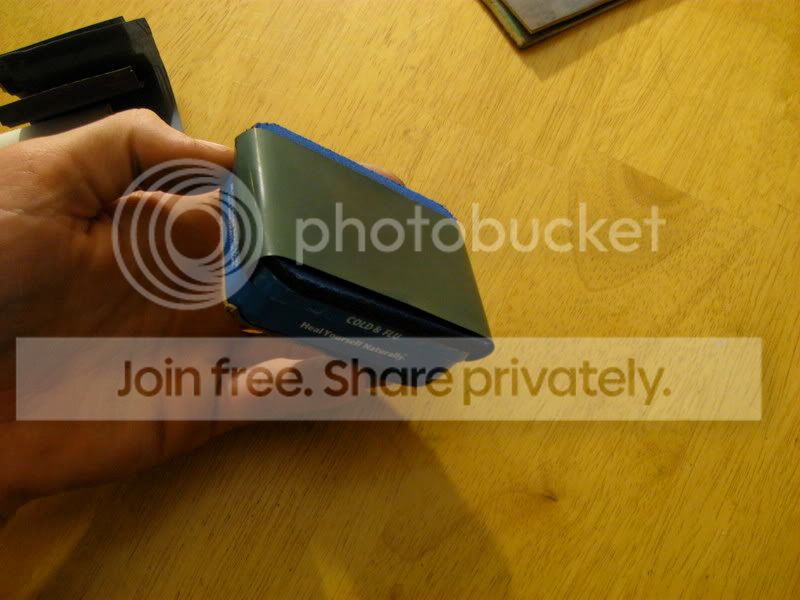
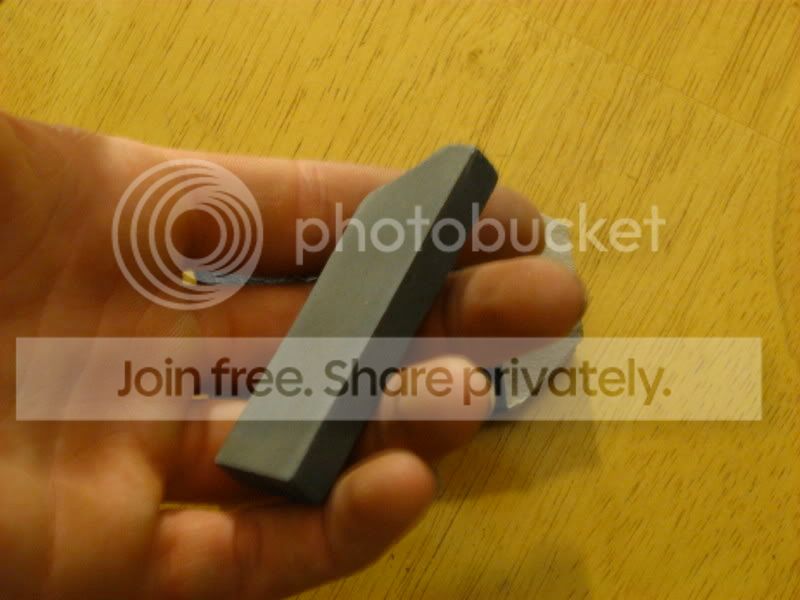
a basic "pocket stone" from the hardware store. a good small stone that can do white alot if you can work it right (carried in a cardboard slip to protect my bag and the stone)...
IMG_1089.jpg


IMG_1090.jpg


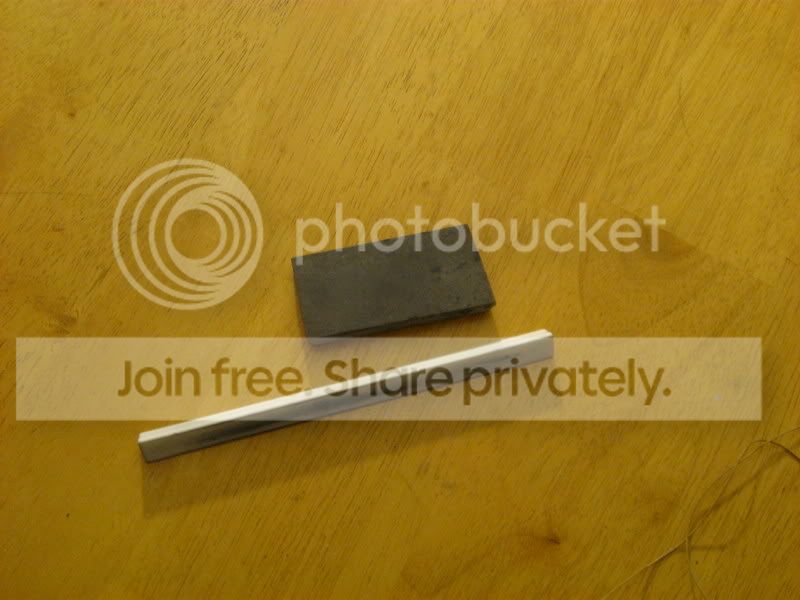
an ultrafine sharpmaker rod (courtesy of theonew) and a soft arkansas stone. both are fine grit, very roughly equal to my green rouge strop i would guess;
IMG_1084.jpg


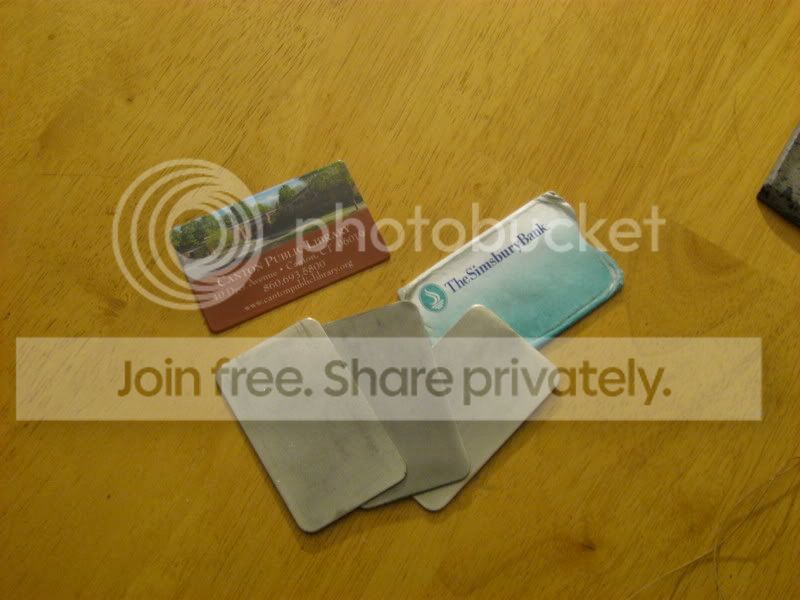
credit card diamond plates. i carry these in a tyvex sleeve that debit cards come in, it protects the stones and keeps them together. i have from 325 grit to 1200 grit, so it covers a pretty wide range. these are a bit heavy though, since they are on steel plates. they are also a bit tricky to use safely, because whever you hold them you will have part of your finger above the surface, and it could potentially get cut.
IMG_1087.jpg


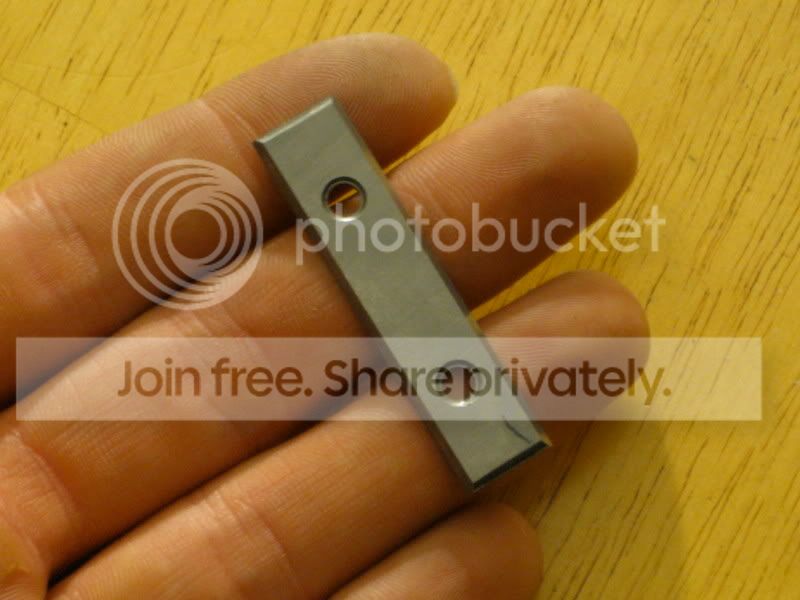
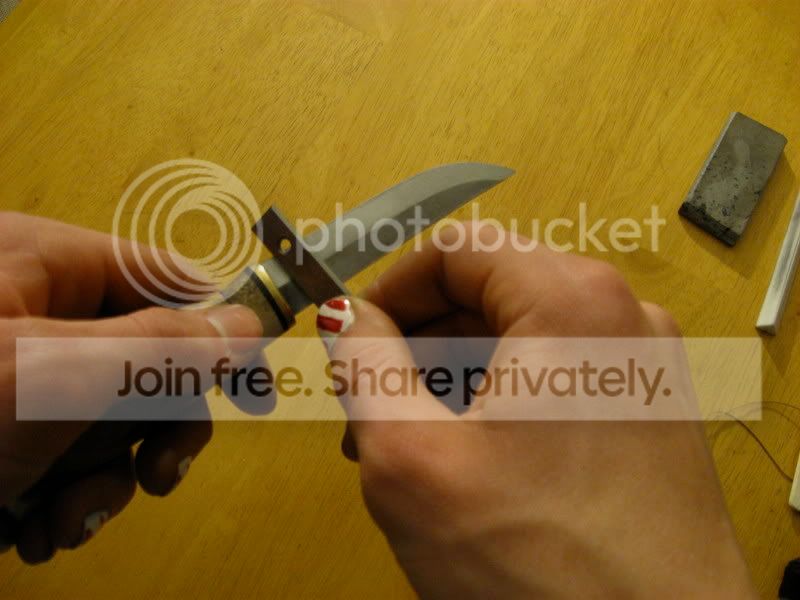
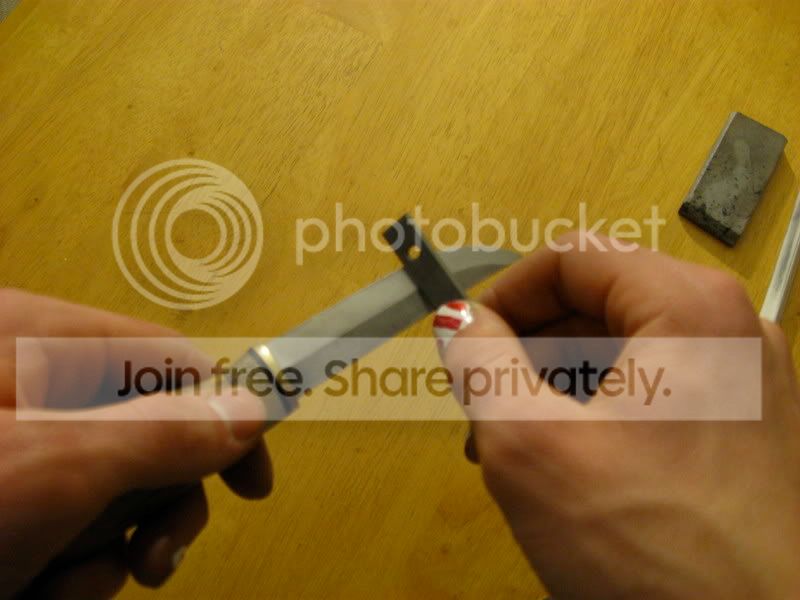
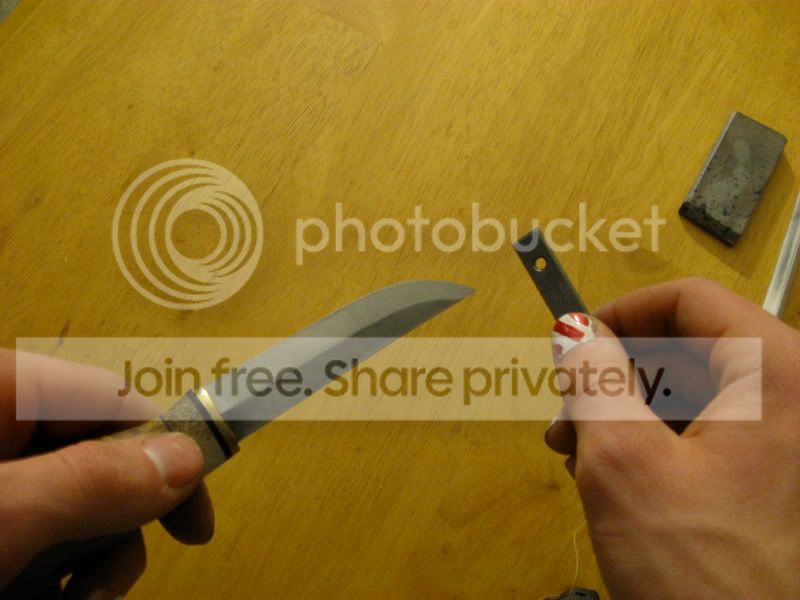
something i have been experimenting with for the last day or two. a carbide scraper blade (this little 2" one was $9 :eek: the 2.5" one was $15 :eek::eek:). you just grab the scraper and drag it along a dull edge to remove metal, maintaining your sharpening angle. this would be for heavily damaged edge, where you slipped and drove your knife into a gravel pit or the like...but it is small and light and i think worth carrying. the one that i have is ground at 45 degrees, and the edge chipped with i hit a nick in my blade. i dressed the edge back and put on a 90 degree bevel at the edge of the initial grind. so far it seems to be holding up better. the corona machete sharpener does the same thing, but gives you a handle to hold onto (and the edges are already much closer to 90 degrees)
IMG_1092.jpg
 
you start at the heel of the blade;
IMG_1096.jpg


and slide the scraper toward the tip;
IMG_1097.jpg


IMG_1098.jpg


basically, almost any small sharpener qualifies for a field sharpener, and a really wide range of different abrasives will all get the job done.

realistically, on a weekend excursion, most of us won't need to sharpen a blade. especially since most of us carry a few blades as backup ;) but there are those times when you are doing a whole lot of cutting, or you slip and damage the blade, or you are out for an extended period of time living out of the pack, and a field sharpener suddenly becomes rather beneficial. far easier to use a prepared sharpener than a stone you find on the ground or silt rubbed into your belt.
 
The carbide sharpeners are cool. They're begging for a kydex fold-over handle. Also, candy cane nail polish is so 2004.....
 
Also, candy cane nail polish is so 2004.
:D

the carbide idea was something i picked up from a member somewhere on this site i think...i don't remember if it was here in WSS or somewhere else...
 
Nice info Siguy - thanks for posting that.

Do you ever use a steel on your edges? I notice it's one thing missing although the Spyderco ceramic rod could serve the role probably. I've tried a smooth butcher's steel occasionally on my Busses and kitchen knives and it seems to work if done regularly, like stropping. I'm not sure if it's more suited to certain blade steels or edge profiles though.

I imagine that if an edge of the carbide were rounded and smoothed it could be used as a smooth steel as well as a scraper.
 
foxyrick, i am not a fan of steels; smooth or "serrated". it seems to me that they just flop metal around on the edge-lining up the edge so that it seems sharper because the cutting edge is straight and even. because they flop the metal around instead of removing it, it fatigues the edge, leading to lower edge retention.

a strop is different because it actually removes a small amount of metal at the very edge, instead of flopping it back and forth. this leads to a less fatigued cutting edge that is actually sharper instead of just seeming sharper.

this makes it sound as though i'm totally against a steel. i'm not, though i don't advocate their use. steels i think apply best where there is alot of cutting done (like in a meat packing plant) without alot of time to stop and take care of the blades being used. you can keep the steel at hand and have at the knife frequently to keep it cutting. meat is also not terribly abrasive, and bone seems to be the main enemy, which can cause the edge to roll. a steel will straighten out the rolls and realign the edge, making it capable of continued cutting.

in a past discussion on steels, i likened myself (the tasks of my blades and the frequency of use) to a carpenter vs a meat packer. i am mostly cutting wood that requires a hard, stable edge. i am in no real rush, and have plenty of time in between cutting tasks to take care of my tools and put them in the best possible shape.
 
Good info here. I have a few diamond rod sharpeners and a fallkniven 2 sided stone. I like the altoids kit a lot!
 
Thanks for sharing your ideas. Nice stuff, as always.

BTW, you live in/near Simsbury? A girlfriend back in college lived there. Great memories, wonderful woman, young love...anyway, there's some surprisingly nice wooded areas to hike around there.
 
PB, i'm about 15 minutes drive from simsbury high school. there are alot of nice little wooded areas around here. in fact, right across the street from SHS is a neat little park with a bunch of trails and woods.
 
My field sharpening kit consists of a 400/1000 grit combo stone, a 6000 grit waterstone and a thick leather pad with green buffing compound. I keep the back of my pants' belt loaded with a bit of green compound for field stropping.

BushKit004-1.jpg
 
Rick,
i really like your setup there, i've seen it in another thread. it really covers all the bases and lets you take care of every step of sharpening with no compromises :thumbup:

where did you get the smaller two sided stone? i have one, but the smallest i have seen in a store is 6x2". a friend has a really nice old two sided stone with a really coarse side and a really fine side that was only about 3x2".
 
Magnussen said:
I bought these combo stones from Lee Valley a cut them with a tile saw.

genius! that's a good idea, i will have to do that next time i feel like putting together a project...
 
Back
Top