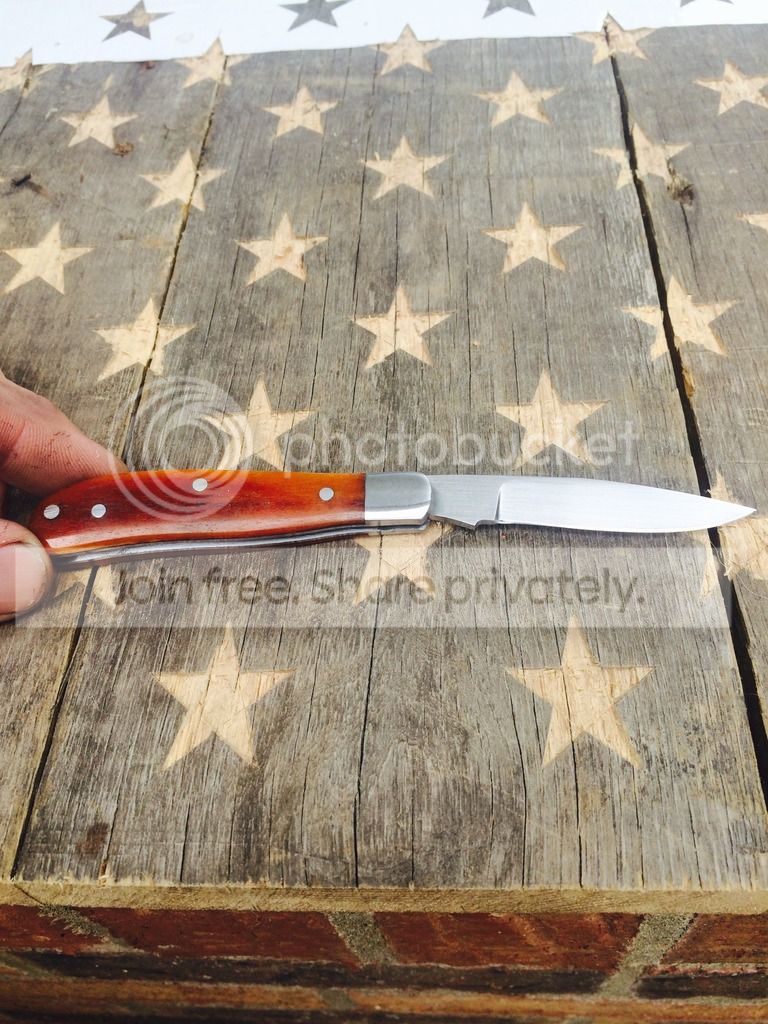
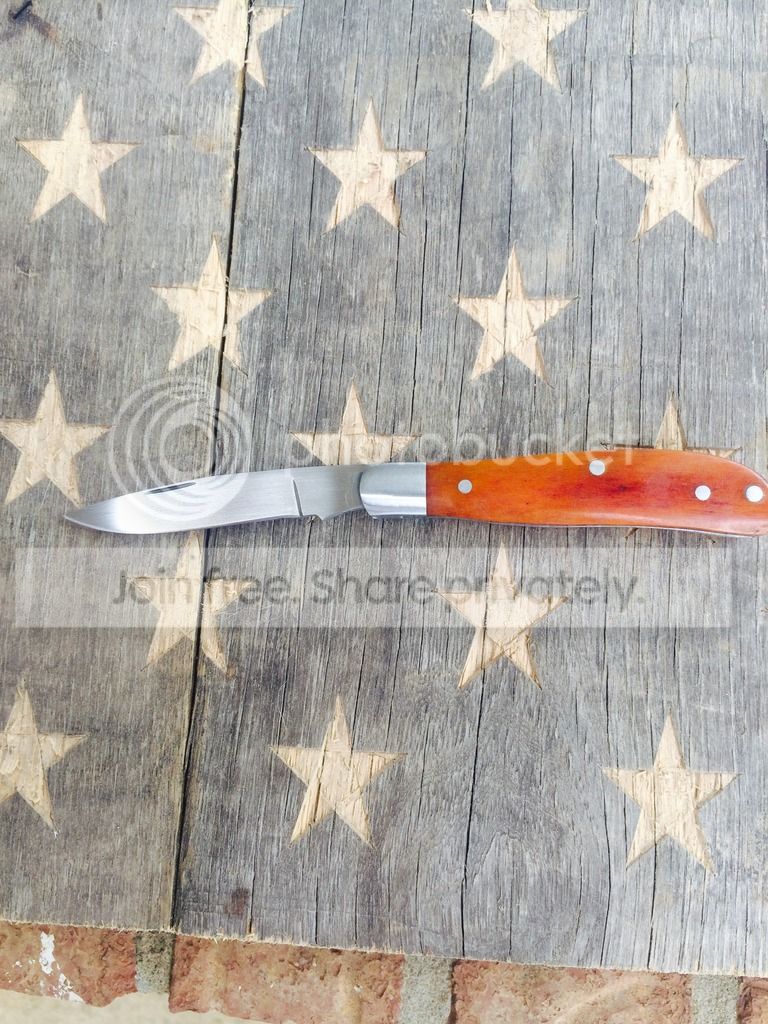
Finished my first slip-joint

Joined
Nov 28, 2014
Messages
1,864
This is the first slip-joint I've made. It's AEBL/416 and amber bone scales. It's a little tight but works great. I will use smaller pins next time as these look too big to me. I have a gap at the bottom between the scale and spring but am worried about cracking another scale trying to pull it up tight. I also feel like the ricasso? is too long. The only real problem is im getting scratches on the blade from the bolsters rubbing it I guess. I'm assuming it's from things not being parallel. Anyways, now I need to make 10 more! Thanks for looking. Of all the knives I've made it feels great to finally have one in my pocket!

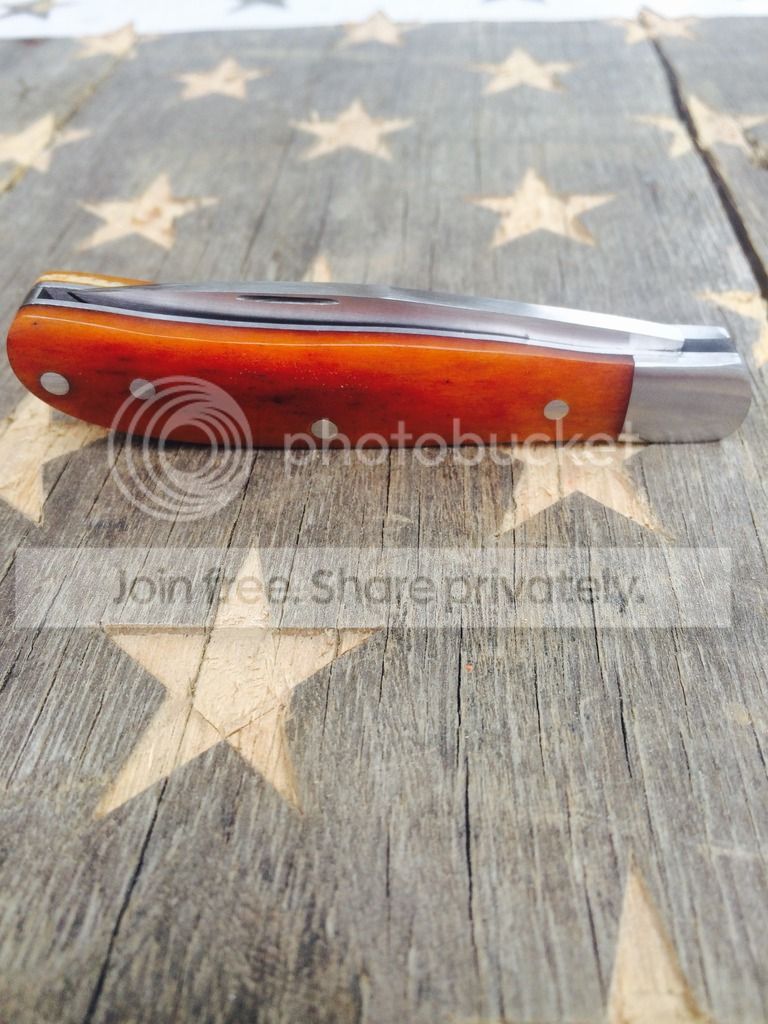
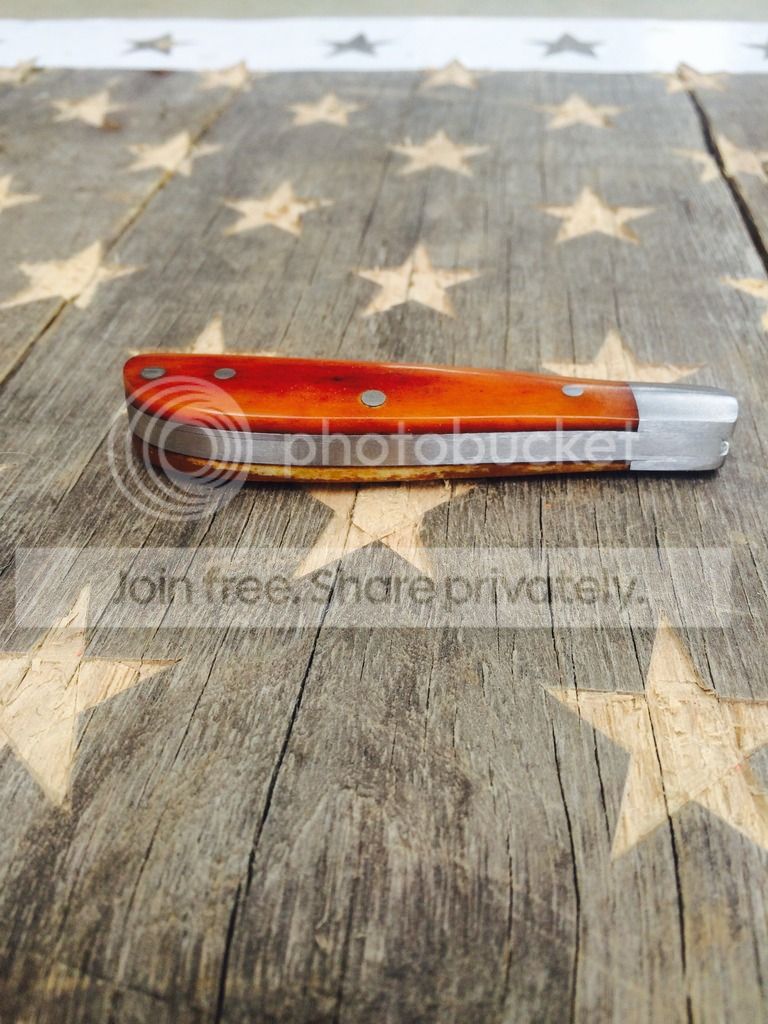
IMG_0828.jpg

Edit. Posting pics in the updated forum is going to be the death of me. I've tried copying the img link and the direct link and neither work. I'm using photobucket and never had an issue until the site was updated. I'm sure it's something I'm doing but I can't figure it out.
 
Last edited:
Wow, that is really nice! I quite like the large pins, but agree with the ricasso being a bit too large. Really nice Satin job on it though, it's a looker!
 
The Ricasso looks a bit long. I use 3/32 pins for spring pivot and spring lock pin and 1/16" for Scales pins they peen easier than 3/32 or 1/8" pins. Did you Relieve the Liners or are you using bronze washers at the pivot? Relieving the liners 0.005/0.007 thousandths should give enough clearance to eliminate any dragging or scratching from the liner/bolster. If you don't have a Mill to relieve the liners I would recommend using .005 bronze washers.
 
The Ricasso looks a bit long. I use 3/32 pins for spring pivot and spring lock pin and 1/16" for Scales pins they peen easier than 3/32 or 1/8" pins. Did you Relieve the Liners or are you using bronze washers at the pivot? Relieving the liners 0.005/0.007 thousandths should give enough clearance to eliminate any dragging or scratching from the liner/bolster. If you don't have a Mill to relieve the liners I would recommend using .005 bronze washers.

I didn't use either. Do you make the blade plus the 2 washers the same thickness as the spring? Also, could I remove the pivot pin, thin and clean up the blade, and reinstall with washers?
 
Last edited:
Yes the blade tang with 2 washers should be equal the thickness of the spring or just a bit under. When you peen the pivot you can adjust the amount of clamping force without locking up the blade the washers should keep the tang from rubbing now on the liners.
You can remove the pivot and polish the ricasso however be mindful of your dimensions and try to remove equal amounts from each side of the tang. I would use a surface plate or pane of glass to make sure you have a dead flat surface go slow measure often.

I relieve my liners using a Milling machine and it leaves a nice protrusion that acts like a bearing surface that I polish at final assembly. I have also used washers, but my set up eliminates the need for washers.

GEC (Great Eastern Cutlery) has a really nice set of videos on youtube of how they build slipjoints at the factory. I think the 3rd video shows final assembly and how to adjust a peened pivot very clever and easy. Worth watching if you enjoy slipjoints:cool::cool:
 
Great first folder! Yeah the ricasso looks a bit long. I use 1/16" pins everywhere except the pivot and have yet
to have a problem. I do use 3/32" on the pivot. I also releive liners to make an elevated bearing surface much
the way Busto describes. It does feel great to have one in your pocket that you made. When someone asks what
you do,-- in a second you can show them. Other than that my folders in my pocket do everything I want a knife
to do- day in, and day out.
Ken.
 
Congratulations for your first!!
Regarding the difference in thickness between spring and tang (+washers, if applies), i'd like to hear what others like.
From my part i prefer to have the spring thinner than the tang, for smooth action.
I am afraid the thicker spring would bind between the liners.
I do them the same thickness and then just barely polish the moving part of the spring until i get a somewhat "invisible clearance".
The thickness of the tang remains equal to the butt of the spring, ensuring the liners get locked parallel. The aim is to avoid showing that spring taper from spine view...but it just takes very little to relieve the pressure from the sides of the moving portion of the spring.
 
Last edited:
GEC (Great Eastern Cutlery) has a really nice set of videos on youtube of how they build slipjoints at the factory. I think the 3rd video shows final assembly and how to adjust a peened pivot very clever and easy. Worth watching if you enjoy slipjoints:cool::cool:

I know what I'm watching at lunch break today :D
 
Great first folder! Yeah the ricasso looks a bit long. I use 1/16" pins everywhere except the pivot and have yet
to have a problem. I do use 3/32" on the pivot. I also releive liners to make an elevated bearing surface much
the way Busto describes. It does feel great to have one in your pocket that you made. When someone asks what
you do,-- in a second you can show them. Other than that my folders in my pocket do everything I want a knife
to do- day in, and day out.
Ken.
KC, do you use 1/16 for both spring holes? Interesting, I may try that on the next one.
 
KC, do you use 1/16 for both spring holes? Interesting, I may try that on the next one.

Yeah, many of us do. Only pin I use bigger than 1/16 is the pivot (3/32 typically), for pretty much every slipjoint I make, regardless of size. With domed pins, you can make the heads appear larger or smaller, when peening, for the scale or spring pins which is nice, using the same stock.
 
Yes I do use 1/16" for the center hole in the spring. I originally started doing this to get a smaller lump on
the inside of the folder spring so the blade wouldn't hit the spring on the inside when snapping shut. The other
thing a smaller pin helps is with any sort of natural handle material there's less chance of cracking the scale
with a smaller pin. ( This depends somewhat on the design of the folder).
Ken.
 
Back
Top