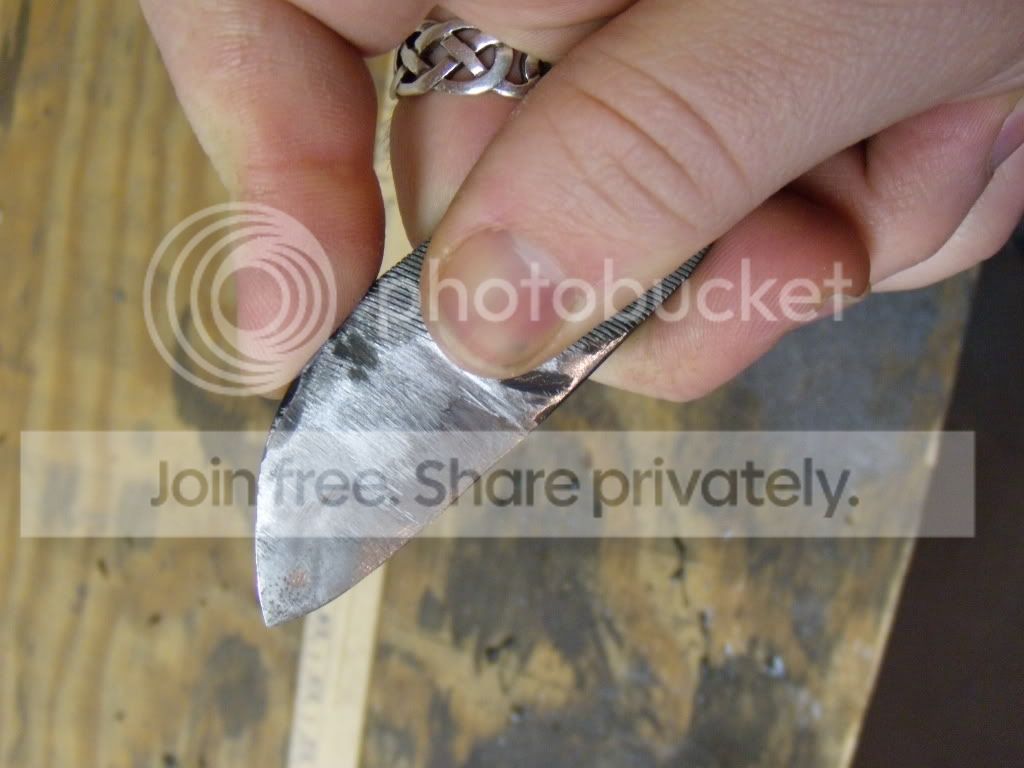
finishing touches

Joined
Sep 22, 2007
Messages
589
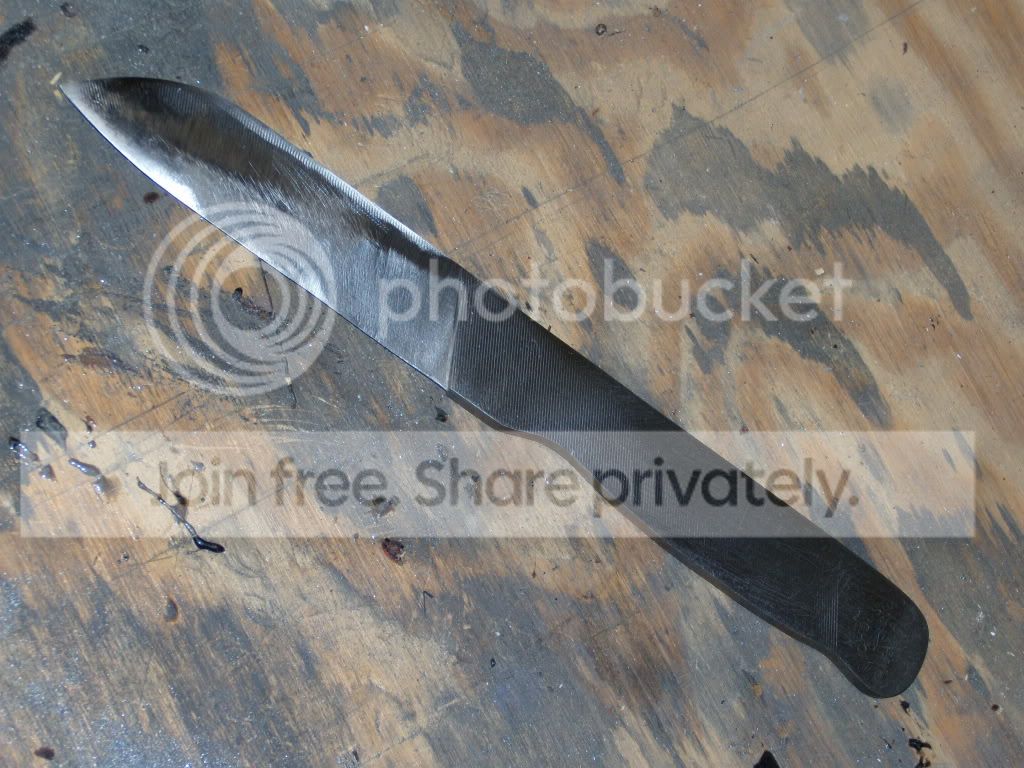
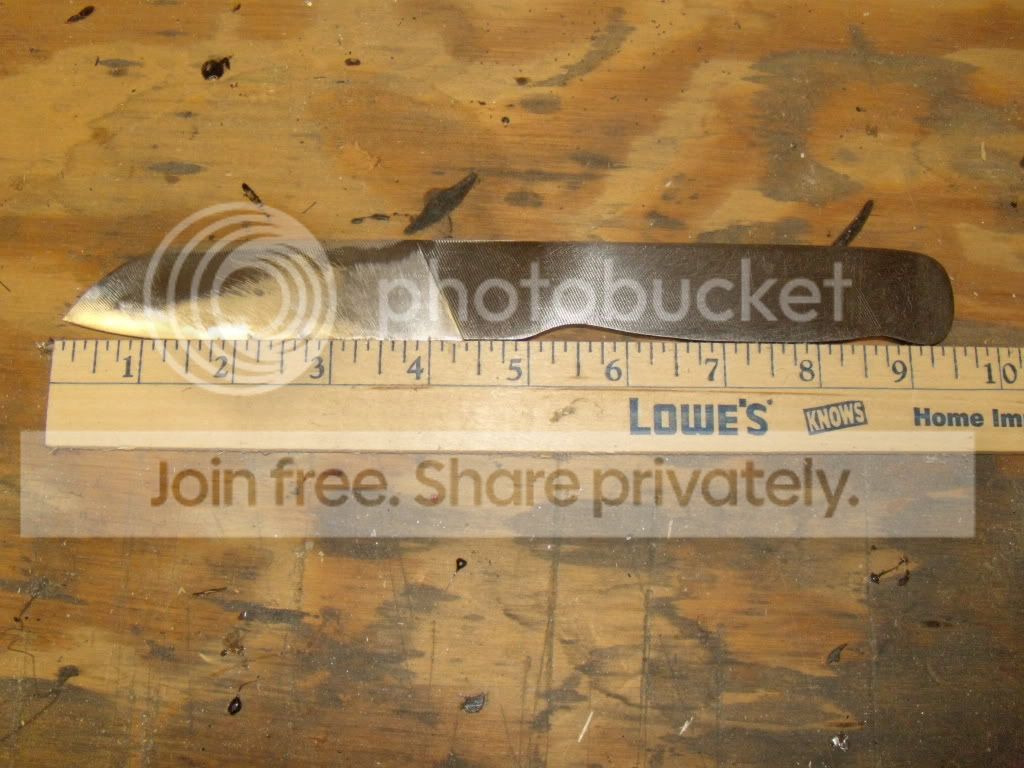
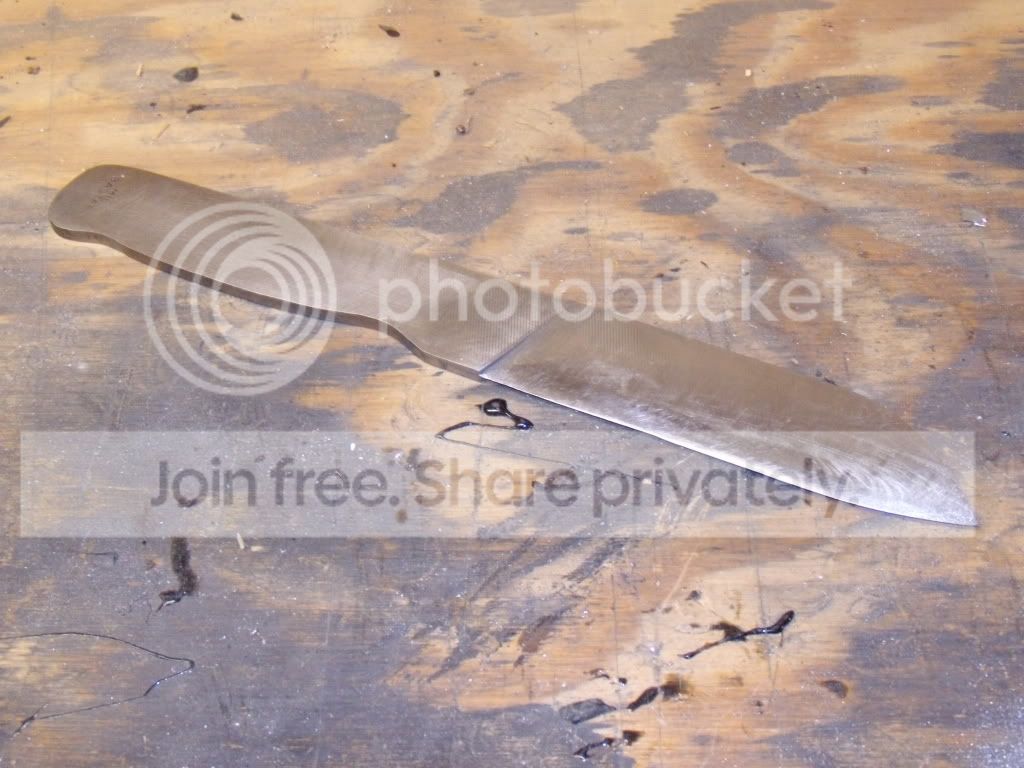
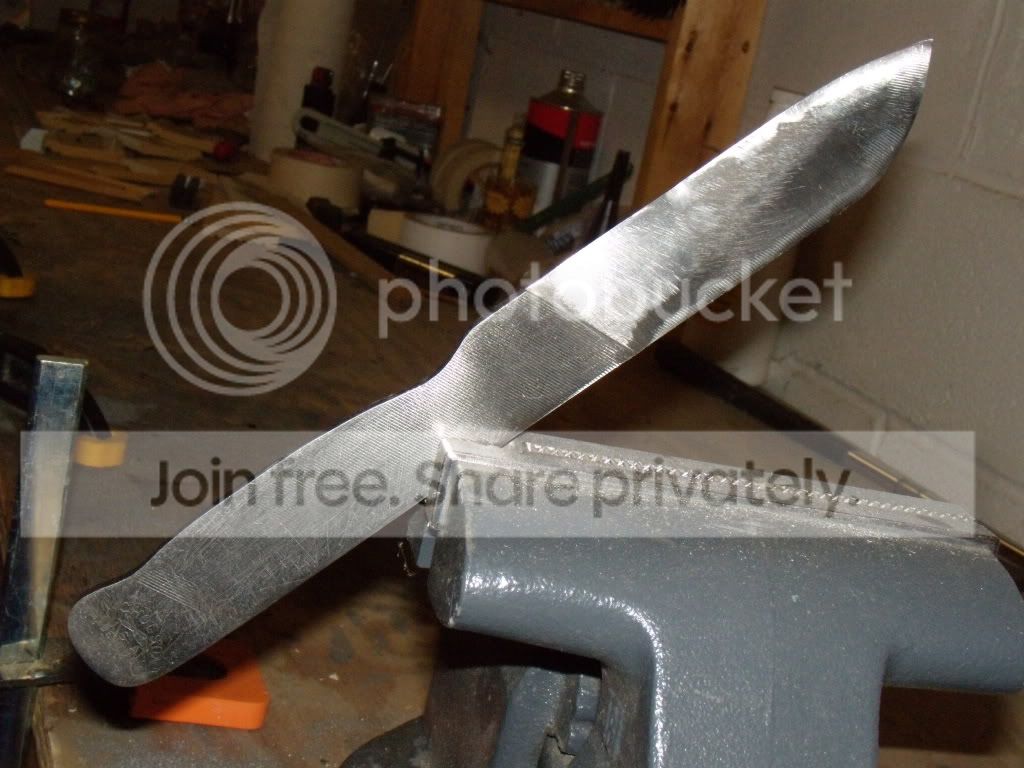
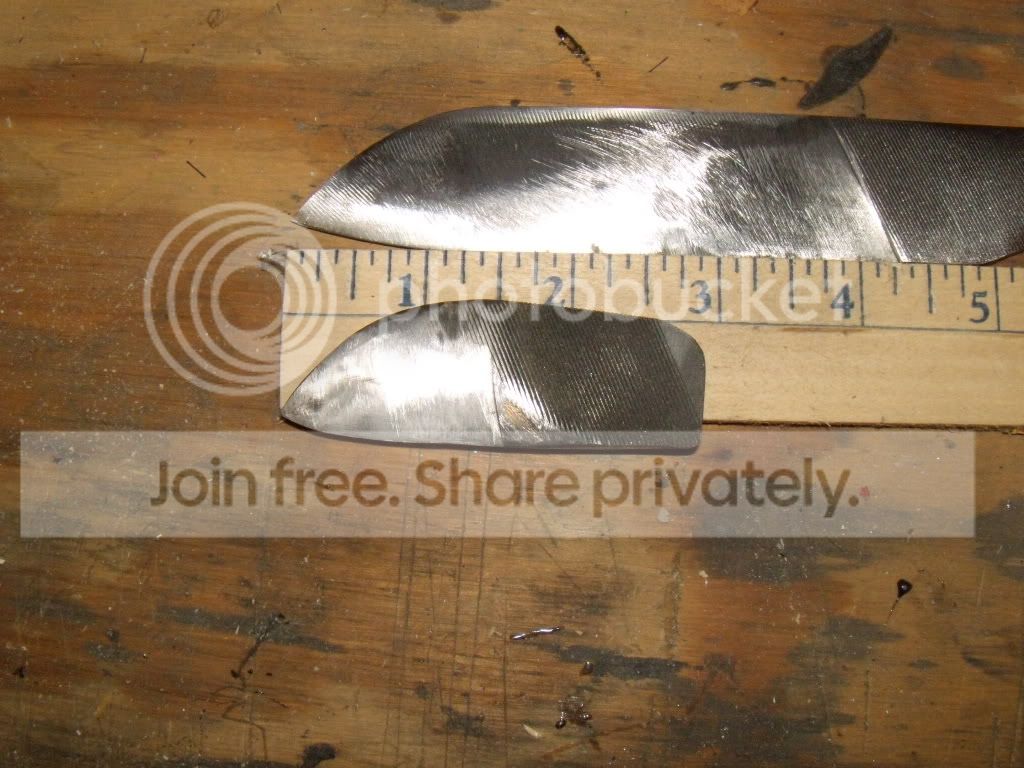
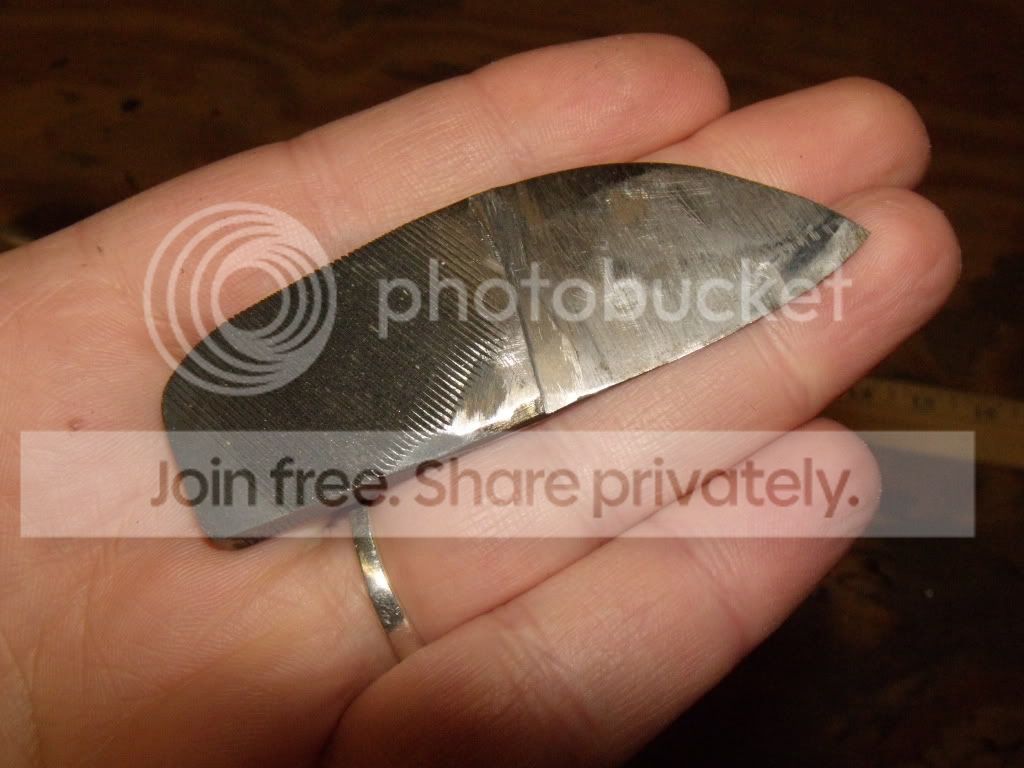
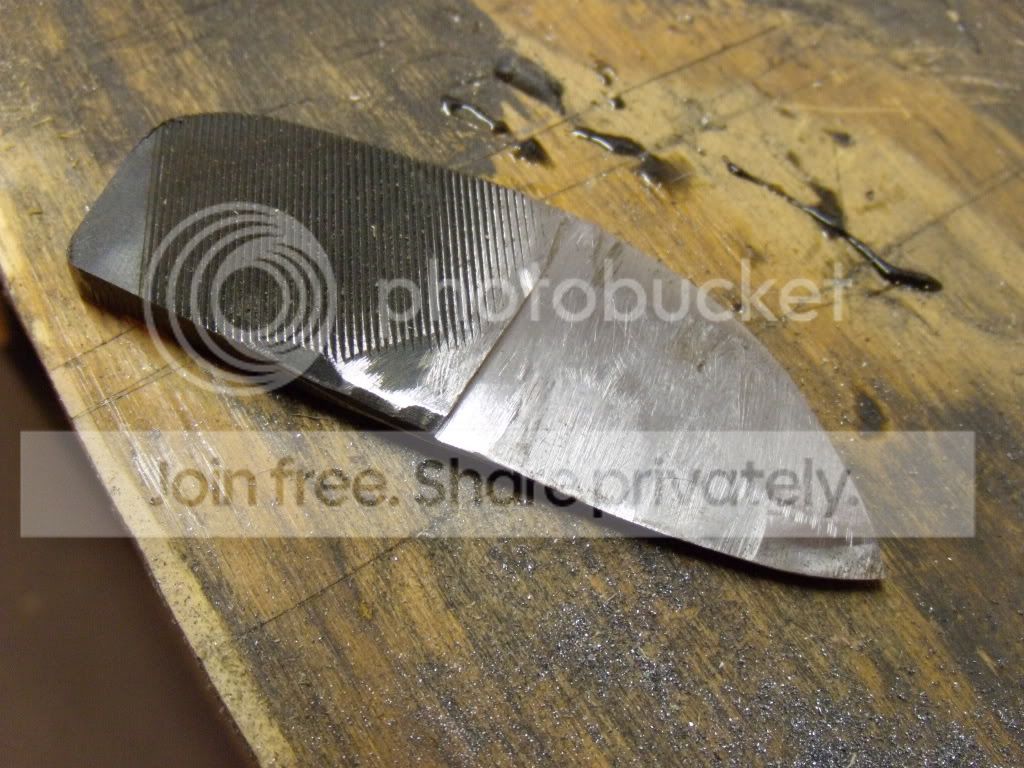
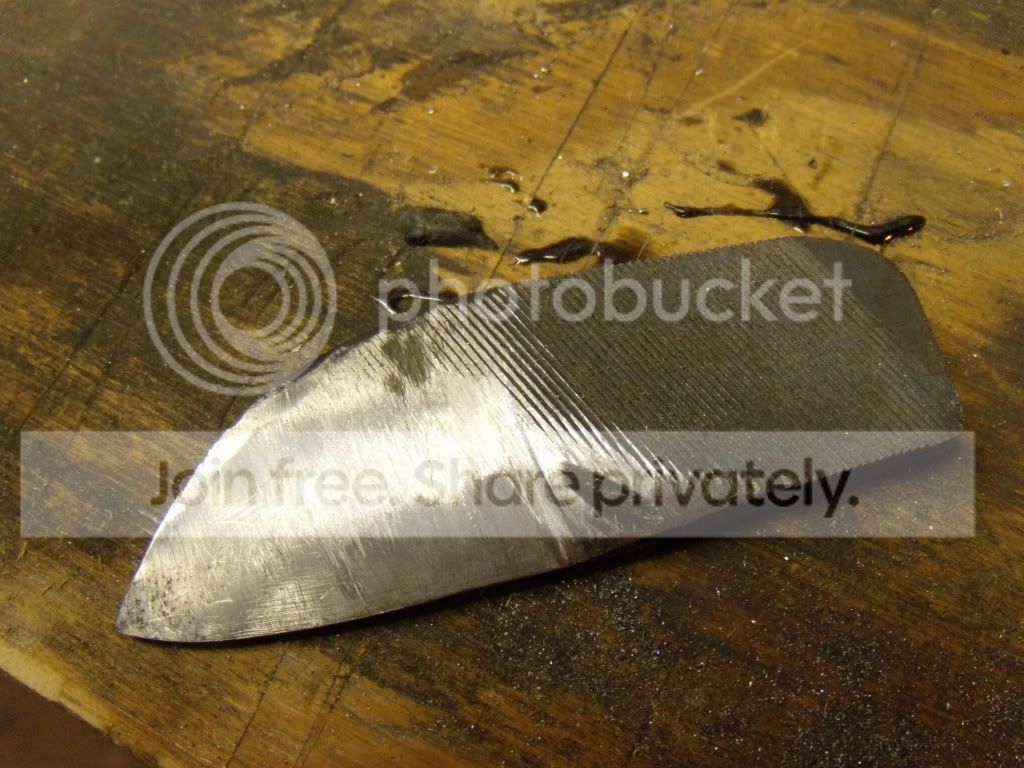
So I'm getting close to finishing my first knife.
It's a stock-removal from a Nicholson file.
I have it cut out and the primary bevel ground.

So what I'm wondering is:
A. How do I grind a consistent secondary bevel to make the final edge?
B. What do you think is a better rust inhibiting finish--Blueing or a patina (mustard or chemical)?
C. My thought for handle material is red oak with brass pins--is this an ok wood for a handle, and is this a wood that needs to be stabilized?

My apologies if much of this has been covered but I don't have access to the search function.

Cheers
-Ronan
 
Last edited:
Hi Ronan

Well first of all there is a couple of diffrent way's to grind the secondary bevel i try and get the thickness of the blade edge down to .15-.20 thousandths of an inch which is about the thickness of 4-5 sheets of printer paper. Then use slack belt 220 grit and put on the secondary bevel till you have a burr along the blade edge then go to a bench stone. Sec. on my carbon steel blades i put a coat of car wax on the blade after your finished sharpening and everything is complete its the last step, Its will prevent rust better than anything ive found. I don't use blueing of patina's on my blades so can't help you there sorry. Red oak is ok ive used it, it's very grainy and porus, when finishing unstabalized red oak sand down to 220 grit then wet the wood it will raise the grain and let it dry for a few min then sand down to 400 grit that will give you a nice smooth handle, then put a coat of tung oil on let it dry and re aplly until it won't soak up any more. Then take some steel wool and lightly sand you can do this in between coats of oil. Anyways that's how I do it.

Take care for now

Daniel Stevens
 
Well first of all there is a couple of diffrent way's to grind the secondary bevel i try and get the thickness of the blade edge down to .15-.20 thousandths of an inch which is about the thickness of 4-5 sheets of printer paper. Then use slack belt 220 grit and put on the secondary bevel till you have a burr along the blade edge then go to a bench stone.

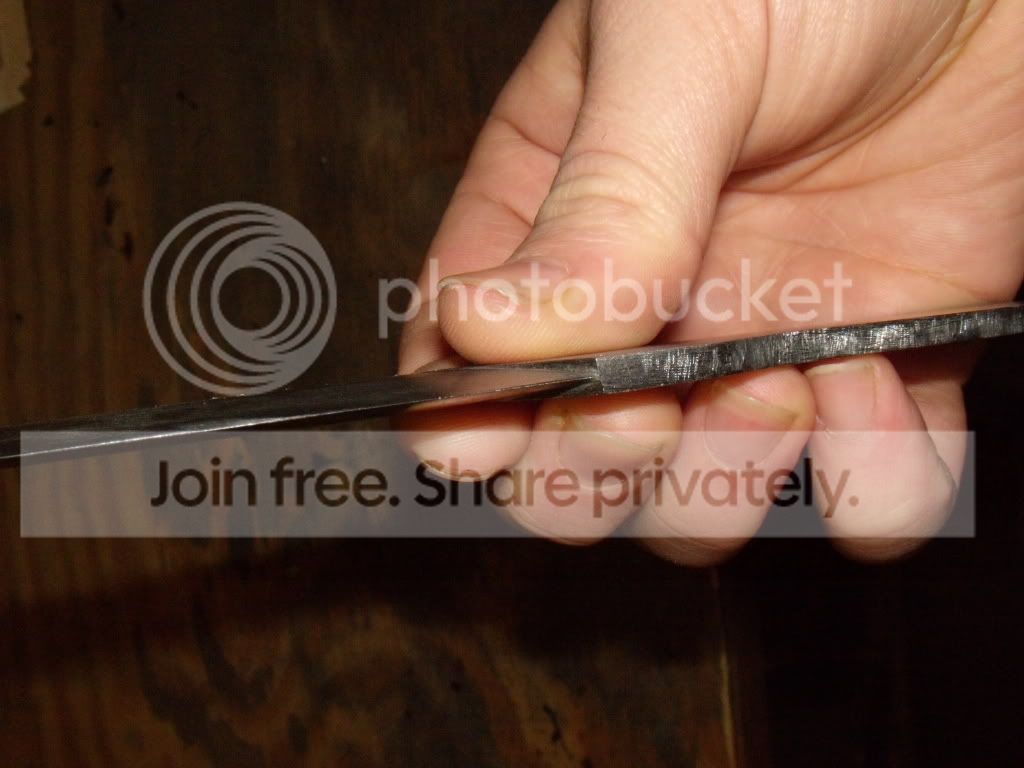
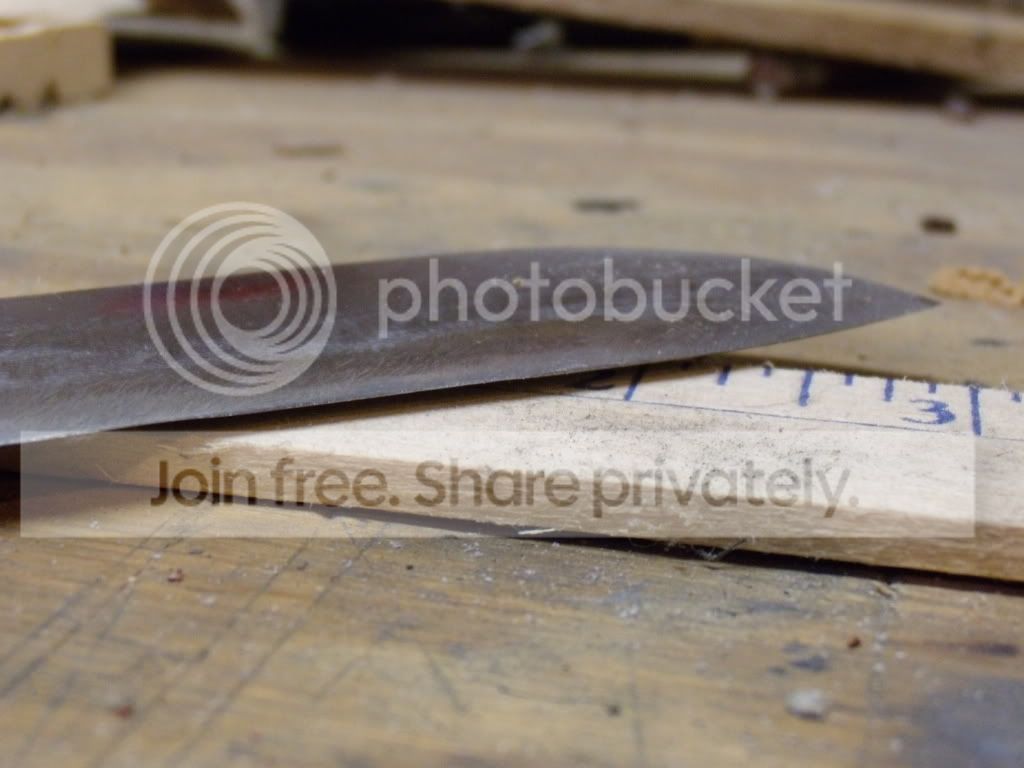
the blade edge as it stands right now is less than 4-5 sheets of paper; probably around 2 sheets. It however is just a scandi grind right now which is a good grind but not the desired end for this knife, I do have a slack belt but I'm just not skilled with it enough to put a consistent secondary bevel on with it.

Also anyone have any experience using a chemical/resin wood hardner ie. Minwax Woodhardner to stabilize wood for a handle?
 
I like to take the primary bevel right down to the edge, then set the secondary bevel as needed. Sometimes I use sandpaper wrapped around a brass bar or old file with the edges smoothed off, you have a lot of control that way. This works for either flat or convex grinds and gives a nice smooth-cutting blade.

Cold-bluing and mustard patinas both give some protection from corrosion, I couldn't really say which is "better." Mustard is a little easier to get a smooth, even finish with in my experience.
 
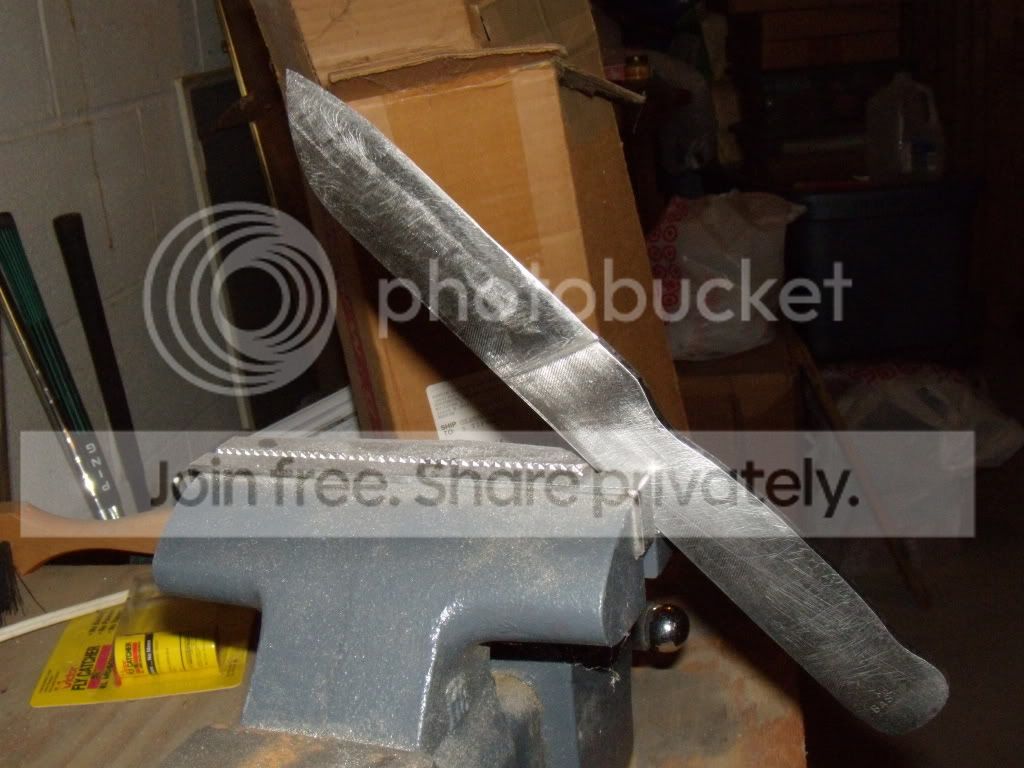
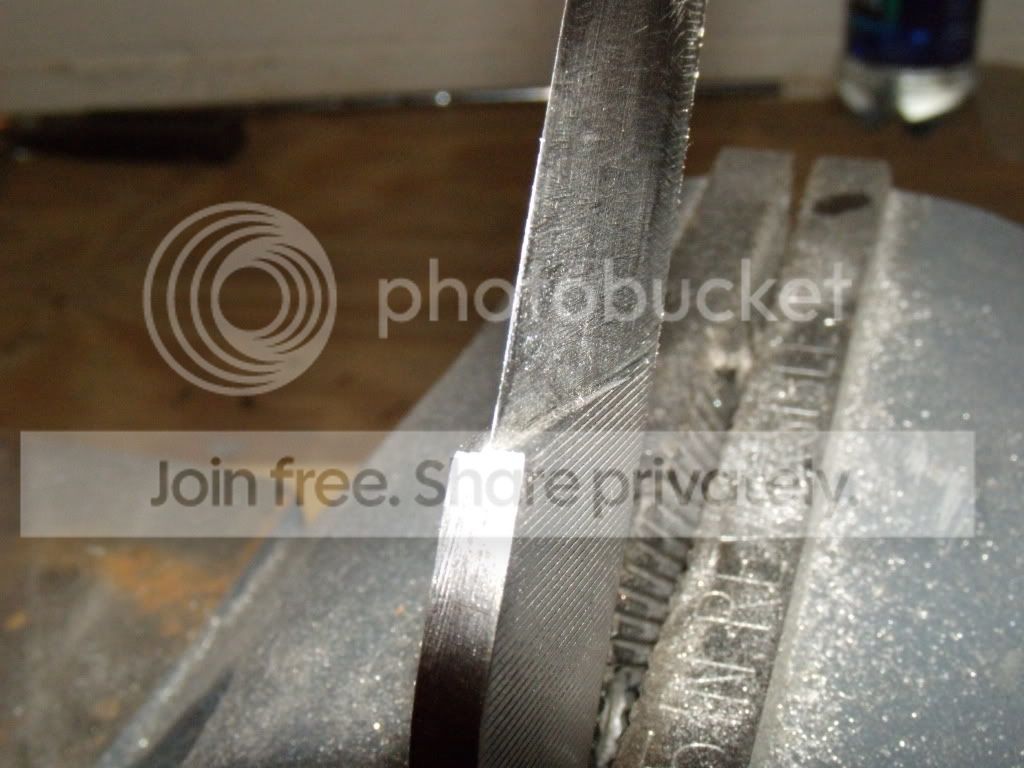
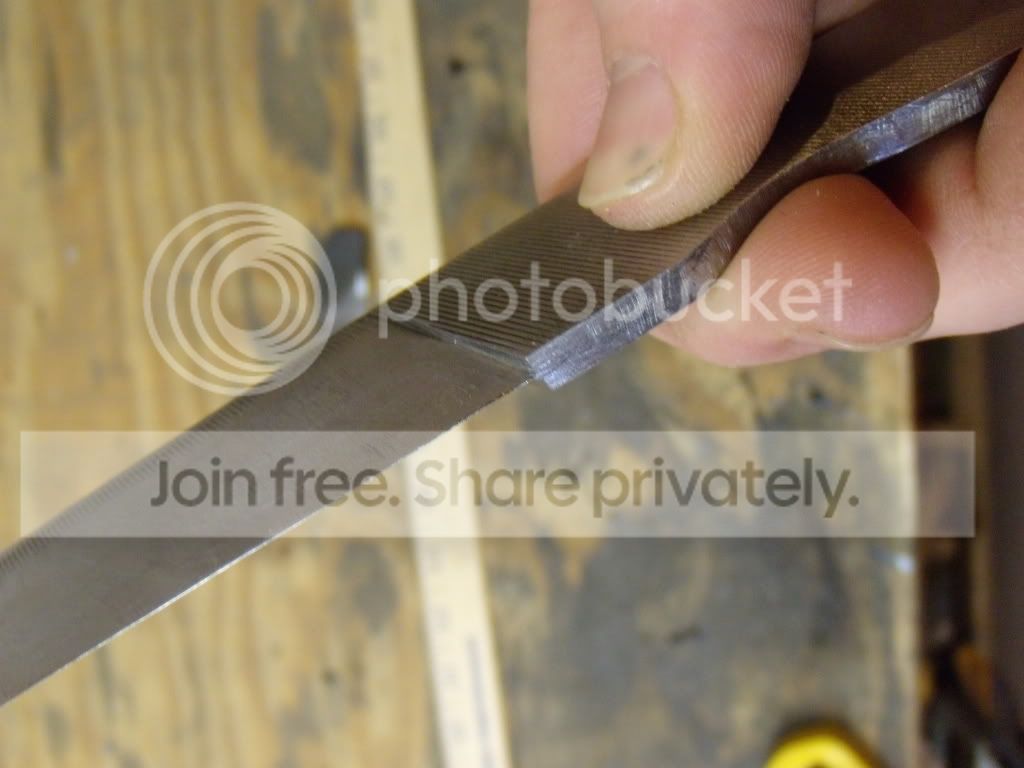
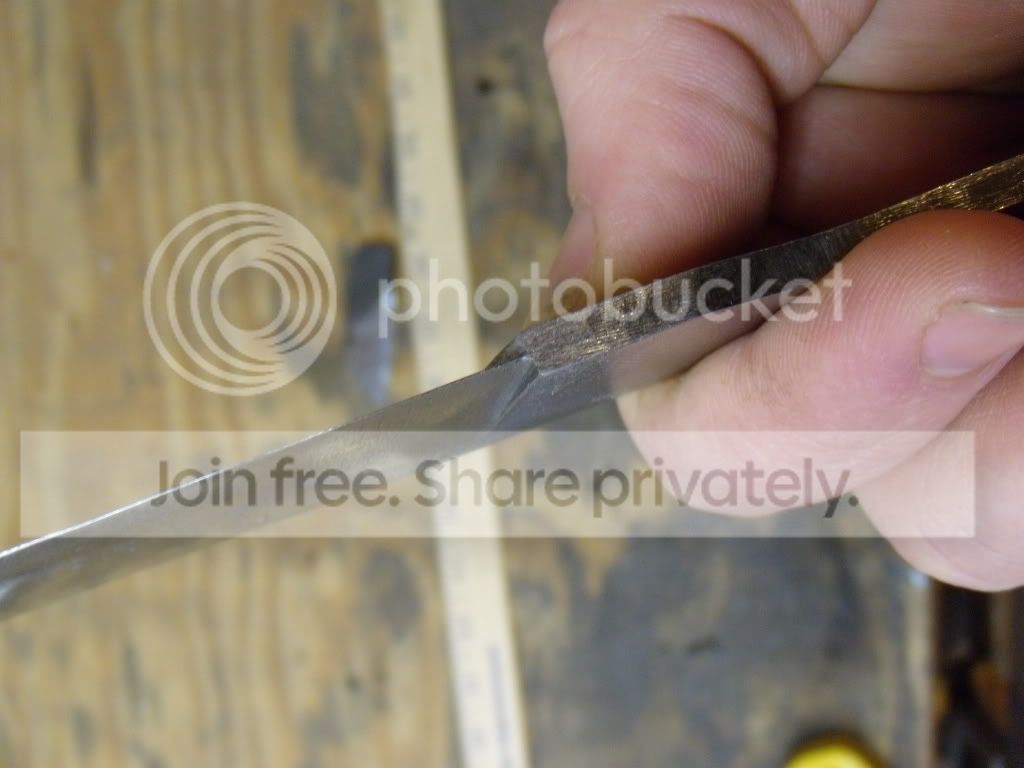
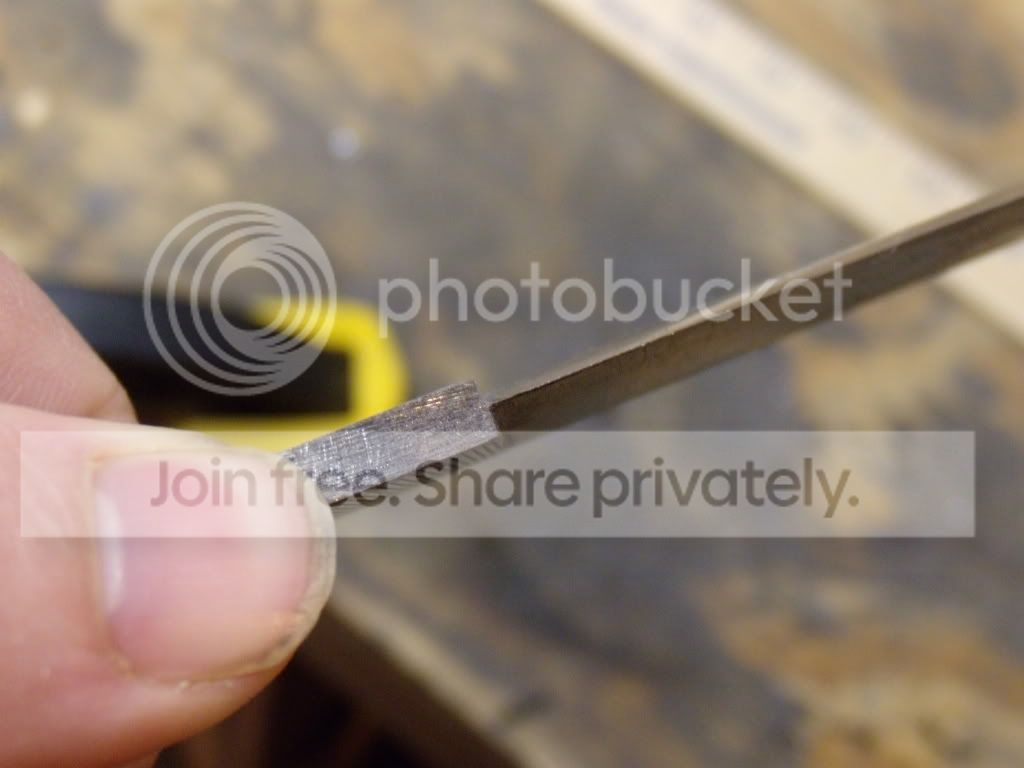
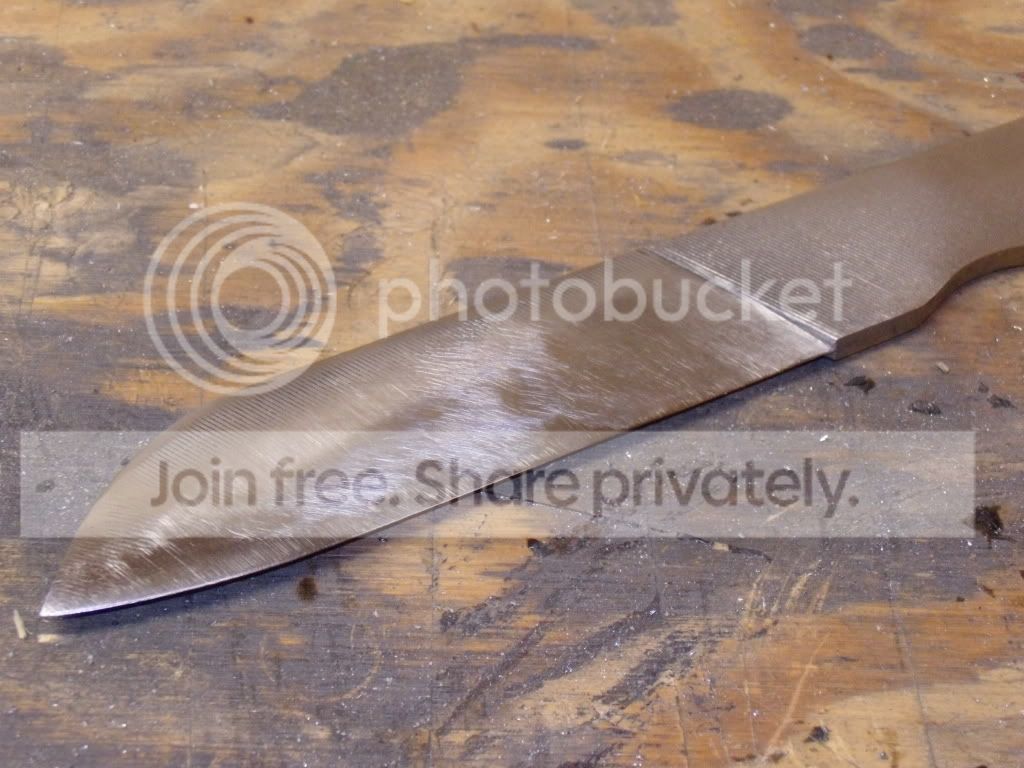
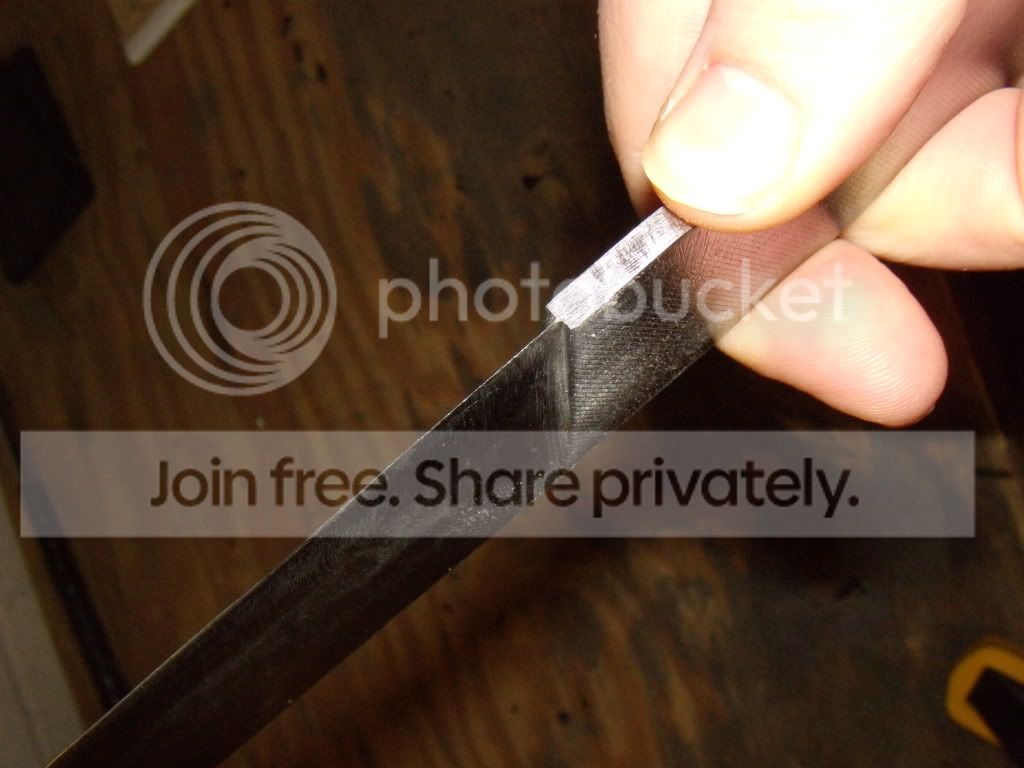
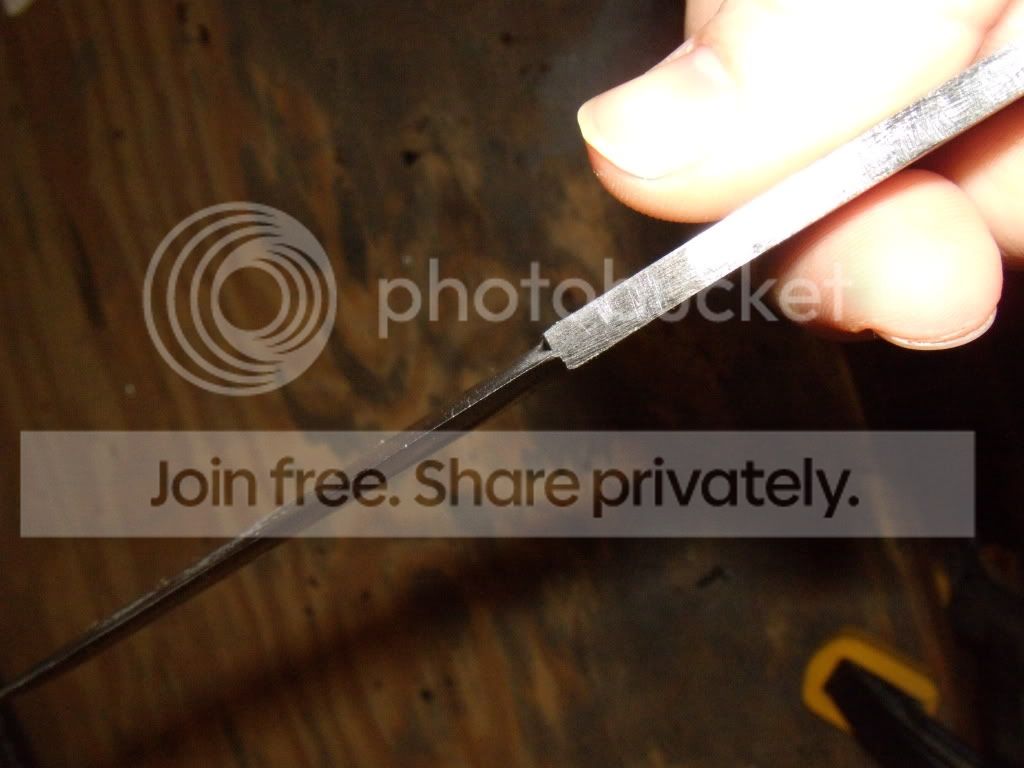
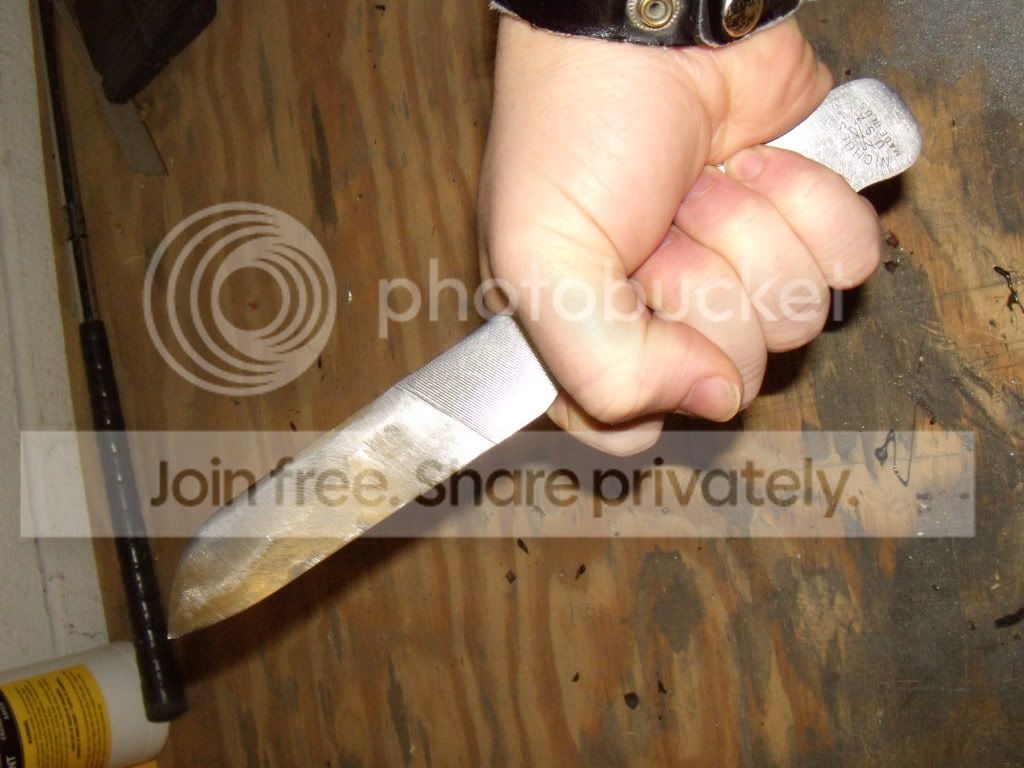
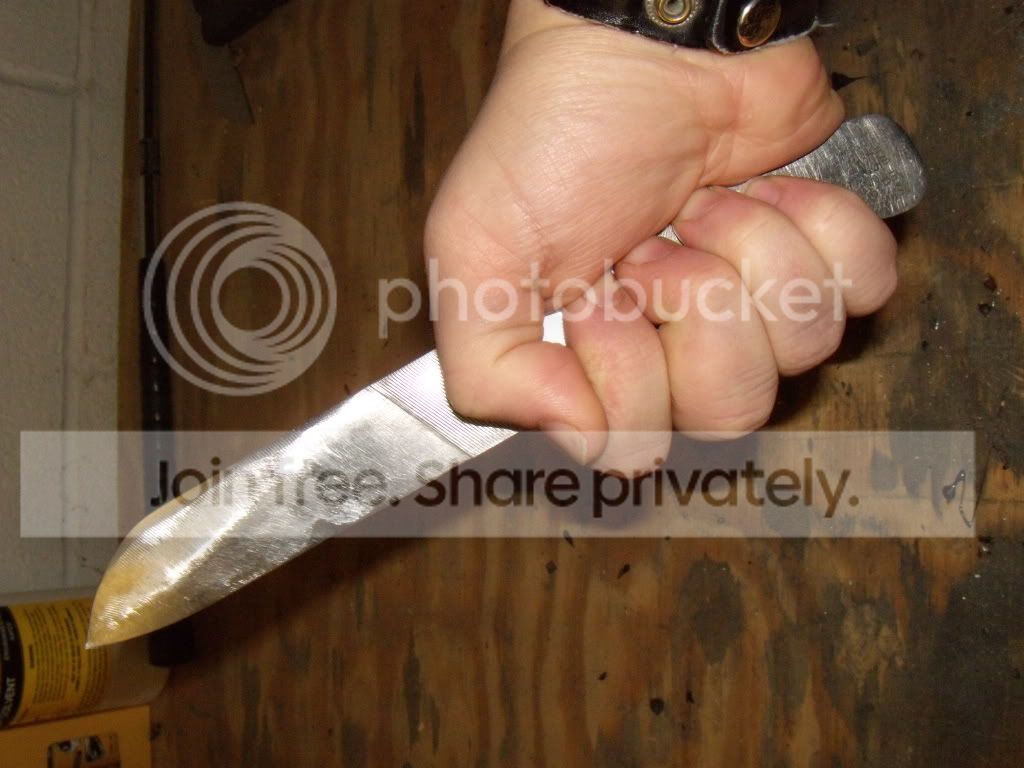
So this is where I'm at so far
DSCN0515.jpg

DSCN0545.jpg

DSCN0523.jpg

DSCN0530.jpg

DSCN0531.jpg

DSCN0533.jpg

DSCN0566.jpg

DSCN0567.jpg

DSCN0568.jpg

DSCN0521.jpg
 
DSCN0561.jpg

DSCN0562.jpg

DSCN0565.jpg

So that's where I'm at. What do you guys think so far? :thumbup: :thumbdn: Any suggestions for where to go next?
 
That's a darn good start. Do some draw-filing to get those bevels nice and clean, right down to the tip. Use whatever you got to make it nice and smoooooooooooth. Your plunges aren't perfect, but they're pretty good... start from there and even everything out towards the tip. Try for a full distal taper from ricasso to tip, I promise your knife will balance and cut better if you do. Basically, keep working on it till it looks even and cuts well :) Pay attention and keep your bevels the same on both sides.

Take your time and when you think you're done, cut some stuff with it, using the whole blade. Review it for yourself, just like you would a knife you bought. If it doesn't cut well, keep easing it into a "fluid" shape. You'll not regret doing it right, even if it takes you a while.

Same goes for the smaller piece... I like the fact that you're making use of every little bit! The "steel gods" smile upon that.

Did I mention, take your time? ;)
 
Last edited:
That's a darn good start. Do some draw-filing to get those bevels nice and clean, right down to the tip. Use whatever you got to make it nice and smoooooooooooth. Your plunges aren't perfect, but they're pretty good... start from there and even everything out towards the tip. Try for a full distal taper from ricasso to tip, I promise your knife will balance and cut better if you do. Basically, keep working on it till it looks even and cuts well :) Pay attention and keep your bevels the same on both sides.

Take your time and when you think you're done, cut some stuff with it, using the whole blade. Review it for yourself, just like you would a knife you bought. If it doesn't cut well, keep easing it into a "fluid" shape. You'll not regret doing it right, even if it takes you a while.

Same goes for the smaller piece... I like the fact that you're making use of every little bit! The "steel gods" smile upon that.

Did I mention, take your time? ;)

Oh I'm taking my time its taken months just to get to this point. I'll try to clean up the plunges a little more. As far as doing a full distal taper I'm a little apprehensive about that as the intended use for this design is hard use outdoor/bushcraft and would worry about tip strength.

As far as the bevels and overall evenness go I think I'm doing pretty good on in just feeling along the blade it feels smooth and symmetrical.

As I've been doing my filing and grinding I cover the blade with a black marker and as I remove material I can see if there is any marker left anywhere and if there I know I need to even it out some more and it all pretty much comes off right now.

Once again thanks for your and anyone else's advice; and I promise to keep adding pics as I go.
 
Anyone else have any advice for putting on a good consistent secondary bevel? I was thinking something around 25°.
 
The magic marker trick is a good one, I prefer layout dye from a spray can. It doesn't seem to smear off as easily as marker sometimes does.

As to your secondary bevel, you could use a sharpmaker or similar deal where the sharpening rods are set at the angle you want.
 
I thought about something like a sharpmaker or the Spyderco equivalent; it would give me a good excuse to buy one as I have been wanting to for awhile. Is the coarse stone that comes with them sufficient enough to remove the steel to put on a bevel?
 
That isn't a scandi grind.

Unlike a scandi, I'll bet that will actually cut...

It is looking a little rough. But first knives frequently are. And first knives are frequently too thick behind the cutting edge, fortunately yours appears good. It isn't going to win any beauty contests, but as long as you didn't overheat it grinding it (drawing back the temper) that will probably work well as a knife. :thumbup:
 
Back
Top