Finishing Walnut Scales

Joined
Jan 2, 2010
Messages
5
I am working on my second knife and I used quarter-sawn walnut for the scales. It's not been stabilized, I just pulled it from the scrap pile. I epoxied the scales on and I also pinned/peened them with brass pins. I decided to try and brush on superglue for the finish. I've probably got about four layers on it and I'm noticing a whitish film coating it. I know that CA/superglue will make a fine finish, but did I use wrong type of superglue or do I need to buff it out later. I'm thinking about sanding it smooth and using spray laquer or wiping varnish...but it may come out of it if I build a few more layers, just need a professional opinion.

Thanks,
 
Not sure my opinion is "professional" but here goes....I would not use laquer because it can gum up and break down with moisture. I have no experience with superglue finish though a lot of guys use it...I wonder whether it would hold up in a wet environment.... I used it to attach fletching to my arrows but it did not perform well in the rain....I did put walnut on my last knife and for the finish I used mutliple applications of Danish Oil, buffing in between.....I do think a wiping poyurethane finish would work well...I use it on restored split bamboo flyrods and it works great.
 
I second the danish oil. Keep applying coats till the wood won't take any more. Aloow to dry a day or so then dry buff.
 
Your problem is too much super glue. 1 or 2 coats is all you need. Personally, I prefer polyurethane. Its easy to apply, water proof, has a good grip, and looks nice. It can really bring out the color of the wood. You can buy it in a spray can for easy application or brush it on. Apply 3 or 4 coats, then using 1000 grit sandpaper you can wet sand it nice and smooth and buff it with a sheeps wool buffing wheel for an excellent finish.
 
i simply sand to smooth finish with autobody sand paper. fine grit.

i like to use Linseed oil, boiled or raw. either is good for a final coating
raw soaks in well.
walnut is tough wood and i don't see a need for a hard finish.

many fine butcher knives had walnut handles in the old days,
all good

Oupa posted a tutorial on how to do a Super Glue finish
please post a photo of your knife
buzz
 
You might look at some pen making sites and find the CA glue they use. It typically comes in 3 consistencies, thin, medium, and thick. Was the super glue you used a gel type, or was it runny like water? I have made a few pens and when i used super glue, i started with the thin and it would soak into the wood like water. A couple of coats of thin, then i would come back with a coat or two of medium. Thin coats are always better than thick. One issue you may have with a CA (super glue) is that you are brushing it on. Brushing it can add to the air bubbles in the CA glue and also cause the cloudy finish as well.

Tung oil, or BLO (boiled Linseed oil) would be good to put on the bare wood. They will help bring out the beauty in the wood. Then put what ever finish over the top, such as poly or CA. Make sure you allow the oil to cure first (BLO can be 5-7 days and i think tung oil is the same).
 
You still have to sand the excess CA off with fine sandpaper and buff. you are looking for the penetration not so much building up a film.
 
I used 4 coats of brush on thin crazy glue on my walnut handle and it worked out fine. I also put 2 coats of tung oil on it first to bring out the grain a bit. I sanded after the second coat with 800 grit then gave it a light wipe with acetone, then two more coats another wipe to smooth things out and sanded with 800 and 1000. Heres what I ended up with
DSC01023.jpg
 
I never thought of acetone...I'm working on pics and should have them up in a minute.
 
Thanks Gixxer and Unky...

I'll read about the burnishing in a minute but depending on what I read, I think I'll just use the acetone to get as much of the finish off as I can at this point and then buff the wood. I'm more of a woodworker and the point there is to build up a finish that you can then wetsand to a nice finish...it never occured to me to just buff the wood nice and pretty.

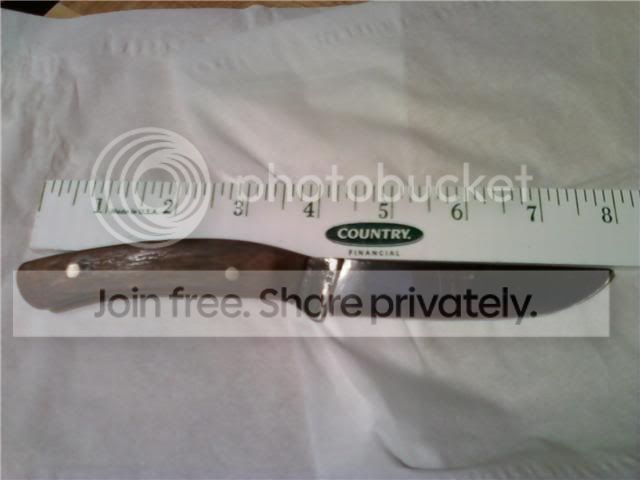
Here's a poor picture of the knife (cell phone - I can't find the good camera)
It was forged from a coil spring that is found on large trucks and is used as additional support on the shock absorber (or strut or whatever). Also, as previously mentioned the scales are QS Walnut.

knife2.jpg


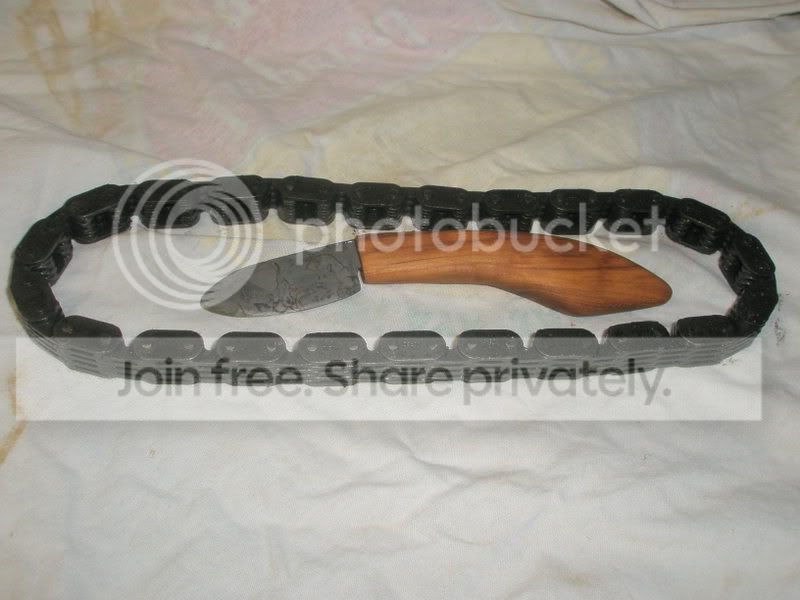
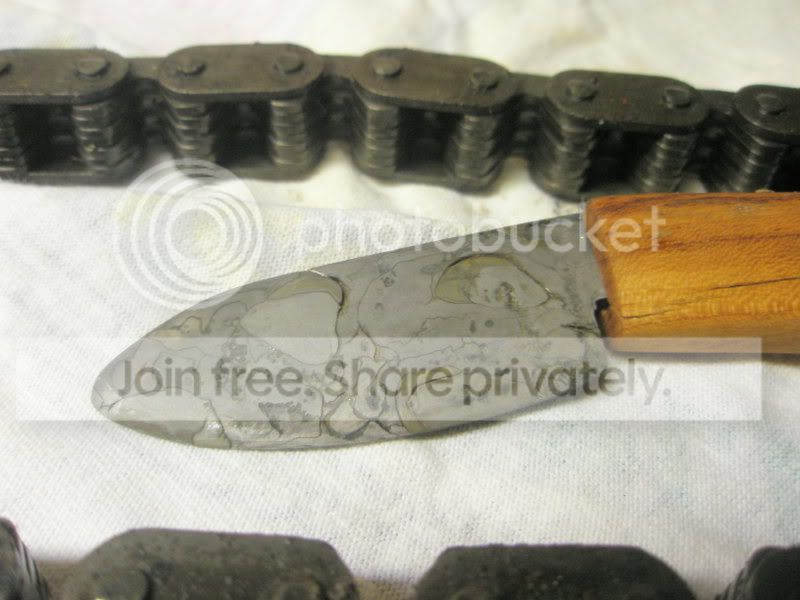
Here's a bonus picture of my first completed knife. It's my first attempt at damascus and I used a timing chain (similar to the one in the pic). The handle is cherry finished with BLO (Boiled Linseed Oil)

P1300001.jpg


P1300002.jpg
 
Bruce bump (was it?? don't remember) actually uses debonder (same thing more or less) and burnishes in the CA then sands and buffs. He posted a while back with a tutorial using buckeye burl.

FOUND IT!!

The page is long with lots of pics but he shows how he does his CA finish.
http://www.bladeforums.com/forums/showthread.php?t=659442&page=2

Thats what I based my finish from. you have to go easy with the acetone because it will strip the CA off:o
 
If you start with an oil finish, you should finish with oil.
Any other finish (except wax) on top of oil will not adhere properly.
 
I was using polyurethane on one large hard use knife, and it seemed to be wearing quickly I stripped the finish and now have super glue sanded to 2000grit, feels nice but we will see. Next will be an oil finish if this doesn't last, at least it can be re applied over the years without much trouble.
 
Back
Top