First Blade, need some help

Joined
Jul 11, 2015
Messages
13
Hey guys,

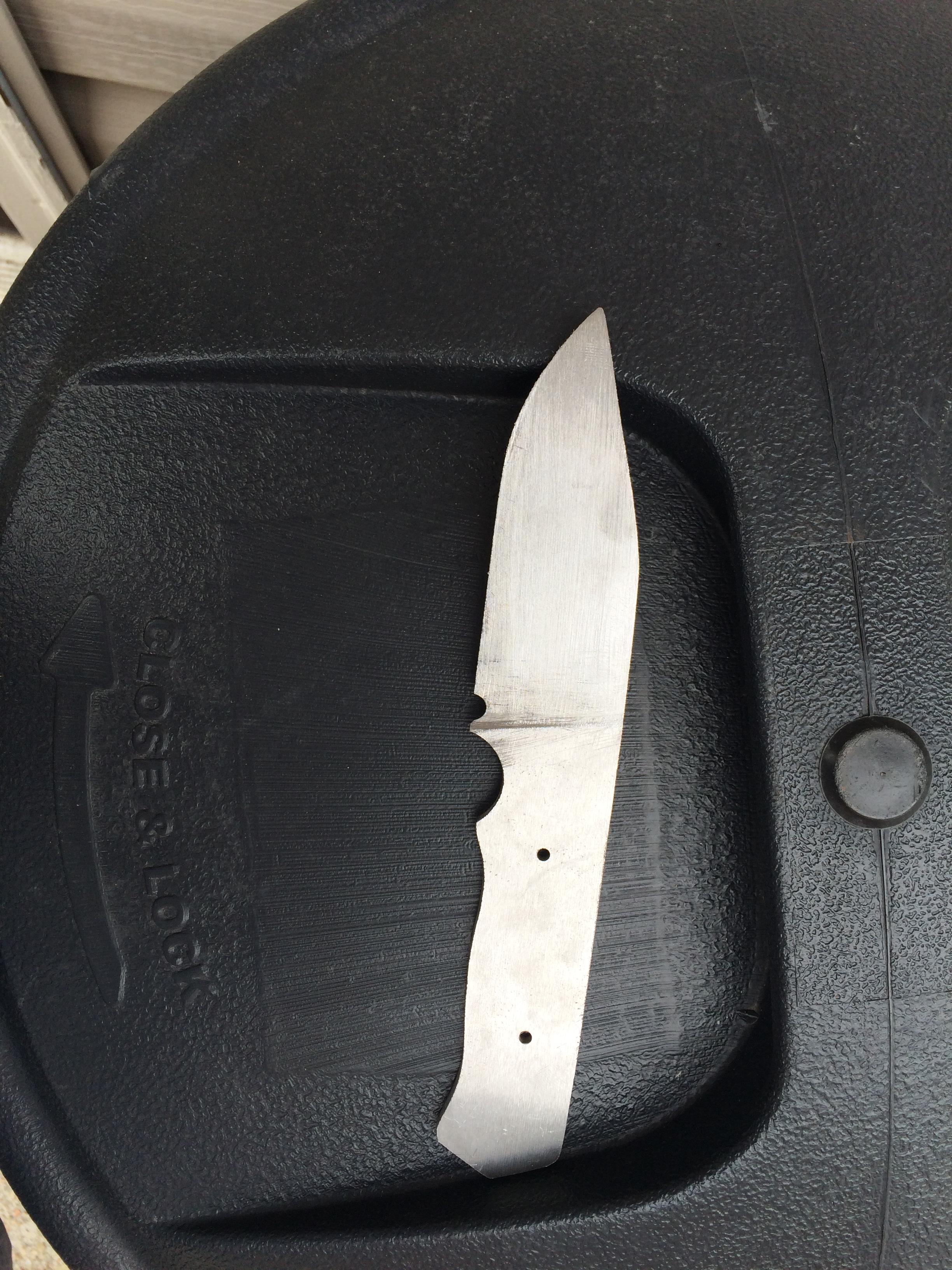
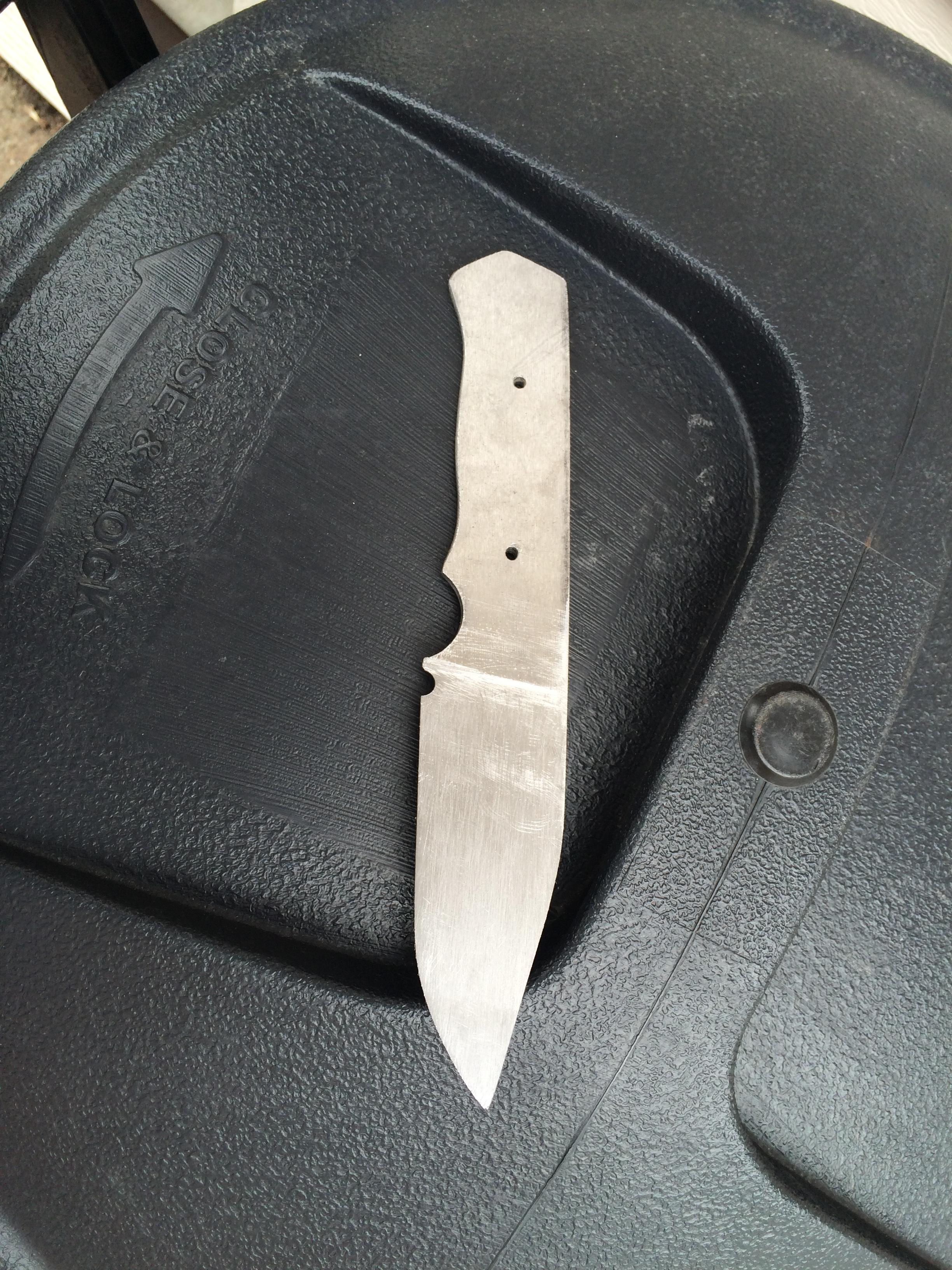
I am in the middle of making my first blade but hit a spot where I felt I could use a little constructive criticism... This is a 4" hunter/outdoors blade made of O1 that I'm making entirely with hand tools (except an electric drill). I JUST finished filing the bevels using a jig similar to what Aaron Gough uses to get his FFG bevels. I'm aware that I have a lot of finish sanding to do but this is straight off the file. The issues I am having are:

1) My plunge line isn't super crisp. I'm not sure if this is something that I should keep attacking with the file on the jig or if it's just a product of doing it by hand and I should move on to sanding. Will sanding help these clean up at all?

2) I am having a hard time determining if my pin holes are even. In the even that they aren't, do i just move them and re-drill?

Any other feedback or criticism is very welcomed, like I said this is my very first knife and I want to do a good job.

Thanks in advance!

http://imgur.com/u4ZqQxk

http://imgur.com/of2k086
 
of2k086.jpg


u4ZqQxk.jpg
 
For your first this is very well done !! Continue with the same care and attention with sanding grits as fine as 400 or more before sending off to heat treat. Well done !!
Frank
 
You're doing a super job. Continue working with deliberation and care and you will end up with a very nice knife. I haven't used a jig like Aaron's but according to his design there should be a screw that acts as a stop for the file at the plunge line. That should result in a nice straight plunge line. Did you use a screw there? Was it solid or was it wiggling a bit? The plunge line can be cleaned up by using a file guide clamped at or just behind the line you have now. Then with a round chainsaw file you can carefully clean up the line. Sandpaper with help later to make it crisp.
 
How thick is the steel you are using and how thin are you on the edge of the blade? Can you show a picture of the front of the blade?
 
Looking good! Your pins are even from top to bottom and plunge to butt. Problem is your handle probably wont go all the way to the plunge. Draw out the front of your handle and then even up your rear pin.
 
google "file guide", Bruce Bump make those, but you can make yours, even with mild steel stock to help when cutting plunges.
Also a simple vise could be used for this purpose.
I cut mine with a chainsaw file, then i switch to a flat file with a safe edge and a killed corner.
 
Hey guys,

I am in the middle of making my first blade but hit a spot where I felt I could use a little constructive criticism... This is a 4" hunter/outdoors blade made of O1 that I'm making entirely with hand tools (except an electric drill). I JUST finished filing the bevels using a jig similar to what Aaron Gough uses to get his FFG bevels. I'm aware that I have a lot of finish sanding to do but this is straight off the file. The issues I am having are:

1) My plunge line isn't super crisp. I'm not sure if this is something that I should keep attacking with the file on the jig or if it's just a product of doing it by hand and I should move on to sanding. Will sanding help these clean up at all?

2) I am having a hard time determining if my pin holes are even. In the even that they aren't, do i just move them and re-drill?

Any other feedback or criticism is very welcomed, like I said this is my very first knife and I want to do a good job.

Thanks in advance!

You have done a really nice job for your first attempt. Even if it was your 5th this would be pretty darn good.
You seem to have a good eye for design and style. As for your pins, there is a practical aspect and an aesthetic aspect.
For me I have to draw them out on the blade to get a feel for how it will look. Play with it a bit. You might cut some thin cardboard to mock the handle and try some different placements to see if something else makes sense. You might even try 3 pins.

Your "grind" looks pretty good man. The only thing I can see that might give you some challenge is it looks like you bit into the handle area a bit on your lower plunges. Hard to tell from the photos.
Hand sanding can do different things. It can crisp things up, or it can blur and blend. Use fresh paper always. Use crisp flat blocks.
It's probably not going to come out perfect, but it is going to come out nice.

Highly recommend Wheeler's sanding videos. I made a sanding vise based on his design and it is a huge help.

You are going to love a belt grinder when you get there, and by your style and skill so far, it looks like you should get there. :)
 

Attachments

  • SandingClamp1.jpg
    SandingClamp1.jpg
    36.1 KB · Views: 55
  • SandingClamp2.jpg
    SandingClamp2.jpg
    32.5 KB · Views: 43
thanks for the kind words. I did use a screw as a stopper, however, as I filed the file bit into the screw and was able to move a couple mm laterally. I kept turning the screw to minimize this but it wasn't exactly precise because the file ate through the screw pretty quick. The steel I am using is 5/32" O1 precision ground. The edge is approximately 1mm but I don't have calipers so I am really going off feel and the "look test". I will use a small chainsaw file to touch up the plunge and then move to sanding. Thanks for the advise guys!
 
thanks for the kind words. I did use a screw as a stopper, however, as I filed the file bit into the screw and was able to move a couple mm laterally. I kept turning the screw to minimize this but it wasn't exactly precise because the file ate through the screw pretty quick. The steel I am using is 5/32" O1 precision ground. The edge is approximately 1mm but I don't have calipers so I am really going off feel and the "look test". I will use a small chainsaw file to touch up the plunge and then move to sanding. Thanks for the advise guys!


If I remember correctly, Aaron grinds the teeth off the side of the file that will be contacting the stop screw. This way the file doesn't eat away at your stop and the plunge line doesn't drift. Take another look at the video.

https://www.youtube.com/watch?v=r9iNDRwwBQQ


Edit: Just watched the video again. He radiuses or knocks the corners off the file but doesn't specifically say to make a safe edge on the side of the file that runs along the stop screw. You should do that. Grind all the teeth off the file on the stop screw side then radius or bevel the sharp corners.
 
Last edited:
thanks for the kind words. I did use a screw as a stopper, however, as I filed the file bit into the screw and was able to move a couple mm laterally. I kept turning the screw to minimize this but it wasn't exactly precise because the file ate through the screw pretty quick. The steel I am using is 5/32" O1 precision ground. The edge is approximately 1mm but I don't have calipers so I am really going off feel and the "look test". I will use a small chainsaw file to touch up the plunge and then move to sanding. Thanks for the advise guys!

Get a cheap little bearing, put it over the screw and the file will roll across the file.
 
If I remember correctly, Aaron grinds the teeth off the side of the file that will be contacting the stop screw. This way the file doesn't eat away at your stop and the plunge line doesn't drift. Take another look at the video.

https://www.youtube.com/watch?v=r9iNDRwwBQQ


Edit: Just watched the video again. He radiuses or knocks the corners off the file but doesn't specifically say to make a safe edge on the side of the file that runs along the stop screw. You should do that. Grind all the teeth off the file on the stop screw side then radius or bevel the sharp corners.

I will have to invest in a crappy little angle grinder or dremel to do this but that should help out a ton
 
Better to remove the teeth on something flat like a hand held belt sander clamped upside down in a vise. Ideally you want a nice flat and smooth safe edge on the file. If you use a Dremel or angle grinder you may end up with a lumpy edge. That will keep you from making smooth accurate strokes with the file. See if there is a Harbor Freight store in your area. The tools are cheap, in every sense of the word, but can add valuable functionality to your shop.
 
You should watch nick wheelers plunge video here https://www.youtube.com/watch?v=fA4BVvfV3tQ then go and find his hand sanding 101 video and you should be good to go (actually just watch them all lol)

edit: even without the file guide and a radius on the steel it really helps clean everything up
 
Last edited:
Back
Top