First Knife- Criticism welcome

Joined
Jul 11, 2015
Messages
13
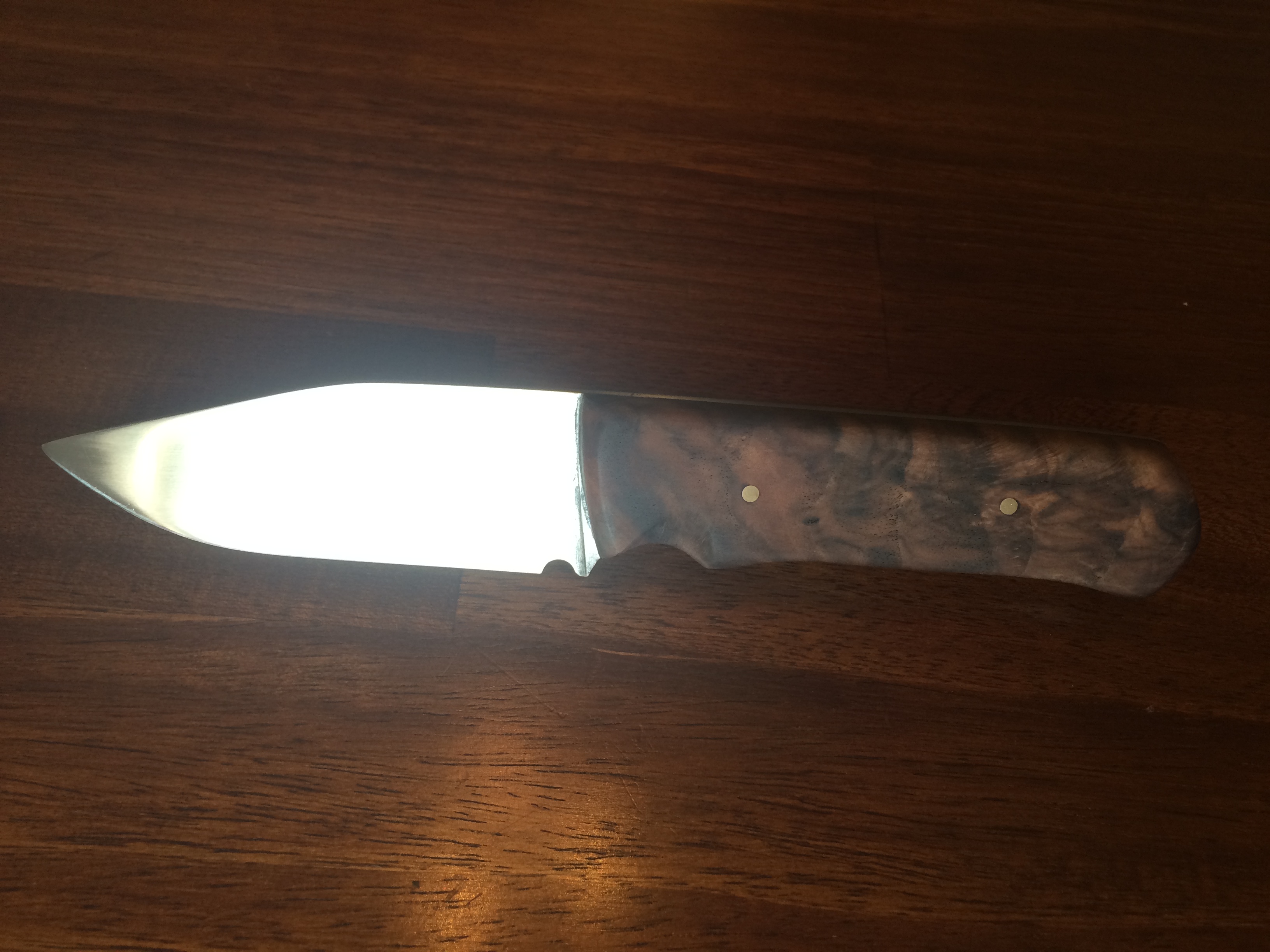
Hey guys, I just finished my first knife. It was made exclusively with hand tools, with the exception of a power hand drill. The steel is 1/8" O1 that I heat treated at home (I know, I know... probably not a perfect heat treat but I was looking to learn more about that process too) and the handle is figured walnut that I finished with tung oil. I am fairly pleased with it overall, but would like to hear anything you guys think I could have done better specifically. In general, how did I do?

Thanks in advance. I learned a lot that I can apply to my next blade. Let me know if you have any questions.

OAL: 8.6"
Blade Length:4"
Height: 1.5"

pgHsXmr.jpg


VmV3E3l.jpg


QmbpwEj.jpg
 
Last edited:
First off...great first! Some much more wise people than me will come on and comment, but thinks that stick out to me are the big shoulders in the handle at the front of the handle and the butt looks a bit asymmetrical. I look forward to seeing your future knives!
 
Nice work,

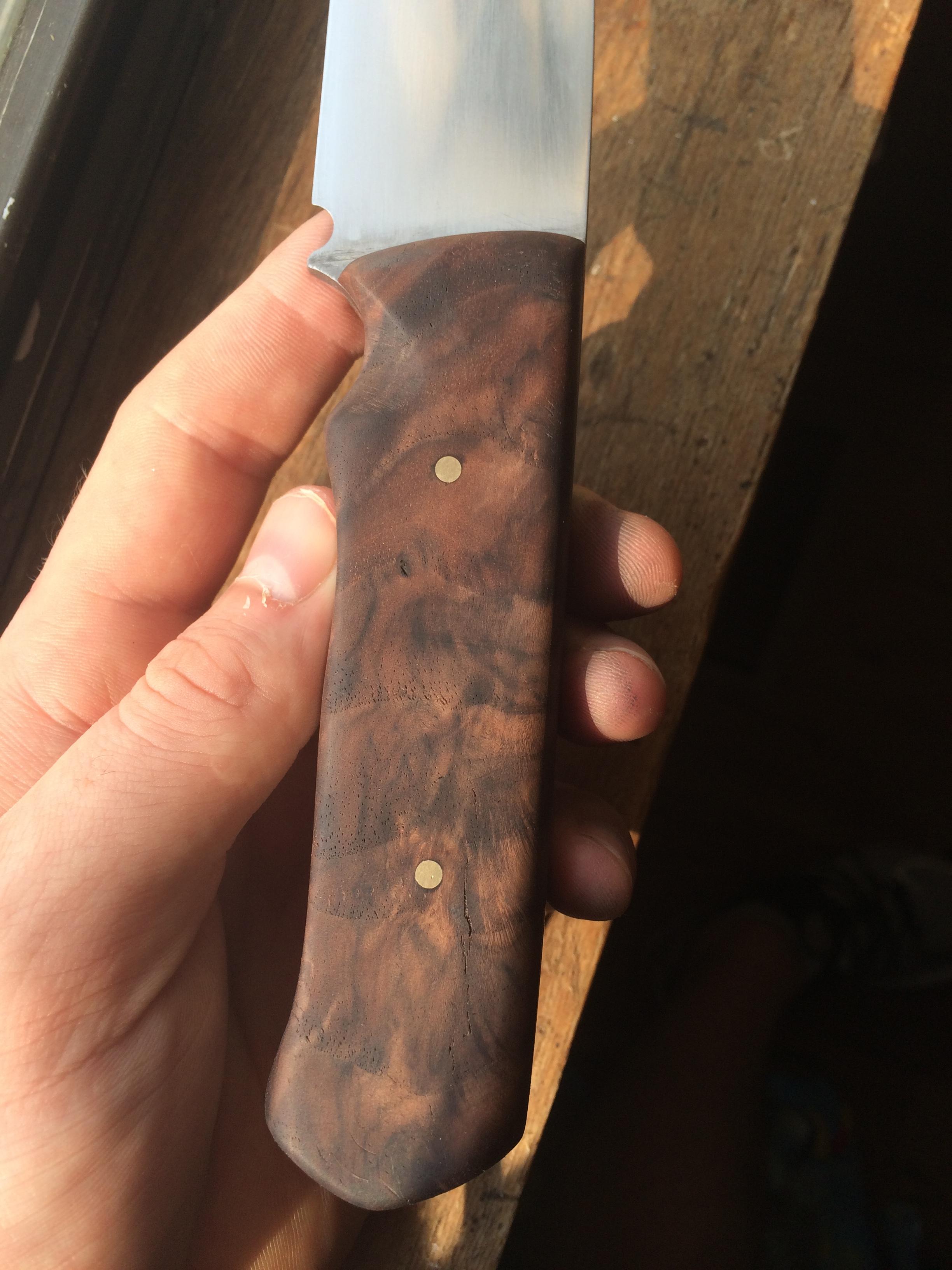
You see those holes and gaps in the wood? You can get some good super glue from a hobby shop and fill those holes let dry and sand again. I use a catalyst to set the glue so there is little waiting time for drying.

Once sanded it will look great
 
Welcome to Shop Talk, and congrats of the first knife.

Overall, it is a good job. There are things to learn and improvements to make, but all first knives have those.

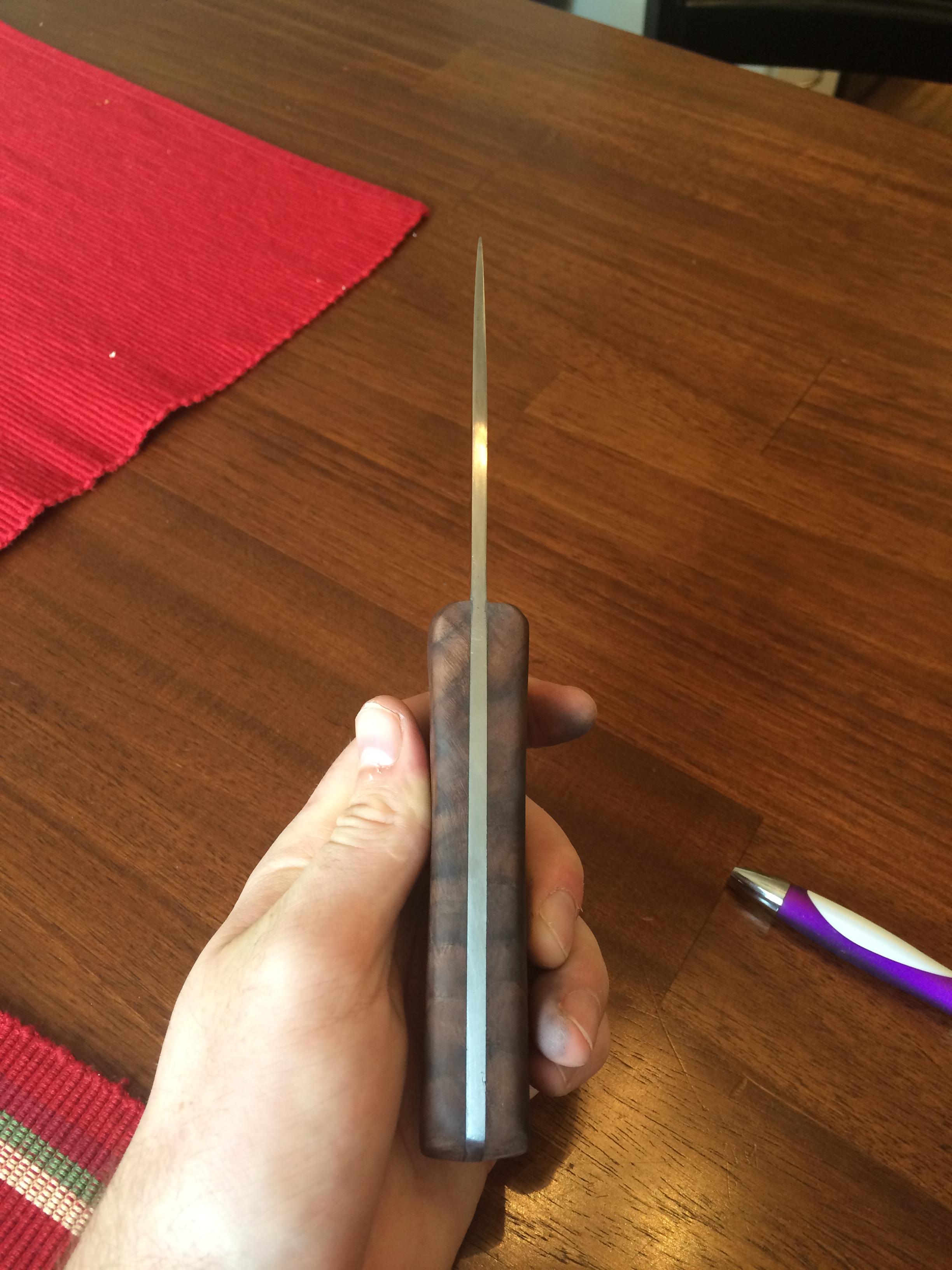
The walnut should have been sealed with sanding sealer repeatedly and sanded down as you worked the final grits. This would have filled the pores and set a base for a smoother and shinier finish. The handle also suffers from "Blocky Handle Syndrome", which is very common on first knives. The shape is still basically a rectangular block of wood with just the corners rounded. The proper shape is an oval or egg shape cross section. These changes are still able to be done on your handle.
The final handle comment is that it is rather massive and far too wide from spine to belly. It appears to be about 1" wide by 3/4" thick. That is rather beefy for a 4" blade. Bringing the bottom up in a curve from the butt to the front with the center of that arc about 1/4 narrower will greatly improve the look and feel of the handle. The finger groove with a pointed spacer is unassay and could be uncomfortable in use.
These changes are still able to be done on your handle.

Putting distal taper into the blade would have helped make it lighter and sleeker looking.

The 1.5" blade height is also a bit excessive. At 1.25" and adding a tad of a curve on the spine from butt to tip would make the knife much sleeker.

Looking at the side view of your knife, notice how the whole package looks squared off and "blocky". This effect is caused by the above things.

Keep at it and post a sketch of your next knife build before getting started.
 
I like the walnut. I just laminated some similar walnut to 2mm Osage orange strips to use on a knife in the future.
It seems to me that the handle runs too close tocthe plunge line and hides the ricasso.
A nice first knife.
 
That's a great job for a first knife! Keep it and don't give it away. (Give your next one away). It will be an heirloom, hopefully.

Stacy saved me a lot of typing because I have the same recommendations for improvement as he has mentioned. In addition, it would be much more aesthetic if the the blade bevel's plunge line was spaced away from the front of the handle a little bit more. This would give a bit of a ricasso. As it is now, the transition between the blade bevel and the tang are aligned with the front of the handle.

Post photos of knife #2 when it is completed.
 
Well it's a better First than mine was some 19 years ago! LOL Most of the suggestions about handle shape, Ricassio being hidden by the handle and the gaps in the Walnut that can be plugged by sanding grit and SG have been mentioned.

I personal don't think there is anything wrong with the height of your blade. I went from 1.25" to 1.50" for hunters at the heel and up years ago for my culinary knives and never looked back. Let your designs be purpose driven. Take that knife in hand and work everything you can from it.

The knife will talk to you and let you know where you can make the nest one better in blade design and handle shape.

Work with the knife, Analyze & refine. In a year you will pick that knife up and think about all it taught you! Now its time to go make another one.:):thumbup:
 
Back
Top