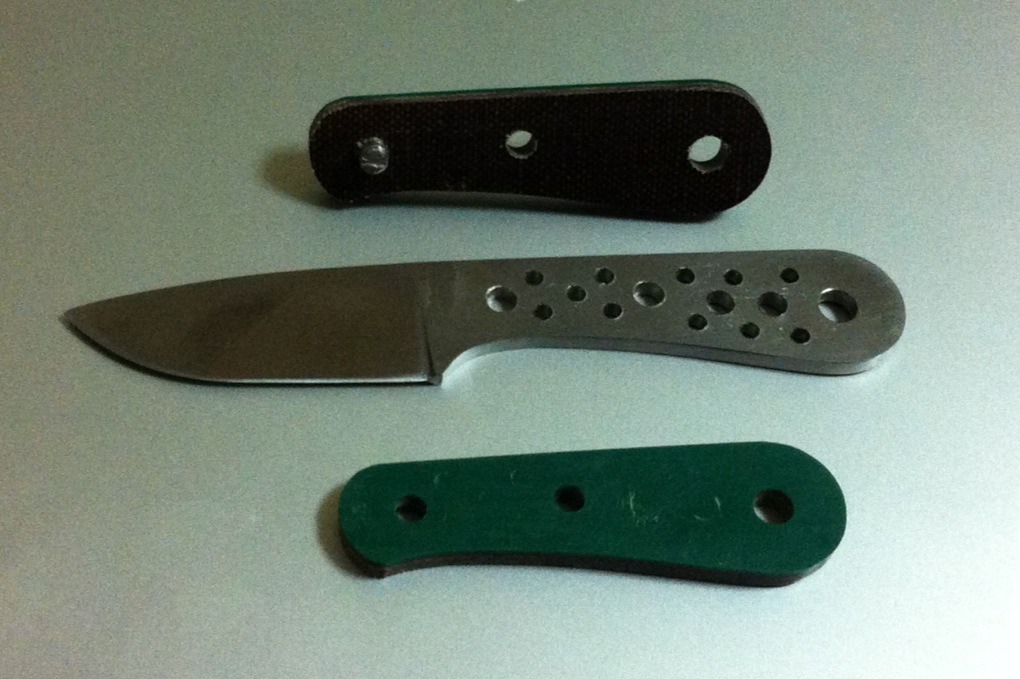
A little introduction first, I suppose. I used to make knives when I was in high school, 12 years ago or so. I actually spent a little bit of time back then in Ron Hembrook's shop, but not as much as I would have liked! I just learned that he passed away, which is sad. The last knife I finished was actually stolen from the high school art show. Oh well. I didn't actually like the design on that one anyways. Recently I got the bug again, and decided to give it a try. It was pretty difficult getting started since I now live in Korea. I had to have *everything* shipped to my friend in the States, and then he shipped it all together to me. I had tons of trouble ordering my magicut file, but that's another story...
I'll start with my question, and then put pics of my WIP.
I have read on here that you should keep the edge about the width of a dime before heat treat. My edge is about that thickness now, or probably thinner. I'm wondering how realistic that is when using only hand tools, though. Can you really take enough steel off after HT to get a decent edge with just sandpaper?
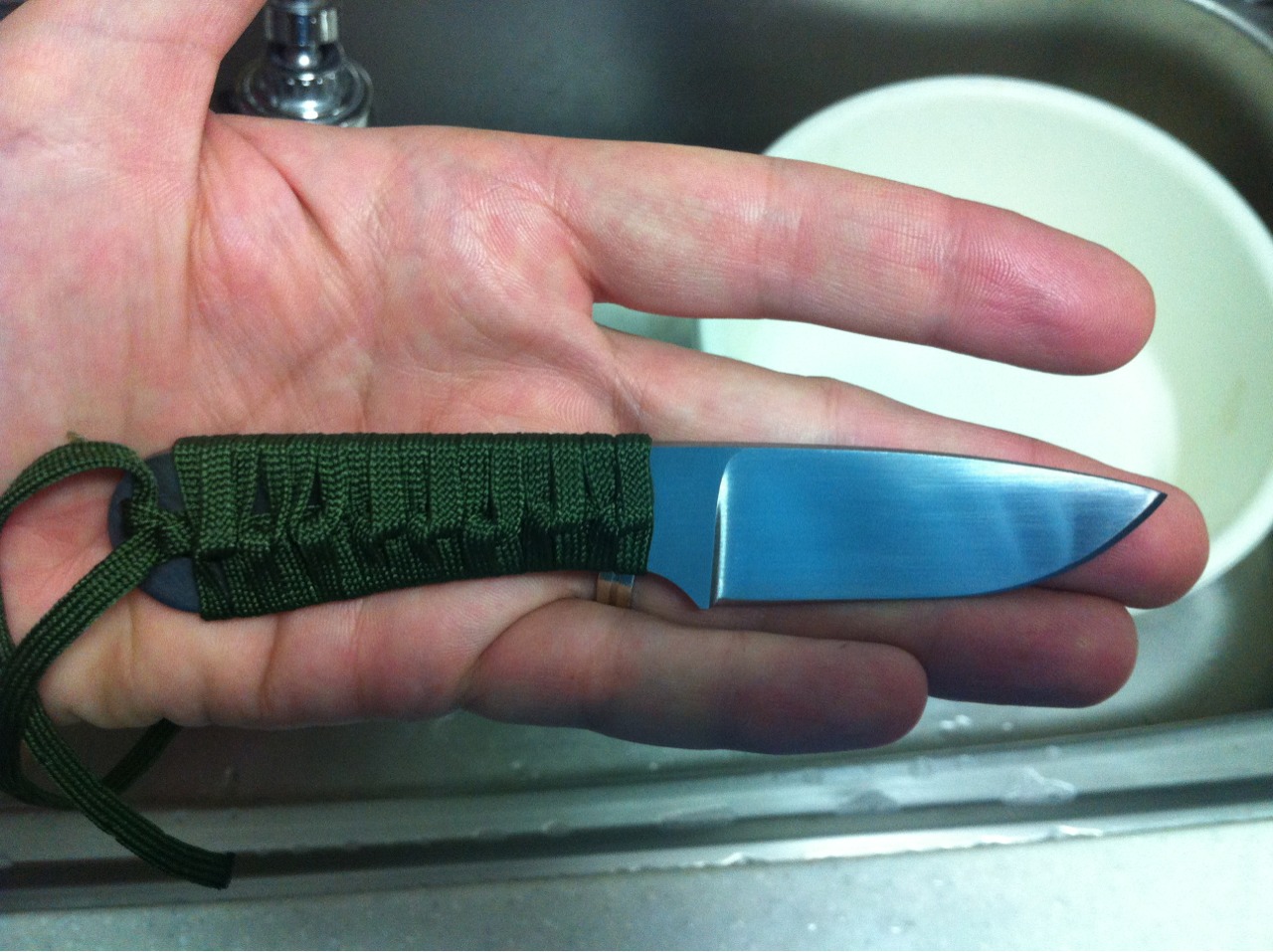
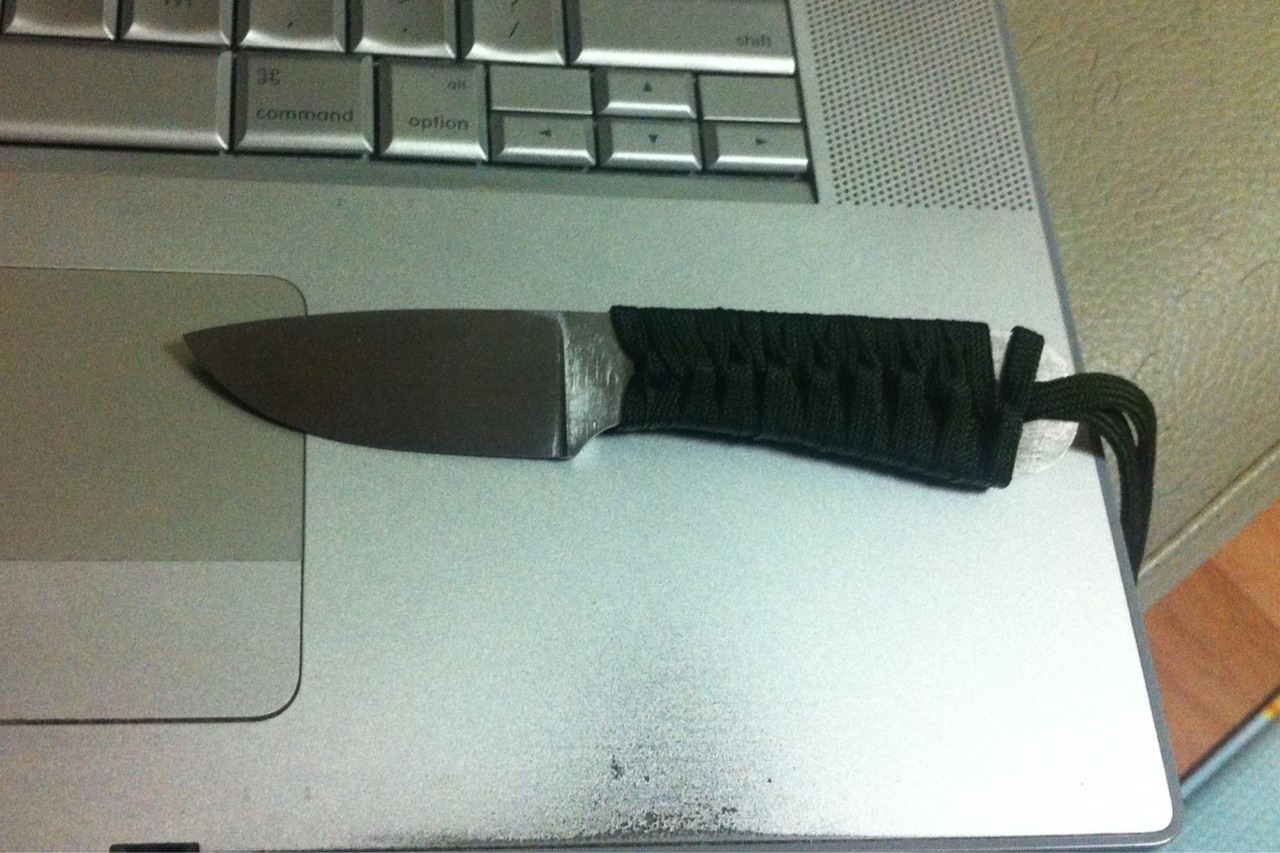
The reason I'm asking is because last night when I started hand sanding out my file marks I found a low spot near the ricasso (You can see it in the picture with the cord wrapped handle at the end of this post). An hour or more later with 120 grit and that spot was still there, but the other file marks were long gone. So I've decided to go back and file it out. But this got me to wondering how I will ever get my blade thin enough after heat treat, given how much time it took to make any progress on that low spot.
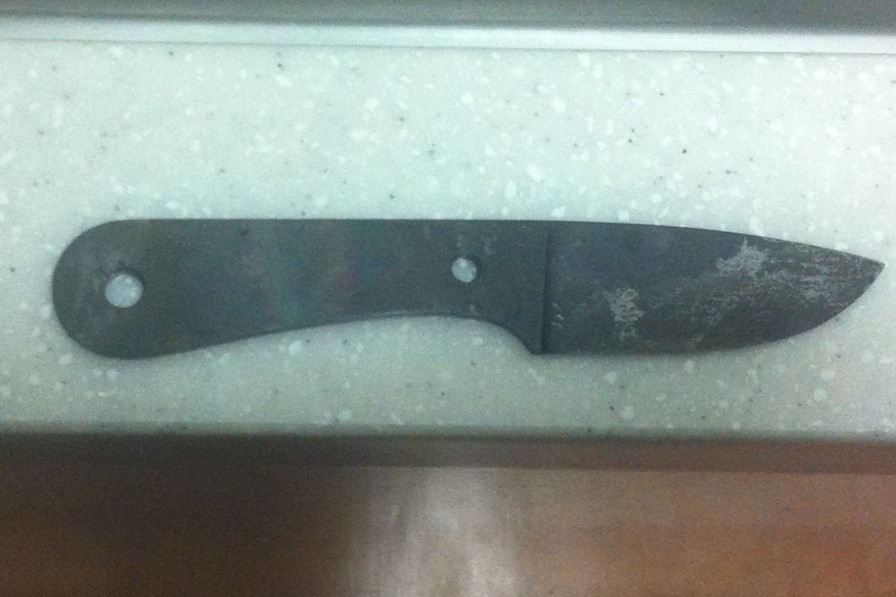
Here is a picture of the thickness I have now. The blade is made from Aldo's 1/8" 1084, which I then sanded down a bit when I took the plunge cut a little too high. Since it started out thicker than 1/8" it's probably around 1/8" now. Does that look okay for heat treat?
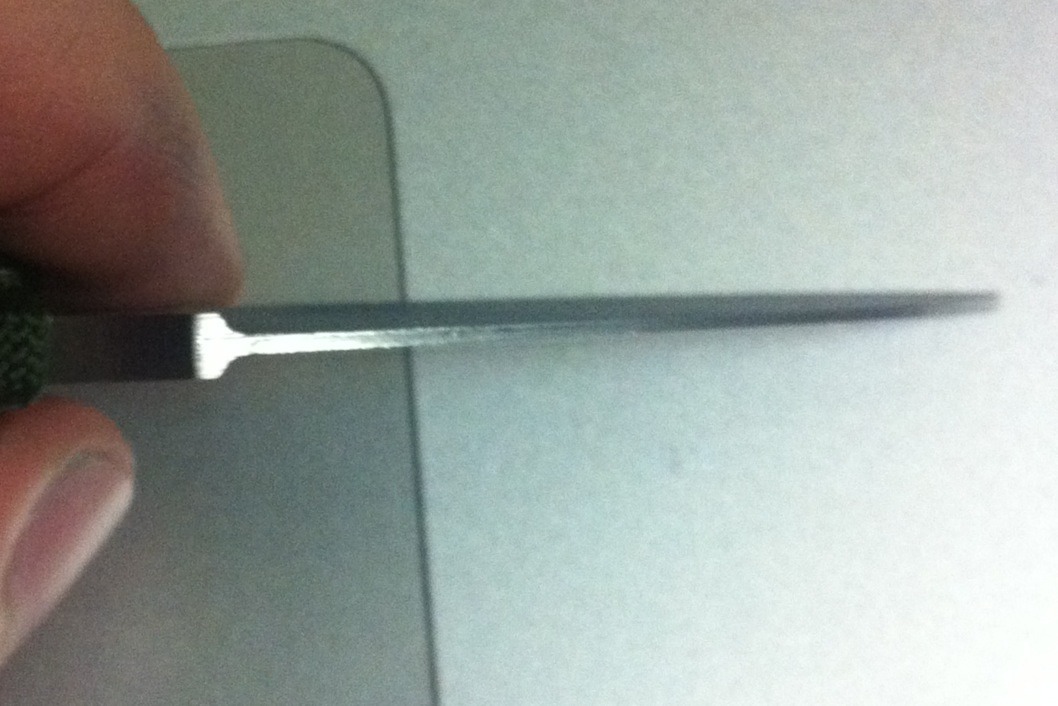
Having asked my question, here's how I got to that point.
I designed this using inkscape. It's not exactly setup for technical drawing, but I made it work. You can export to dxf if you want to have something waterjet cut, which I considered doing initially, since profiling takes so long with hand tools. I actually made several designs, and traced them onto cardboard, and finally wood. I tried longer and shorter handles, but this one felt the best, since the bulge sits near the center of my hand. My son likes playing with the wooden one.
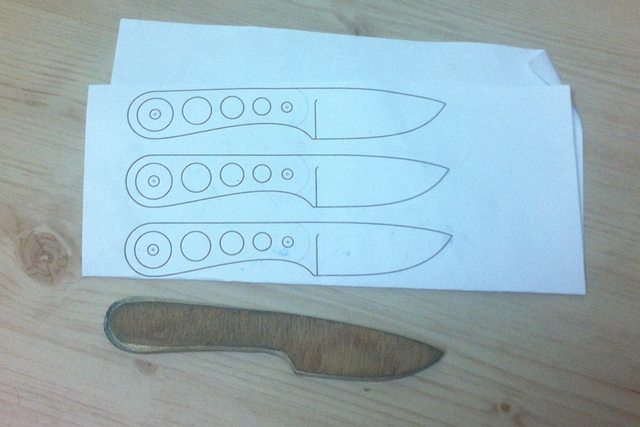
I taped a printout to the back of a picture frame and cut it out. Then I traced that onto steel. The dots are center punches for drilling (Next time I'm doing those one at a time. The holes ended up too far apart. *Drill*Punch*Drill*Punch*...)
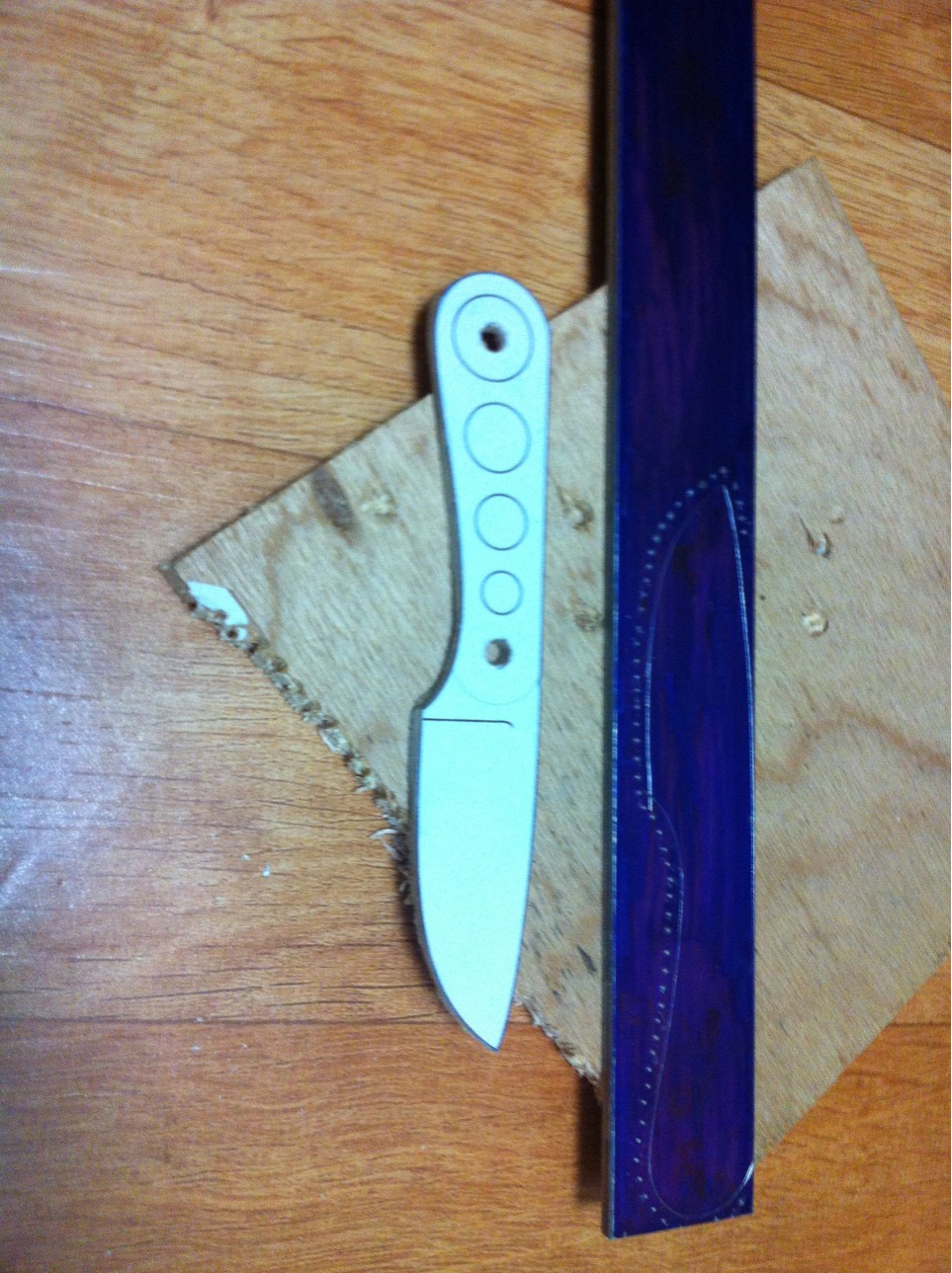
Partially cutout
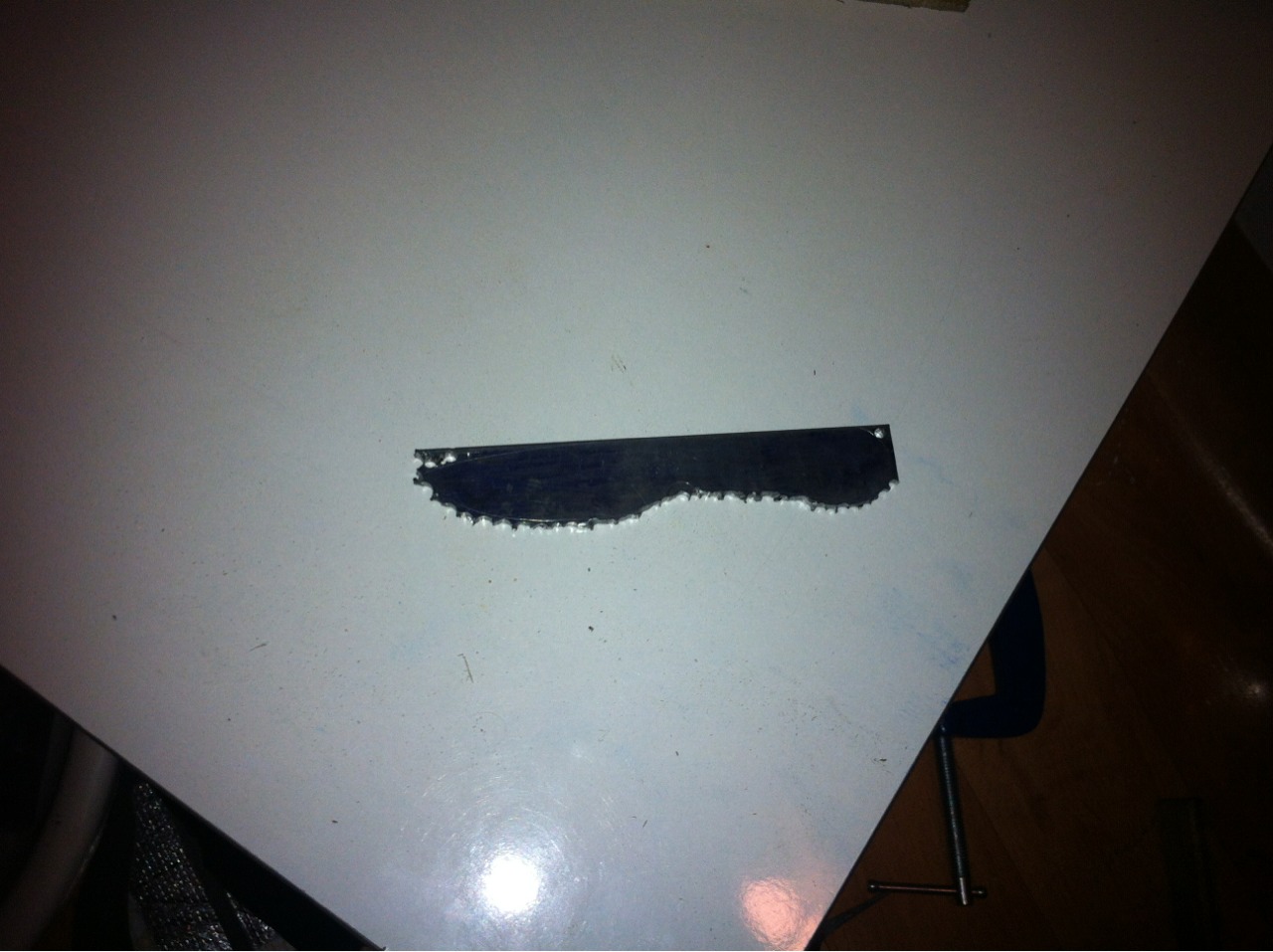
All cutout, and plunge cuts made. The practice cut on the left came in handy when I was filing the bevels. Practice didn't do as much good as hoped, though, as I ended up going much higher on my actual plunge cuts. (I think this turned out to be good, though. The blade still feels quite thick to me. A narrower bevel might have been too fat to cut well.)
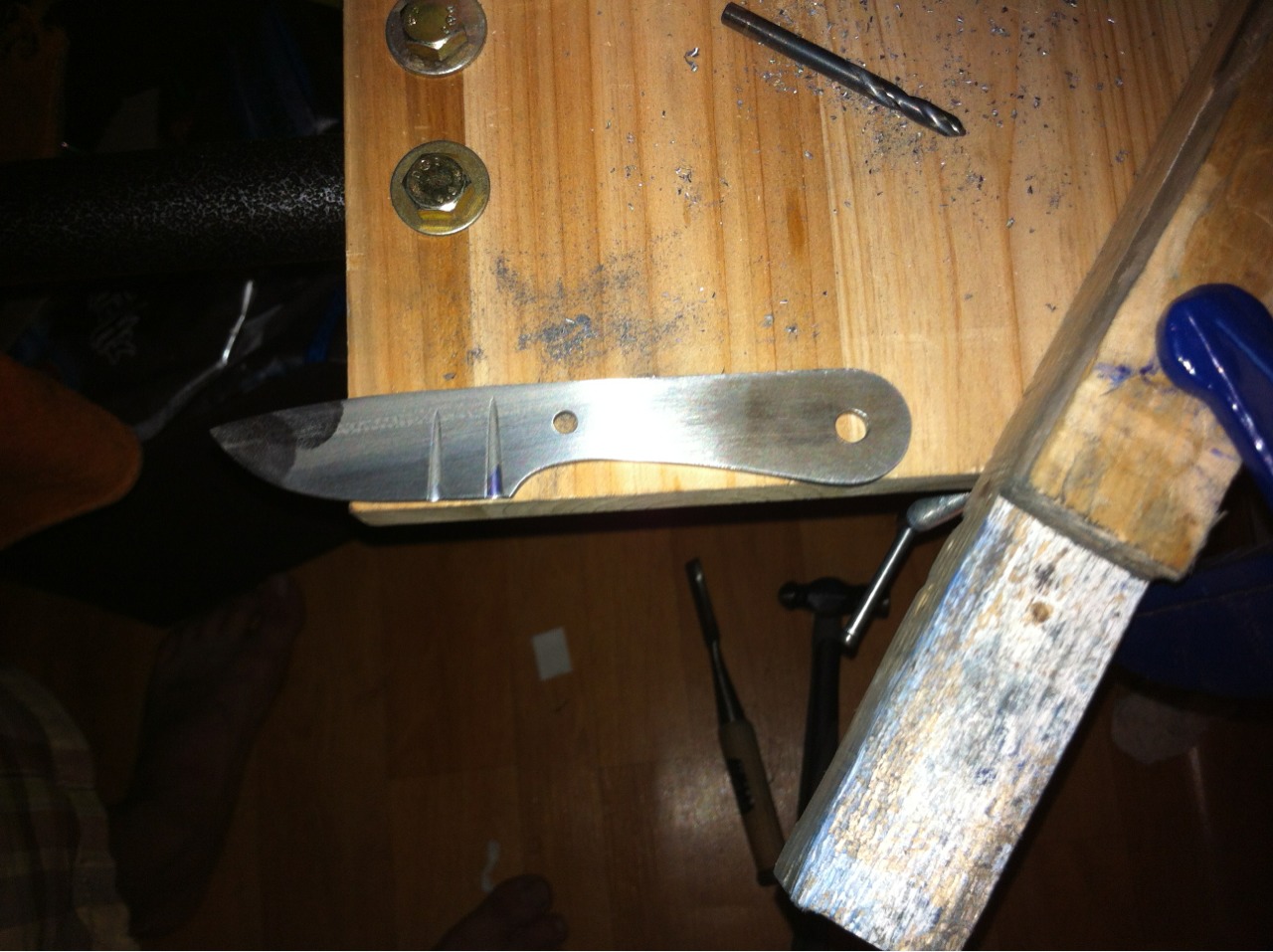
Bevels are done.
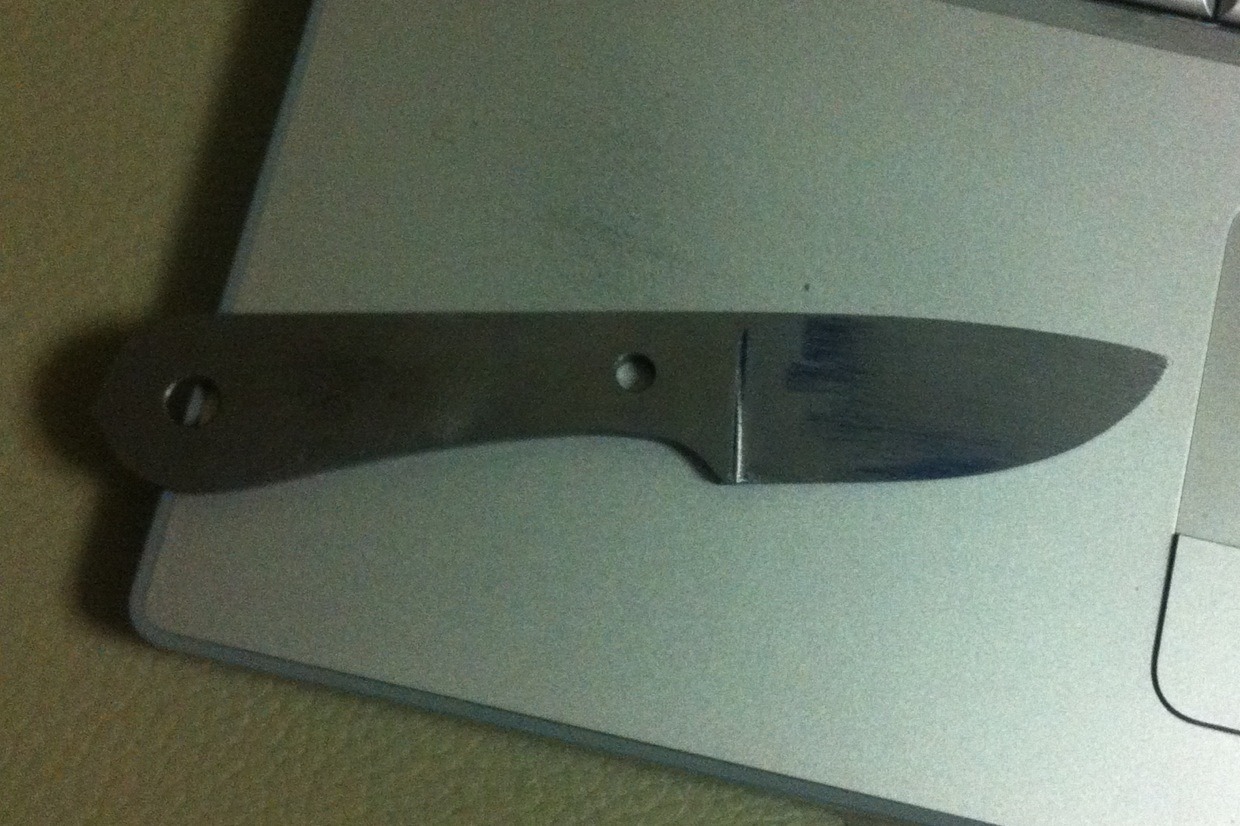
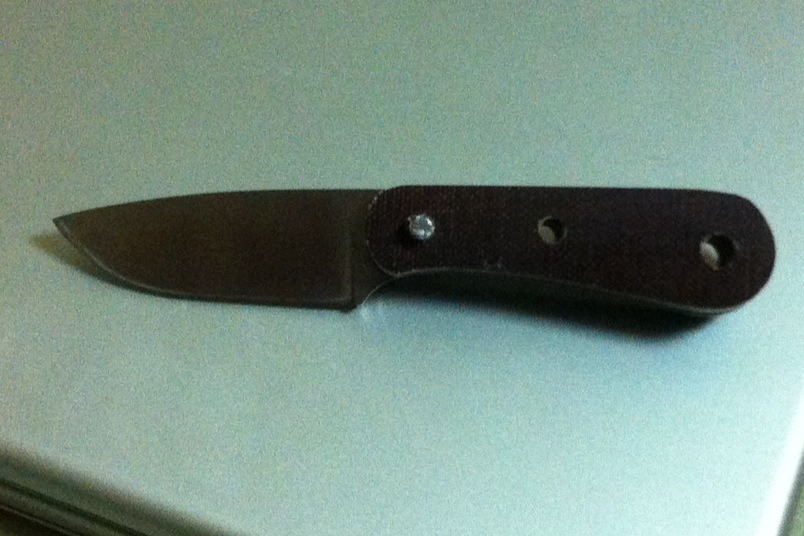
I couldn't resist putting a temporary handle on it!
I'll start with my question, and then put pics of my WIP.
I have read on here that you should keep the edge about the width of a dime before heat treat. My edge is about that thickness now, or probably thinner. I'm wondering how realistic that is when using only hand tools, though. Can you really take enough steel off after HT to get a decent edge with just sandpaper?
The reason I'm asking is because last night when I started hand sanding out my file marks I found a low spot near the ricasso (You can see it in the picture with the cord wrapped handle at the end of this post). An hour or more later with 120 grit and that spot was still there, but the other file marks were long gone. So I've decided to go back and file it out. But this got me to wondering how I will ever get my blade thin enough after heat treat, given how much time it took to make any progress on that low spot.
Here is a picture of the thickness I have now. The blade is made from Aldo's 1/8" 1084, which I then sanded down a bit when I took the plunge cut a little too high. Since it started out thicker than 1/8" it's probably around 1/8" now. Does that look okay for heat treat?
Having asked my question, here's how I got to that point.
I designed this using inkscape. It's not exactly setup for technical drawing, but I made it work. You can export to dxf if you want to have something waterjet cut, which I considered doing initially, since profiling takes so long with hand tools. I actually made several designs, and traced them onto cardboard, and finally wood. I tried longer and shorter handles, but this one felt the best, since the bulge sits near the center of my hand. My son likes playing with the wooden one.
I taped a printout to the back of a picture frame and cut it out. Then I traced that onto steel. The dots are center punches for drilling (Next time I'm doing those one at a time. The holes ended up too far apart. *Drill*Punch*Drill*Punch*...)
Partially cutout
All cutout, and plunge cuts made. The practice cut on the left came in handy when I was filing the bevels. Practice didn't do as much good as hoped, though, as I ended up going much higher on my actual plunge cuts. (I think this turned out to be good, though. The blade still feels quite thick to me. A narrower bevel might have been too fat to cut well.)
Bevels are done.
I couldn't resist putting a temporary handle on it!
Last edited: