First knife questions

Joined
Oct 22, 2009
Messages
15
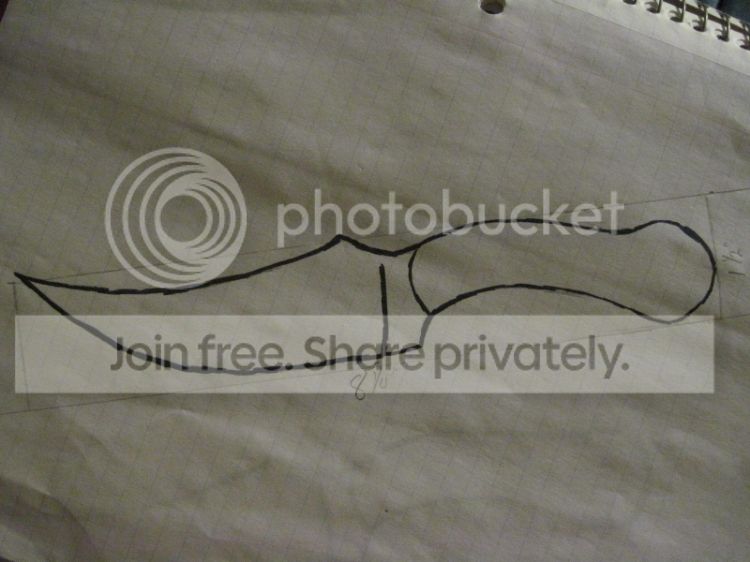
This is my first knife project, and I'm planning to use mostly hand tools. I'm planning to make a hunting/skinning type of knife. I'm wanting to order supplies from knifemaking.com, but want to get some advise from some more experienced knife makers first. I was thinking to order the 1095 3/16" x 1-1/2" x 18", because its cheap, and hopefully easy to work with. Also I thought I would order the walnut scales that are 3/8" x 1 1/2" x 5". My questions are... Do I need a liner between the tang, and the scales? Can I use the brass or nickel handle pins they sale, and if so, what size would you reccomend my planned design. (I'll add a pic here) Is there a better way to attach the scales to the tang? And last, I have access to a kiln, but wondering about quenching oil. Is there a cheap alternative, that is still effective? Thanks in advance for the help. If I'm overlooking something else, please let me know. Feel free to be as blunt and strait forward as need be.


,Zac

IMG_8360_zps7088337f.jpg
 
While a drop point hunter will be a far easier first project, the size you have drawn seems OK. That blade shape and tip will be a bit of a task to get right. You might want to take that bump off the end of the handle top.

The materials you listed should work fine. You don't need a liner, and brass or nickel pins are good.

How do you plan on the HT?
 
If you dont want to have to ask these guys a million questions on heat treat you should get 1084 or ship out for heat treat
 
While a drop point hunter will be a far easier first project, the size you have drawn seems OK. That blade shape and tip will be a bit of a task to get right. You might want to take that bump off the end of the handle top.

The materials you listed should work fine. You don't need a liner, and brass or nickel pins are good.

How do you plan on the HT?


Thanks, I really appreciate the help, and so quick. I have access to a kiln, that I can program to heat however I need it to, and them quench in ? Oil ? just not sure what kind of oil will work. I figured I'd look up the specs on how to heat treat the 1095, Like heat to 1450 for 10 minutes, quench, then back to 400 for an hour, or whatever. I'd really like to somehow either take the hardness out of the tang, and spine. Or not harden those parts. I know its doable, because the old sword makers used to, but that might be a little much for my first build. I'm not sure the process. I'm also a little worried about the grind for that point, but I'll just take my time, and get some good hands on. I kept making that bump on the handle bigger and bigger, because it didn't look balanced on paper, but I guess the feel is more important than looks. I also though about a smooth dip, where your pinky would be, but never drew it in. Also I'm scratching my head on the placement of the pens, and how many. I was thinking 3. Whats your opinion? Any other advise would be much appreciated.

,Zac
 
1095 isn't all that forgiving. You have a really short window taking it out of the kiln and quenching it. Heated canola oil can work, brine is a quicker quench, but there is the risk of cracking the blade. With the Canola oil, you may not get full hardness. If you have a kiln, why not try O1 if you don't want to use the 1084? Its oil quenching, and relatively easy to work with. Its more expensive than the 1095 though. HT isn't as easy as it seems. I have three broken blades from my learning experiences. 2 of the breaks made sense to me, but one has me scratching my head.
 
You might look at 1084. It is touted as being a little easier steel to heat treat. Also read the stickies at the top of the forum. There is a lot of good advise posted there.
I like corby bolts for the handle, especially if you like the look of the larger size head.
 
You know, I was wanting to do 01 to start with, but seen that the 1095 was about half the price. I'll have to ponder on that for a few. If its that much more forgiving, and a good quality steel, I don't mind to spend a little extra. Thanks, and if anyone has any more advise, or suggestion, please do share.

,Zac
 
OK, guys, hoe you haven't lost interest, after some consideration, I think I'll opt for the 01, its what I had in mind to start with, and the 1095 kinda has me spooked. I want to give the step by step plan, that I've written out for myself to follow, and would like some of you to critique, and discuss the steps, so I further understand what I'll be doing. I'm ordering this stuff from Knifemaking.com ( Jantz Supply ). The steel is 3/16"x1 1/2"x 18" 01 tool steel. I'm using a kiln than is used for sample brick making.

#1 (optional) Normalize the steel, by bring it up to 1550-1600 degrees, and letting it air cool. Question, how long should I hold it at temp? I was thinking about doing 1575 degrees, for 30 minutes. ??

#2 Annealing the steel, heat to 1400-1400, and reduce heat slowly. OK, I could program the kiln to heat to 1425 hold for 20 minutes, drop to 1375 for an hour, then drop to 1325 for an hour, 1275 for an hour, all the way to 900 degrees. It that a good way to go about it? I really think, since I'm using a file for most of the work, this is an important process. Advise appreciated.

#3 cutting out, and shaping the blade. I won't really get into that yet. Just using hand tools though. Don't bring edge too thin, before hardening right, leave about 1/8th inch think??

#4 Stress relief Is this something I need to consider, since I'm using hand tools?

#5 hardening, I hate to make it sound so simple.... I planned to bring the blade to 1475 degrees, for 30 minutes, and very quickly quench in oil, that has been heated to 130 degrees. ??Hold for a few seconds?? not sure how long, and straight into tempering. Questions, it there any reason to heat and quench twice, and how long do I hold in the oil?

#6 Tempering, as soon I finish quenching, I would put it in the oven at 425 degrees, for 2 hours, let it cool, and back it the oven at 475 for 4 more hours.

#7 final finish, handle, and sharpen to hair splitting edge. ;)

Man, I really appreciate the help. This is something I've wanted to do for a long time, and I'm finally going to jump in and go at it. Any advice, tips or opinions, are very much welcome. Don't think its too much common sense, or that everyone knows it. I really would love to hear anything you have to offer. Thanks in advance.

,Zac

 
the steel from jantz already comes annealed. also I would do a cardboard mockup of your design just to make sure you like the way it feels in your hand. I'm working on my first couple knives and the cardboard cutout really changed my handle and blade shape.
 
You can start by annealing it, it can't hurt and might help. Put some charcoal in the kiln to help prevent oxidation. Also, you might want to shield your blade from the coils to help with radiative heating. After you shape your knife you will want to normalize before your final quench. See this thread: http://www.bladeforums.com/forums/s...Size-and-Normalizing-WITH-UPDATED-GRAIN-SHOTS . This is all the stress relief you will need. After your final quench, 2 x 2 hour tempers at 425 should suffice. Sharpen the blade and test the edge. If it is too brittle, you can temper again at a higher temperature.
 
I use 01 and I normalize the steel, soak for about 20 min, quench in canola oil about 110 deg. moving the blade around. Then I temper at 390 three times for one hour each time. That gets me 59rc.
 
Thought you might learn from one of my mistakes. I put the knife in the forge while it was coming up to temp. The probe never read higher than 1525f. I suspect the flame was way overshooting the temperature to come up to temp, and caused grain growth. Total newb error.
 
Thought you might learn from one of my mistakes. I put the knife in the forge while it was coming up to temp. The probe never read higher than 1525f. I suspect the flame was way overshooting the temperature to come up to temp, and caused grain growth. Total newb error.


Thanks for the tip. No point in both of us learning from the same mistake. LoL

,Zac
 
I'd opt for 1084 personally but I suppose 01 always works. Good luck!

I looked for it on Jantz site, but didn't see it. I'm planning to order my stuff, tonight, or tomorrow. I'm hoping with a good kiln, I'll have an advantage over other beginners. Also, I have some experiences with machining, I done CNC work, and tooling, and was in quality control for a few years, but never got far into actual Metallurgy. If this goes well, and I enjoy in, I'll buy some equipment to tinker with, at least a belt sander. I'm really doing this for relaxation, and personal enjoyment. I've got another hobby, that is also my lively hood, that I obsess over 24/7, and really need something to get my mind off it for a few hours. I'm a night owl, and and this is a goal I've had for years, along with making my own bow, and taking a deer with it. Anyway, I really appreciate all the advice, I'm planning to take some pictures of this process, to help other beginners.

,Zac
 
I always buy steel from njsteelbaron.com. They sell the 1084. Petty much everything else from usaknifemaker.com
 
If I used 1084, from what I have read, and the horrific conditions I historically heat treated other steel that I think was 1070 or so, I probably wouldn't have learned this lesson (grain growth in O1.) I am glad I learned it now, rather than on a knife I sold or gave to someone. Since you have good heat control, you have some options with steel choice. 1084 is cheap, works well, and makes a really nice knife. Using a "sexier" steel probably won't give you any better performance in the first couple knives, but I understand the desire to not use what is seen as a "beginner steel." It is only a beginner steel in that it is forgiving of error, not in terms of performance. With heat control, O1 is not difficult to work with.
 
If I used 1084, from what I have read, and the horrific conditions I historically heat treated other steel that I think was 1070 or so, I probably wouldn't have learned this lesson (grain growth in O1.) I am glad I learned it now, rather than on a knife I sold or gave to someone. Since you have good heat control, you have some options with steel choice. 1084 is cheap, works well, and makes a really nice knife. Using a "sexier" steel probably won't give you any better performance in the first couple knives, but I understand the desire to not use what is seen as a "beginner steel." It is only a beginner steel in that it is forgiving of error, not in terms of performance. With heat control, O1 is not difficult to work with.


If Jantz had the 1084, I would have ordered it with my other supplies, but I didn't want to make two orders. I plan to make 2 of these, and if they turn out well, I'll give one to a very good friend of mine, a woman who uses a skinning knife way more than I do. She brought home a bear, and a buffalo last year, so I'm sure it will get lots of use. The other, I'll probably test, and really test hard, maybe to destruction, or at least until I'm satisfied with the quality of the HT. If it does test out, I'll probably order some 1084 like has been recommended. I'm actually more worried about the grind, than the HT. I see why BLADSMTH said a drop point hunter will be a far easier first project. The tip of this thing has got me worried. I really thank you guys for checking in on me, and Willie, I'll be getting some 1084 to play with as well. I think I'll go ahead and get a cheap belt sander Monday. Thanks guys.

,Zac
 
My first bought steel was O1, (I have only been at this for about 6 months) since it was the only knife appropriate steel at the local steel supply store. Regarding the tip shape: I made three that were similar, one turned out OK, one broke in heat treat, and the third is turning out quite nice. That tip shape is much harder to grind evenly, and look good while maintaining appropriate material thickness. If you are up for a challenge, try it out. The worst that happens is you waste a few bucks worth of steel.
 
Back
Top