- Joined
- Dec 9, 2015
- Messages
- 392
The time has finally come for me to make my first knife. I've done a few pocket knife kits, put some together from parts of others, but this will be my first time actually grinding and HT-ing steel.
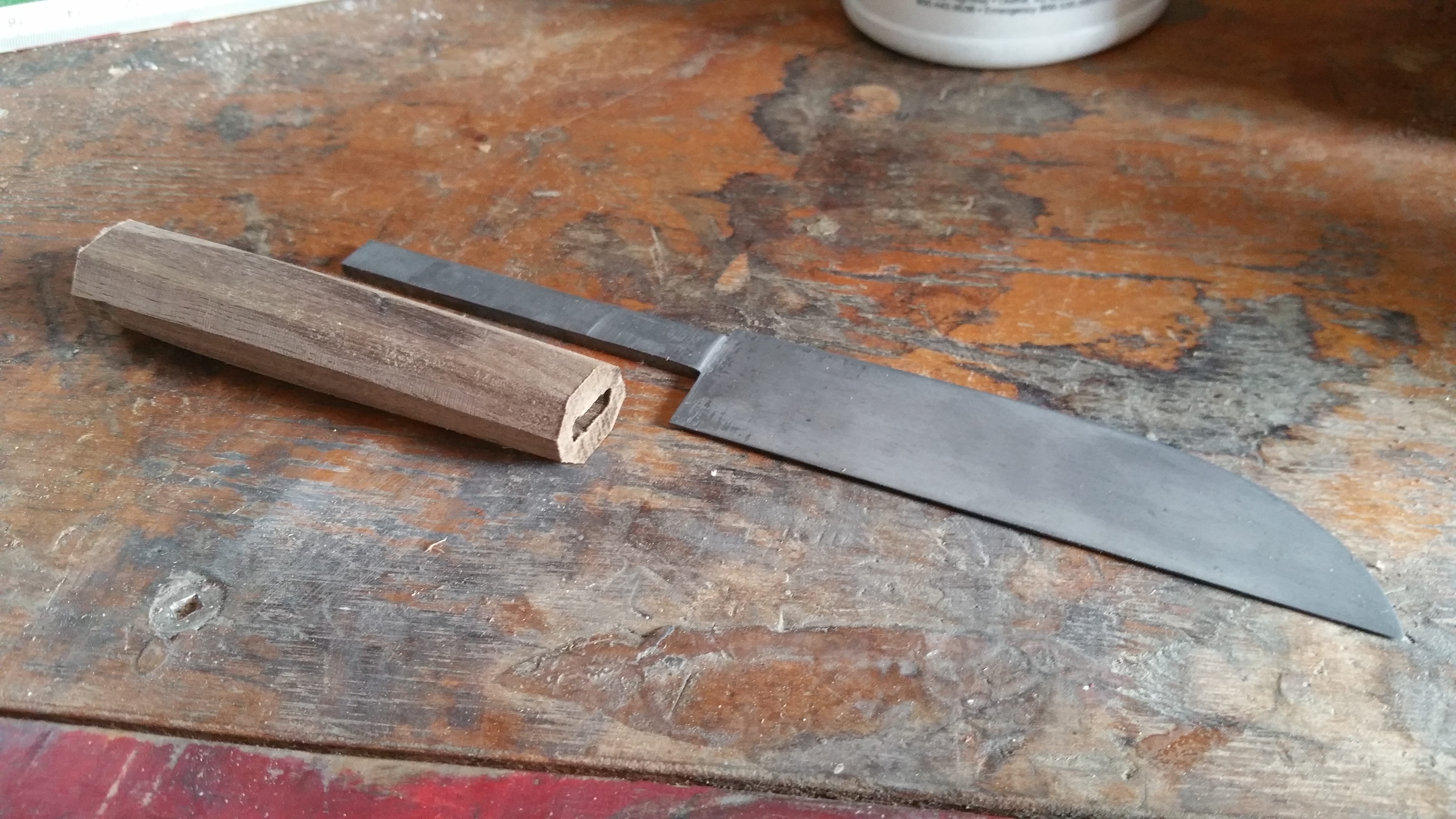
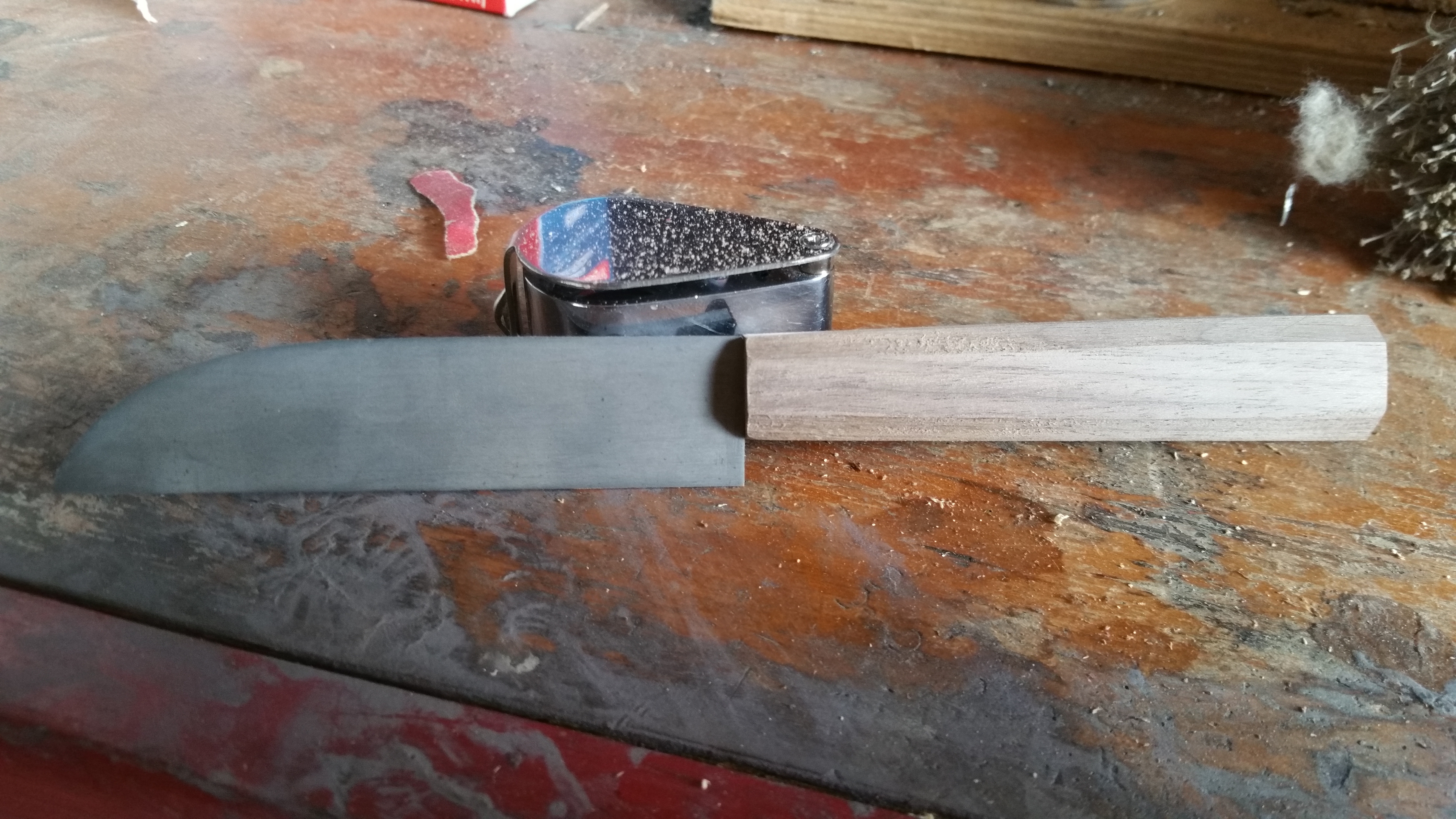
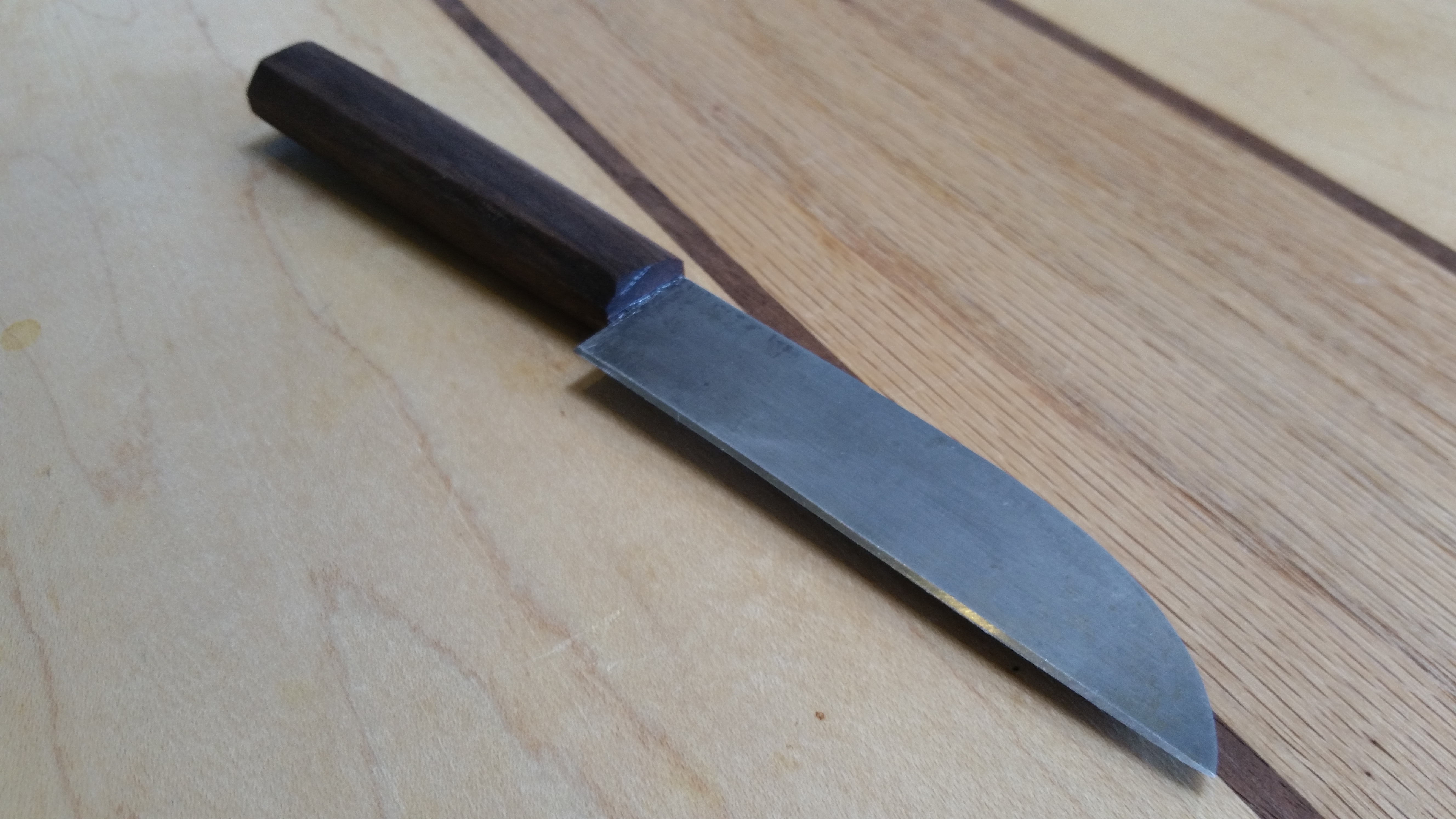
The goal: A Wa handled sheep's foot paring knife.
The materials:
3/32" O1
Walnut
Brass (maybe)
The methods/tools:
HF 1x30 grinder w/ Norton Blaze belts
Expedient grinding jig
Coffee can forge
Alrighty, let's dive in!
I've been building up to this for while, watching tons of YouTube, reading tons of tutorials. Normally I'm the kind of person who will spend the majority of time drawing, planning, setting up jigs, and then zip through on auto-pilot. This time, since I'm not making a folder, just a fixed blade, I made some quick measurements and threw down some ink. I see these lines as a guide to rough-cut, then I'll dial it in on the grinder.


I cut it out with an air cutter then cleaned it up on a bench grinder
A quick note about my HF belt sander. I don't know what the stuff is called, but I made a table out of that particle board with the slick surfaces. That way it's completely flat and smooth. I also made a new platen out of 1/8 mild steel. I had a piece of bar stock, cut it to length, bent it in my vice, then after tons of checking against a square and adjusting, got it at a perfect 90. I then ran it on a 4x36 to smooth the face out, drilled holes, and mounted it up. It goes almost all the way to the top wheel, that way I can grind bigger knives if I want, though if I make many more knives I'll build a 2x72. I lost my dust shield so I made another with a piece of scrap aluminum that I had laying around. These things are a big deal because without it the dust goes straight into your face and will eventually make it's way around the edges of your glasses.
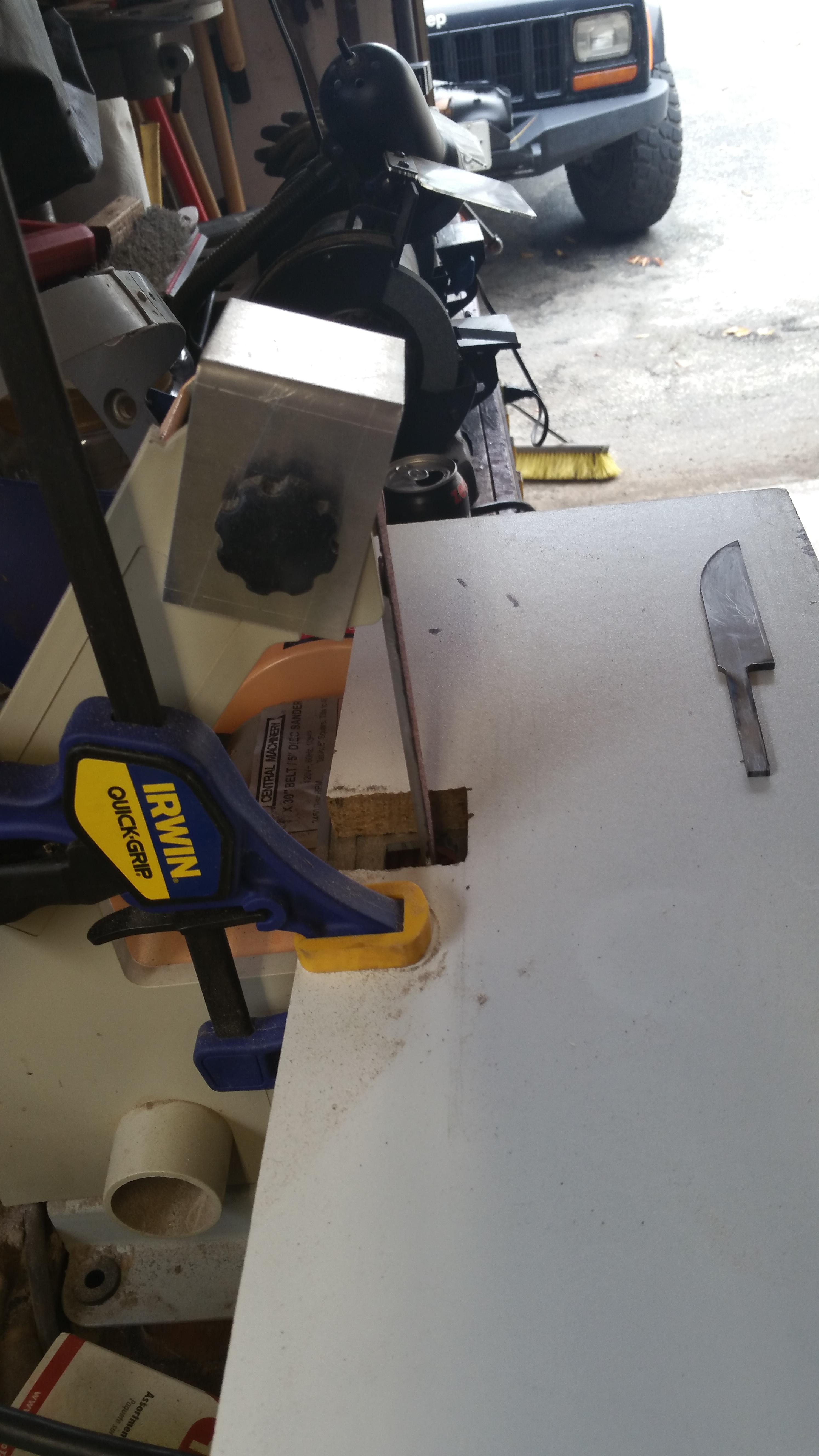
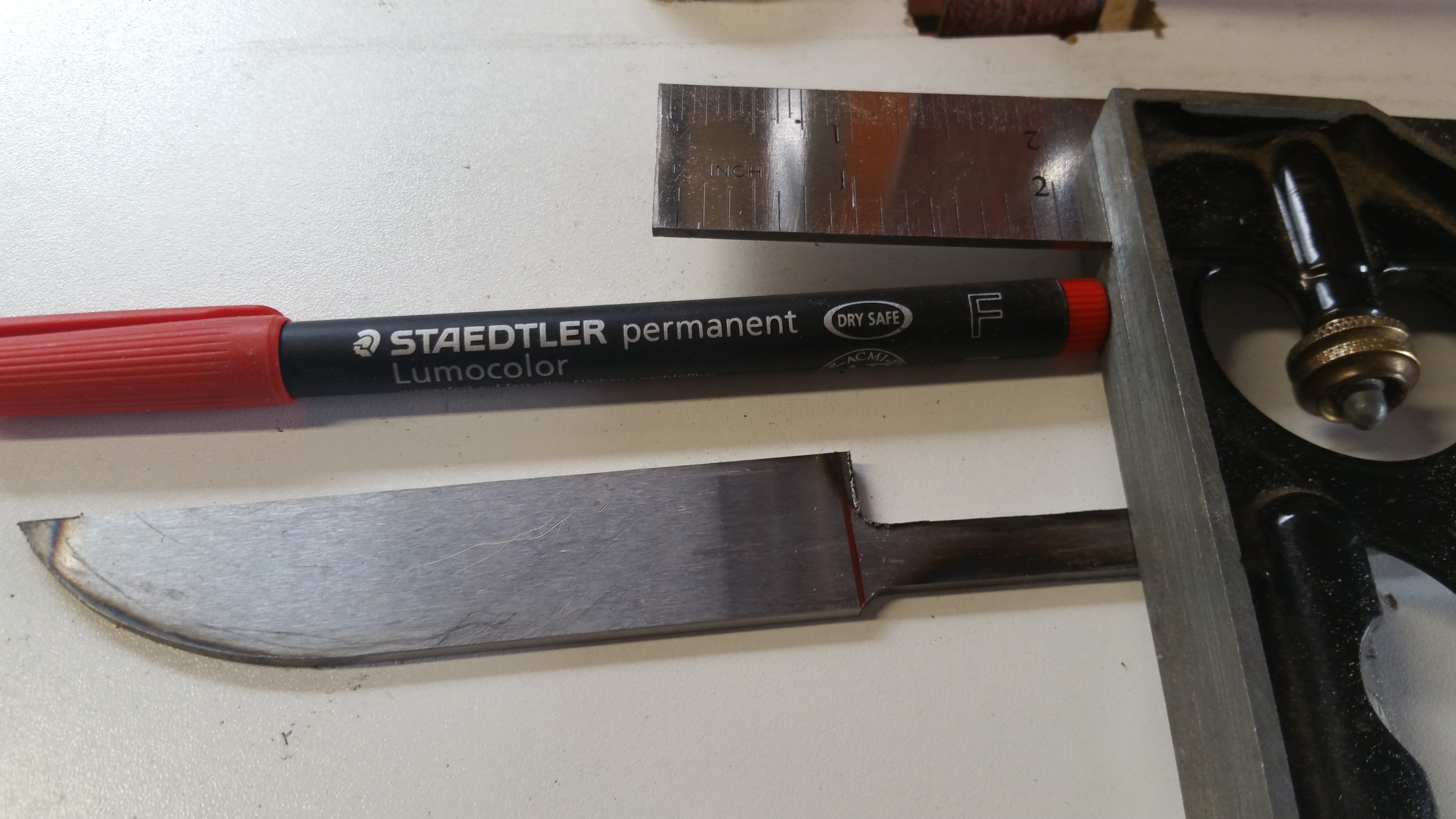
I cleaned up the corners of the tang using a file and a square. This is the "before" shot, i've got it about 90% now and I'll finish it after HT.
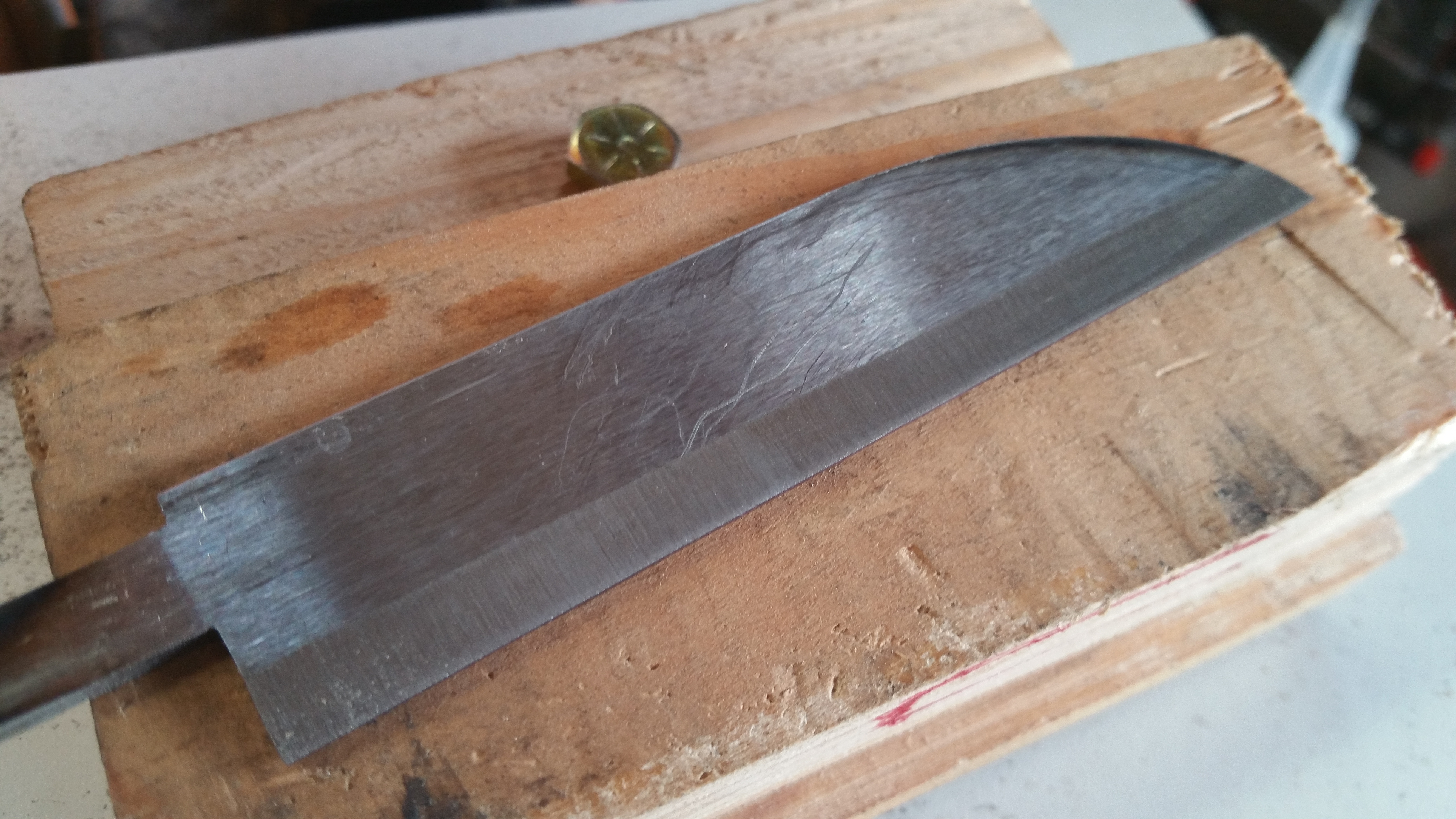
The jig is just a scrap end of a 2x4, cut appropriately and with a bolt going through the bottom to adjust the angle. What you can't see is a countersunk nut on the underside for the bolt. The blade is held to it using a C clamp. If I make more knives I'll make a better jig, but this one works for now.
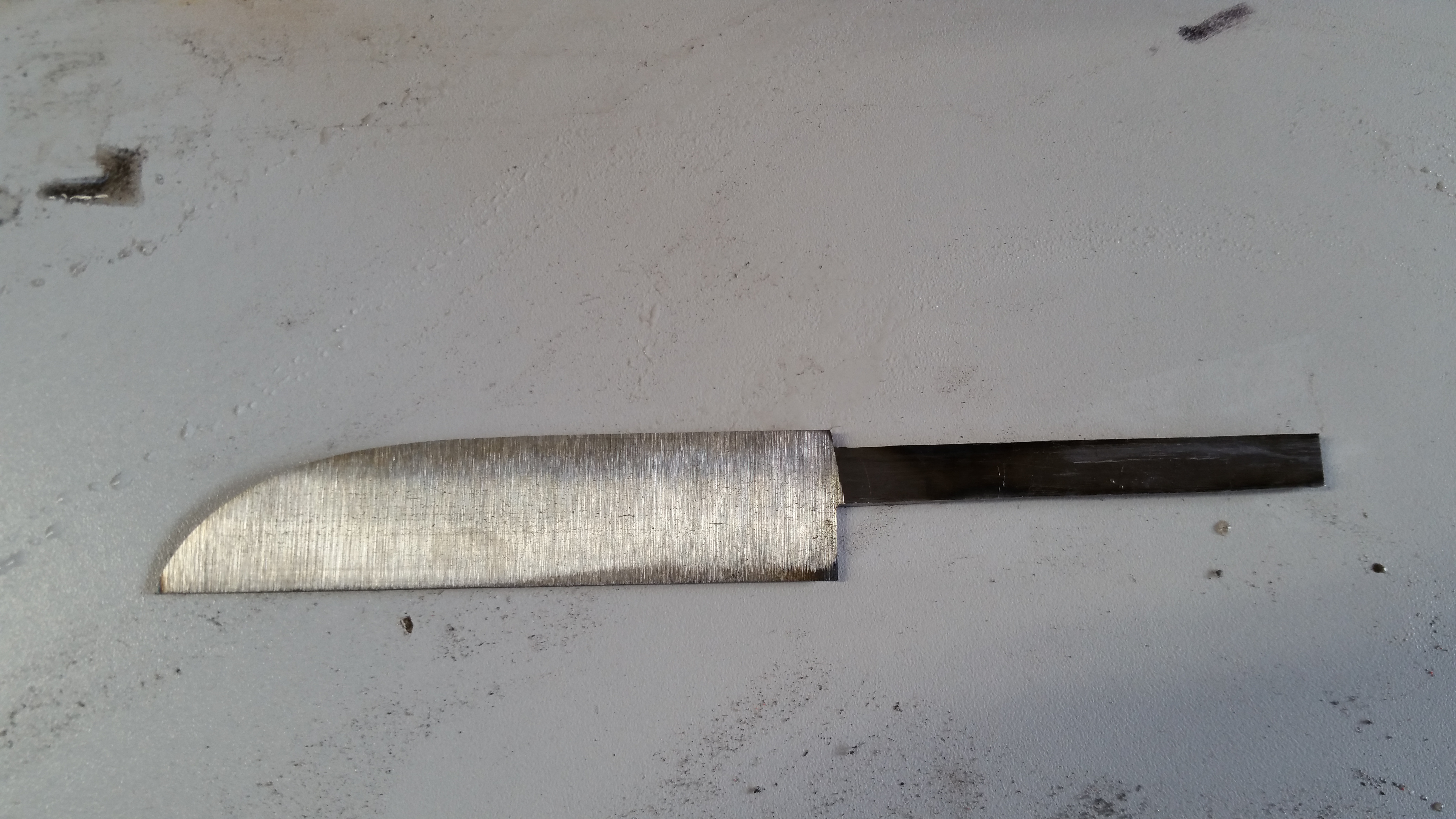
Using an old belt I knocked down the corners and brought the edge to it's pre-HT thickness. I then switched to a fresh 60 grit blaze belt. I dialed back the angle on the jig, ground until the old grind line was gone, and repeated until I reached the spine. I then did a few passes with a 120 belt and this is how it sits now, waiting for my forge to dry. I accidentally ground the tip a bit too thin, so I took some off the nose of the blade to put a bit more meat behind it. I lost concentration for a second and the jig wobbled and I took a swipe near the spine of the blade where a swedge might go. I am not going to attempt a swedge to cover it up, I'm just going to chalk it up as a learning experience and move on.
I know that the proper way to grind a kitchen knife is to leave the part that meets of the handle flat and then blend it, but it's my first knife, cut me some slack!
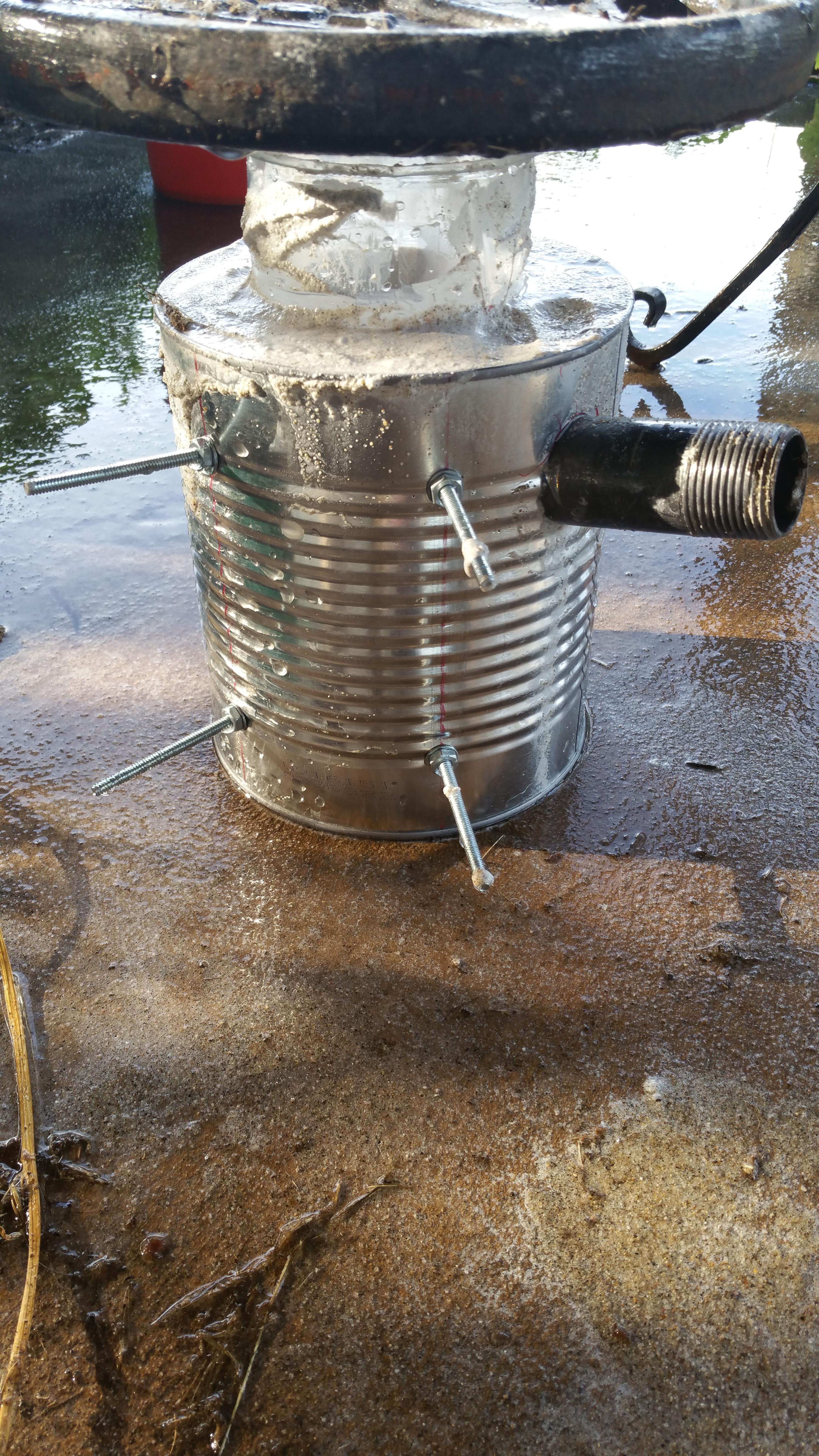
I also started the forge today. Using a large can, the size that restaurant kitchens buy stuff in, I lined it with a 50/50 plaster and sand mix. I used a piece of 1" black iron pipe, inserted tangential to the inside and pointing slightly towards the back. After it's dry I'll cut the back out and hopefully get a nice spiral flame. I know it's not ideal, but just like the grinder, if I keep making knives I'll build something better.
The pozole that came in the can didn't smell all that great, but I saved some to try anyway.
And that's it for now. I live on the coast, and it's November, so the air is very wet and cool. It'll probably take a long time for the forge to dry completely.
The goal: A Wa handled sheep's foot paring knife.
The materials:
3/32" O1
Walnut
Brass (maybe)
The methods/tools:
HF 1x30 grinder w/ Norton Blaze belts
Expedient grinding jig
Coffee can forge
Alrighty, let's dive in!
I've been building up to this for while, watching tons of YouTube, reading tons of tutorials. Normally I'm the kind of person who will spend the majority of time drawing, planning, setting up jigs, and then zip through on auto-pilot. This time, since I'm not making a folder, just a fixed blade, I made some quick measurements and threw down some ink. I see these lines as a guide to rough-cut, then I'll dial it in on the grinder.
I cut it out with an air cutter then cleaned it up on a bench grinder
A quick note about my HF belt sander. I don't know what the stuff is called, but I made a table out of that particle board with the slick surfaces. That way it's completely flat and smooth. I also made a new platen out of 1/8 mild steel. I had a piece of bar stock, cut it to length, bent it in my vice, then after tons of checking against a square and adjusting, got it at a perfect 90. I then ran it on a 4x36 to smooth the face out, drilled holes, and mounted it up. It goes almost all the way to the top wheel, that way I can grind bigger knives if I want, though if I make many more knives I'll build a 2x72. I lost my dust shield so I made another with a piece of scrap aluminum that I had laying around. These things are a big deal because without it the dust goes straight into your face and will eventually make it's way around the edges of your glasses.
I cleaned up the corners of the tang using a file and a square. This is the "before" shot, i've got it about 90% now and I'll finish it after HT.
The jig is just a scrap end of a 2x4, cut appropriately and with a bolt going through the bottom to adjust the angle. What you can't see is a countersunk nut on the underside for the bolt. The blade is held to it using a C clamp. If I make more knives I'll make a better jig, but this one works for now.
Using an old belt I knocked down the corners and brought the edge to it's pre-HT thickness. I then switched to a fresh 60 grit blaze belt. I dialed back the angle on the jig, ground until the old grind line was gone, and repeated until I reached the spine. I then did a few passes with a 120 belt and this is how it sits now, waiting for my forge to dry. I accidentally ground the tip a bit too thin, so I took some off the nose of the blade to put a bit more meat behind it. I lost concentration for a second and the jig wobbled and I took a swipe near the spine of the blade where a swedge might go. I am not going to attempt a swedge to cover it up, I'm just going to chalk it up as a learning experience and move on.
I know that the proper way to grind a kitchen knife is to leave the part that meets of the handle flat and then blend it, but it's my first knife, cut me some slack!
I also started the forge today. Using a large can, the size that restaurant kitchens buy stuff in, I lined it with a 50/50 plaster and sand mix. I used a piece of 1" black iron pipe, inserted tangential to the inside and pointing slightly towards the back. After it's dry I'll cut the back out and hopefully get a nice spiral flame. I know it's not ideal, but just like the grinder, if I keep making knives I'll build something better.
The pozole that came in the can didn't smell all that great, but I saved some to try anyway.
And that's it for now. I live on the coast, and it's November, so the air is very wet and cool. It'll probably take a long time for the forge to dry completely.
Last edited: