
-
The BladeForums.com 2024 Traditional Knife is available! Price is $250 ea (shipped within CONUS).
Order here: https://www.bladeforums.com/help/2024-traditional/
You are using an out of date browser. It may not display this or other websites correctly.
You should upgrade or use an alternative browser.
You should upgrade or use an alternative browser.
First Post and a little help
- Thread starter lutejones
- Start date



- Joined
- Mar 15, 2007
- Messages
- 737
Hey guys,
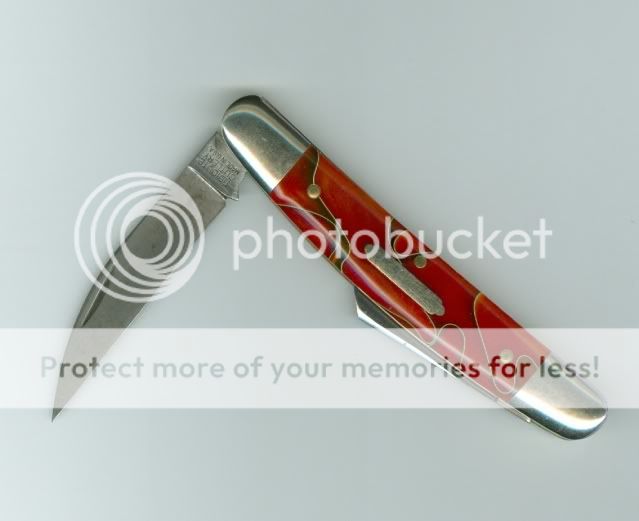
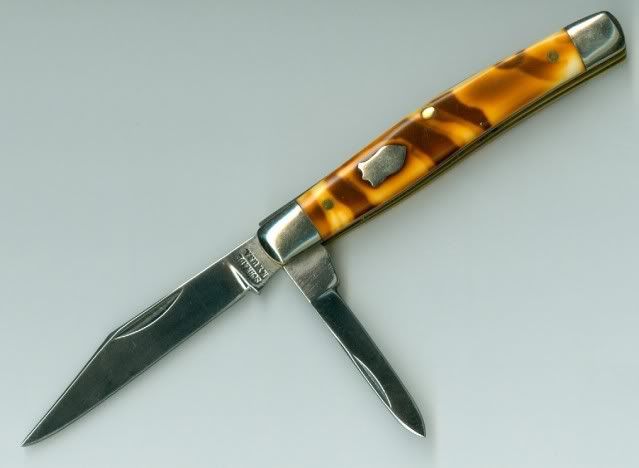
today I brought you some photos of my 2 american traditional slipjoints.
I took your advice and tried the large stockman 6375 cv and the Boker Barlow in my pocket for a while, here are the conclusions:
Case 6375 cv:
+ Nice knife, the two "secondary" blades are like scalpels and with the size of the handle they are very comfortable to use
- way too big in the pocket
- I don't know if It happens with all stockmans but the sheepfoot blade pinch my fingers when working with the primary clip blade of the knife. (I made a bowdrill kit for friciton firelighting and ended with little blisters in the pinky)
Boker Barlow:
+ Perfect size for the pocket, I really like the combination of clip and pen blades.
+ Love the look of the Barlow pattern
- the fit and finnish of this model could be better
- the grind of the blades is too thick, I had to reprofile the main blade and now It's right. The secondary is not yet reprofiled but It's even worst than the main.
Now the photos:


Hope you like them,
see you
today I brought you some photos of my 2 american traditional slipjoints.
I took your advice and tried the large stockman 6375 cv and the Boker Barlow in my pocket for a while, here are the conclusions:
Case 6375 cv:
+ Nice knife, the two "secondary" blades are like scalpels and with the size of the handle they are very comfortable to use
- way too big in the pocket
- I don't know if It happens with all stockmans but the sheepfoot blade pinch my fingers when working with the primary clip blade of the knife. (I made a bowdrill kit for friciton firelighting and ended with little blisters in the pinky)
Boker Barlow:
+ Perfect size for the pocket, I really like the combination of clip and pen blades.
+ Love the look of the Barlow pattern
- the fit and finnish of this model could be better
- the grind of the blades is too thick, I had to reprofile the main blade and now It's right. The secondary is not yet reprofiled but It's even worst than the main.
Now the photos:
Hope you like them,
see you
Lutejones,
Thanks for your post. I find it incredibly interesting to think about American traditions as viewed through your eyes from Spain! One of the things that I love most about traditional designs is their ties to the cultures that produced the design, especially with regards to the different work traditions that produced the need for the knife. That will factor into what follows...
One way I sort out folding knives is by size. There are large utility knives like the Opinel #8 & #9, Buck 110/112 folding hunters and the German butcher's knife (we call them sodbusters). I would put the large stockman knives into this category. In this size range, I think the suitability for "pocket" carry needs to be understood in terms of traditional work clothing. Knives of this sort fit into vest/jacket pockets, the pants pockets of baggy and tough work pants in situations where the "imprint" of the knife doesn't matter and into pockets specially made to carry tools. Most days, I wear baggy carpenter's jeans and my EDC rotation is between a French Opinel #9 or a Buck folding hunter (112 or 500). The Bucks in particular are bigger and heavier than your large stockman but they work just fine for me (and my clothing choices) for pocket carry. The thing will all of these big knives though is a tie to heavy rugged use that favors a bigger knife. How it gets carried follows after that and the comparison is not to other smaller folders but to small fixed blades. Large folders can be put into (large) pockets and fixed blades can't.
In my mind, the next steps down include "medium" and "small" knives. I would put your Barlow in the medium size range. But as others have noted, I think of the Barlow as more of an English design that persisted in the US. That alone is an interesting point of US culture. Most of our culture is formed by our history of immigration (and to be fair, destruction of native culture). The Barlow is like the German butcher's knife. They're European designs that took hold here. I guess I would have to toss in the American Camper/Boy Scout pattern in with this bunch. Very closely related to the Swiss Army knife. Other American knives in this category are more reflective the emerging American culture. The equal end cattle knife and medium sized stockmen would be in this category. I associate them with the cowboys of the American west. There are also the canoe and medium sized trappers, which I associate with the hunters and trappers of the American north woods.
I associate smaller knives with the rise of the business man. Often they're referred to as "gentlemens' knives" and I associate them with more genteel task like opening letters and with more citified dress slacks where a large knife would be too visible. Whittlers, peanuts, congress and senator's knives are often found in this class.
No right or wrong here. Really depends on what strikes your fancy and suits your carrying needs (related to your dress style).
You mentioned wanting a thin profiled blade so I'll toss out one of my favorite "American" designs in the medium sized class for consideration and that's the Camper/Boy Scout style knife. They typically a very flat ground spear point blade. If you like a flat spear point but want other cutting blades, you might look for an equal end cattle knife. Similar to the stockman in terms of having 3 blades but can be found with a spear point instead of the clip blade.
Here's a 70s vintage Camper. I associate this design with the "camping" and scouting ideal of the early 1900s. Very much the romantic movement of retreat to the outdoors for health and well being.

camper-leaves by Pinnah, on Flickr
Thanks for your post. I find it incredibly interesting to think about American traditions as viewed through your eyes from Spain! One of the things that I love most about traditional designs is their ties to the cultures that produced the design, especially with regards to the different work traditions that produced the need for the knife. That will factor into what follows...
One way I sort out folding knives is by size. There are large utility knives like the Opinel #8 & #9, Buck 110/112 folding hunters and the German butcher's knife (we call them sodbusters). I would put the large stockman knives into this category. In this size range, I think the suitability for "pocket" carry needs to be understood in terms of traditional work clothing. Knives of this sort fit into vest/jacket pockets, the pants pockets of baggy and tough work pants in situations where the "imprint" of the knife doesn't matter and into pockets specially made to carry tools. Most days, I wear baggy carpenter's jeans and my EDC rotation is between a French Opinel #9 or a Buck folding hunter (112 or 500). The Bucks in particular are bigger and heavier than your large stockman but they work just fine for me (and my clothing choices) for pocket carry. The thing will all of these big knives though is a tie to heavy rugged use that favors a bigger knife. How it gets carried follows after that and the comparison is not to other smaller folders but to small fixed blades. Large folders can be put into (large) pockets and fixed blades can't.
In my mind, the next steps down include "medium" and "small" knives. I would put your Barlow in the medium size range. But as others have noted, I think of the Barlow as more of an English design that persisted in the US. That alone is an interesting point of US culture. Most of our culture is formed by our history of immigration (and to be fair, destruction of native culture). The Barlow is like the German butcher's knife. They're European designs that took hold here. I guess I would have to toss in the American Camper/Boy Scout pattern in with this bunch. Very closely related to the Swiss Army knife. Other American knives in this category are more reflective the emerging American culture. The equal end cattle knife and medium sized stockmen would be in this category. I associate them with the cowboys of the American west. There are also the canoe and medium sized trappers, which I associate with the hunters and trappers of the American north woods.
I associate smaller knives with the rise of the business man. Often they're referred to as "gentlemens' knives" and I associate them with more genteel task like opening letters and with more citified dress slacks where a large knife would be too visible. Whittlers, peanuts, congress and senator's knives are often found in this class.
No right or wrong here. Really depends on what strikes your fancy and suits your carrying needs (related to your dress style).
You mentioned wanting a thin profiled blade so I'll toss out one of my favorite "American" designs in the medium sized class for consideration and that's the Camper/Boy Scout style knife. They typically a very flat ground spear point blade. If you like a flat spear point but want other cutting blades, you might look for an equal end cattle knife. Similar to the stockman in terms of having 3 blades but can be found with a spear point instead of the clip blade.
Here's a 70s vintage Camper. I associate this design with the "camping" and scouting ideal of the early 1900s. Very much the romantic movement of retreat to the outdoors for health and well being.
camper-leaves by Pinnah, on Flickr
Last edited:
- Joined
- Mar 15, 2007
- Messages
- 737
Wow Pinnah,
thank you very much, that was a very nice cultural knife lesson.
Only one question, Where jack's knives fit into those categories? Because I see them as personal carry knives, but I don't know how they are pictured into the rising country historical background.
best regards
thank you very much, that was a very nice cultural knife lesson.
Only one question, Where jack's knives fit into those categories? Because I see them as personal carry knives, but I don't know how they are pictured into the rising country historical background.
best regards
Lutejones, I think "jack knife" is one of those terms whose meaning is quite flexible!! Remember, in American English, a word can mean anything you want it to mean.
I think the strictest sense of the word is that it is a slip joint with 2 blades on the same end. In this sense, a Barlow is a jack knife. The serpentine jack and peanut are closely related and both jack knives. Two blades both at the same end. The Canoe, which has 2 blades, is not a jack knife since it typically has the blades on opposite ends. The 3 bladed stockman isn't a jack knife either. At least, this is my understanding of things.
On the other hand, I associate the above definition with medium and small pocket knives and not with larger folders. I don't think I've seen large 2 bladed trappers referred to as jack knives for instance. I think in common usage, that's due to the size.
More generally, the term "jack knife" has been frequently used more or less for any medium to small slip joint knife here in the states, regardless of it's blade configuration. Wouldn't be surprising for somebody to look at my 4 blade camper and say, "Can I borrow your jack knife?"
Here are 2 word origin discussions that link jack knife to jackleg knife and that link jackleg knife to early northern English and Scottish references to knives made by Jacque de Liege. The end result here is that jackleg came to refer to cheap crude tools used by common poorly trained workers so it's something of a term of derision as the term moves through the US later, as in a "jackleg lawyer" (lacking scruples and skill). In this sense, Barlow knives and other jack knives fit this perfectly as they were inexpensive tools typically sold in hardware stores for workers to use and abuse.
I'm happy to carry a crude jackknife, in this sense.
http://www.word-detective.com/2012/01/10/jackleg/
http://www.wordorigins.org/index.php/site/jackleg_jackknife/
I think the strictest sense of the word is that it is a slip joint with 2 blades on the same end. In this sense, a Barlow is a jack knife. The serpentine jack and peanut are closely related and both jack knives. Two blades both at the same end. The Canoe, which has 2 blades, is not a jack knife since it typically has the blades on opposite ends. The 3 bladed stockman isn't a jack knife either. At least, this is my understanding of things.
On the other hand, I associate the above definition with medium and small pocket knives and not with larger folders. I don't think I've seen large 2 bladed trappers referred to as jack knives for instance. I think in common usage, that's due to the size.
More generally, the term "jack knife" has been frequently used more or less for any medium to small slip joint knife here in the states, regardless of it's blade configuration. Wouldn't be surprising for somebody to look at my 4 blade camper and say, "Can I borrow your jack knife?"
Here are 2 word origin discussions that link jack knife to jackleg knife and that link jackleg knife to early northern English and Scottish references to knives made by Jacque de Liege. The end result here is that jackleg came to refer to cheap crude tools used by common poorly trained workers so it's something of a term of derision as the term moves through the US later, as in a "jackleg lawyer" (lacking scruples and skill). In this sense, Barlow knives and other jack knives fit this perfectly as they were inexpensive tools typically sold in hardware stores for workers to use and abuse.
I'm happy to carry a crude jackknife, in this sense.
http://www.word-detective.com/2012/01/10/jackleg/
http://www.wordorigins.org/index.php/site/jackleg_jackknife/

- Joined
- Jan 18, 2007
- Messages
- 34,125
I find a Whittler to be a very comfortable knife in the hand.
The CASE Large Stockman is big, OK for outdoor coat pockets but not really for trousers. If you like the Barlow then you will like the GEC 56 in hand, quite a heavy knife though.
The CASE Large Stockman is big, OK for outdoor coat pockets but not really for trousers. If you like the Barlow then you will like the GEC 56 in hand, quite a heavy knife though.
- Joined
- May 26, 2011
- Messages
- 704


Just my thoughts on the matter but its hard to go wrong with a swayback jack (or gent) perfect size for edc and absolutely beautiful knives. The one pictured above is the Chestnut Bone CV SBJ