First Post, First "Knife", First Two and a Half Knives [Pic Heavy WIP]

Joined
Oct 21, 2014
Messages
168
Hey BladeForums,

First post here, just another fool bitten with the knifemaking bug! Here's the highlight reel from my first couple of knives (sorry that it's all phone pictures).

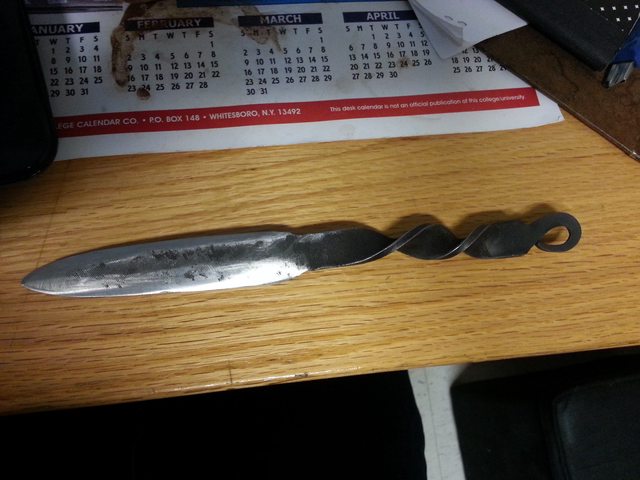
First "knife" I banged out in my university's forge a year ago or so. It cuts but it sure isn't pretty.
E0ESqhUl.jpg


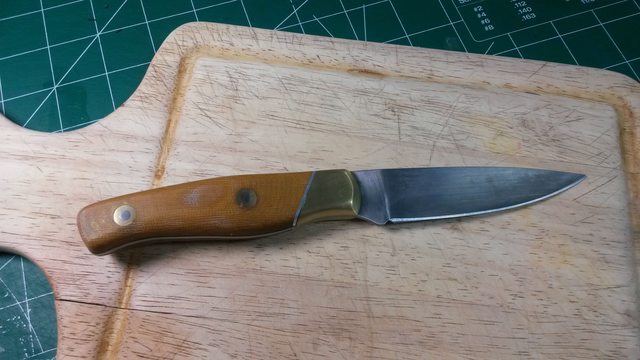
My first "real" knife I finished right on July 4th.
HlvBdEOl.jpg

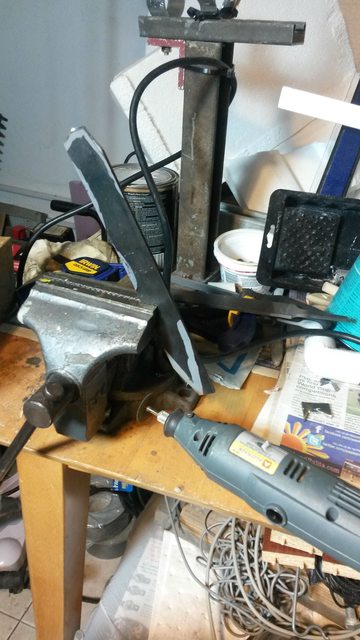
I started with a 1" x 1/8" bar of O1 I bought off Amazon and used a Dremel and a bench grinder to rough out the profile.
htYrBtQl.jpg

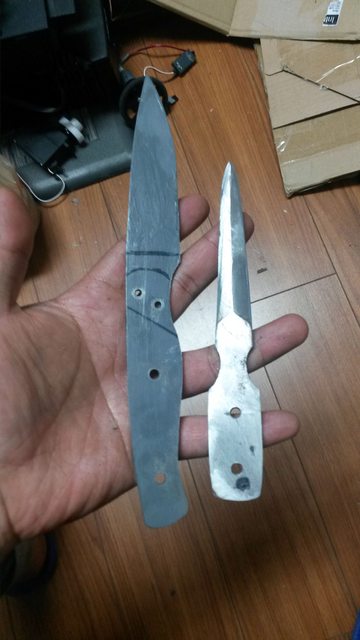
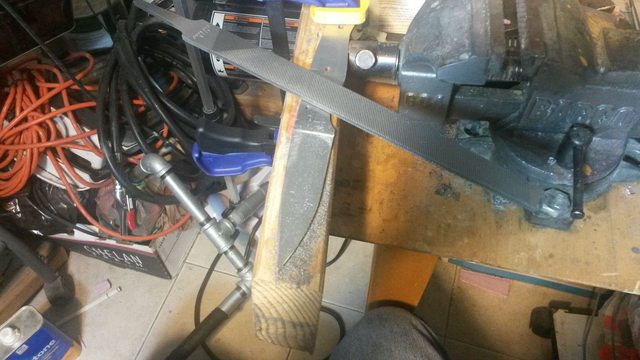
After refining the edges with a file, I layed out my bolsters and grind lines using paint, and drilled the pin holes.
YDRbxiSl.jpg

Bevels were filed in by hand. I've never been a stickler for "you have to make your first knife totally by hand", but it looks like I ended up closer to that than I expected.
sSsrYnll.jpg

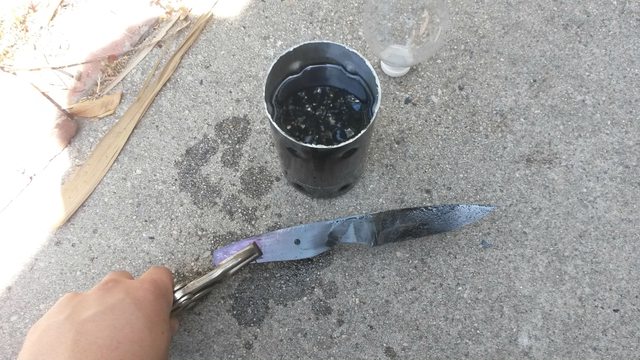
MAPP gas torch and a cup of old compressor oil.
SMM7Ggil.jpg

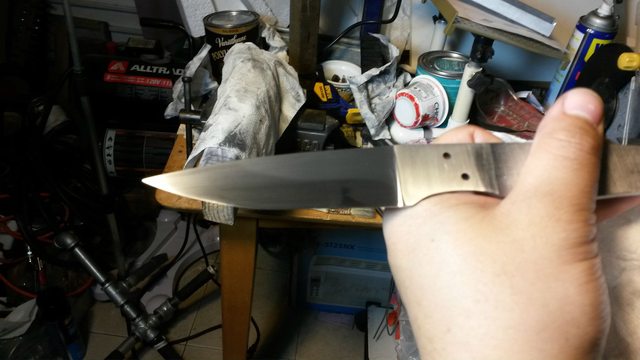
Wet sanded to 400 grit.
YCSENH9l.jpg

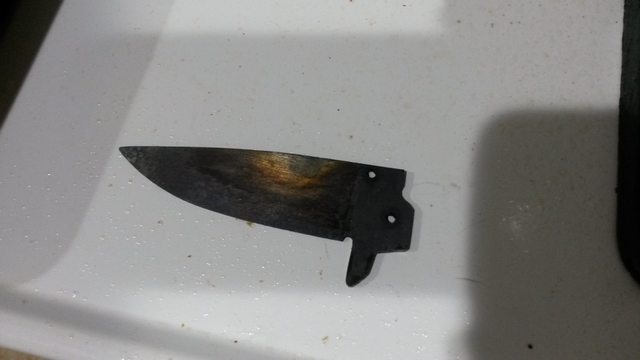
The ancient differential hardening technique of "I was running out of gas for my torch and could only heat the blade". I'm actually not sure what the dark spot near the base is, it's not a stain or glare, it's a dark spot in the metal.
EXI7lKal.jpg

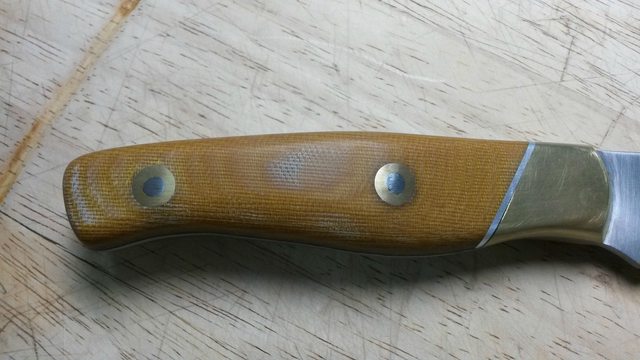
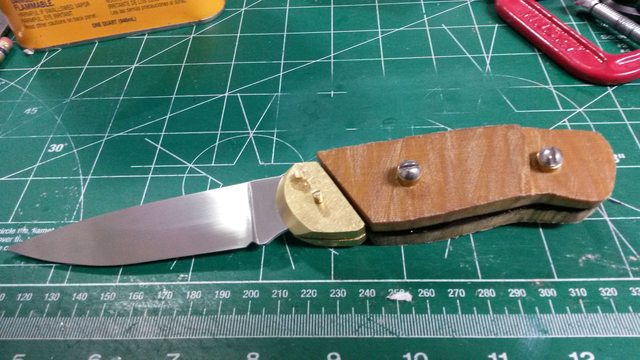
The bolsters were made from scrap 1/4" brass I found lying around a shop at uni. The handle material (mystery G-10) was actually electrical insulator my dad found kicking around at his workplace.
sMd7L0kl.jpg

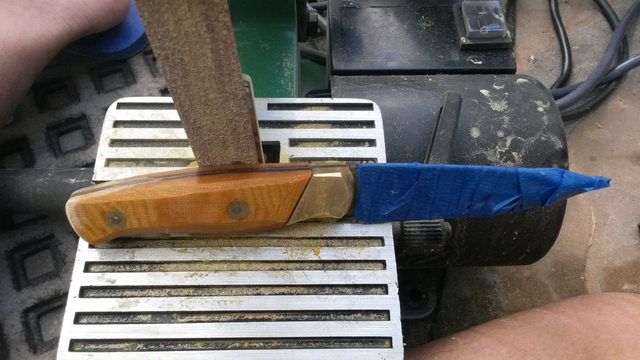
I was pretty happy to get my hands on the infamous $40 (and that was before the 20% off coupon) Harbor Freight 1x32, I sure didn't want to file and saw through all that handle material.
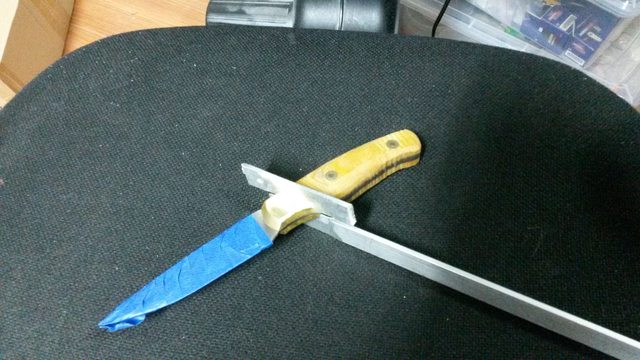
GksOMbLl.jpg

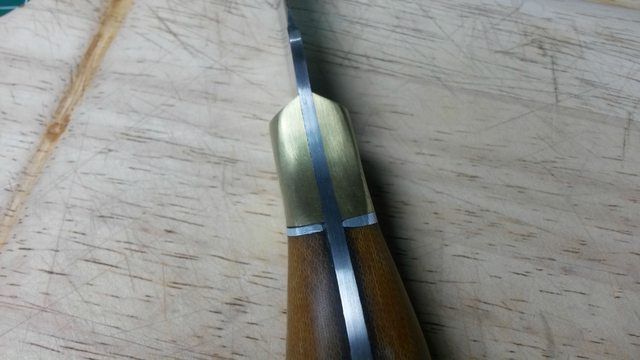
I didn't think my order of operations through very well, and ended up shimming the gap between the bolsters and handle material with some scrap aluminum.
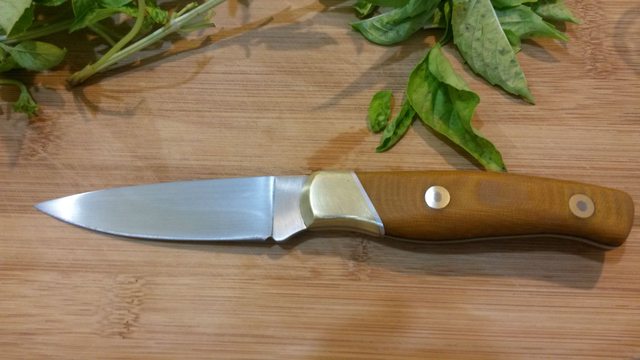
1aGZO9yl.jpg

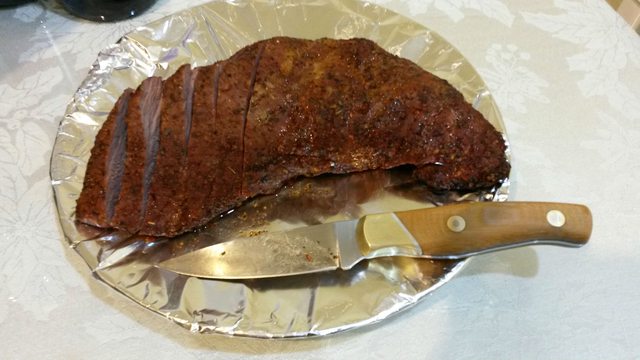
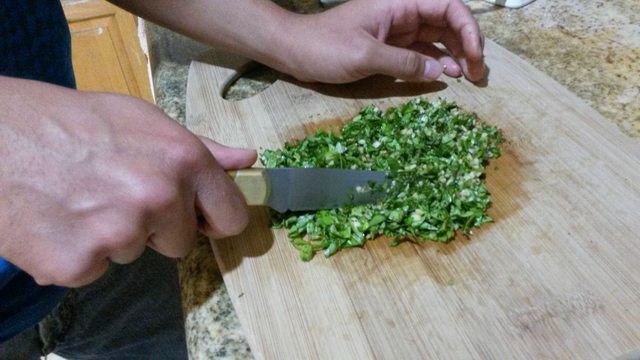
Everything sanded up to 400 grit, just in time for 4th of July dinner!
nSovofbl.jpg

TnSKoSWl.jpg

1RhpazYl.jpg

1RhpazYl.jpg

3AOAvW4l.jpg

BcosJTKl.jpg

BcosJTKl.jpg


This knife is currently in my parents' kitchen, happily cutting up vegetables for breakfast omlettes and the like. While the carbon steel is a bit more maintenance than my family is used to, it's definitely the sharpest knife in the kitchen. It's gotten a pretty nice patina on it, but the scour side of a sponge easily takes off the patina.
I have a more in depth WIP on my blog if you wanna check it out (rest assured mods, I don't sell anything yet).
http://borjasbuildblog.wordpress.com/2014/07/15/paring-knife/

Hold on for part 2, which will probably have more questions.
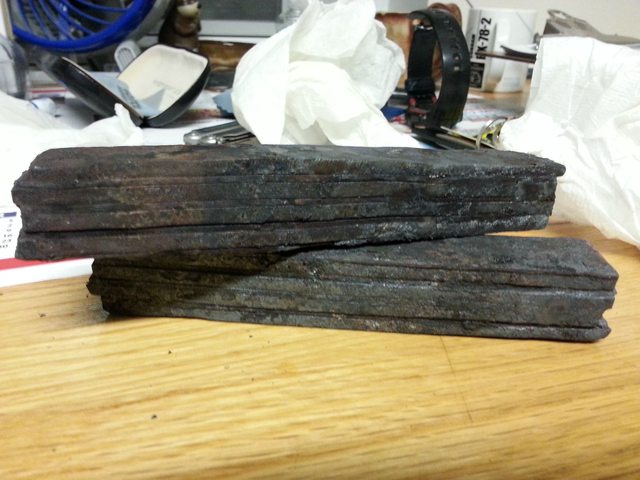
 
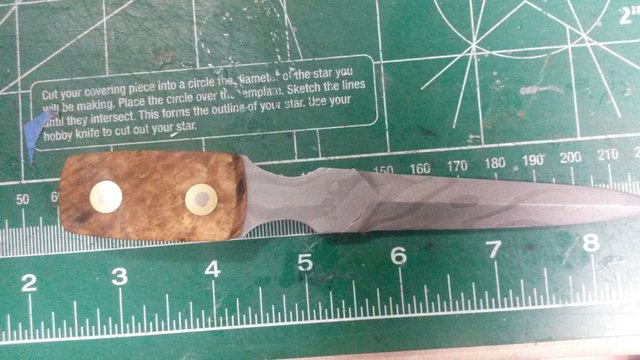
The next two blades I made happened sorta concurrently, but this post is about a letter opener I made for a mentor of mine. I started this maybe a year ago, but I finished this right around the end of August right before school started for me.
JjP9rF1l.jpg

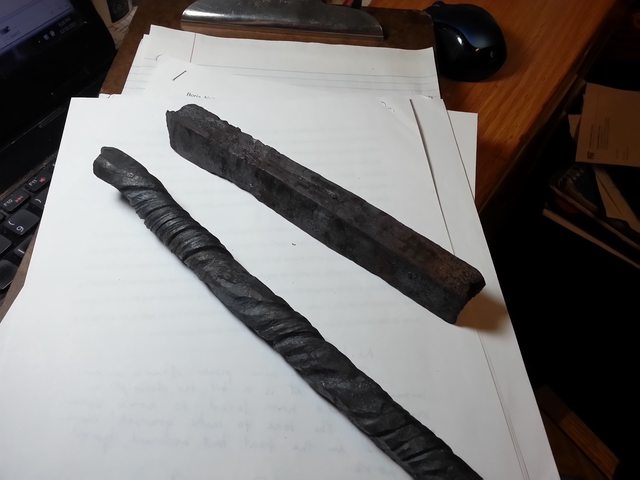
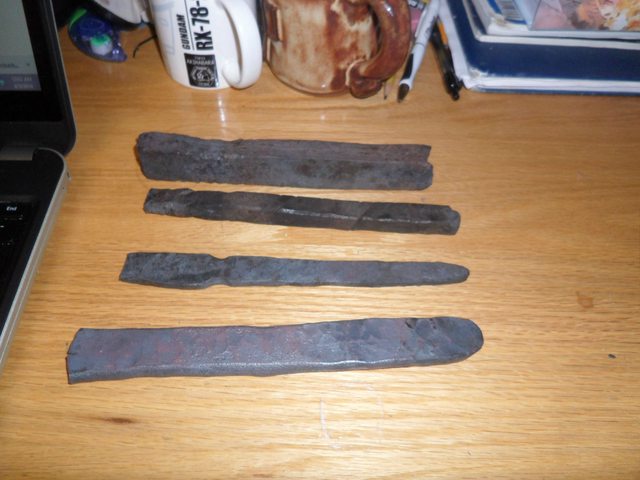
I started out with a bunch of 15n20 and 1084 from Aldo. I was too impatient to get someone to weld it for me, so I just ended up tying it with bailing wire and forge welding it like that. Despite my stupidity, the billets welded up somehow, although not without a lot of soreness in my arms. This was first batch of damascus.
1gQy7sdl.jpg

I gave one of the billets a big twist, and then struggled to flatten it out. It was pretty squirrelly and the valleys of the twists didn't want to weld up.
S1Goupxl.jpg

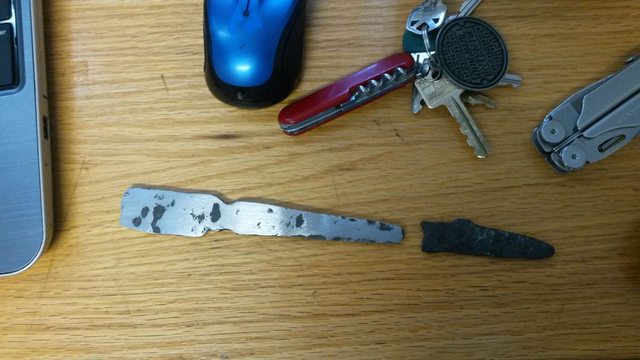
I forged the basic shape of the letter opener, but I left it a bit too long in the fire and burned off the tip.
bKKu3fRl.jpg

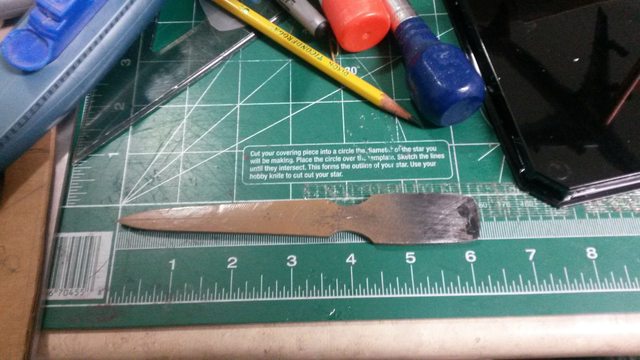
After a lot of grinding and filing, I got a shape that didn't have too many terrible burns or inclusions and was roughly symmetrical.
LBY6Mn7l.jpg

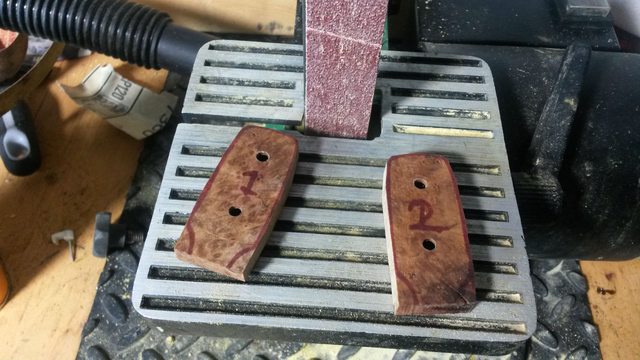
I wanted this thing to be pretty dressy, so I roughed out some stabilized Black Ash burl scales. At this point, after only having ground mystery G-10 and metals, I was pleasantly surprised at how well the Harbor Freight 1/2hp motor could handle woods.
czEhbv5l.jpg

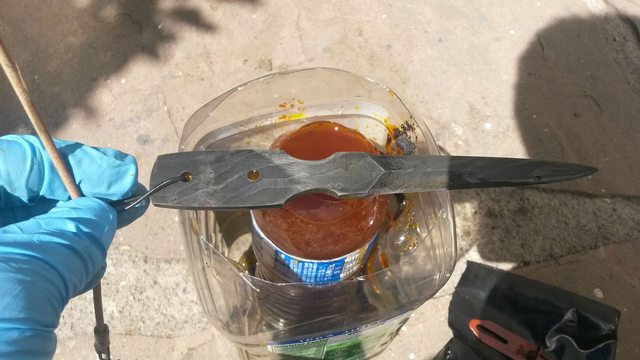
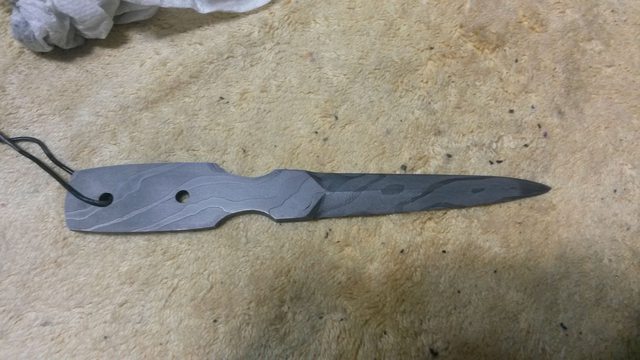
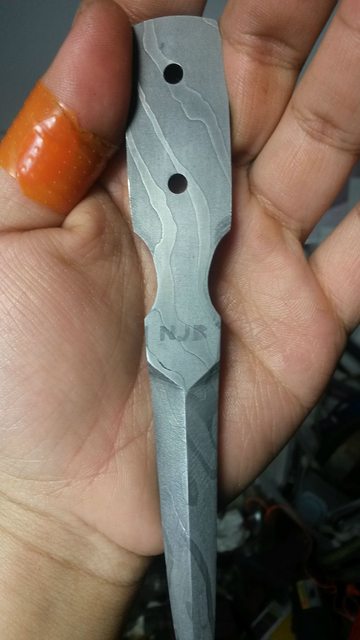
I was skeptical about completing this project and gifting it until I etched it in ferric. Boy do I wish I had spent more time sanding out all the file marks. I actually was on the fence about heat treating this letter opener (the inclusions and failed welds might have caused it to crack in the quench), but I ran out of gas so it didn't get HT'd
OALwIJpl.jpg

KOy1e7Ul.jpg

q9yRUA5l.jpg

bfBH36Kl.jpg

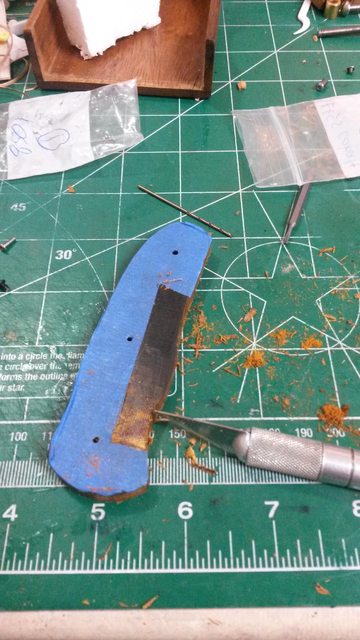
I cut my initials out of some blue painter's tape, using a computer printout as a guide.
BNtsYdll.jpg

I just used the trusty old 9V battery + salty q tip to etch my name, nothing too fancy. It actually creates a really cool shimmering effect since it's etched on both the 15n20 and the 1084.
nXKibzwl.jpg

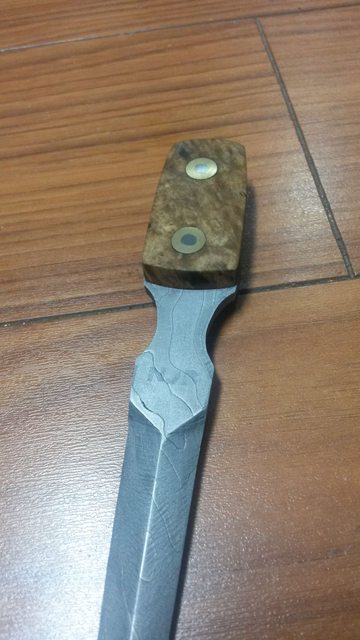
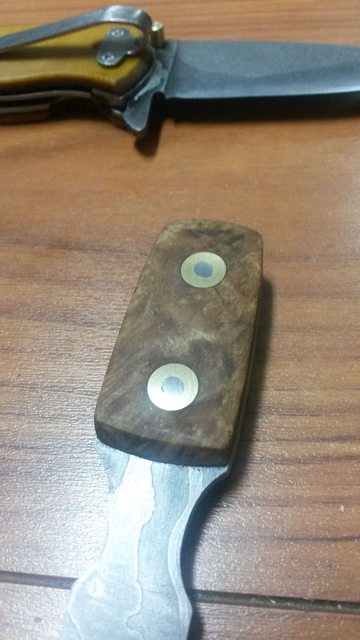
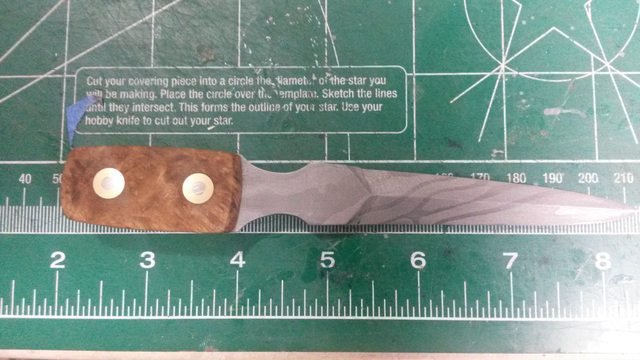
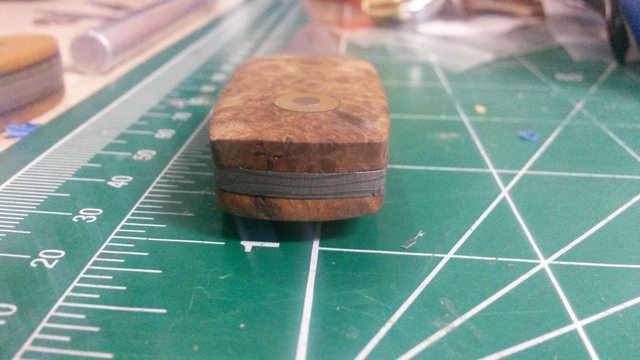
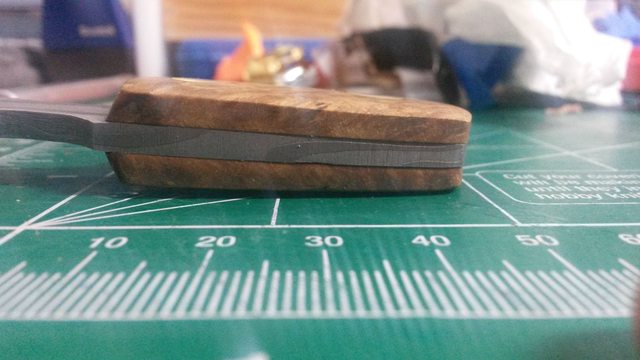
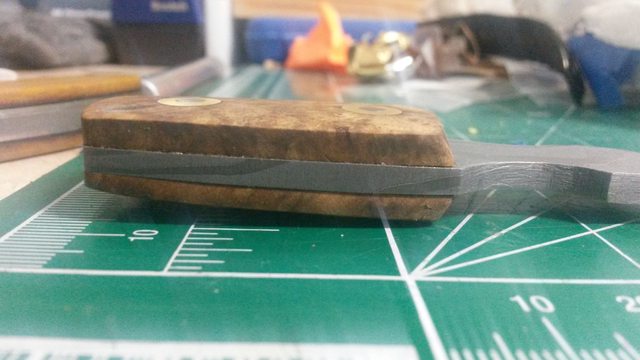
Here's some shots of the finished letter opener. I didn't treat the burl or anything, I just sanded it to 400 grit.
nTHOXc5l.jpg

bXTFy7xl.jpg

n7EHwVgl.jpg

I tried to do the whole "shape the scales before etching", but my alignment wasn't so good. I think if I used just plain pins instead of loveless bolts I might have gotten more consistent alignment.
VqjlGRUl.jpg

259d61Vl.jpg

The mentor I gifted this to was quite the opposite of a knife person, but I think he was definitely excited by the burl and the etch :D
Again, slightly more pictures and documentation:
http://borjasbuildblog.wordpress.com/2014/08/31/36/"]http://borjasbuildblog.wordpress.com/2014/08/31/36/[/URL]

Part 3 I'll go over that liner lock you might have seen hiding in the back of one of the pictures.
 
I like your enthusiasm and I can see some attention to detail on your first couple of knives.

I'll just comment on your heat treat if the o1 paring knife. O1 steel has more alloying in it and requires soaking for 10-15 minutes at austentizing temp. Using an acetylene torch will not work as well with this steel. You also need to use more quench oil than you did. In such a small volume the oil temp will raise very quickly when place your red hot blade in there. This decreases the effectiveness of the quench. You should be using a gallon of oil at the very least. Canola oil would be just fine for O1 and it doesn't give off nasty fumes when you quench.

Keep it up, and stick around here. You might learn a few things ;)
 
Thanks for the encouragement and welcome, Shane. Yeah, I've read a bit about how O1 has a lot of subtleties to it. I think I will move to canola in the future, since I'm not super satisfied with the other blade I HT'd (about to post about that). If I could get 1084 precision ground, I sure as hell would use that instead heh.
 
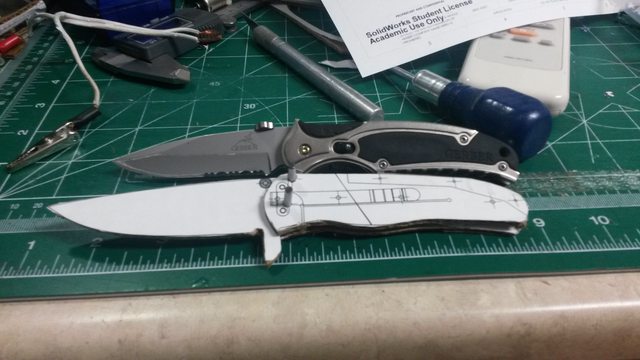
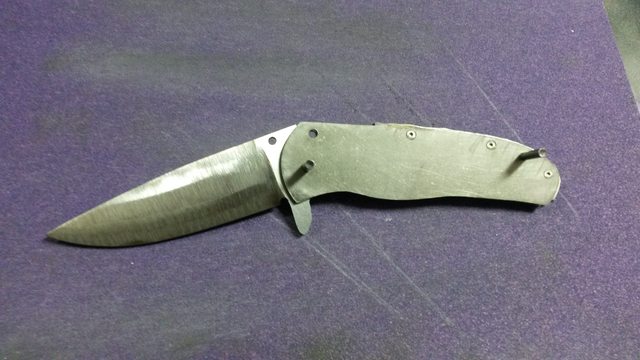
This one is the latest, my pride and joy that I've shown off to all my friends and machine shop instructors.
DlJevmVl.jpg

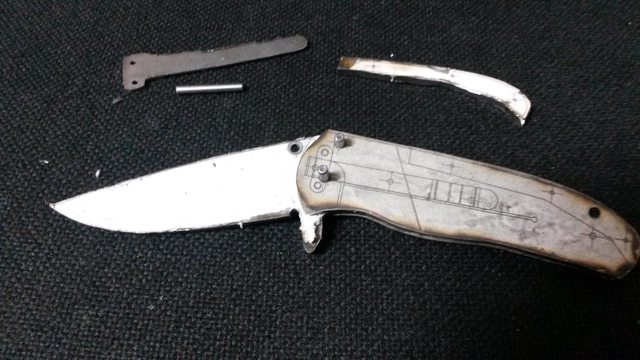
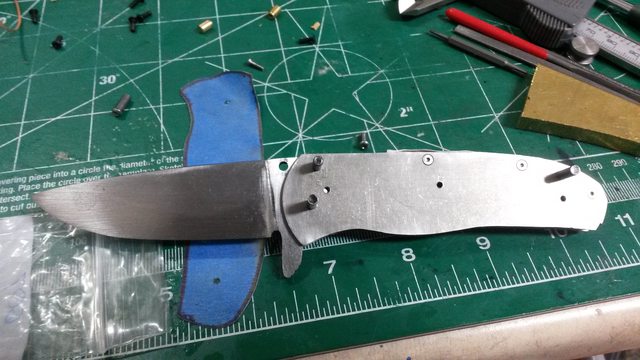
I made a model of the knife in SolidWorks and made a cardboard mock up of it. CAD made it easy to get all the mechanisms to line up.
XGPCuprl.jpg

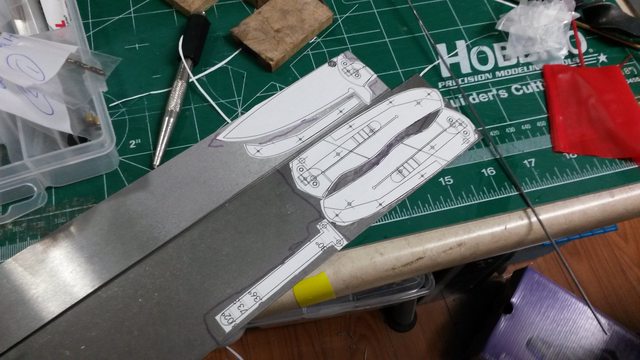
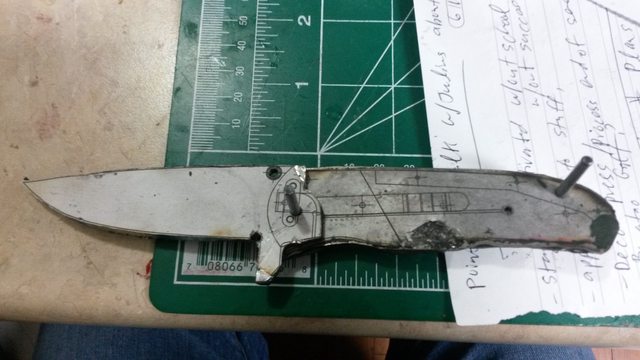
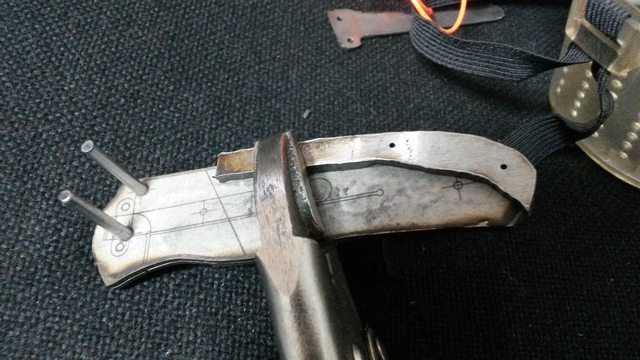
Printed out the patterns and glued onto 0.050" 6Al4V and 1/8" O1.
RDF79Dal.jpg

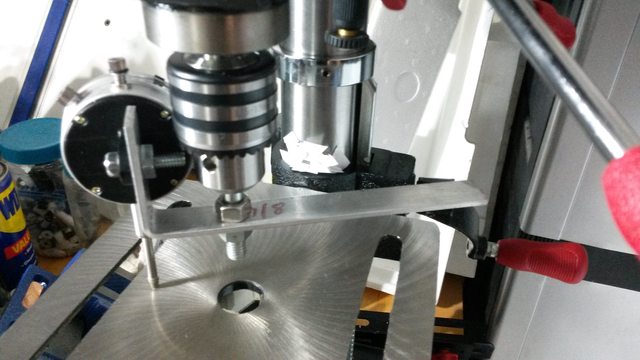
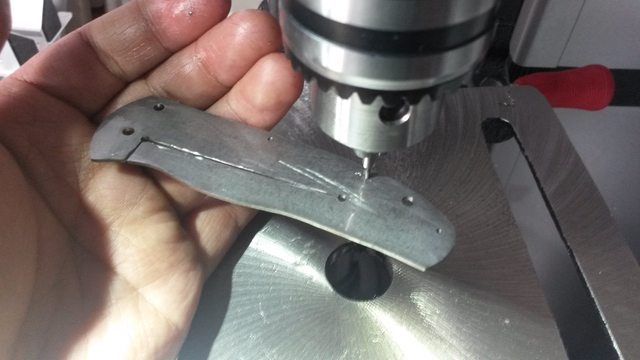
I used a ~$150 Craftsman drill press and a $15 dial indicator to true up the drill press to the best of my ability. I ended up using a ton of time, trial and error, and paper shims to get it where I wanted. :foot:
NqU1OZrl.jpg

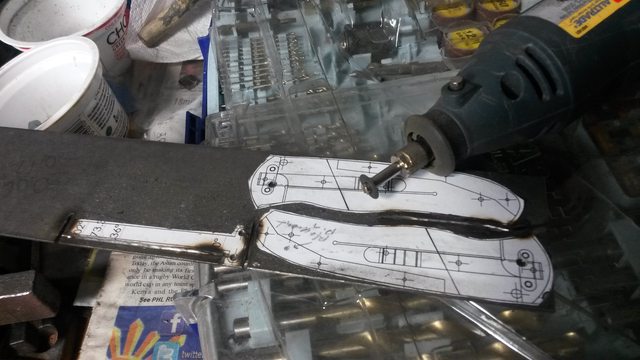
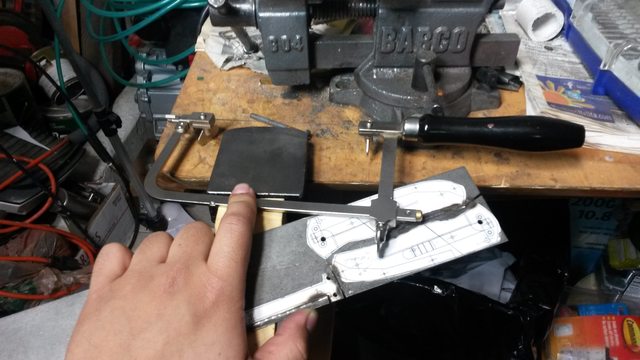
Cutting the titanium without a band saw or water jet was pretty taxing.
6deGWf9l.jpg

dEFLKiYl.jpg

Pd5NIuxl.jpg

7TPLjJEl.jpg

I cut out the lock bar using a Dremel abrasive wheel. It seemed like the thinner disks cut through the titanium more easily than the thicker, fiberglass reinforced ones.
ItCWQRdl.jpg

QVS4Oi4l.jpg

I tapped the holes in the titanium by chucking the taps on my drill press without belts and just manually spinning the parts around it while holding the chuck still.
4bpEjzQl.jpg

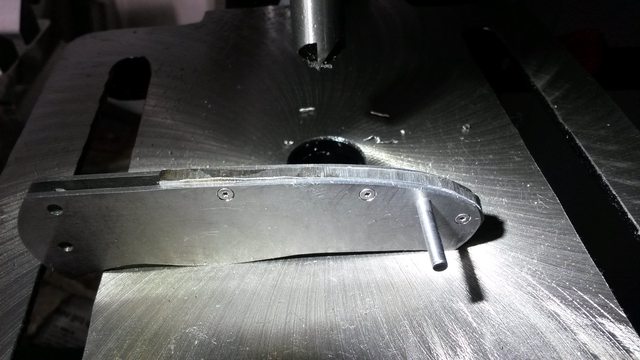
Backspacer screws countersunk.
ntUYonRl.jpg

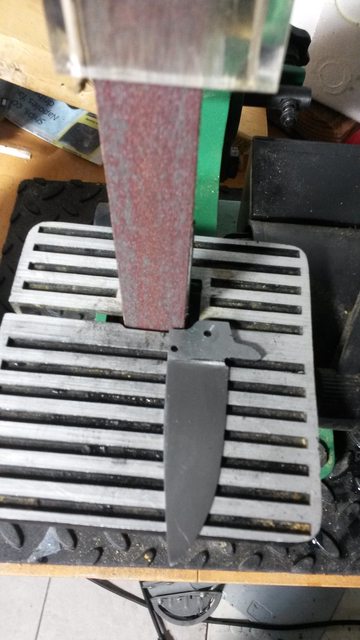
This was my first blade ground on a belt sander. Probably should have practiced on some scrap first.
h883iaCl.jpg

More mystery "G-10".
Mgk4JIXl.jpg

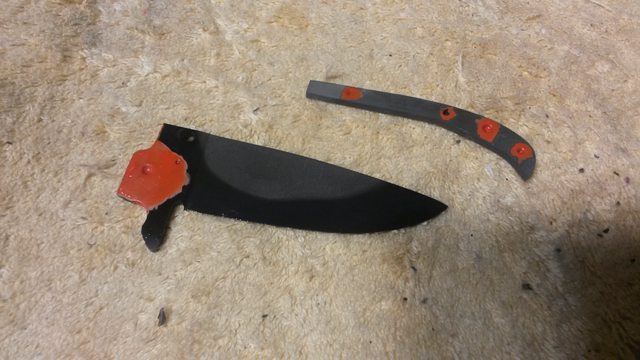
Blade torched and treated like my paring knife and tempered in the oven.
h9Pgx09l.jpg

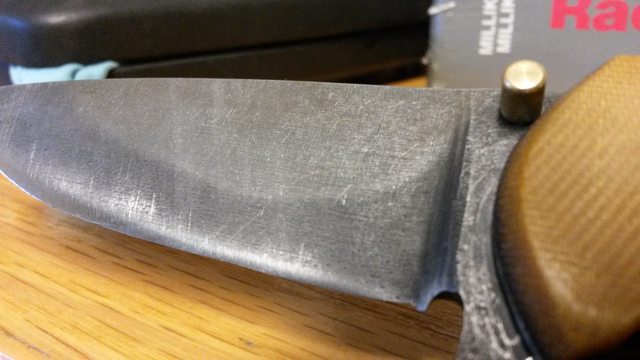
I wasn't as ruthless about getting all the scratches out because I planned on etching and stone washing the blade. That was sort of a mistake, as the scratches showed up later.
ZZ5NWKBl.jpg

O8qF2y0l.jpg

ezRoi8fl.jpg

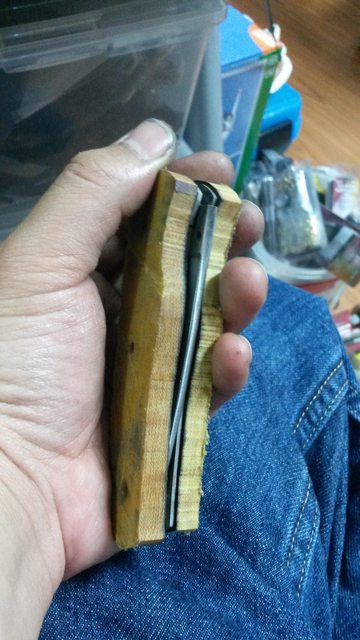
The scales were much fatter than expected because I cut them wide to make sure they didn't get too thin, but I ended up over compensating. It took a lot of sanding (and burning) to get them to just a little over 1/8" thick.
GLPefN8l.jpg

80vxY8Sl.jpg

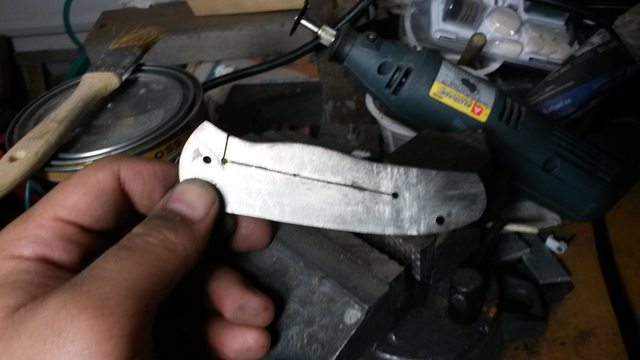
Relieving the scale so that the lock bar can move outwards.
Pizwrehl.jpg

jNiQNH1l.jpg

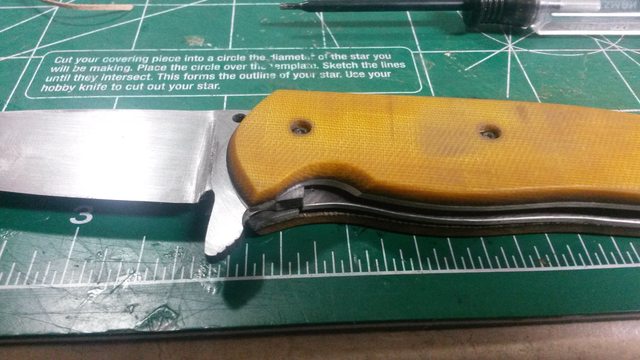
Thumb cut out roughed out. I ended up widening it, and in the future I will make the cutout much further from the actual tang of the knife.
w813jUYl.jpg

Blade and back spacer etched, with the holes and pivot surfaces covered in nail polish to keep them smooth. Not pictured but I then put the two in a big jar of rocks and shook it until tired.
b7Tr3jOl.jpg

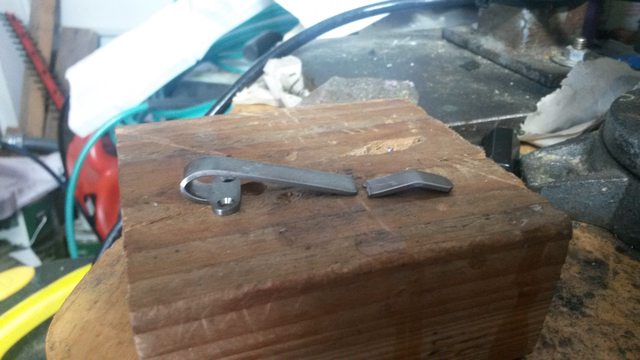
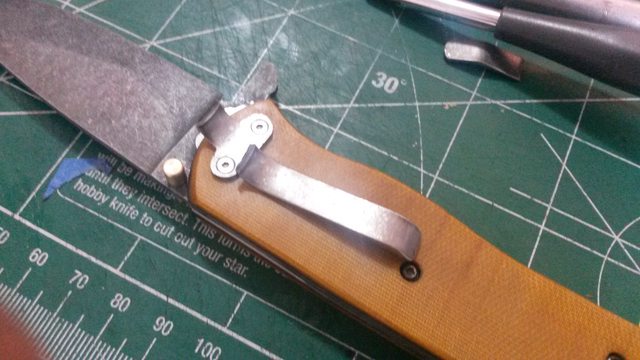
Bending Ti clips cold is very frustrating.
BR8DLAkl.jpg

cQ3fvPUl.jpg

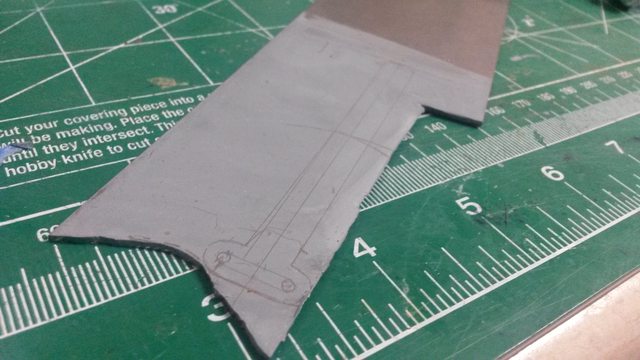
This was late at night and I was too tired and frustrated to print another copy, so I just manually scribed one.
NRR1gzxl.jpg

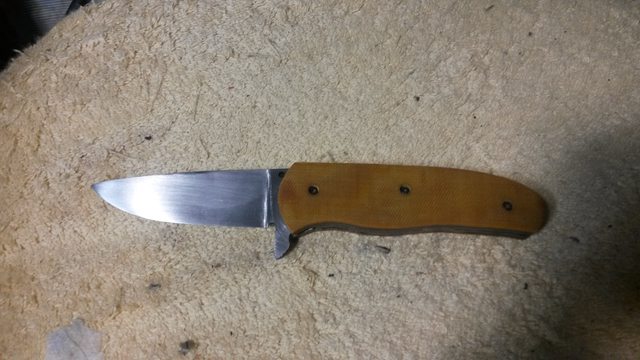
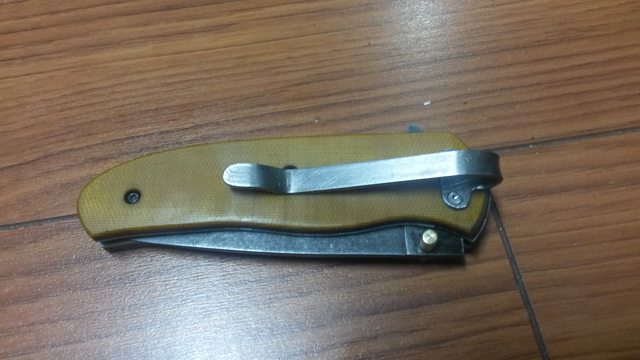
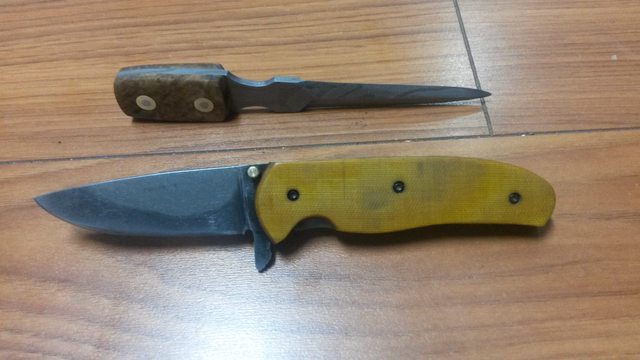
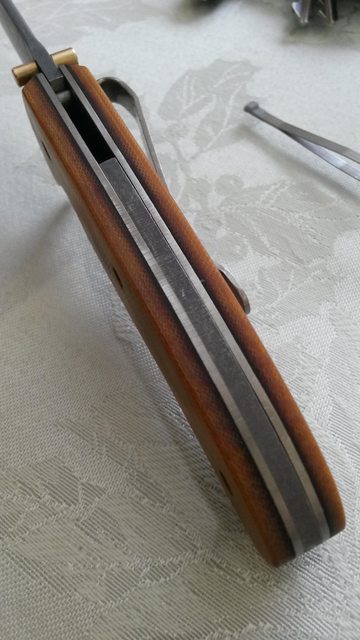
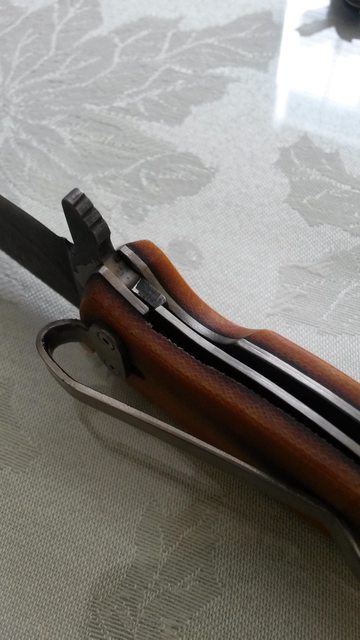
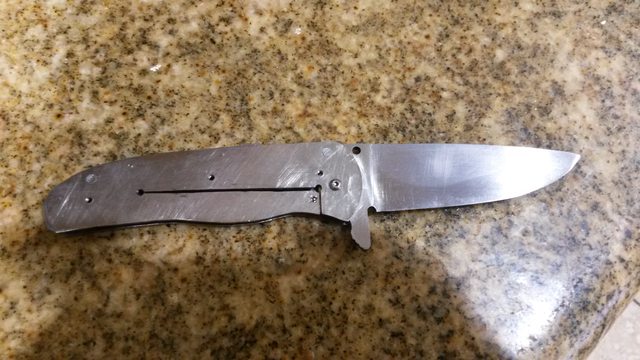
Tada, actual nice knife #2.
wbvxmlnl.jpg

53LEUwzl.jpg

PNG9aKWl.jpg

DIuIAVVl.jpg

rwWirrol.jpg


Longer documentation: http://borjasbuildblog.wordpress.com/2014/09/03/liner-lock-folder-prototype/

I guess here's where my ramble and picture spam really becomes Shop Talk - BladeSmith Questions and Answers
I love my new EDC knife (it's really the first knife I've owned or EDC'd except my Leatherman Wave), but it has a lot of flaws that I'd like to improve upon for the next round. My thumbs and wrists are actually really sore since I've basically been playing with it non stop for the past couple of months. Obviously my fit and finish could use some work, but I figured my first few ones are going to be beaters :D

The main thing is that it doesn't "flip". It needs quite a bit of wrist action, or the action needs to be fairly loose. I think it's down to a few factors: my pivot hole was not reamed correctly (there's a bit of slop to it), the washer surfaces aren't flat (I tried to remove a bit of thickness using the belt grinder and ended up grinding off parallel), and the action's a bit sticky. I think my detent's a bit weak too. I think most of these I know how to fix next time except the detent. Any advice on making the detent stiffer? Right now it's laughably weak, and a lot of my pants now have a tiny cut on pocket from it opening up :cower: It "sucks in" when closed, but I definitely can't flip it using the flipper without some wrist. The lockup is also not that great in the sense that it's pretty easy to cause the lock to fail. Again, I'm pretty sure if the sides were parallel, this wouldn't be a problem, but I think I'm going to grind the tab angle shallower (currently at 9.5 degrees I think, might shoot for 7.5).

Obviously my heat treatment wasn't anything close to idea, but I'm curious as to how to improve it. I've dropped this blade a few times, and the tip snapped and blunted. Is it normal for pocket knife tips to not survive drops? I also attacked some hard plywood knots and noticed the blade chipped out. This blade was tempered to about 400 degrees (kitchen oven so not super accurate). Should I have bumped up the tempering temperature?

What's the best way to deal with sharp 90 degree edges? I rounded them off with sandpaper for the "G-10", but on the metal it kind of needed a file. But at the same time, rounded them makes them look different and not line up properly. How do you strike a balance of "won't cut you when you hold it" and "wobbly rounded edge"?

Anyways, I'll shut my trap and listen, comments and criticism welcome!
 
Last edited:
Yeah Boogaloo, I have a detent set in. It "works", it's just a lot weaker than I'd like. I drilled the detent hole on the tang by putting sharpie on the surface and drilling a hole a thousandth or so above where the detent ball would rest. Perhaps I should have gone a bit further up? Someone also mentioned geometry of the flipper/stop pin/pivot in another post, I'm not too sure about how all the relations are supposed to work out.
 
Thanks Gottimus, I've gotten a little bit better since these knives, mostly in fit and finish and grinds (thank you filling jig!), but I still have quite a ways to go!
 
Back
Top