
-
The BladeForums.com 2024 Traditional Knife is available! Price is $250 ea (shipped within CONUS).
Order here: https://www.bladeforums.com/help/2024-traditional/
You are using an out of date browser. It may not display this or other websites correctly.
You should upgrade or use an alternative browser.
You should upgrade or use an alternative browser.
First Rough Design. Comments?
- Thread starter JMAN86
- Start date

looks fine - recommend you make a practice version out of wood or plastic so you will see how it feels in hand, that way you won't remove metl that you later decided you should have kept.
Good call. It's hard to get a solid feel for the design with only cardboard.

- Joined
- May 2, 2013
- Messages
- 1,711
Go buy a yardstick from Lowe's for about $.67. Will give you three feet of easy to carve wood to play with. Looks nice for a first. The important things to learn with a first knife are the bevel grinds. Get that down, and you can start to venture outside the box (figuratively and literally as you are playing with a rectangle of steel.)
As far as not wanting to remove a lot of metal, a good file will remove metal faster than you might think. Keep it carded off and you can cut a pretty decent shape out of a bar of annealed steel with one.
Your proportions are spot on. Usually a first handle is too small or too big, yours looks like it will be about right. If you add a little more curve to the back of the blade by carrying the arc a little further back, and round the butt just a little more, you will have a very classic looking traditional knife design going on. Click on my sig and find the misc. pictures. There you will see a picture of a 100+ year old MSA skinner that is very nearly what you have drawn. It just flat feels right in the hand for a design that old. And today we tend to think were are all ergonomically correct and stuff.... lol.
As far as not wanting to remove a lot of metal, a good file will remove metal faster than you might think. Keep it carded off and you can cut a pretty decent shape out of a bar of annealed steel with one.
Your proportions are spot on. Usually a first handle is too small or too big, yours looks like it will be about right. If you add a little more curve to the back of the blade by carrying the arc a little further back, and round the butt just a little more, you will have a very classic looking traditional knife design going on. Click on my sig and find the misc. pictures. There you will see a picture of a 100+ year old MSA skinner that is very nearly what you have drawn. It just flat feels right in the hand for a design that old. And today we tend to think were are all ergonomically correct and stuff.... lol.
Go buy a yardstick from Lowe's for about $.67. Will give you three feet of easy to carve wood to play with. Looks nice for a first. The important things to learn with a first knife are the bevel grinds. Get that down, and you can start to venture outside the box (figuratively and literally as you are playing with a rectangle of steel.)
As far as not wanting to remove a lot of metal, a good file will remove metal faster than you might think. Keep it carded off and you can cut a pretty decent shape out of a bar of annealed steel with one.
Your proportions are spot on. Usually a first handle is too small or too big, yours looks like it will be about right. If you add a little more curve to the back of the blade by carrying the arc a little further back, and round the butt just a little more, you will have a very classic looking traditional knife design going on. Click on my sig and find the misc. pictures. There you will see a picture of a 100+ year old MSA skinner that is very nearly what you have drawn. It just flat feels right in the hand for a design that old. And today we tend to think were are all ergonomically correct and stuff.... lol.
Thanks for the great information. I will absolutely try using a yardstick from Lowes.
- Joined
- May 8, 2013
- Messages
- 41
Thanks for the great information. I will absolutely try using a yardstick from Lowes.
Or get a few of the free paint stirrers from Home Depot.
- Joined
- May 2, 2013
- Messages
- 1,711
Stirrers are fine, but really thin, and only about an inch wide. They tend to be really crappy wood too. I use em, but found yardsticks are much better...
- Joined
- May 8, 2013
- Messages
- 41
Thanks for the tip

Hengelo_77
Basic Member
- Joined
- Mar 2, 2006
- Messages
- 6,319
My 2c.
a bit more belly, have it start earlier and let the line flow.
Same with the spine (or drop point)
a bit more belly, have it start earlier and let the line flow.
Same with the spine (or drop point)

Barry Clodfelter
Knifemaker / Craftsman / Service Provider
- Joined
- May 29, 2007
- Messages
- 579
It looks blocky. Look at other similar sized knives to get a better idea how the tip should look as well as the handle. I know you want to maximize your bar but waste is part of it with stock removed work. Long flowing curves work better than straight lines. One other thing your bar is 1" wide so many shortening the blade length a little would give you room to get it to flow.

- Joined
- Feb 5, 2010
- Messages
- 3,911
Okay, I'll be the Debby downer here. Not a good design. Lots of straight lines, no curves. It's a lazy design, and no matter how well you do with it it will always look like a lazy design. Don't give in to laziness. Design something you actually want to hold and use. Design something that looks like a knife, not a sharpened bar.

- Joined
- Feb 15, 2010
- Messages
- 696
Okay, I'll be the Debby downer here. Not a good design. Lots of straight lines, no curves. It's a lazy design, and no matter how well you do with it it will always look like a lazy design. Don't give in to laziness. Design something you actually want to hold and use. Design something that looks like a knife, not a sharpened bar.
The OP stated that this is his first attempt and as such, it may out of his skill set and tools to design and make a knife with more curves. My first blade wasn't too far from his design for the very reasons mentioned. Just my .02

- Joined
- Nov 29, 2010
- Messages
- 1,320
It looks blocky. Look at other similar sized knives to get a better idea how the tip should look as well as the handle. I know you want to maximize your bar but waste is part of it with stock removed work. Long flowing curves work better than straight lines. One other thing your bar is 1" wide so many shortening the blade length a little would give you room to get it to flow.
tryppyr said:Okay, I'll be the Debby downer here. Not a good design. Lots of straight lines, no curves. It's a lazy design, and no matter how well you do with it it will always look like a lazy design. Don't give in to laziness. Design something you actually want to hold and use. Design something that looks like a knife, not a sharpened bar.
What these two said. Think of the knife as a woman. Everyone likes a few curves on a woman! Curves are good. Curves are your friend. Straight is boring.
- Joined
- Jul 13, 2009
- Messages
- 21,855
I just purchased a bar of 1/8'' O1 from Admiral and will soon embark on creating my very first knife. I wanted to keep the design simple because I'm only using files right now. Here is what I came up with for a rough template;

Good choice on 1/8" rather than 1/4"
1" is pretty narrow, I'd probably have gone with 1 1/4" or 1 1/2"
As you can see your knife is very straight.
The wider stock would have given you some room to put curvature in the spine.
I would bring the clip back further for a pointier point, make the belly curve more gradual so it doesn't come down and hit that flat bottom
Get a set of french curve templates for drafting, Staples and other stationary / art supply stores have them.
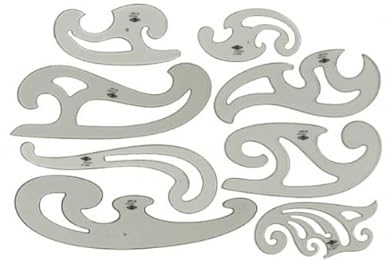
Do your drawings and design, THEN buy your material to suit the drawing - nnot the other way around.
Have a look at the design links in this post
http://www.bladeforums.com/forums/s...al-Testing-Facilities?p=11996394#post11996394
Here's an example of a very simple design with nice curves.
http://i768.photobucket.com/albums/...fe Challenge/Challenge Results/chuck25201.jpg
Last edited:

- Joined
- Nov 10, 2010
- Messages
- 575
JMAN86,
If you are located in east TN, you are more than welcome to come by my little shop to work on your knife. I am a relatively new maker myself, but I feel I am progressing rapidly and could possibly be of some assistance. Listen to the suggestions above with your design. 1" width stock is a bit narrow, but I'm sure we could squeeze a sexy, smaller edc design out of it.
Adam Buttry
If you are located in east TN, you are more than welcome to come by my little shop to work on your knife. I am a relatively new maker myself, but I feel I am progressing rapidly and could possibly be of some assistance. Listen to the suggestions above with your design. 1" width stock is a bit narrow, but I'm sure we could squeeze a sexy, smaller edc design out of it.
Adam Buttry

- Joined
- Feb 17, 2009
- Messages
- 7,310
Work with what you are comfortable in doing. Sure your knife is straight lines but you will learn a lot from it and your next knife you will add a few more techniques and even more with the knife after that.
It is far more important you do a good straight style knife then get frustrated trying to many things all at once.
Knock this one out and try your best at your grinds and plunges. You will carry that knowledge on to your next blade and you can put in a few more design elements.
Some new guys try to much in their first knife and it overwhelms them and they make mistakes simply because they bit off to much without having the experience needed.
Keep us up to date and good luck
It is far more important you do a good straight style knife then get frustrated trying to many things all at once.
Knock this one out and try your best at your grinds and plunges. You will carry that knowledge on to your next blade and you can put in a few more design elements.
Some new guys try to much in their first knife and it overwhelms them and they make mistakes simply because they bit off to much without having the experience needed.
Keep us up to date and good luck
Thank you for all the comments and suggestions.
I am out on the road tonight and only have my phone to view the forums. I will reply with more detail once I get home and have the ability to generate proper responses on my laptop. It would take me forever on this phone.
Josh
I am out on the road tonight and only have my phone to view the forums. I will reply with more detail once I get home and have the ability to generate proper responses on my laptop. It would take me forever on this phone.
Josh
A lot of knives are made that are similar to your design, but... you don't see them as sterling examples of art and design. For your consideration, I played around on the computer beginning with a design similar to yours, and then made small changes in steps to see how they affect the overall appearance.

Your design should cut as well as something a little more graceful and ergonomic, but with just a wee bit more shaping you can improve the knife's appearance and function. I also agree with AVigil;
"Work with what you are comfortable in doing. Sure your knife is straight lines but you will learn a lot from it and your next knife you will add a few more techniques and even more with the knife after that.
It is far more important you do a good straight style knife then get frustrated trying to many things all at once.
Knock this one out and try your best at your grinds and plunges. You will carry that knowledge on to your next blade and you can put in a few more design elements.
Some new guys try to much in their first knife and it overwhelms them and they make mistakes simply because they bit off to much without having the experience needed."
Have fun. If you're not making mistakes you're not learning.
- Paul Meske

Your design should cut as well as something a little more graceful and ergonomic, but with just a wee bit more shaping you can improve the knife's appearance and function. I also agree with AVigil;
"Work with what you are comfortable in doing. Sure your knife is straight lines but you will learn a lot from it and your next knife you will add a few more techniques and even more with the knife after that.
It is far more important you do a good straight style knife then get frustrated trying to many things all at once.
Knock this one out and try your best at your grinds and plunges. You will carry that knowledge on to your next blade and you can put in a few more design elements.
Some new guys try to much in their first knife and it overwhelms them and they make mistakes simply because they bit off to much without having the experience needed."
Have fun. If you're not making mistakes you're not learning.
- Paul Meske

1066vik
Gold Member
- Joined
- Nov 28, 2009
- Messages
- 21,482
A lot of knives are made that are similar to your design, but... you don't see them as sterling examples of art and design. For your consideration, I played around on the computer beginning with a design similar to yours, and then made small changes in steps to see how they affect the overall appearance.
Your design should cut as well as something a little more graceful and ergonomic, but with just a wee bit more shaping you can improve the knife's appearance and function. I also agree with AVigil;
"Work with what you are comfortable in doing. Sure your knife is straight lines but you will learn a lot from it and your next knife you will add a few more techniques and even more with the knife after that.
It is far more important you do a good straight style knife then get frustrated trying to many things all at once.
Knock this one out and try your best at your grinds and plunges. You will carry that knowledge on to your next blade and you can put in a few more design elements.
Some new guys try to much in their first knife and it overwhelms them and they make mistakes simply because they bit off to much without having the experience needed."
Have fun. If you're not making mistakes you're not learning.
- Paul Meske
4th from the top is simple and elegant -- this is a pattern I could use in the woods, in the shop, or to cut up dinner.
the 6th one would make a great paring/fruit knife.