First Three Knives Done!

Joined
Mar 19, 2010
Messages
1,154
After a lot of work, I finally finished my first three knives from this thread.

http://www.bladeforums.com/forums/showthread.php/1090264-My-Knife-Making-Journey-Advice-Would-Be-Greatly-Appreciated

I can't really call one or another my first knife as I worked on them in a single batch but the rosewood handled one was my first one cut out.

I used my 1 x 30 belt sander for shaping the blade, doing the bevels, the handles, and many other things. I also used a file and sandpaper to smoothen things out.

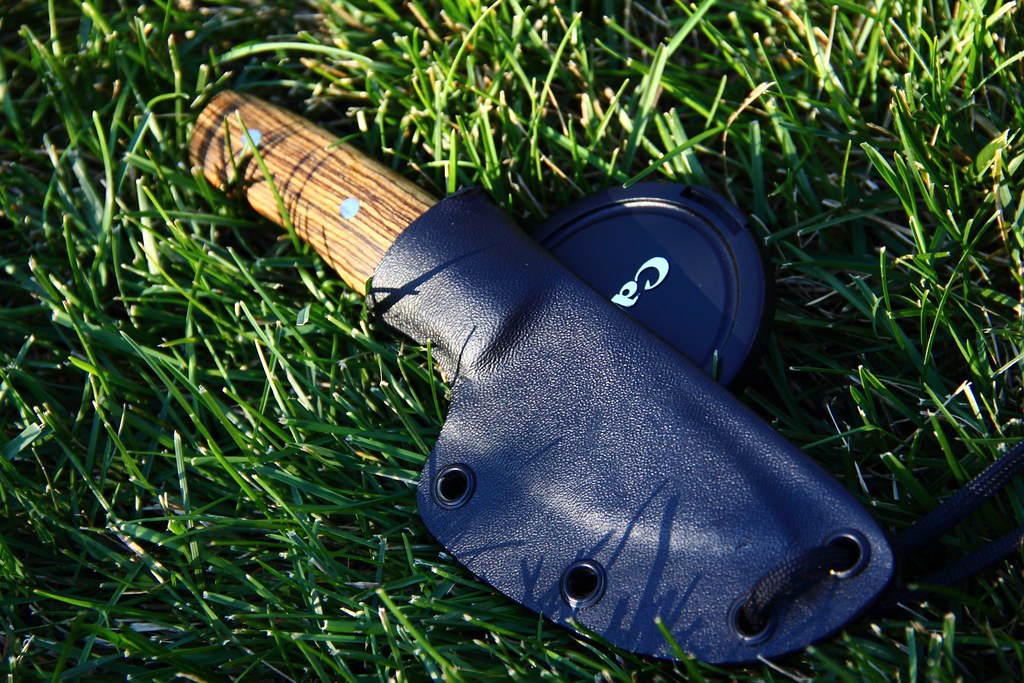
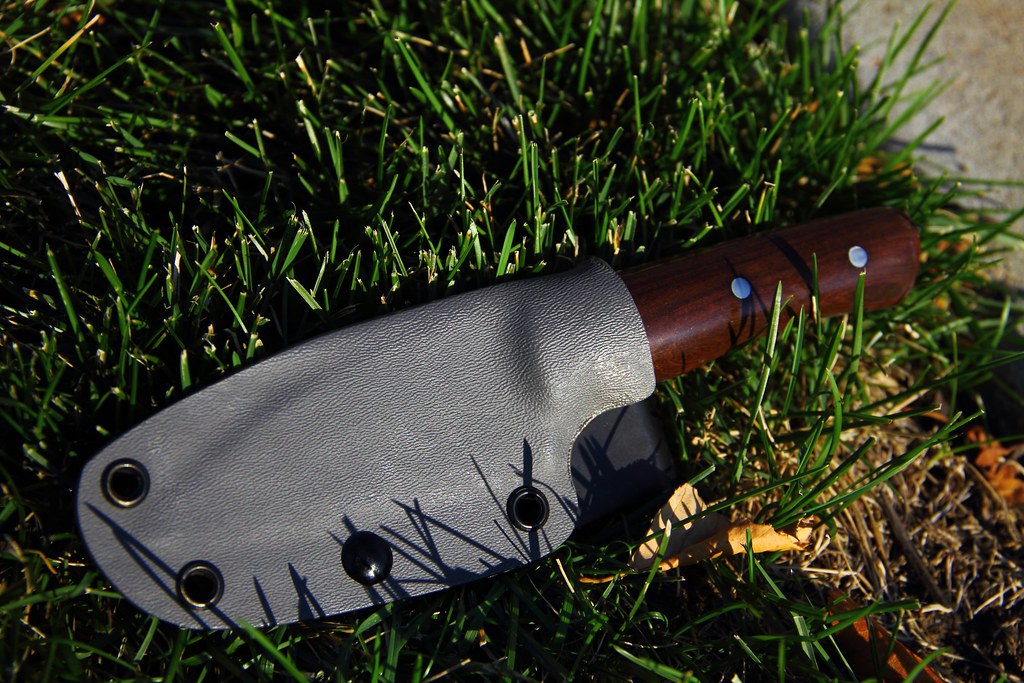
The kydex sheaths are also my first try with making a sheath.

Here they are!

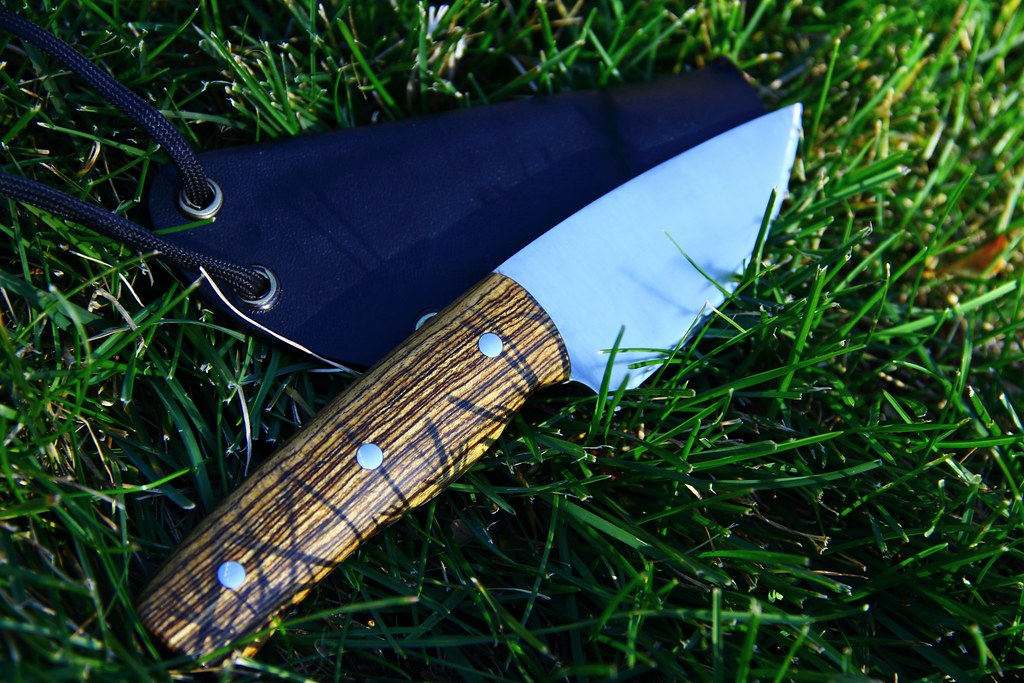
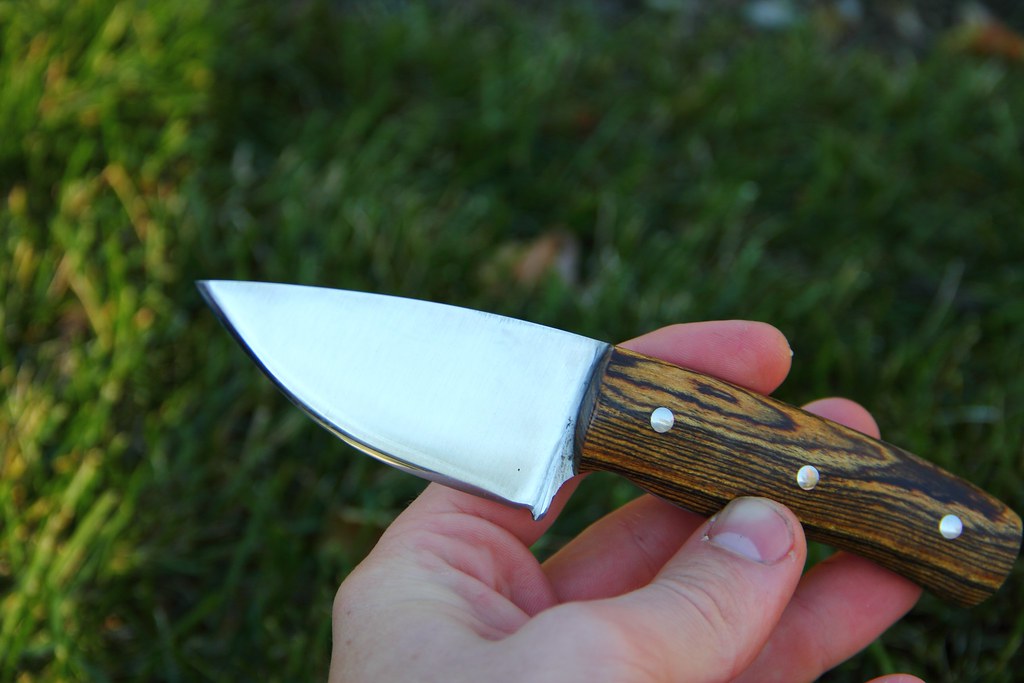
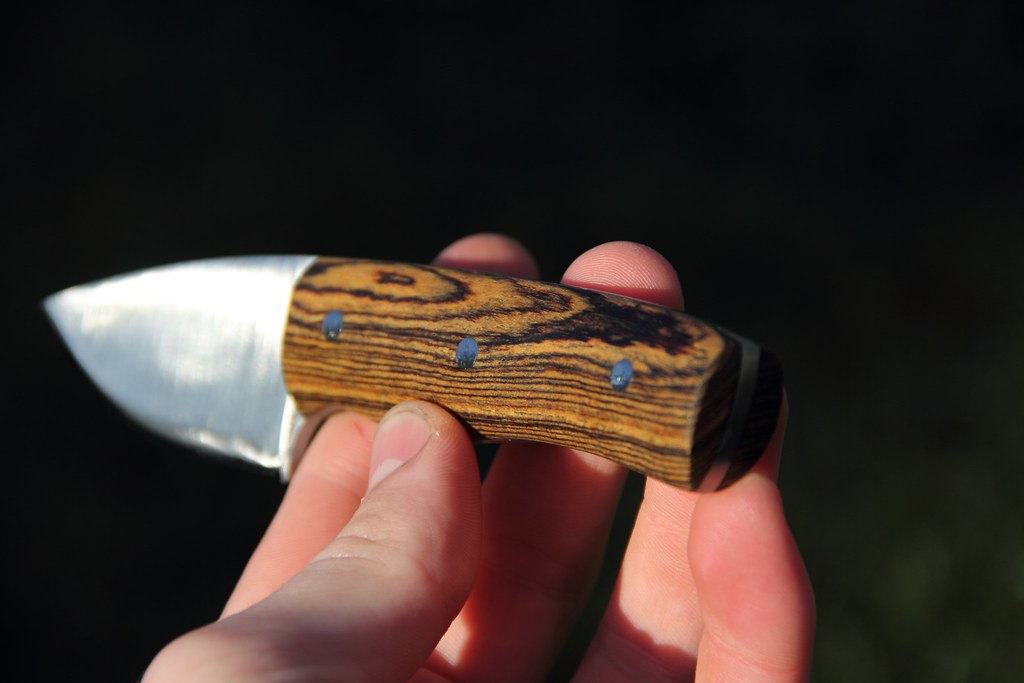
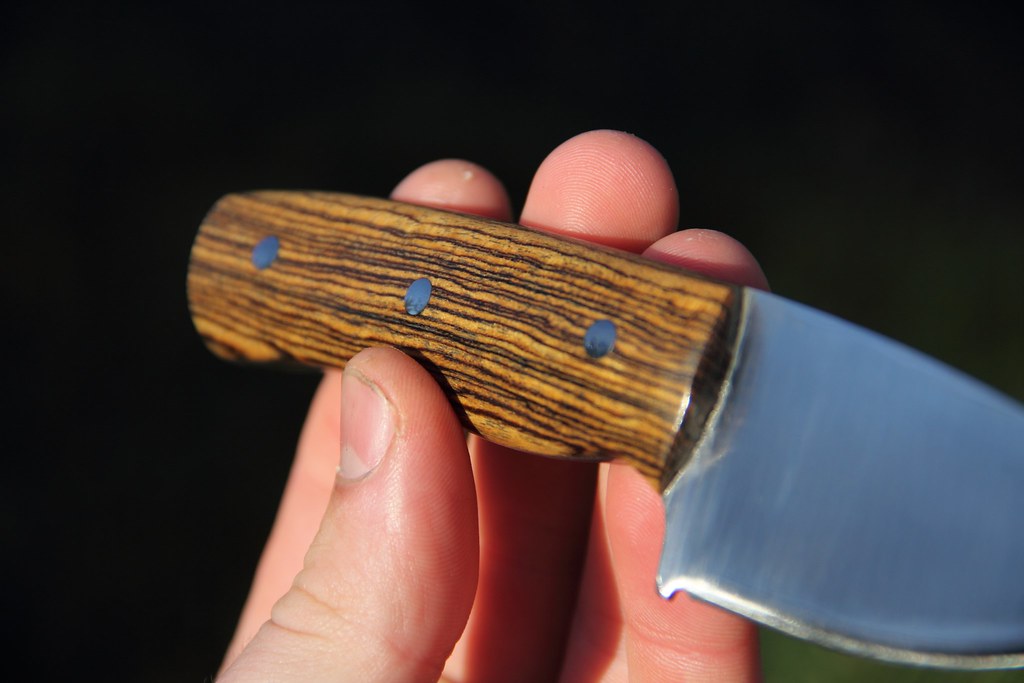
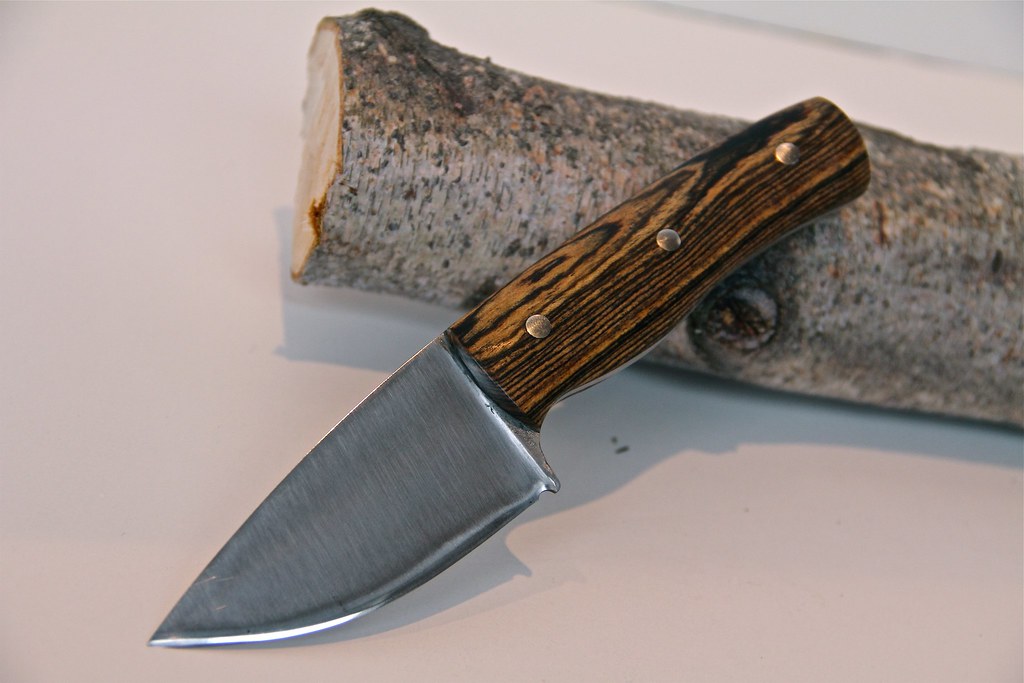
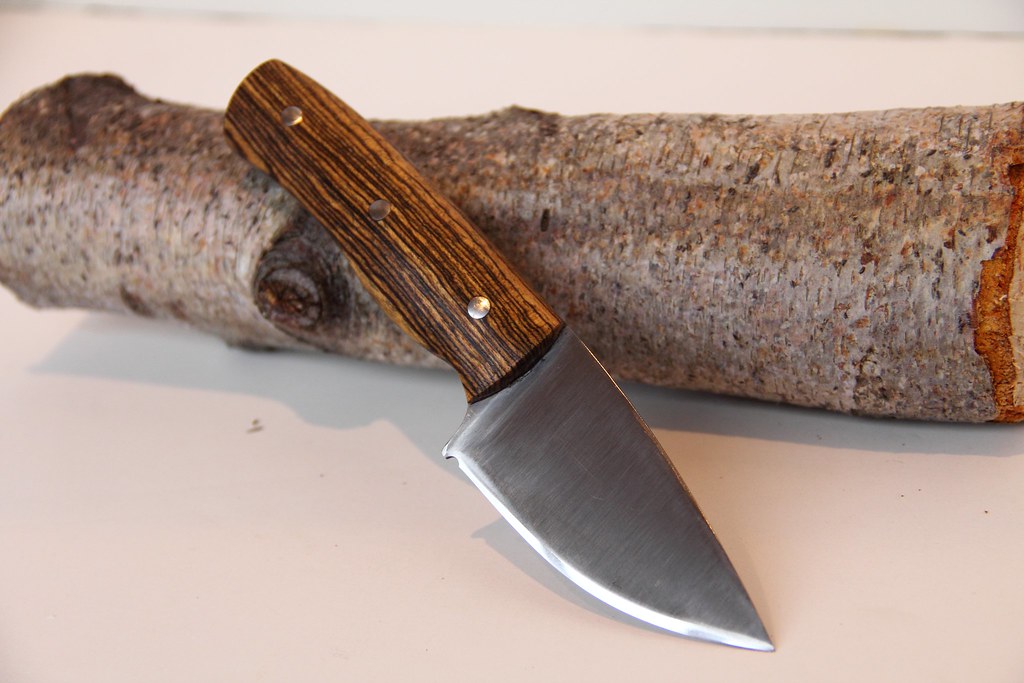
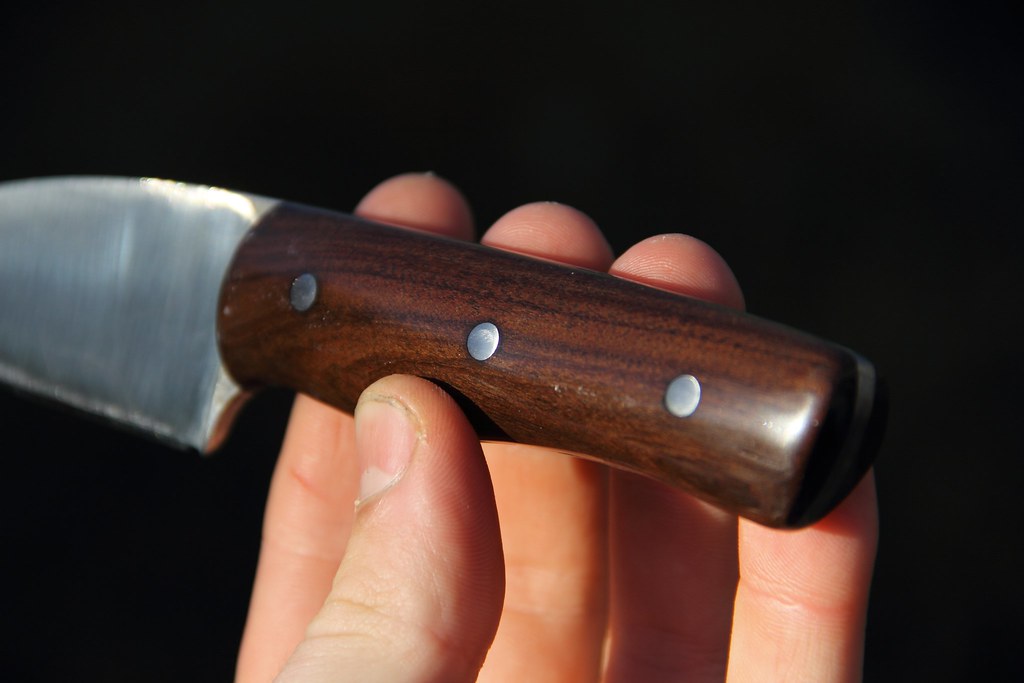
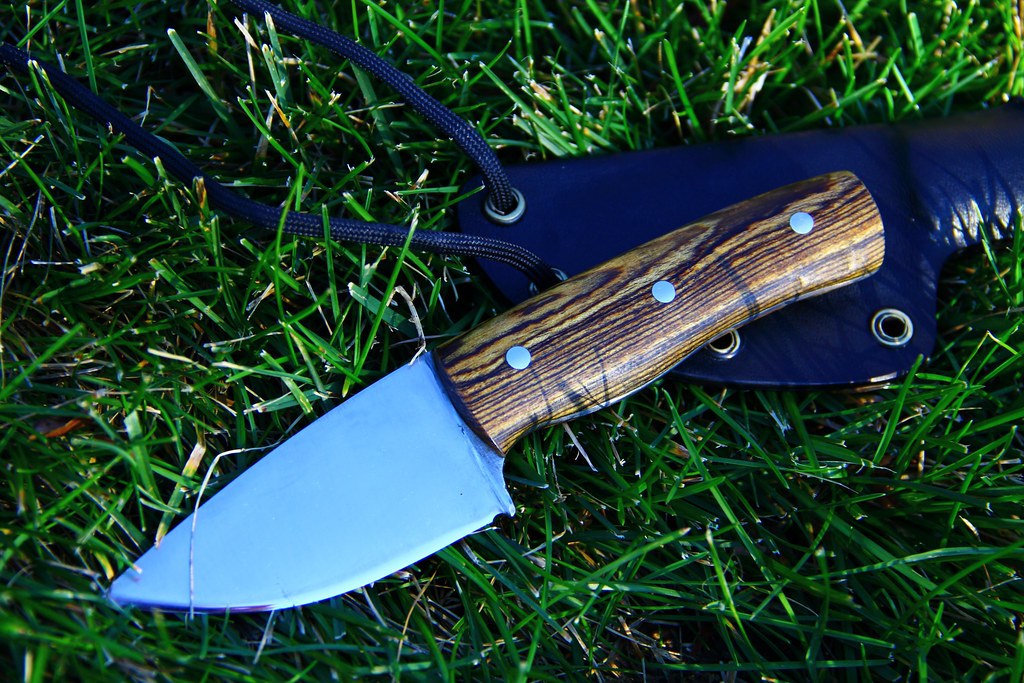
Knife #1

Steel: 1084 from Aldo

Handle material: Bocote

Blade length: 3.25"

Handle length: 4"

Overall length: 7.25"
10442695505_1770b6cc74_b.jpg


10442676496_9d809795a8_b.jpg


10442666144_97d867ec5f_b.jpg


10442669224_60e222c732_b.jpg


10442684526_0c46f43707_b.jpg


10442688166_c2357cdeea_b.jpg


10442752155_2a36dabe61_b.jpg


10442900843_00b8e903de_b.jpg


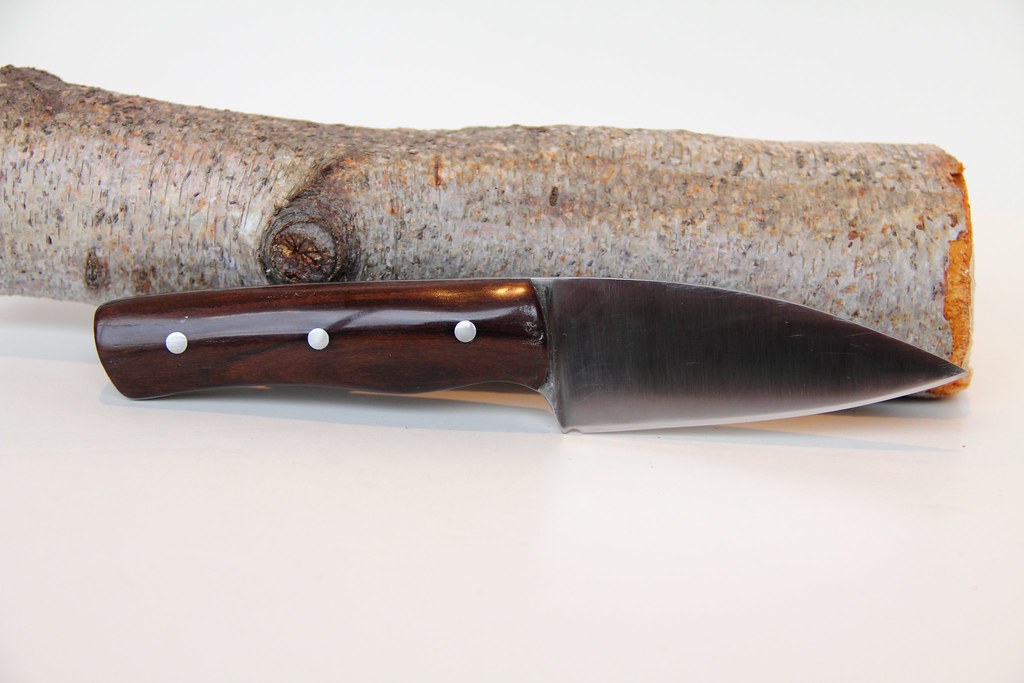
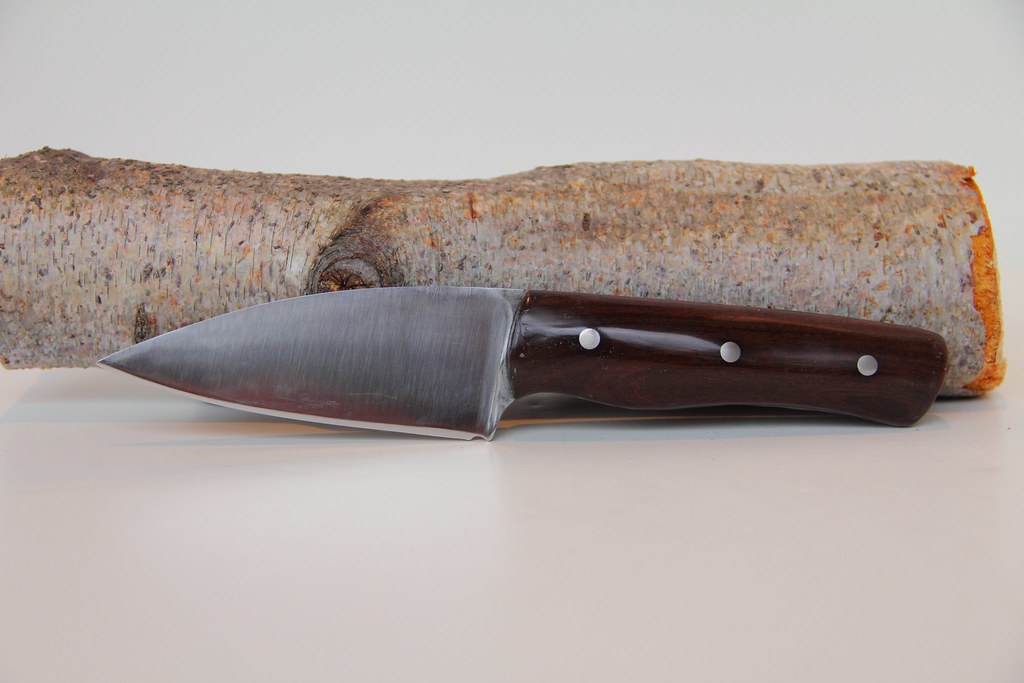
Knife #2:

Blade steel: 1084 from Aldo

Handle material: Bolivian rosewood with super glue finish (I will not be doing this again :P)

Blade length: 3.75"

Handle length: 4.2"

Overall length: 7.95"
10442712144_0fe0ed4c8a_b.jpg


10442895913_69c6d74e8d_b.jpg


10442859113_e91c25913a_b.jpg


10442655414_5d9105eff4_b.jpg


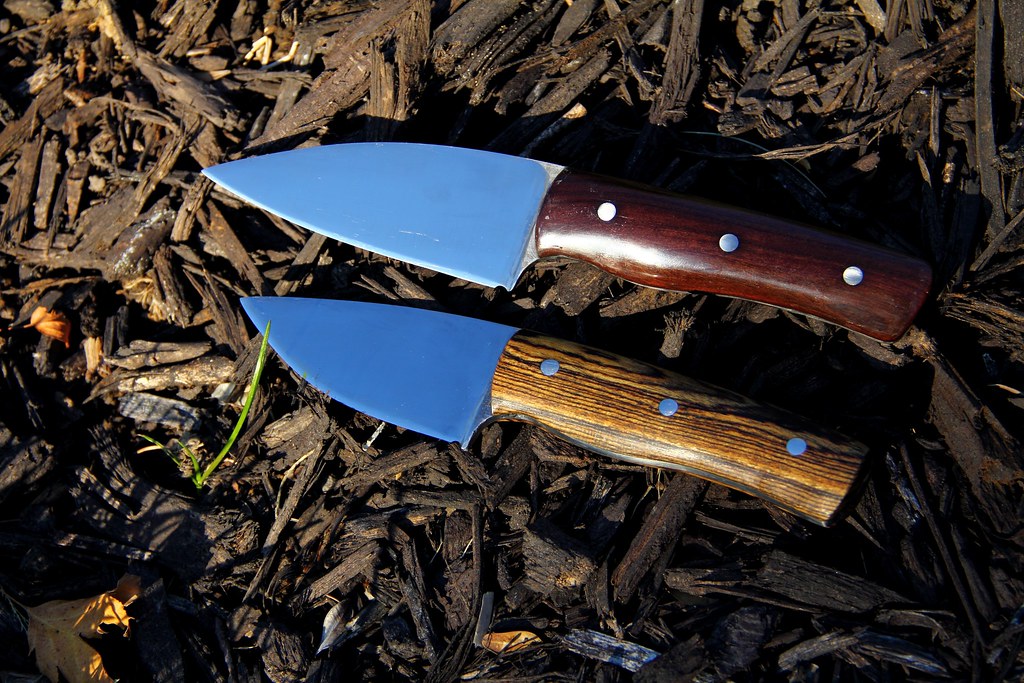
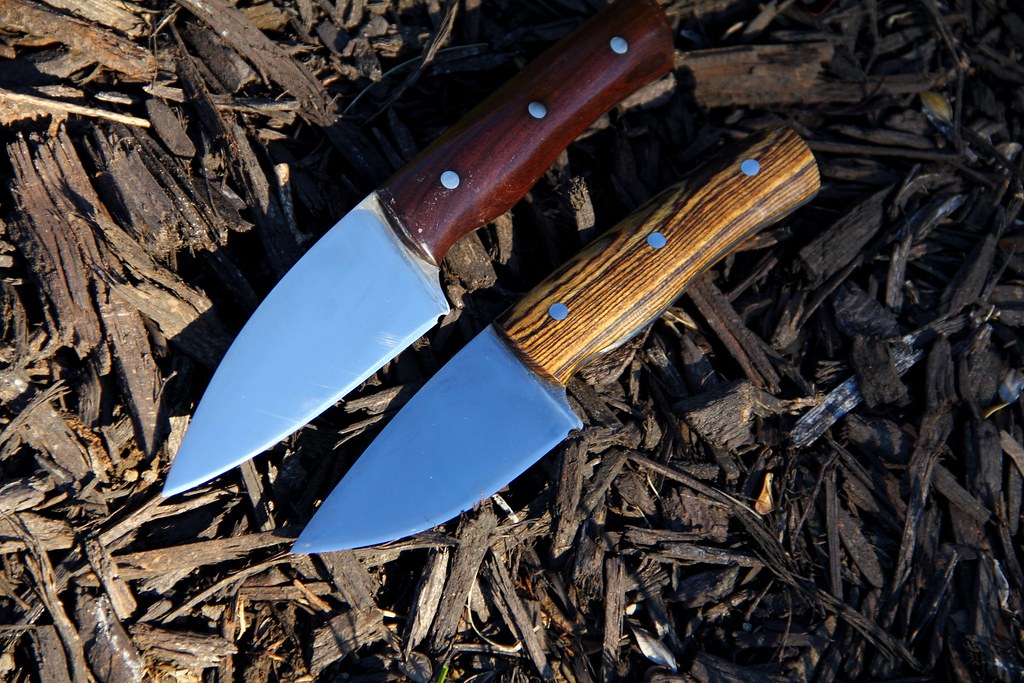
Here they are together:

10442716485_f7b053ddb0_b.jpg


10442719225_e30db9ea7c_b.jpg


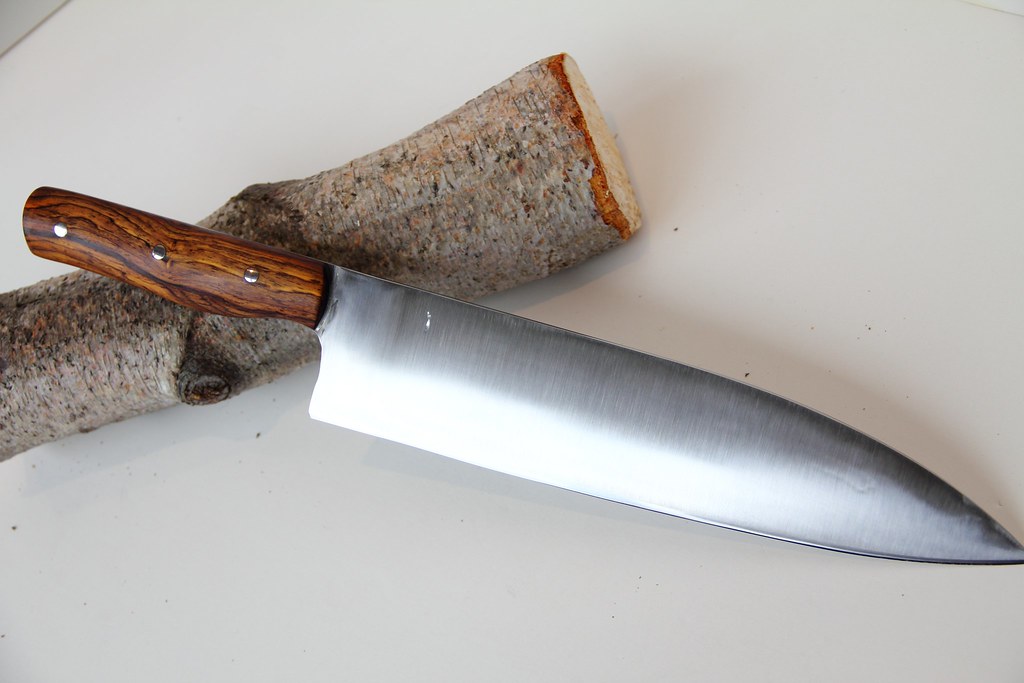
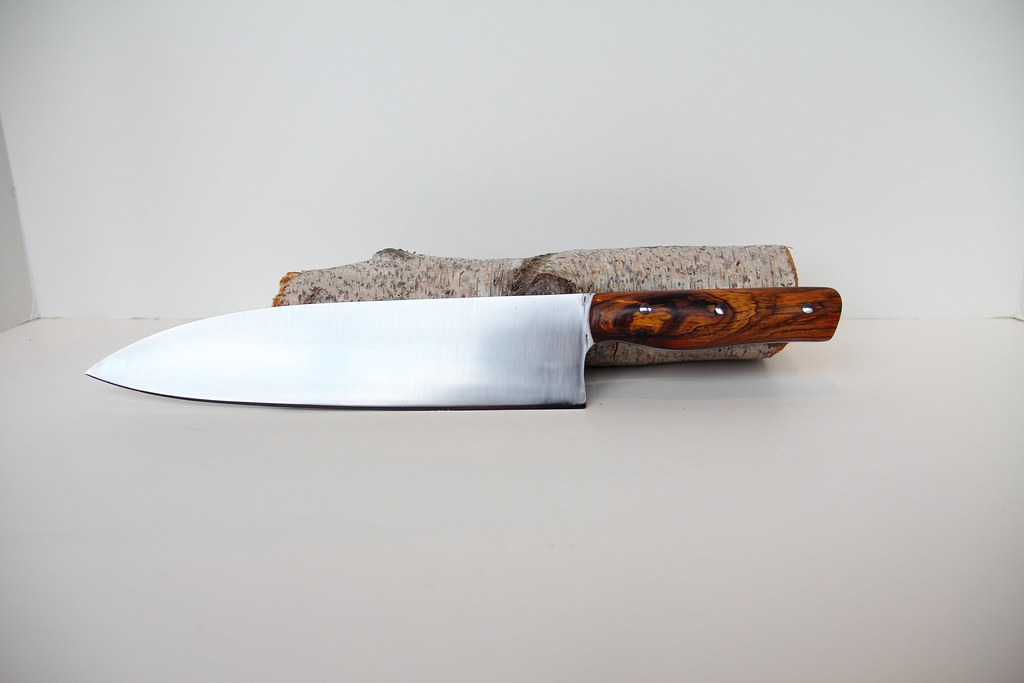
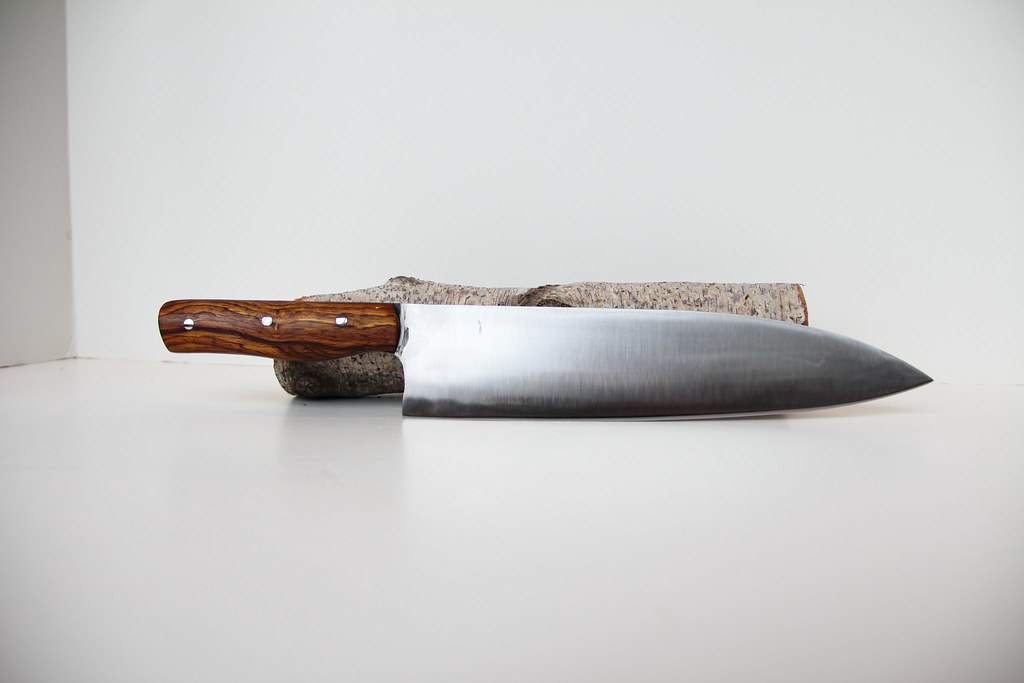
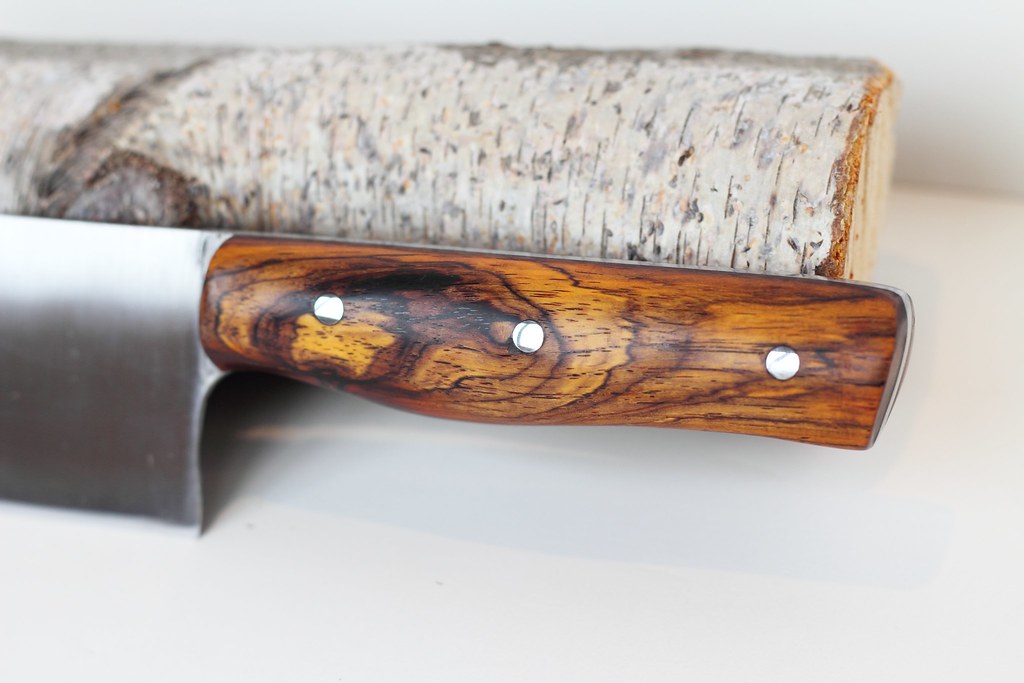
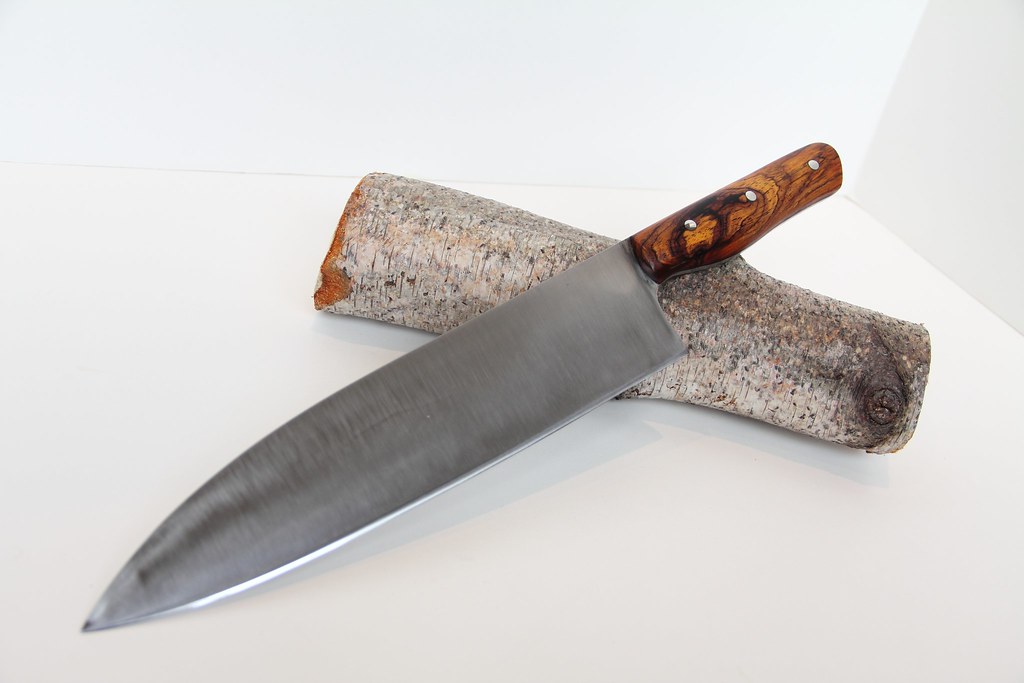
Knife #3 (kitchen knife):

Blade steel: 1084 from Aldo

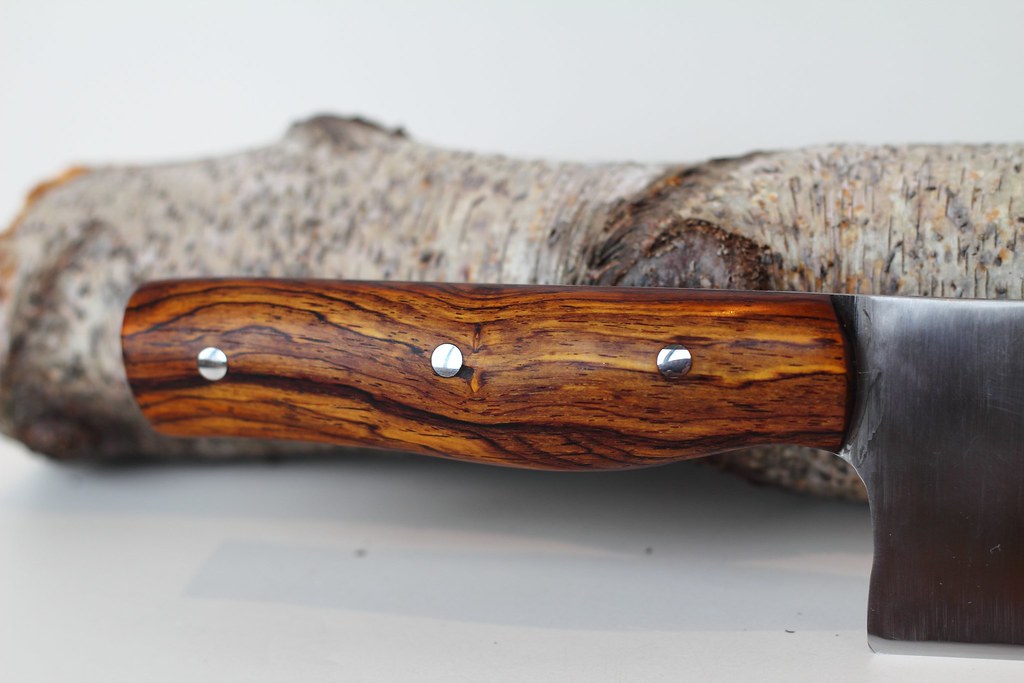
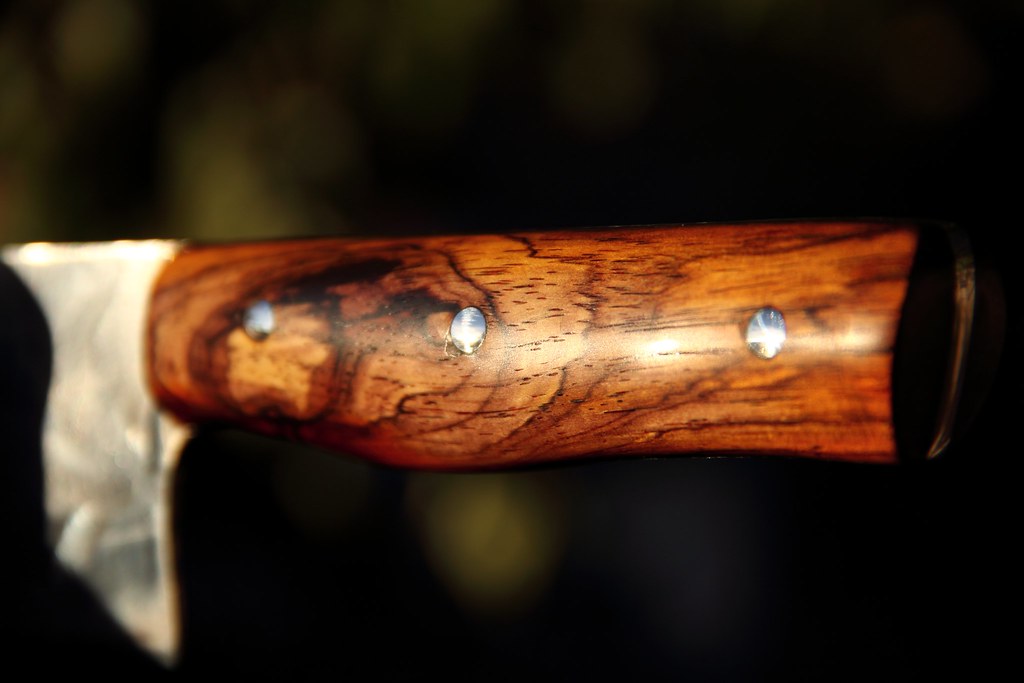
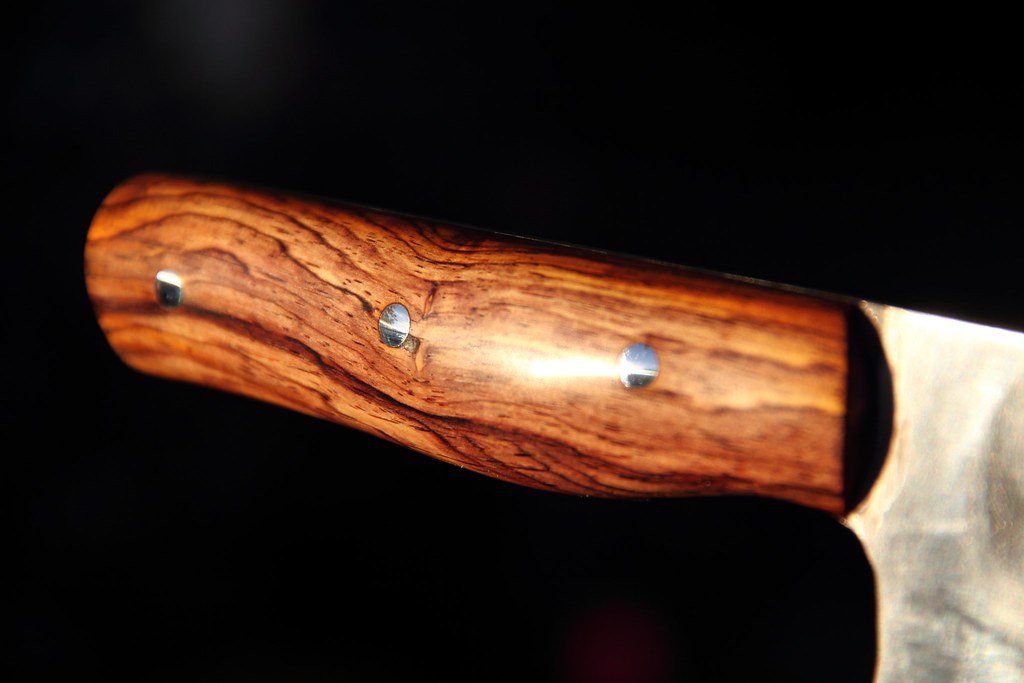
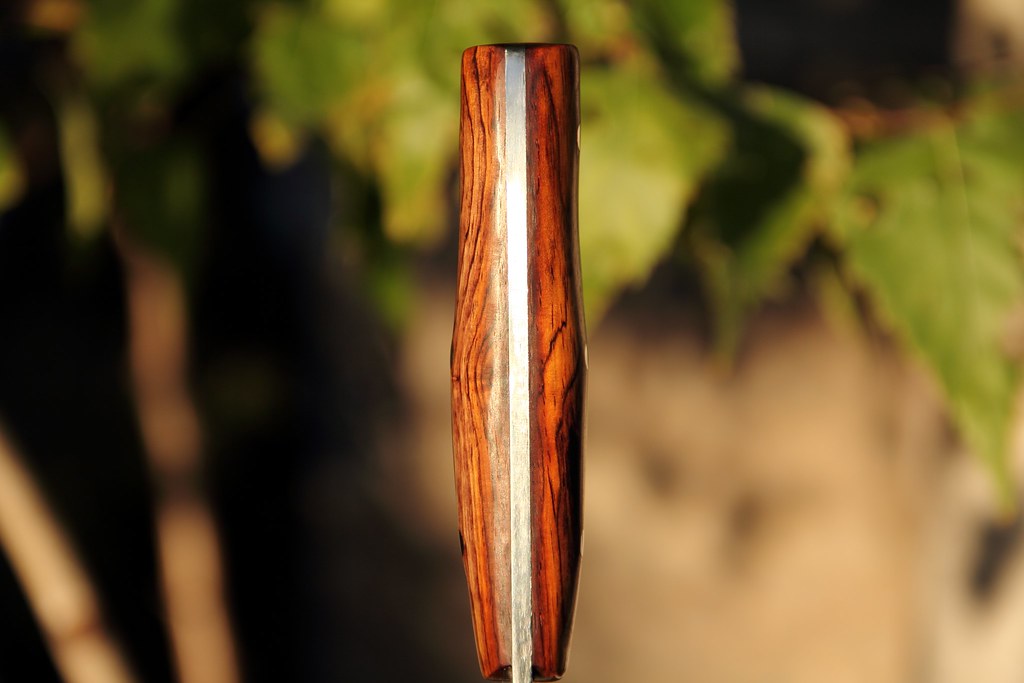
Handle material: Cocobolo

Blade length: 9.25"

Handle length: 4.5"

Overall length: 13.75"
10442696484_6178029f2f_b.jpg


10442880513_84ffa11445_b.jpg


10442703054_a19b423833_b.jpg


10442737045_0073092754_b.jpg


10442741075_333de92050_b.jpg


10442890583_bd5df0ea47_b.jpg


10442869043_42665a17f7_b.jpg


10442725305_8dc9597d65_b.jpg


10442874133_e142ca53d9_b.jpg


10442757435_0d187bc97c_b.jpg


The handles on all of them are fully contoured. I made sure not to get "blocky handle syndrome" ;)

Sorry for the overload of pictures, I'm just very proud of them.

Any questions, comments, or critics would be greatly appreciated. :)
 
Last edited:
Helluva start! Love the way you shaped the handles. A few little cleanliness and attention to detail issues but you have to leave yourself someplace to grow right? Great job.
 
Good start. The kitchen knife looks useful.

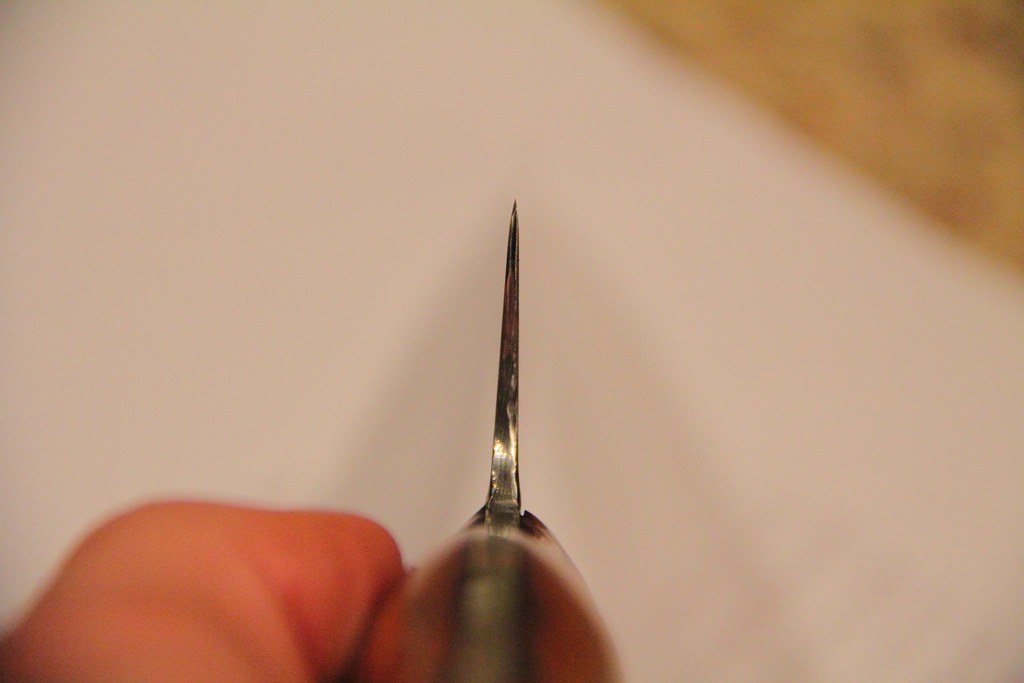
On knife #1, the little tit sticking out behind the choil needs to be ground back. It must not stick out past the edge. Take it back about 0.10" more than the edge projects out.
As you already know, you have some room for improvement in finishing and clean-up.
 
It looks like you're ahead of the curve. A couple of suggestions:
1) The first two blades look a little bit wide for their size. You may find them to be more handy if you narrow the blades down.
2) You blades all look fairly thick behind the edge. They will perform better if you bring them down to around 0.01" before you sharpen them. This is especially true for the kitchen knife. I don't know what style of knife you were going for, but what you made is going to be most suitable for fairly rough-use tasks. If you want a more general-purpose chef's knife then you'll want to thin the edge down to at least 0.008".

- Chris
 
Now that you made a few its time to pay attention to the finer details. I am a work in progress myself but I can give you a few pointers. On the next batch pull your handle back from your plunge. You want a little bit of steel there it looks more professional that way. Loose the Spanish notch as well. Your handles are way better than what I was showing on my first three or four or even ten.

So keep trying to better yourself. And take it from me you can have a string of a few decent knives and then go into a tailspin and have to throw a few away but don't beat yourself up and just learn from every knife.
 
It looks like you're ahead of the curve. A couple of suggestions:
1) The first two blades look a little bit wide for their size. You may find them to be more handy if you narrow the blades down.
2) You blades all look fairly thick behind the edge. They will perform better if you bring them down to around 0.01" before you sharpen them. This is especially true for the kitchen knife. I don't know what style of knife you were going for, but what you made is going to be most suitable for fairly rough-use tasks. If you want a more general-purpose chef's knife then you'll want to thin the edge down to at least 0.008".

- Chris

1. I agree that the blade may be a little wide, but that is the height of the steel I had and it would've taken much more hand work to narrow them down. They still work great though.

2. I actually think they're pretty thin behind the edge, they're almost a zero convex grind. I need to do some testing and see how they perform, but I definitely think they are not way to thick.

Thanks so much everyone!
 
The kitchen knife is very thick behind the edge and will not cut well unless significantly thinned.
I like the blade shape though.
 
WOW, they look awesome. Great job.


Bryan

Thanks again for HTing them and giving me advice Bryan!
The handles look comfy. Kinda reminiscent of Gavkoo and Ferrum Forge. :)

I watch all of Gavkoo's video so I probably got some inspiration from them. :)

The kitchen knife is very thick behind the edge and will not cut well unless significantly thinned.
I like the blade shape though.

I haven't fully tested it yet because I want to show a few people before it gets a patina, but I cut one tomato and could get see-through slices so it may just be the picture...
 
Ah, I was wondering, I thought Ferrum made more folders than fixed. I actually got most of my inspiration from Fiddleback. :)
 
I haven't fully tested it yet because I want to show a few people before it gets a patina, but I cut one tomato and could get see-through slices so it may just be the picture...

A tomato is a good test for how sharp the edge is, but it moves away from the geometry of the blade easily. Something like a potato, which is more dense and stiff, would be a good judge to determine if the grind is thin enough.
 
The best test for any knife is to use them a lot for the purpose which they were intended. For kitchen knives, cutting tomatoes is a good measure of sharpness and cutting potatoes (or any other stiff, thick material) is a good measure of geometry. But the only way to really get an idea of how good the knife is is to use it in the kitchen every day for the whole range of things that it is designed to be used for. Chop all kinds of vegetables, mince herbs, slice raw and cooked meats of all kinds. Try using it instead of a paring knife — it will perform poorly, but then you'll know. Lend it to someone else and have them try it for a while (sometimes it's hard to be objective when it comes to our own knives). Compare how it performs in all manner of tasks to other knives.
For EDC knives, carry them every day and use them for everything.
Make more knives and change various aspects of them and then compare them to the rest of the ones you've made.

- Chris
 
Back
Top