

- Joined
- Jul 19, 2008
- Messages
- 199
I hope I'm not going to come off as being vain by posting a WIP thread when there are so many better makers on the forum here, but I have leaned so much from similar threads that I wanted to start one of my own, both to get criticism and feedback from other makers, and to show others how I go about making a full tang camp knife.
This knife was commissioned by a BF member who wanted a full tang camp knife with an 8" blade and micarta handle based on my standard camp knife. He requested some changes to my typical knife including a sharpened, raised clip, a large finger-hole choil, grooves on the spine for thumb griping, and both rear and forward lanyard holes. I liked all the changes he wanted, and we came up with a design that we both liked. I didn't start off with the intention of doing a work progression thread so most ofthe pictures I have were taken just to show the progress to the customer, and do not cover every step of the making.
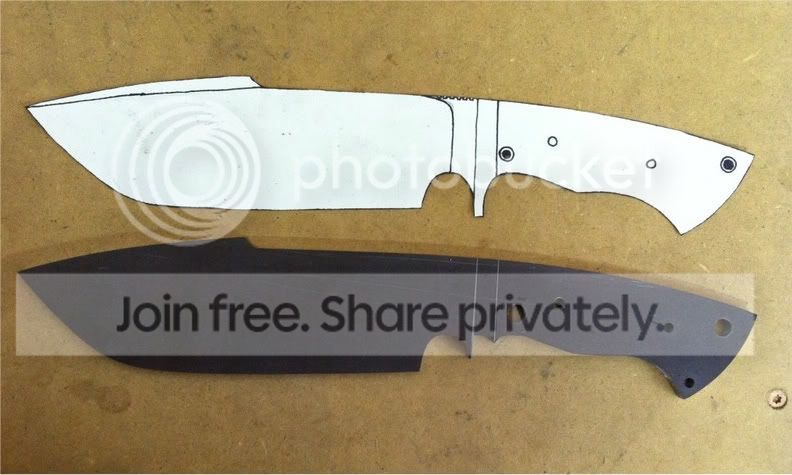
Here is the agreed upon design and blade blank cut from 0.27" S35NV steel that has been profiled on the grinder, and the corby bolt and lanyard holes have been drilled.
This knife will have a tapered tang so the next thing I do is to dish out the tang on both sides with the wheel on the grinder. I learned this from S. R. Johnson's DVD on making a subhilt fighter. It makes it much easier to get a precise taper in the tang if you can remove most of the metal before you have to flatten it. I then make sure both sides of the tang are nice and flat with my disc grinder. (after heat treatment I will flatten them on a granite surface plate.)
Here the tang has been tapered and the blade has been ground to 120 grit. From here on out everything will be done with files and sandpaper.
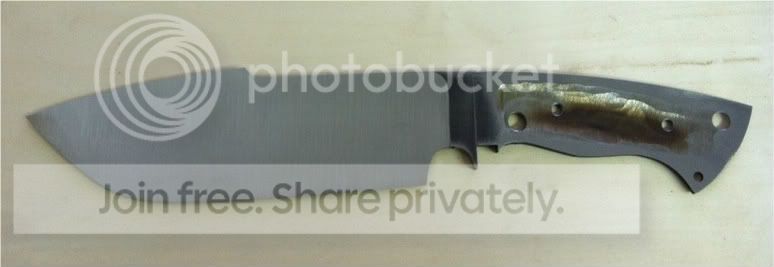
Here I have sanded out all of the grinder scratches with 220 grit sandpaper
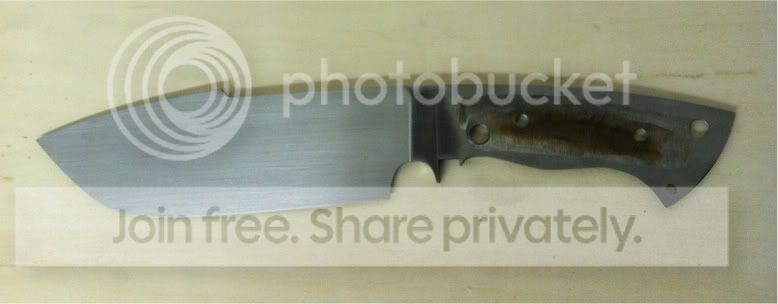
Here it is hand sanded up to 600 grit. I have also spent considerable time flattening the riccasso area on the surface plate so that it is perfectly flat and so that the difference in thickness between the spine and the bottom of the riccasso is less than 1/1000th inch. One thing I leaned from a WIP that Kyle Royer once posted that helped me a lot, was to wait to grind in the clip until the flats of the blade were nearly finished so that you can keep a nice crisp line were the bevels change.
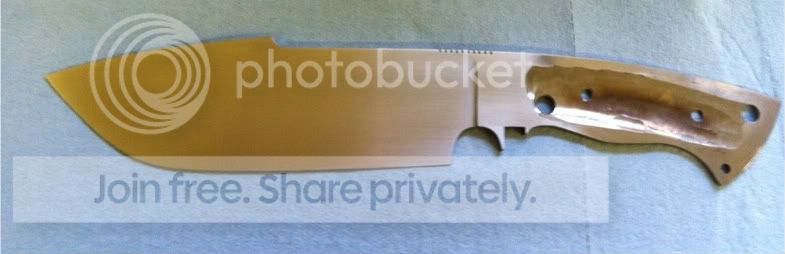
I used files to cut in the clip so I could have more control than if I had used a grinder. I don't have any pictures of how I fit the guard, but I did it with a drill press, and files. I fits tightly enough that you need a hammer to get it on and off, and there is almost no visible gap between the guard and riccasso. Here the knife is ready to be sent out for heat treatment.
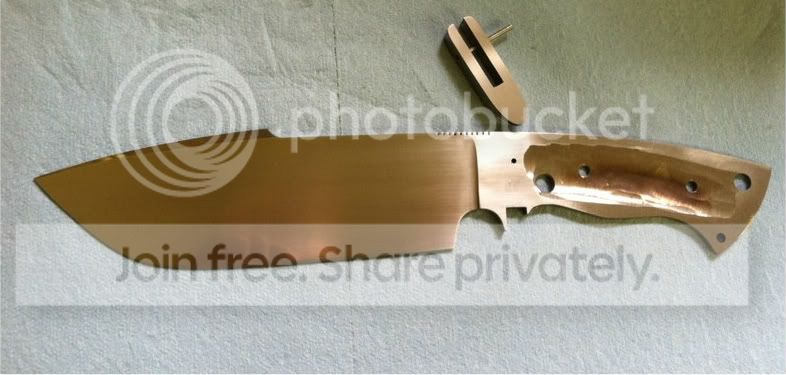
I sent the knife to Bos Heat Treating, and requested it to be hardened to 58 rc. The first thing I do when I get a blade back from heat treatment, is to clamp the blade between aluminum plates and temper back the riccasso and tang with a torch. Here it is up to that point.
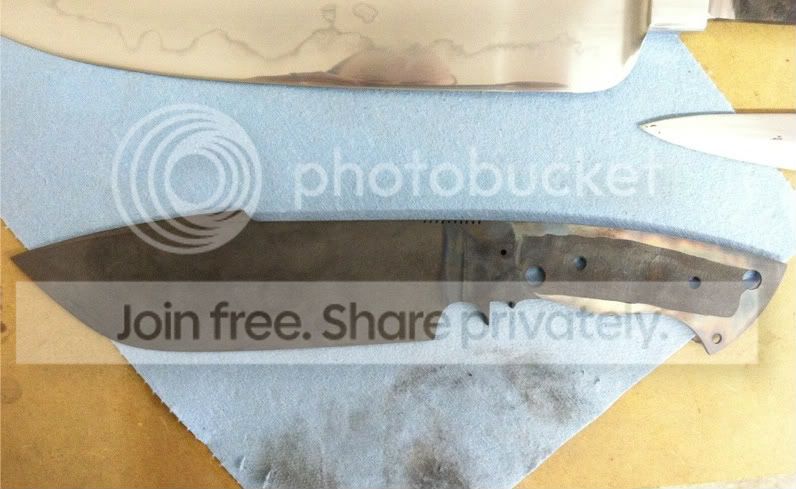
I then take the tang back to the grinder wheel and make sure there is only about 1/8th inch of flat area on the periphery of the handle. This will make flattening much easier.
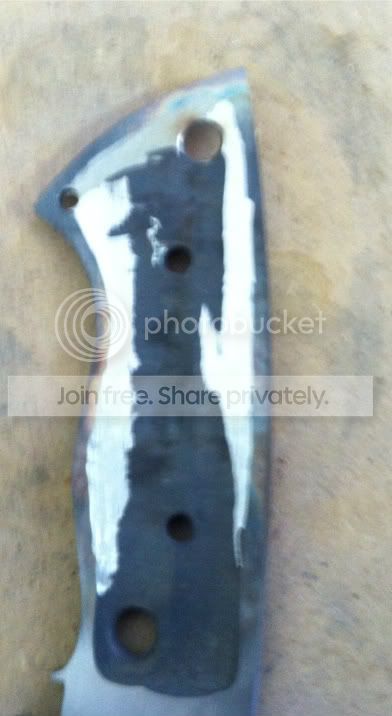
this is how I make the tang as flat as possible on the granite surface plate with 220 grit paper.
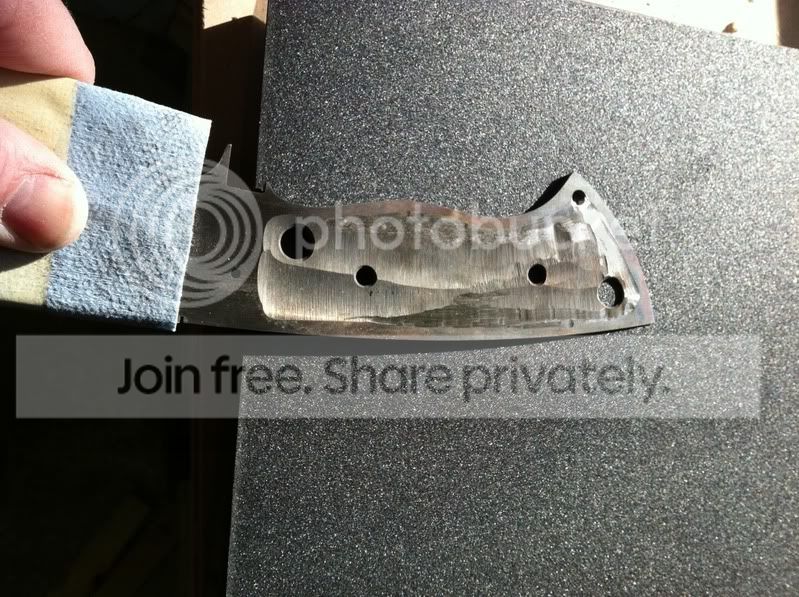
The black oxidation on the blade from heat treatment comes of fairly easily with 600 grit sandpaper. Here it is with the guard all ready for assembly.
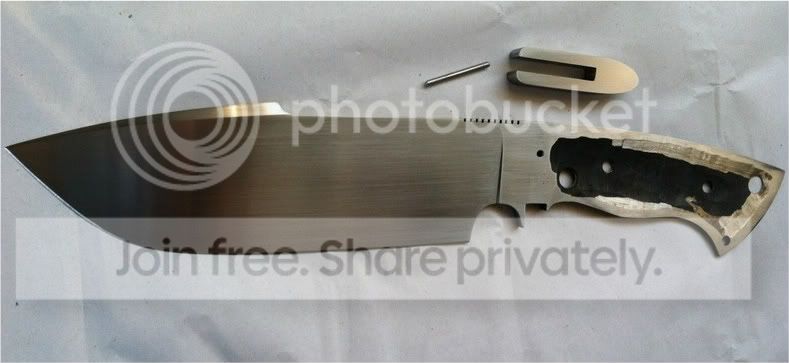
Here I've peened the guard in place. I used a little bit of JB Weld in the joint to seal moisture out.
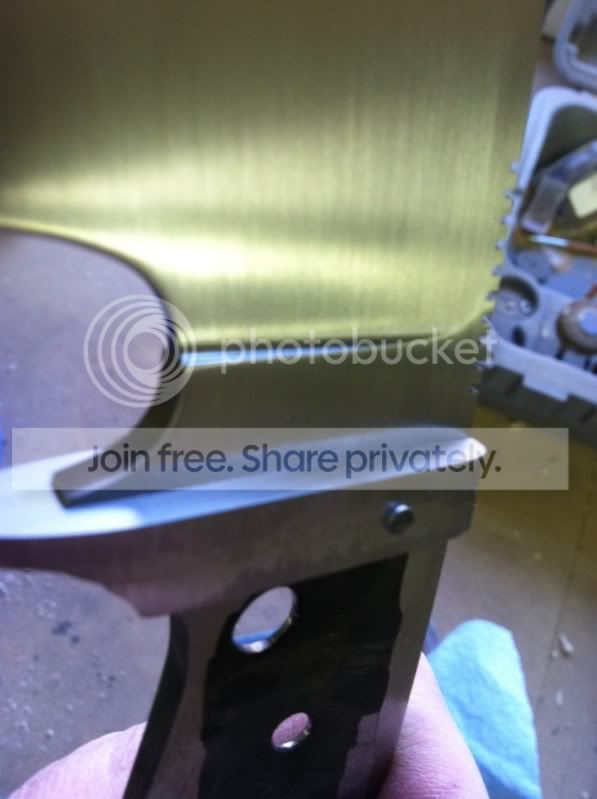
Next I prepare the micarta scales by flattening them on the surface plate. What will not be shown is that I also flattened some 1/16" 416 stainless steel and epoxied it between the micarta and some black liner material.
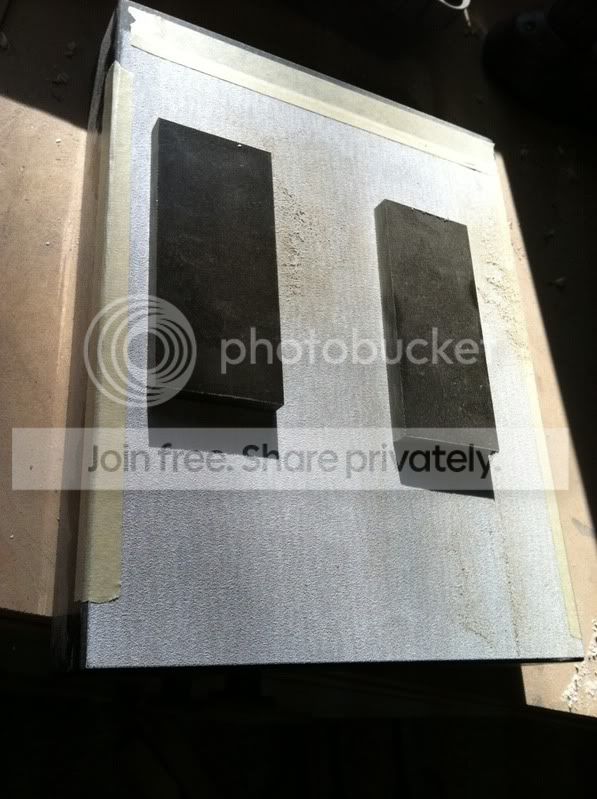
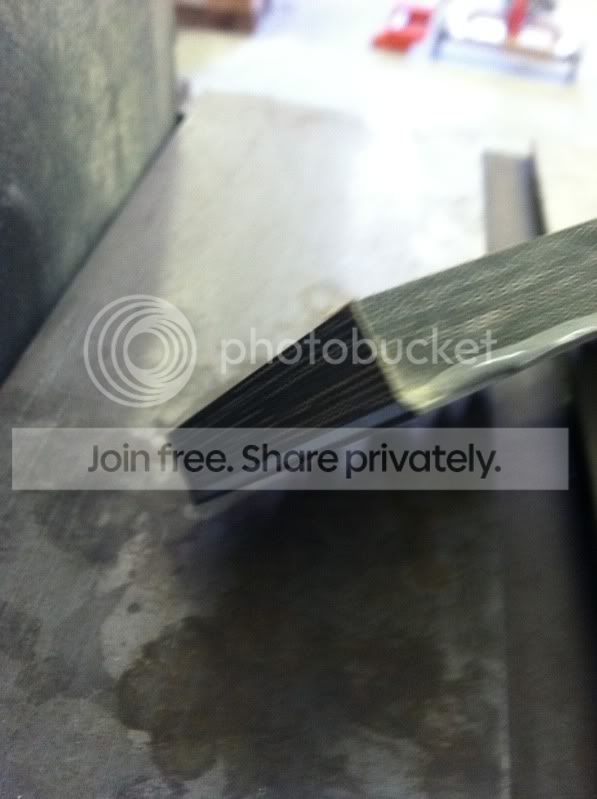
Because the tang is tapered, the angle where the guard meets the tang is greater than 90 degrees. In order for the scales to fit without gap, I use a piece of hardwood and my disc grinder to find the perfect angle by trial and error. The next two pics show the correct angle and the ground scales and liners.
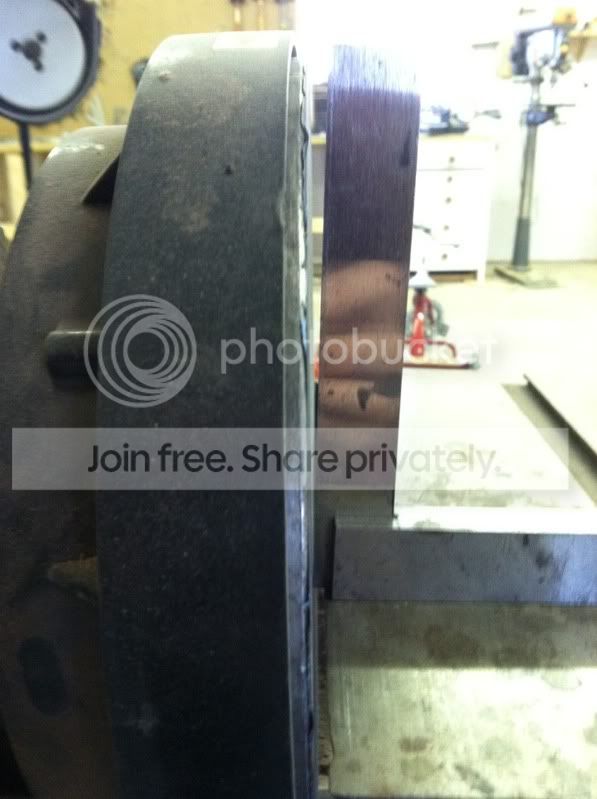
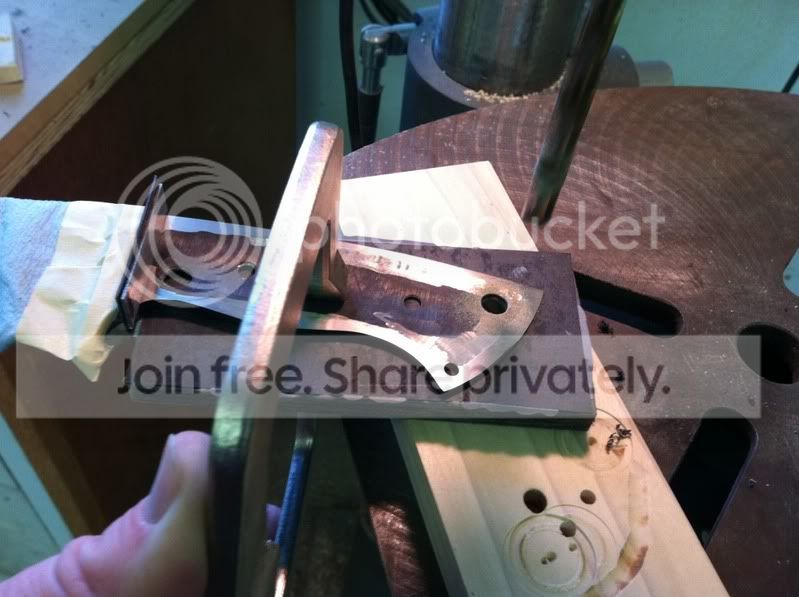
To get the holes in the scales I clamp the scale up tight to the guard and drill out the holes with the drill press. You might notice that there is a small hole at the very bottom end of the tang. In my experience, if scales are going to separate from the tang it will be right here, so I put this hole in for an epoxy rivet. I will drill a corresponding hole about 1/8th inch into each scale.
Once the first hole is drilled I put in the bolt or lanyard tubing to help keep everything in place.
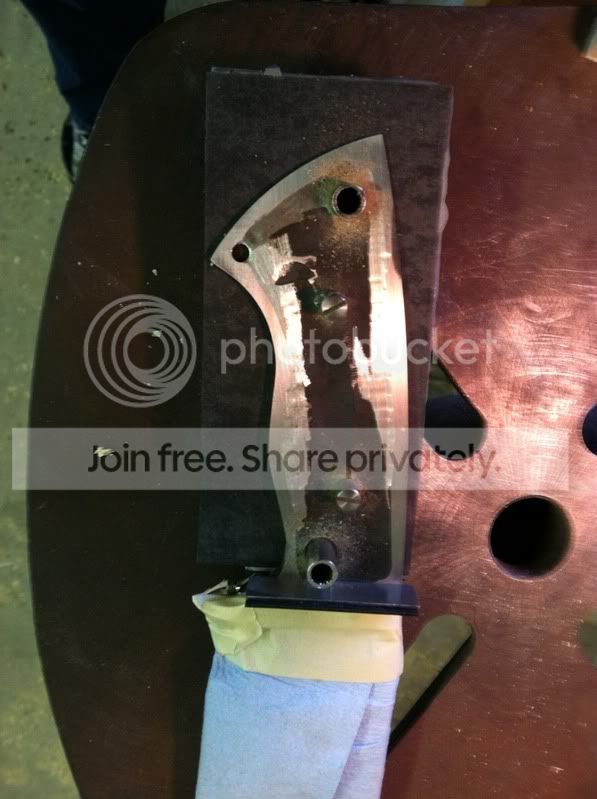
Here I am test fitting both scales onto the knife to make sure they fit with no gaps.
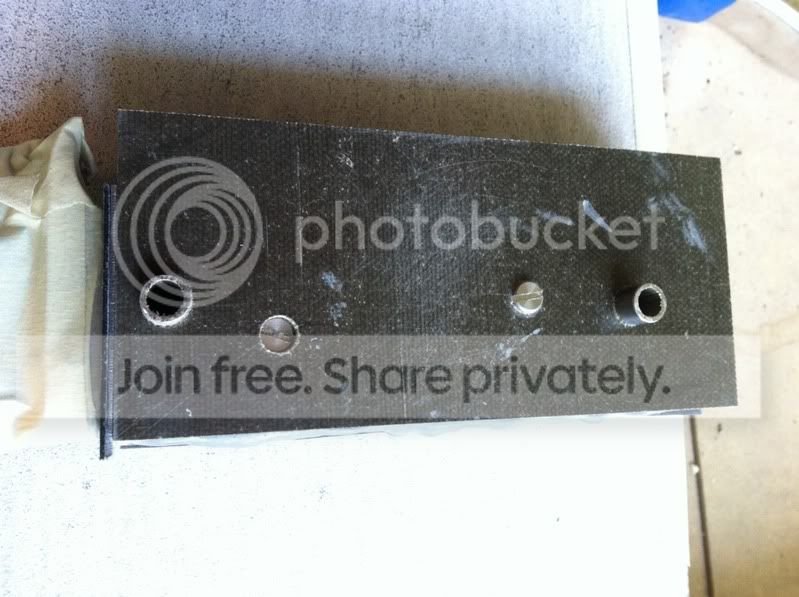
Here I have shaped the scales to within a 16th inch of the size of the handle, and epoxied them on with Acraglass epoxy.
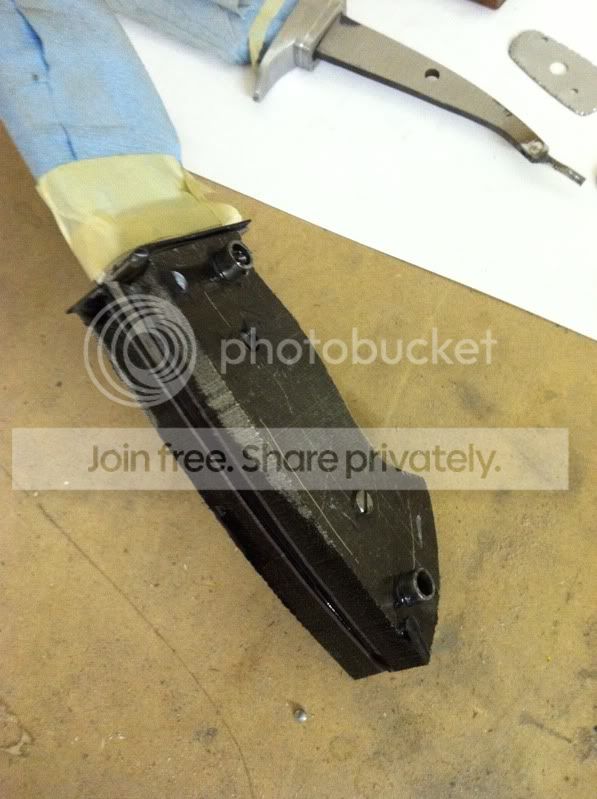
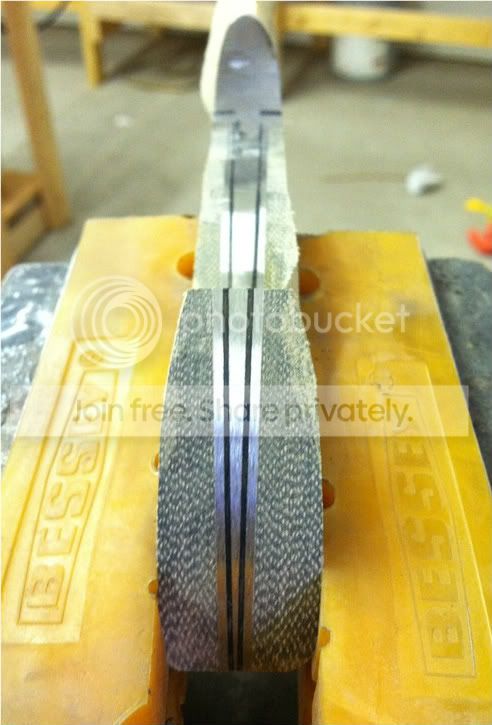
I start off shaping the handle on the grinder, but just to get things in the general shape they need to be. The first picture is after shaping on the grinder. As you can see it is very rough. The rest will be done with rasps and sanding forms. It seems like the more handles I make, the less I use the grinder. The second pic is an end on view as I'm shaping with the rasp that shows how everything fits nice and tight.
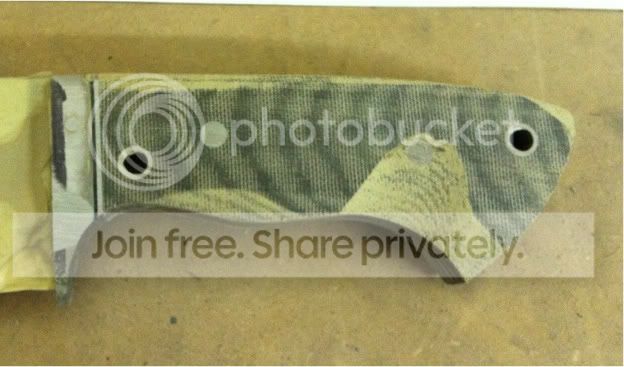
I finish the micarta to 600 grit and buff lightly. The last few pictures are of the finished knife.
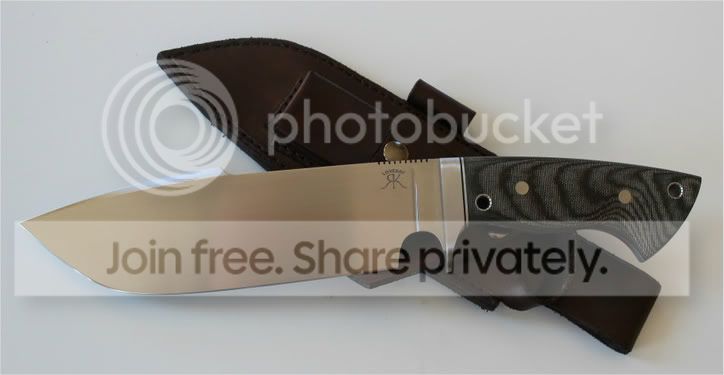
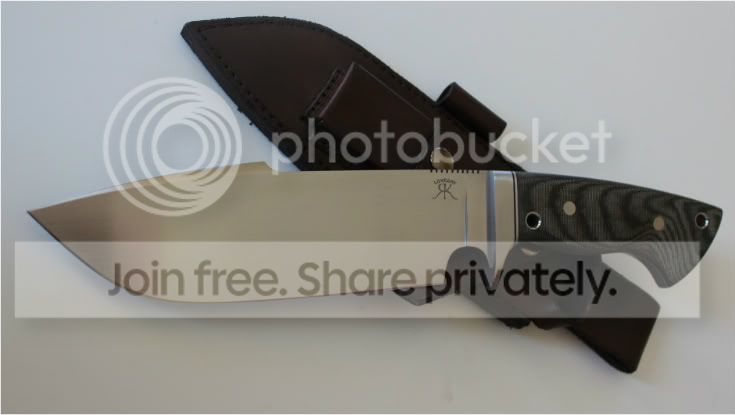

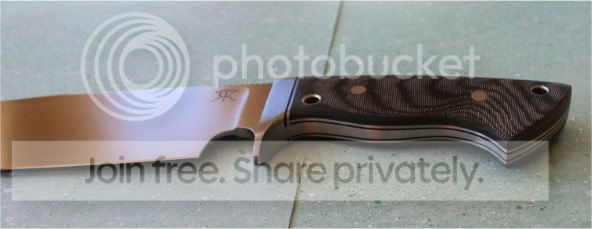
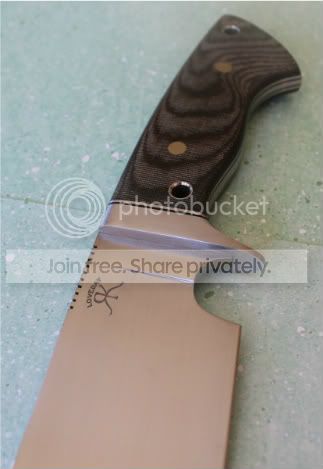
And that's it. Thanks for looking.
This knife was commissioned by a BF member who wanted a full tang camp knife with an 8" blade and micarta handle based on my standard camp knife. He requested some changes to my typical knife including a sharpened, raised clip, a large finger-hole choil, grooves on the spine for thumb griping, and both rear and forward lanyard holes. I liked all the changes he wanted, and we came up with a design that we both liked. I didn't start off with the intention of doing a work progression thread so most ofthe pictures I have were taken just to show the progress to the customer, and do not cover every step of the making.
Here is the agreed upon design and blade blank cut from 0.27" S35NV steel that has been profiled on the grinder, and the corby bolt and lanyard holes have been drilled.
This knife will have a tapered tang so the next thing I do is to dish out the tang on both sides with the wheel on the grinder. I learned this from S. R. Johnson's DVD on making a subhilt fighter. It makes it much easier to get a precise taper in the tang if you can remove most of the metal before you have to flatten it. I then make sure both sides of the tang are nice and flat with my disc grinder. (after heat treatment I will flatten them on a granite surface plate.)
Here the tang has been tapered and the blade has been ground to 120 grit. From here on out everything will be done with files and sandpaper.
Here I have sanded out all of the grinder scratches with 220 grit sandpaper
Here it is hand sanded up to 600 grit. I have also spent considerable time flattening the riccasso area on the surface plate so that it is perfectly flat and so that the difference in thickness between the spine and the bottom of the riccasso is less than 1/1000th inch. One thing I leaned from a WIP that Kyle Royer once posted that helped me a lot, was to wait to grind in the clip until the flats of the blade were nearly finished so that you can keep a nice crisp line were the bevels change.
I used files to cut in the clip so I could have more control than if I had used a grinder. I don't have any pictures of how I fit the guard, but I did it with a drill press, and files. I fits tightly enough that you need a hammer to get it on and off, and there is almost no visible gap between the guard and riccasso. Here the knife is ready to be sent out for heat treatment.
I sent the knife to Bos Heat Treating, and requested it to be hardened to 58 rc. The first thing I do when I get a blade back from heat treatment, is to clamp the blade between aluminum plates and temper back the riccasso and tang with a torch. Here it is up to that point.
I then take the tang back to the grinder wheel and make sure there is only about 1/8th inch of flat area on the periphery of the handle. This will make flattening much easier.
this is how I make the tang as flat as possible on the granite surface plate with 220 grit paper.
The black oxidation on the blade from heat treatment comes of fairly easily with 600 grit sandpaper. Here it is with the guard all ready for assembly.
Here I've peened the guard in place. I used a little bit of JB Weld in the joint to seal moisture out.
Next I prepare the micarta scales by flattening them on the surface plate. What will not be shown is that I also flattened some 1/16" 416 stainless steel and epoxied it between the micarta and some black liner material.
Because the tang is tapered, the angle where the guard meets the tang is greater than 90 degrees. In order for the scales to fit without gap, I use a piece of hardwood and my disc grinder to find the perfect angle by trial and error. The next two pics show the correct angle and the ground scales and liners.
To get the holes in the scales I clamp the scale up tight to the guard and drill out the holes with the drill press. You might notice that there is a small hole at the very bottom end of the tang. In my experience, if scales are going to separate from the tang it will be right here, so I put this hole in for an epoxy rivet. I will drill a corresponding hole about 1/8th inch into each scale.
Once the first hole is drilled I put in the bolt or lanyard tubing to help keep everything in place.
Here I am test fitting both scales onto the knife to make sure they fit with no gaps.
Here I have shaped the scales to within a 16th inch of the size of the handle, and epoxied them on with Acraglass epoxy.
I start off shaping the handle on the grinder, but just to get things in the general shape they need to be. The first picture is after shaping on the grinder. As you can see it is very rough. The rest will be done with rasps and sanding forms. It seems like the more handles I make, the less I use the grinder. The second pic is an end on view as I'm shaping with the rasp that shows how everything fits nice and tight.
I finish the micarta to 600 grit and buff lightly. The last few pictures are of the finished knife.
And that's it. Thanks for looking.


 )
)