

- Joined
- Mar 15, 2000
- Messages
- 45,835
Recent post copied from http://www.atlantakayakfishing.com
Thought this one might be of interest to the survival folks here...
Thought this one might be of interest to the survival folks here...
Apalach said:A recent mishap with a ladyfish hooking one of our members in a finger after he first hooked the ladyfish reminded me of the recent article in GAFF (May-June, 2007) by one of our former Florida State University pre-med students, Paul Hart, MD. Although nearly all such hookings of humans are strictly accidental, Dr. Hart PURPOSELY hooked himself to test a couple of the suggested remedies for hook removal-OUCH! I know, I know, but sometimes you just have to steel yourself to getting past the GAFF chick pics!
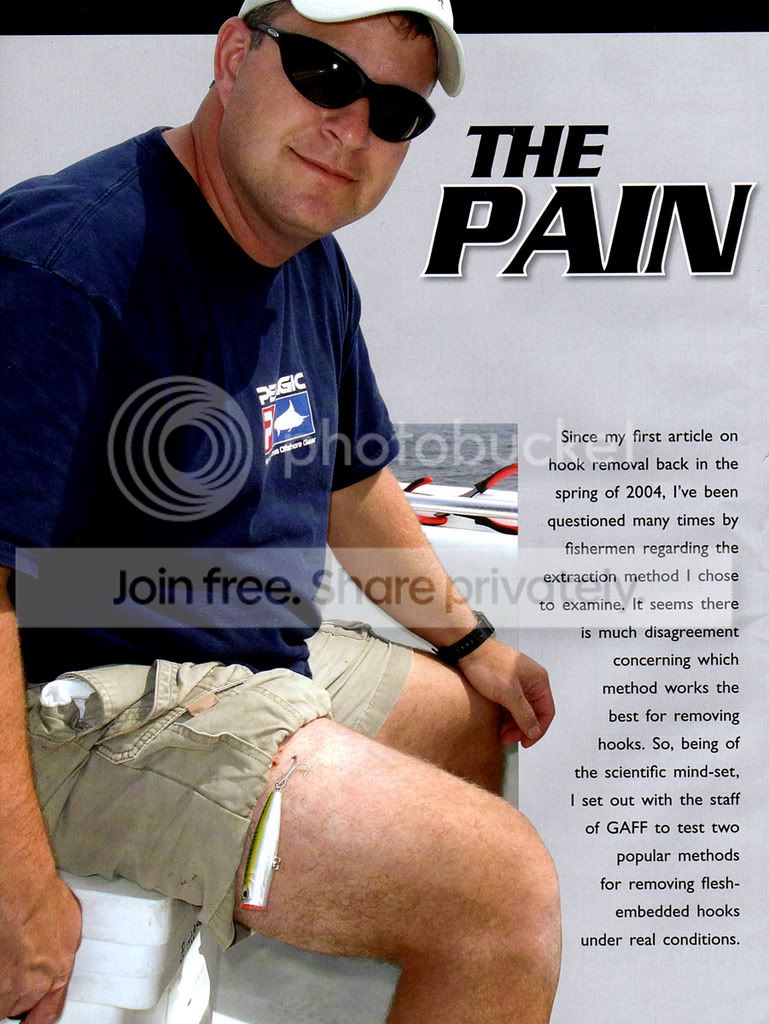
1. Here is the first pic that caught my attention (or mebbe it was the 12th, but no matter). This shows Dr. Hart with a self-hooked treble on a plug--more about this one later.
2. This pic shows Dr. Hart self-inserting two new Gamagatsu J-hooks side by side for a comparison of the snatch method with the push-through method of hook removal.

3. Snatch Method-1. The next pic illustrates the use of a short piece of heavy-duty mono around the hook in the snatch method. Although I first saw this method published in a scientific paper from Britain about 30 years ago, not many folks even today seem to be familiar with it, or at least have ever tried it. But it does require a fishing buddy to help you out with this method.
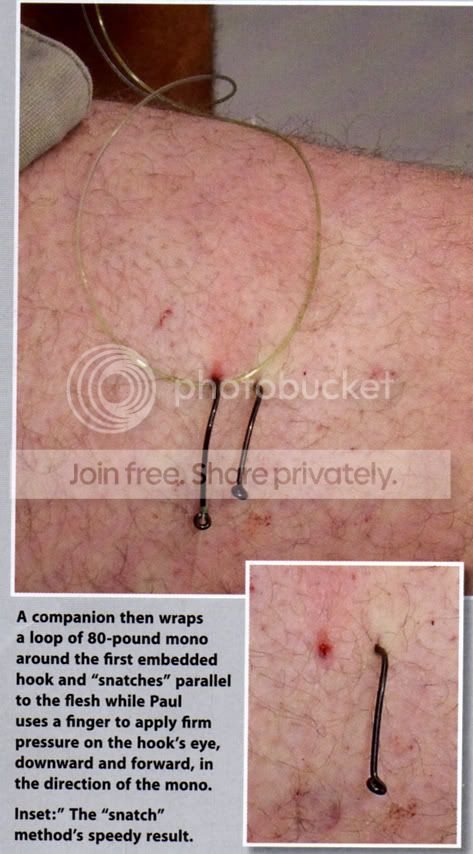
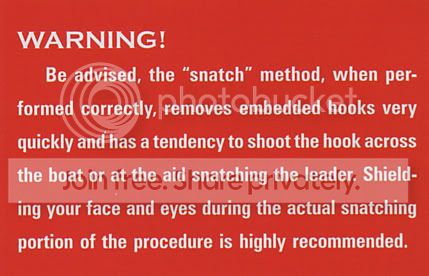
4. Snatch Method-2. WARNING! You also need to be especially careful with the snatch method since anyone in the vicinity stands a chance of being hooked even more severely in the face or eye during the extraction procedure.
5. Push-thru Method-1. You will need two pairs of pliers/side cutters for this method. In the left-hand pic, first grip the shank of the hook with a pair of normal long-nose or other pliers to stabilize it and to keep it from twisting (very painful!). Then in the right-hand pic, you cut off the eye of the hook with your bolt, or side cutters.
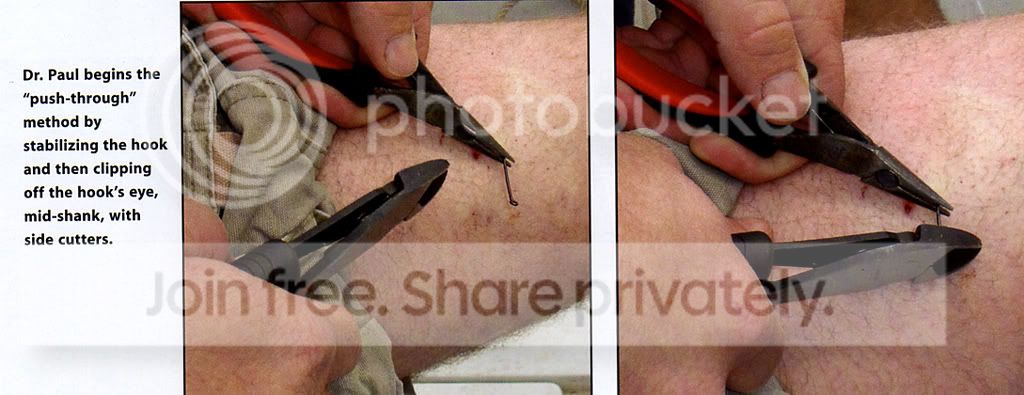
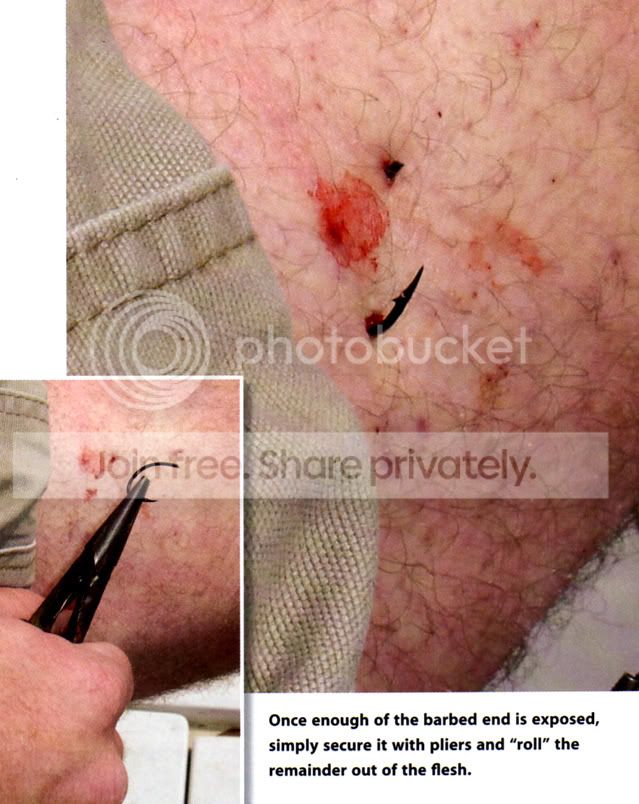
6. Push-thru Method-2. Next comes the hard partyou grip the shank of the hook (or what is left of it), and then roll it up and out thru the skin to form a brand-new opening and expose the barb (also very painful, depending on how much fresh, un-hooked tissue you need to pass through).
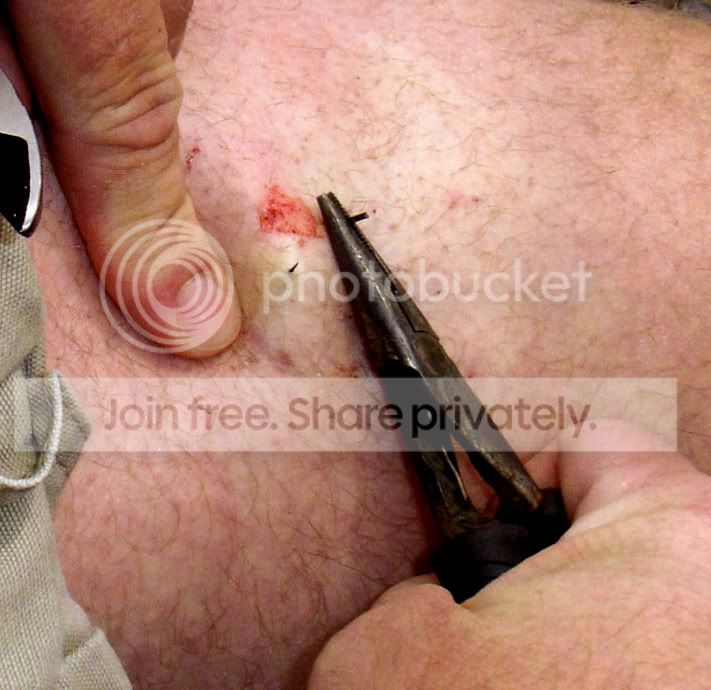
7. Push-thru Method-3. It finally gets a bit easier from here on out. The idea now is to grip the hook with your long-nose pliers just above the exposed barb and then quickly roll or rotate the eye-less hook shank up and out thru your second openingi.e., your new exit wound.
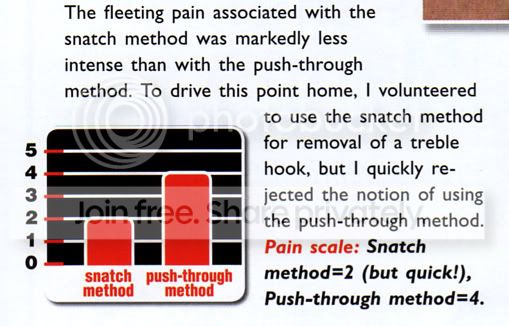
8. Pain Factor. Dr. Hart also included some interesting graphical info in his article. One of them dealt with the pain factor of the two hook removal methods. As you can see here (and as you might expect), the pain associated with the push-thru method was considerably greater than the snatch method that was still painful, but over a much briefer time frame. In fact, as Dr. Hart pointed out towards the end of his article, there was no doubt about which method he was going to use to remove the embedded treble hook shown in the first picthe snatch method won out hands down!
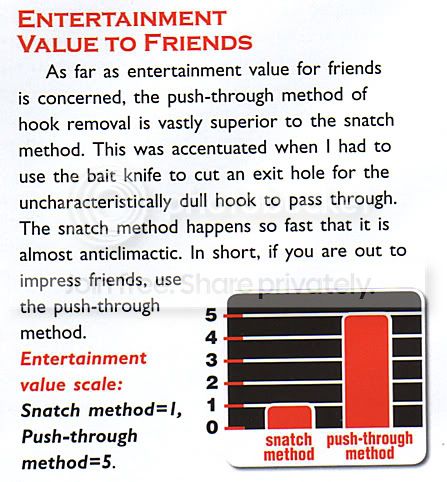
9. Finally, jusr for grins, Dr. Hart included another graph comparing the Entertainment Value for ones fishing partners or boatmates of the two methods. Again, as you probably might expect, the EV of the push-thru method was considerably greater than that of the snatch method. Finally, my cap is off to Dr. Paul Hart, MD for perhaps being the first to so carefully experiment with (and to document!) the two methods of hook removal. Well done!
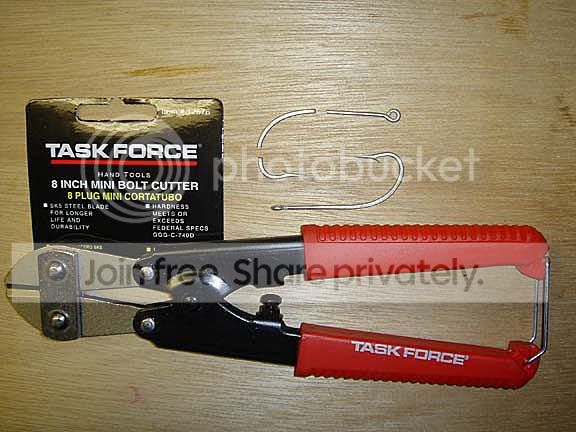
10. Mini-Bolt Cutter for Hook Removal
As Dr. Hart points out in the article, it may not be easy to find a pair of wire or side-cutters (1) heavy enough to cut thru say, even a 5/0 hook (or smaller) that I have often used for saltwater fishing, and (2) small enough to carry on a yak. I have tried a variety of sturdy, plier-type tools with wire cutters, but none did the job of cutting thru a 5/0 hook satisfactorily. I finally discovered what I was looking for at Lowes about a year agoa pair of mini bolt cutters, only 8.25 inches long, that would fit nicely into a tackle or gear box, or in a crate, or in a seat-back pocket (where I carry mine). This is the Lowes Task Force 8 inch Mini Bolt Cutter for $9.98. My test object was a 5/0 stainless steel OShaughnessy hook that was easily sliced and diced by this tool. However, a pair of heavy-duty linesmans pliers with a side-cutter barely made a dent in it. Of course, the closer you can get the fulcrum point of the bolt cutter to the shaft of the hook, the easier it will be to sever it.
11. How to avoid being hooked in the first place. Now it should be pointed out that the average fisherman can avoid all (or most all) of the above pain and distress, plus the turmoil and cost of driving oneself (or being driven) to the nearest ER, plus having to submit to surgery, plus having to be stitched up, plus having to undergo several weeks of rehab as a result.
Get out your long nose (or other) pliers before even leaving home and use them to flatten ALL or NEARLY ALL the barbs on your treble hooks. Stock treble hooks seem to be the major source of hooking problems. First they are extremely sharp, second there may be 6 or 9 of the suckers on your average plug, and third, should you really get nailed in the palm of your hand or in a finger by more than one treble hook on a lure, you could be in big trouble out on the water with a long paddle home in front of you. I try to remember to bend down the barbs on all the forward trebles, and 2/3 of the after trebles on my plugs. This will generally permit you to back a hook out the way it entered, assuming the barb is sufficiently flattened (not always easy to do). Course, Murphys Law being what it is, I will probably get nailed eventually with that one hook on the after treble that I left intact! Asi es la vida!!
Finally, here is the electronic version of Dr. Harts article from GAFF Magazine (May-June, 2007):
http://www.gaffmag.net/live_to_fish_another_day.php?id=127


