*****FIXED!**** Motor sluggish to respond, turns the wrong way sometimes.

Josh Rider

Stuff maker
Joined
Sep 2, 2014
Messages
2,428
I have an iron horse motor that I've been running with a teco vfd for a disk grinder.
I use plugs to switch from my 2x72. I have zero issues when it's connected to the 2x72 but as soon as I switch it to the disc, I have these problems. The motor is maybe 2 years old.
Has anyone experienced this?

I plan on opening the plate when I get home to check wiring and I would call the company I got it from but I'm sitting in a doctor's waiting room and figured you guys would be more helpful than the company.
Thanks for any help guys.
 
Last edited:
This started out of the blue after working properly for 2 years?
 
Single Phase? If so does check the start capacitor? I'd look there first.
If its 3 phase, check your fuses, it may be a bad leg.. Two places to start troubleshooting a motor..
I'm betting it's a 120v motor and your start capacitor is getting weak. It's an easy fix, just don't knock your dick in the dirt by touching the contacts on the caps.
That will eff you up lol!
 
Since he is running a VFD, it better be a 3Ph motor. I would look for a bad leg or a short somewhere. I would start at the plug.

Just a question, but is the disc grinder motor the same HP as the 2X72 grinder motor?
 
Ok guys, thanks for the help.
Yes 3 phase of course.
Stacy, it's less HP than the 2x72 motor. Both 4 pole 1725 rpm.
Kuraki, yes just out of the blue after 2 years.
Count,
 
Yeah, you've dropped a leg somehow. Not in the VFD since it runs your belt grinder normally, but between the VFD and the disc grinder. Start with the plug and work your way back. A 3 phase motor will act funny like that when it's not getting all 3 legs, because the pulse of energy through the windings is now no longer happening in an equal manner.
 
All I can say if take it to a motor shop and try for a free estimate

If you have nothing to lose, open it up eyeball and sniff for burned stuff.
 
Yeah, you've dropped a leg somehow. Not in the VFD since it runs your belt grinder normally, but between the VFD and the disc grinder. Start with the plug and work your way back. A 3 phase motor will act funny like that when it's not getting all 3 legs, because the pulse of energy through the windings is now no longer happening in an equal manner.

I agree. A continuity check with a DMM may diagnose it right away, unless it's an intermitten/loose connection. If I were a betting man, the first place I would look is the terminal connections for the male plug coming off the disk grinder. The wire strands may be loose or broken, or the plug could be coming apart. Next I would check just inside the motor pecker head to make sure your wire nuts were all still tight.
 
So the cable gland developed about a 1/4" or so of play causing the white t2 to separate frome the line 2 in.
Tightened everything down again, reconnected the wires, wire nut reapplied. Bing bang boom all better!
Thanks fellas!
 
God deal Josh. I didn't comment, but figured it was a wiring issue. Typically issues like these that happen all the sudden with symptoms like you described end up being a wiring issue.
 
Nice when it's an obvious fix and not a gremlin though.
 
Nice being able to catch that with no fuss.


For you or others that read this later.

When you make your twist connection, have fairly long bare ends, do the twist with two pliers not just finger tips.,
You don't rely on the installation of the nut to do the twisting.
Then snip the ends to length

When you are done installing the wire nut, pull on it as hard as you can.
If it pulls off, it didn't catch properly.


These things are slower to use, but really secure
If you're just doing one motor, 4 connections- why not ?
Bad connections create heat, heat causes failure and fire.


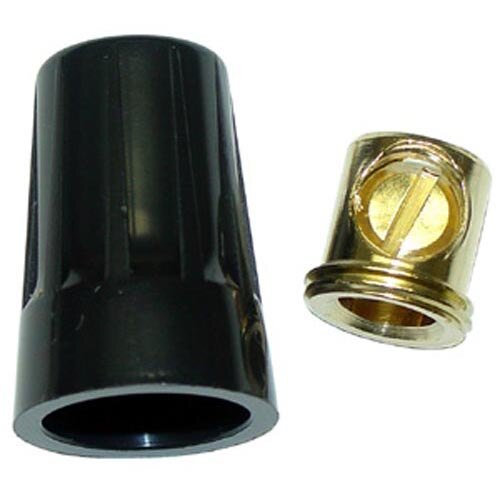
The same thing applies, do your twisting with pliers, feed the end through the ring.
Tighten the set screw
Turn the cover on over the brass ring.

If you install these properly, the will never come loose.

wire-connector.jpg


I bought a used motor removed from Coast Guard service
It used eyes crimped on every wire - really really great crimping job too.
Then the connections were made with short brass screws, double nutted - jam nutted with brass nuts.
Then all taped or heat shrinked up with electrolytic grease inside.

I was surprised to see all that, but those connections were bright and shiny 10 years after installation.

I looked that up later, apparently the Coast Guard has their own standards for that sort of thing.
 
Glad you got it going. Count touched on it, but your wires do look like they are stripped just a tad short. For 12-14 gauge wire, I'll normally strip off at least 3/4" to 1" of insulation, pre-twist them together (for stranded lighter gauge wires, my manly fingers are usually sufficient) and then crank down an appropriately sized twist connector (usually yellow for 2 wires) as tight as I feel comfortable. For motors, I'll often tape the connections too. Now a lot of sparkies will tell you that you should never have to tape a properly installed twist connector, but I just got into the habit on things that vibrate and move. I've seen the plastic caps come loose leaving just the bare twisted ends and the spring from the wire nut exposed. This normally is the result of cheap connectors, and/or over tightening. There's also a bit of a debate on pre-twisting, as a lot of twist connect instructions will say not to, or that it's not necessary, but I find it just helps to make sure everything is lined up and even before the cap goes on. This really helps when connecting more than 2 conductors.
 
Wire nuts that come with switches, fans, etc etc the best thing you can do is JUST THROW in the garbage. Go to a electrical supply house and buy some Ideal Tan twister wire nuts! Hand tighten as tight as you can and be done with it! Never had one fail since they came out with them. Been doing this electrical thing for a long time, a good electrical connection is one of the main causes of electrical failures.
 
Thanks for the advice. My friend wired it up, but I can honestly say I wouldn't have done it different probably.
I always use pliers when twisting, 1. Because it works way better, 2. Because I don't like wire piercing my thumb.
No doubt if it were all done correct the first time this could have been avoided.
I really liked the screw down nuts the count showed, I don't like having to wire something more than once.
 
Good information, I am in the middle of building a 9 inch variable disc grinder and will use all this in the build.
 
Back
Top