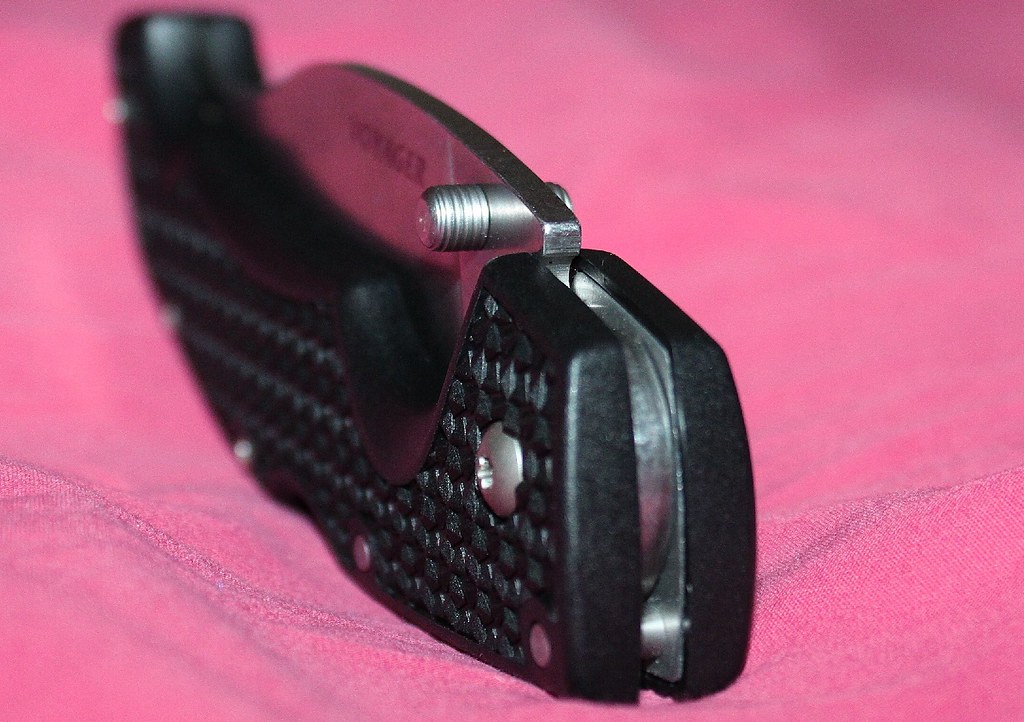
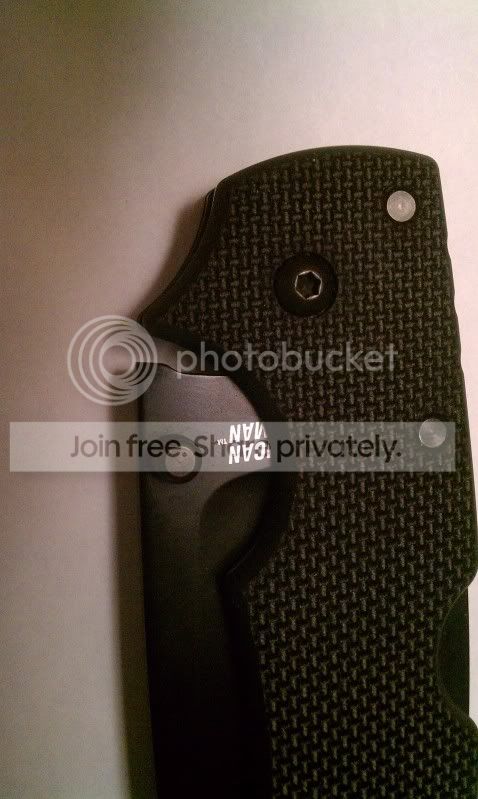
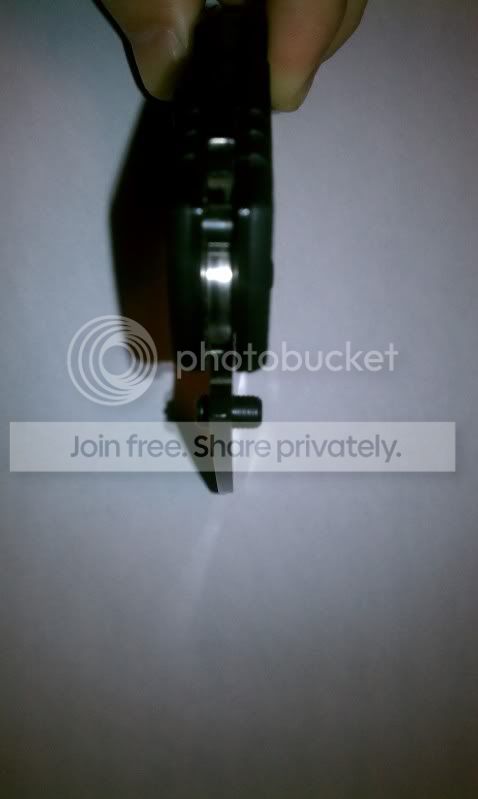
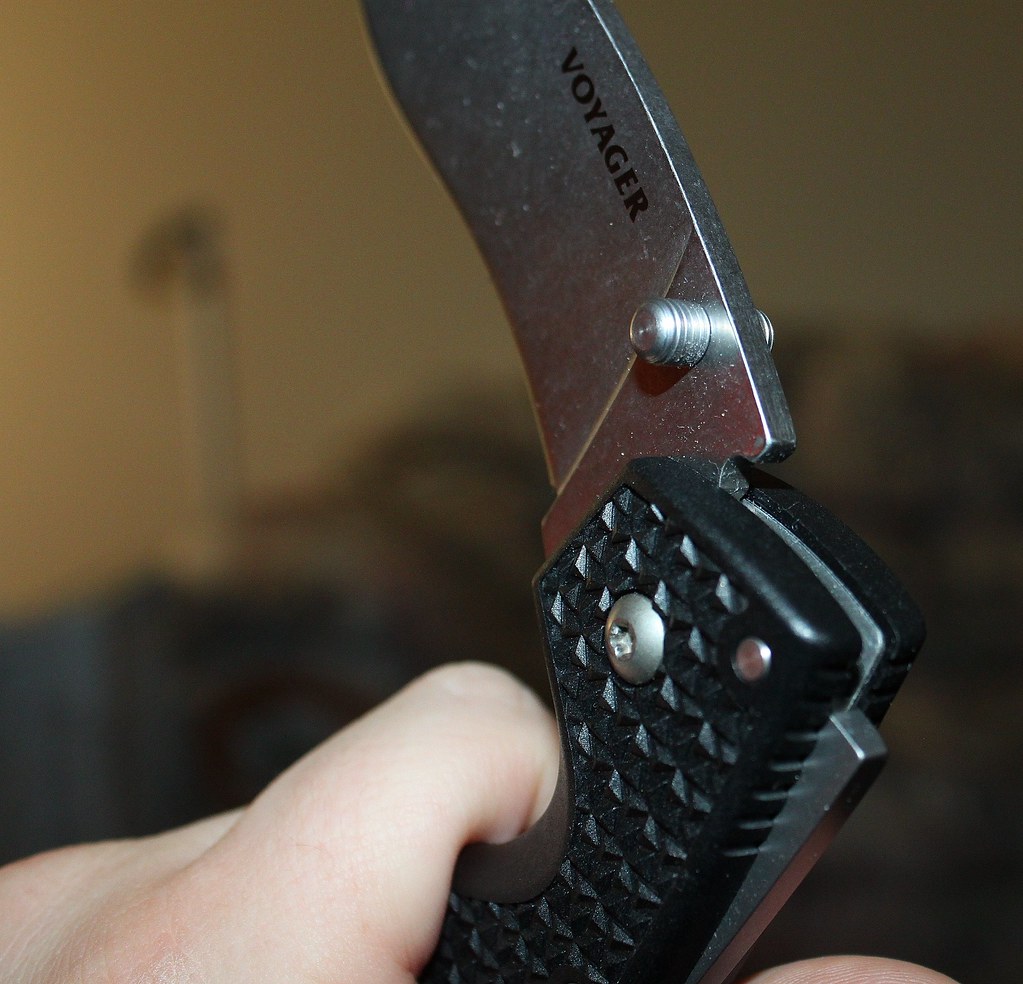
My American Lawman also has that small jump on the tang. But it doesn't do anything. Its not even a curved radius it is a jog with straight lines. There is a line on the tang where the paint is worn where it makes contact with the stop pin over just one small area. There is a matching mark on the stop pin and I can look in the knife and the 'tab' sticking out extends over the stop pin and doesn't touch anything. If that jog doesn't increase the contact patch with the stop pin then it doesn't have any benefit. I was talking about an actual half circle that wraps all the way around the stop pin.
I wasn't saying any other lock is 'better' that the Triad. Just that others have features I like better. As an engineer I like to have more reasoning than "just because". If a lock uses a piece of metal to bridge a gap between tang and stop pin that gets compressed and the forces are transferred through it, I don't see how one lock can be significantly stronger than another. They use the same principles just a slightly different way of implementing them. I have yet to read an explanation why the Triad will be significantly stronger than the other locks that are out there. I don't need an explanation because I can see how the different locks work, but if it is so much stronger and better than everything else, then someone who believes that must have a logical explanation why. Sure if one lock uses stronger or thicker materials it will be stronger, but many locks can be over built to make them stronger. Just to be clear, I haven't said anything bad about the Triad lock.
Also, the amount of moving parts has nothing to do with strength. An argument can be made that less moving parts may be more reliable, but there is no relation to how strong it is.



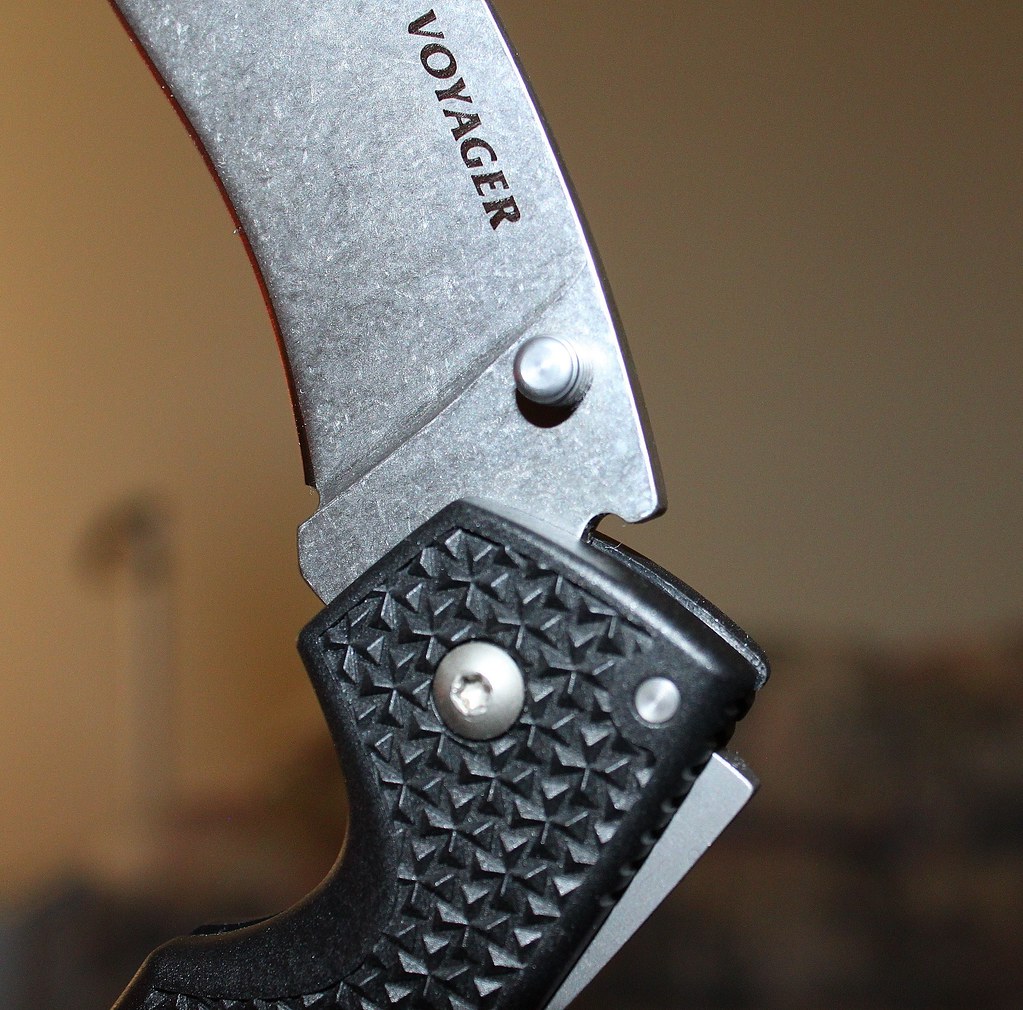
 here is one of the $38 Voyagers - lock-up is as perfect as you could ever hope for in a folder at any price.