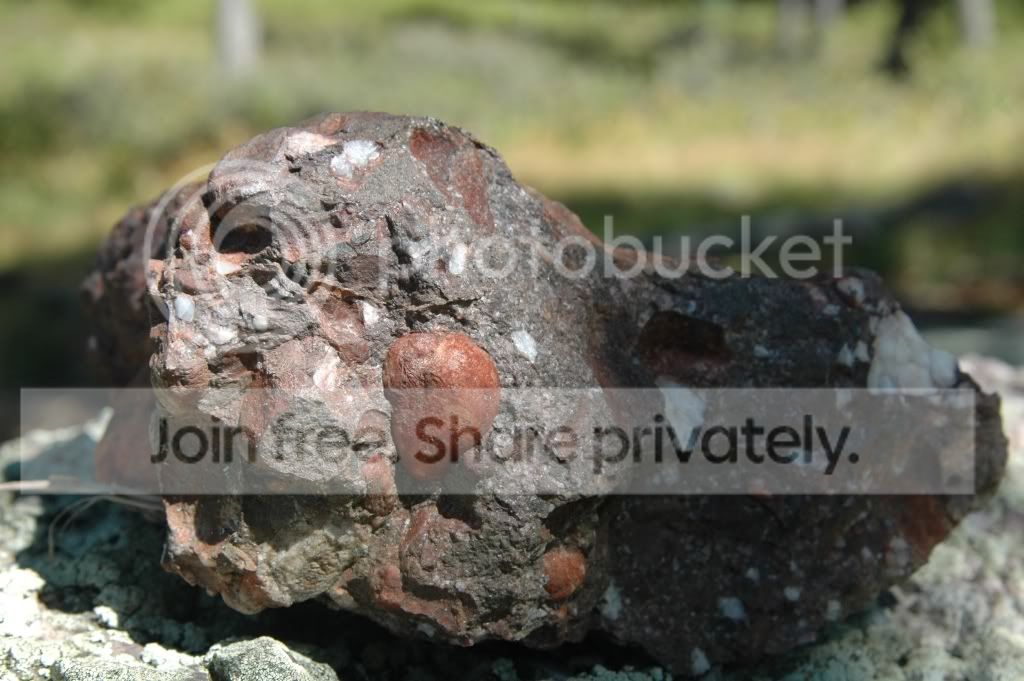
For the geologists among us... (pic heavy)

Joined
May 16, 2006
Messages
2,724
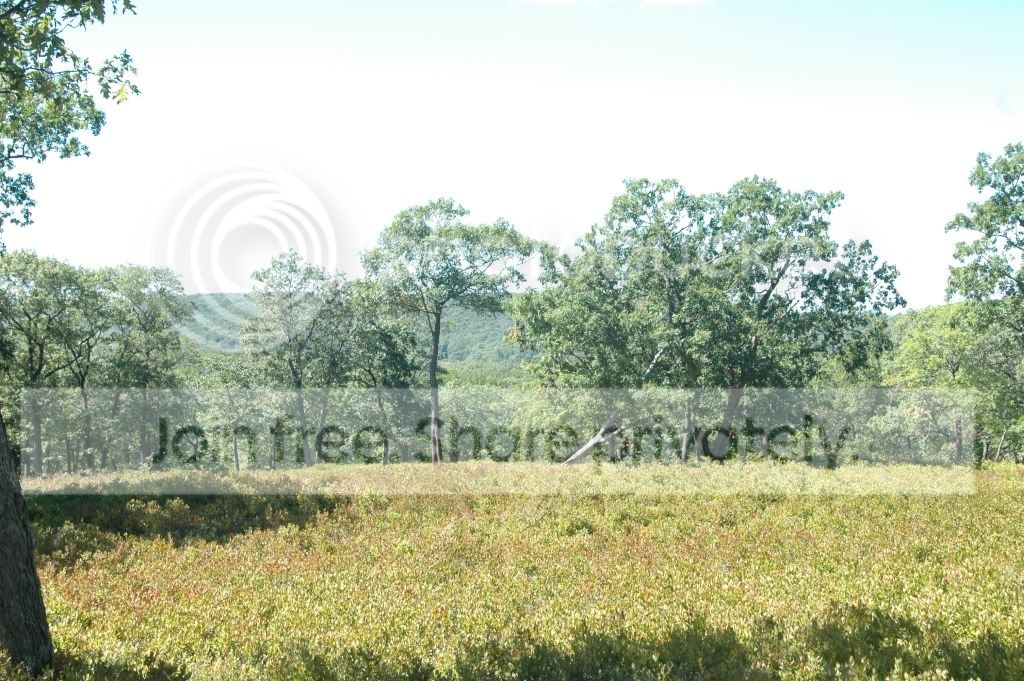
On the very top of Goshen Mountain (elev. 1247 ft.) in Harriman State Park
sDSC_3389sml.jpg


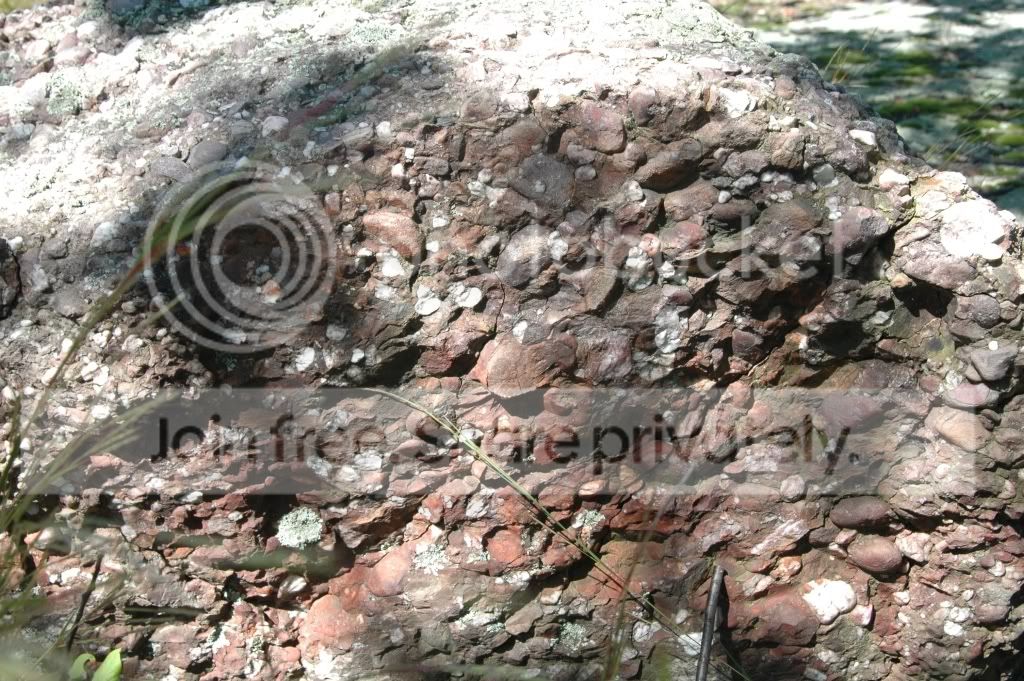
I ran across this rock today, which was about 2.5 feet high and was cracked open to reveal this:
sDSC_3387sml.jpg


sDSC_3386sml.jpg


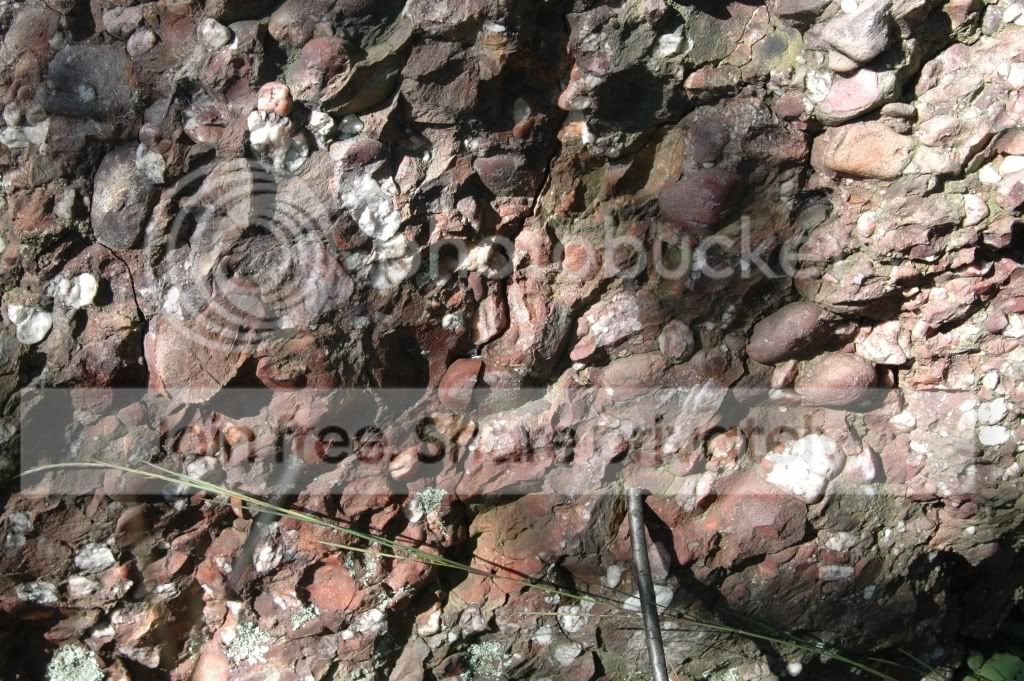
Here's a piece I broke off by hand

sDSC_3396sml.jpg


Anyone know if this is some kind of man made debris left over from a mining operation or a naturally occurring composite, if the latter it seems like such a strange place for it.

There were also some suspiciously large, yet unripe, wild blueberries in the vicinity

sDSC_3399sml.jpg


Alien landing site perhaps :confused::D


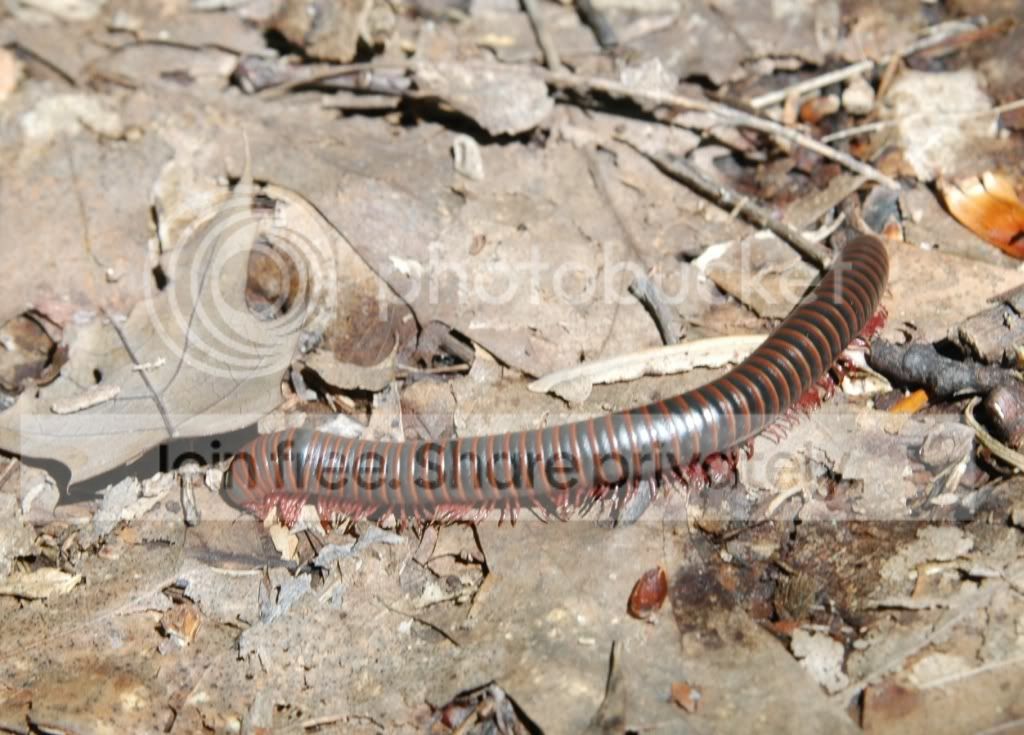
And here's a pic of a large creep-crawly, about 4 inches long:
sDSC_3403sml.jpg
 
The boulder is a conglomerate; lots of stuff gathered in sediment and formed into a rock by heat and pressure.

Later that piece broke off a larger section and was probably washed and tumbled down stream, making it a boulder.

During the ice age that boulder was moved by the ice and was eventually deposited on the scoured bedrock of Harriman State Park.

Recent erosional forces split that weak rock to expose what you see.
 
What Big Mike said. Conglomerates can be very interesting. And with the glacial history of that area, this glacial erratic could have come from anywhere north of there, even northern Canada. Most of the sedimentary rock in that part of the country is shale and limestone, which form in shallow and deep water basins, respectively. Conglomerates are usually stream/river or shoreline deposits. Just picture a gravel-filled sandbar being changed to rock.

The only change I would make to Big Mike's statement is that conglomerates are cemented (by lime, silica, etc) rather than heat and pressure. If it is changed by heat and pressure, then it becomes metaconglomerate.
 
Well, all of those legs have to equal a lot of speed, right?

September67hike008.jpg


Sorry for the blurry pic, my camera sucks.

-Chris
 
The boulder is a conglomerate; lots of stuff gathered in sediment and formed into a rock by heat and pressure.

Later that piece broke off a larger section and was probably washed and tumbled down stream, making it a boulder.

During the ice age that boulder was moved by the ice and was eventually deposited on the scoured bedrock of Harriman State Park.

Recent erosional forces split that weak rock to expose what you see.

What Big Mike said. Conglomerates can be very interesting. And with the glacial history of that area, this glacial erratic could have come from anywhere north of there, even northern Canada. Most of the sedimentary rock in that part of the country is shale and limestone, which form in shallow and deep water basins, respectively. Conglomerates are usually stream/river or shoreline deposits. Just picture a gravel-filled sandbar being changed to rock.

The only change I would make to Big Mike's statement is that conglomerates are cemented (by lime, silica, etc) rather than heat and pressure. If it is changed by heat and pressure, then it becomes metaconglomerate.

Thanks for the geology lesson guys. Very interesting. It somehow just looked really out of place on the top of a mountain surrounded by blueberry bushes.
 
Hey no intention to Hijak the excellent thread - but could I get our resident experts opinion on this formation?

Taken from the airplane over Guatemala, en-route from Guatemala City to Tikal. I imagine the rock face is quite high, but difficult to tell from the airplane (don't remember our altitude, but it was a small plane ~ 15 seats so it couldn't have been very high). There was a massive valley and agriculture land off the vallue from the one side of the mountain face.

DSC_0020-8.jpg
 
Hey no intention to Hijak the excellent thread - but could I get our resident experts opinion on this formation?

Taken from the airplane over Guatemala, en-route from Guatemala City to Tikal. I imagine the rock face is quite high, but difficult to tell from the airplane (don't remember our altitude, but it was a small plane ~ 15 seats so it couldn't have been very high). There was a massive valley and agriculture land off the vallue from the one side of the mountain face.

DSC_0020-8.jpg

The sudden change in elevation (escarpment) to the left may indicate a fault. The ring like structure could be an eroded caldera or similar volcanic structure, or an eroded dome, or it could be the nose of a fold. If the latter, the small scallops or facets may be limestone or calcareous rocks. It does look like tilted beds, though :)
 
It's also unscientifically known as puddingstone. Had a chance to get up to Sam's Point yet Theo?
 
The sudden change in elevation (escarpment) to the left may indicate a fault. The ring like structure could be an eroded caldera or similar volcanic structure, or an eroded dome, or it could be the nose of a fold. If the latter, the small scallops or facets may be limestone or calcareous rocks. It does look like tilted beds, though :)

I'm no geology expert, but I'm in a geology class right now so this is actually interesting to me. Just based on appearances, it looks like it could be a sill composed of a harder rock than the surrounding areas. Now it would be a pretty massive sill, so I don't know if that's even a possibility. The reason I'm thinking this way is because of it's drastic rise in elevation on both sides of the formation relative to the surrounding terrane.

I'd love to get some feedback on this since you seem to have much more knowledge than I do on the subject.

Edit: I also noticed that there seems to be a very distinct texture on the land, perhaps indicative that it was once covered with water?
 
The rock is conglomerate. It looks like it has been exposed to some metamorphic action (heat and pressure). Conglomerates are sedimentary rocks (sandstone, shale, limestone) They are usually acculumated in a stream or river bed. You can look at the shape of the stones and if they are rounded or angular you can guess the depositional conditions. Fast or slow stream and distance form the source.
 
I'm no geology expert, but I'm in a geology class right now so this is actually interesting to me. Just based on appearances, it looks like it could be a sill composed of a harder rock than the surrounding areas. Now it would be a pretty massive sill, so I don't know if that's even a possibility. The reason I'm thinking this way is because of it's drastic rise in elevation on both sides of the formation relative to the surrounding terrane.

I'd love to get some feedback on this since you seem to have much more knowledge than I do on the subject.

Edit: I also noticed that there seems to be a very distinct texture on the land, perhaps indicative that it was once covered with water?

A sill? Haven't come across that term in a long time, but yeah, the ridge sticking out could be a sill (which in my hazy memory means a tabular intrusive rock that sorta injects its way parallel to regional or local bedding).

The thing a bout a sill, I believe, is that if it were a linear (straight) emplacement, when eroded, it should not be curved the way it is. It would outcrop straighter, unless the sill and regional dip were folded.

It could also simply be a more resistant layer (sedimentary or otherwise). Notice though that the top of the ridge (the geomorphology guys have a term - hogback or something like that) also shows the indents or scalloping that the lower elevation surfaces were showing, so I'm actually guessing it's also limestone or calcareous that were folded, then faulted.

Have you done stereopairs (aerial photograph interpretation) in your geology class yet? That's a lot of fun and you can impress everyone if you can get the 3D image without the stereopair glasses :) The trick is to relax your eyes, stare off into an imaginary point far away so that your vision lines are parallel, then the two aerial photos will "merge" into a 3D image.


But I digress. Looks like we still have multiple working hypothesis that need testing, so maybe more literature research or fieldwork is needed :)
 
The rock is conglomerate. It looks like it has been exposed to some metamorphic action (heat and pressure). Conglomerates are sedimentary rocks (sandstone, shale, limestone) They are usually acculumated in a stream or river bed. You can look at the shape of the stones and if they are rounded or angular you can guess the depositional conditions. Fast or slow stream and distance form the source.

Some of the history that sedimentary geologists can infer from conglomerates borders on the amazing, imho. I knew some guys who studied the lithology of the clasts (pebbles/cobbles, etc). in a diamictite (where the clasts are of different lithologies and sizes; poorly sorted) and found pieces of older bedrock. There was older preCambrian bedrock that matched the lithology of the clasts, so they were able to infer tectonic uplift rates in the region that deposited the conglomerate. So not only can they make inferences on deposition environment, transport mode, but also provenance (source) and tectonic history! (among other things).

Don't get me started on these things cause I tend to bore people to tears :)
BUT, it's a lot of fun to do roadside geology, especially with a cooler full of beer and lunch :) (with a designated driver of course). That way the rest of you can look at rocks, wave your arms and piss on outcrops :D
 
Back
Top