Giving stabilized wood the "wet look" or satin look?

Joined
Sep 14, 2010
Messages
819
I got a pair of stabilized slabs but they are very matte in appearance. But when they are wet they become much darker and show the contrasting way better.

Any recommendations on how to give it a wet look or satin look while retaining the contrast (this was professionally dyed and stabilized)? I was considering using some linseed oil.
 
I got a pair of stabilized slabs but they are very matte in appearance. But when they are wet they become much darker and show the contrasting way better.

I have no experience with stabilized wood but I have cut loads of stabilized stone. I bet the slabs need to be polished more for a wet look. Usually a grit around 600 will give you a satin look.
 
I put boiled linseed oil on stabilized wood scales, and they look more wet. You want to have the sanding done, then just rub on a thin coat. Let that dry, and reapply.
You can use Tung oil and get about the same effect, but get pure Tung oil.
 
Not all stabilized wood is equal. I wonder if an inferior job can be bettered by a better stabilizing process or if once done, you are stuck?
 
I had the same experience with the first time I used stabilized wood scales. It was suggested to me from a maker here to coat it with Tung Oil just enough to cover the surface, very very little, then wipe off immediately and let dry. It really made the wood colors "pop" and it looked great!
 
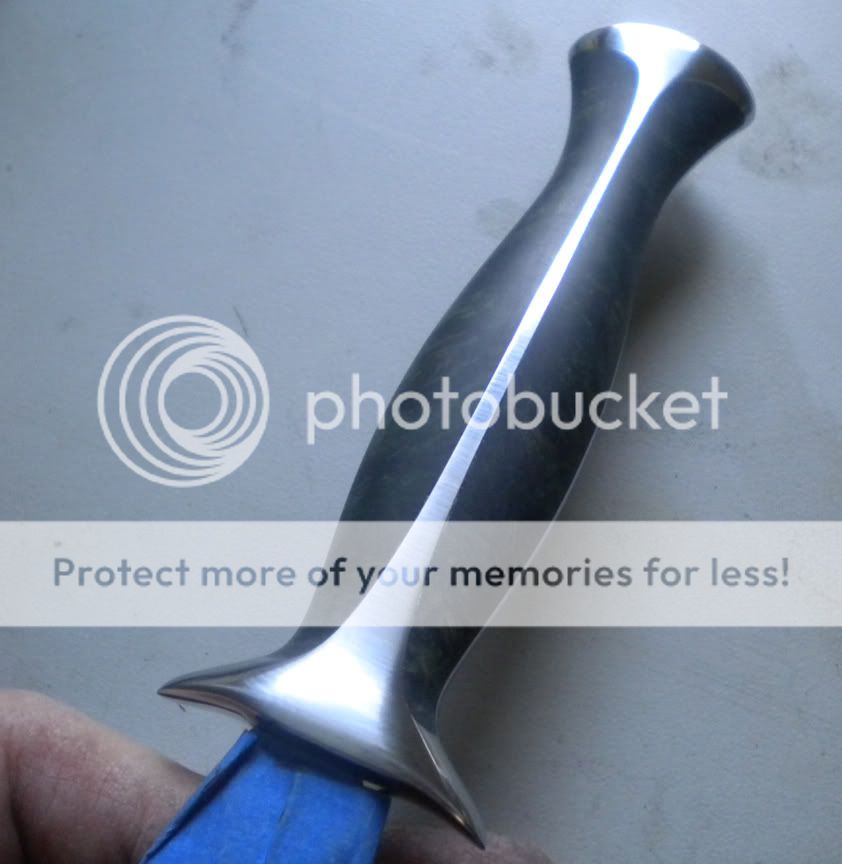
I saw this thread this morning and was going to be polishing some stabilized wood this afternoon, so I took a couple picts.

sanded:

a.jpg


then buffed:


b.jpg


Some of that "no scratch pink" Darrin was talking about. No oils necessary... :thumbup:
 
Darrin, Nathan, and Don are right on the money. Sand to 600 or 800 and hit it with no scratch pink.

With non-stab wood sometimes I'll follow that with SC Johnson paste wax, rubbed on, play a lighter flame lightly over the wood, a little more wax, buff it off clean by hand with a cloth. It can make woodgrain look 3-D for sure. Don't know about this for stab. wood.

edited to add: Dang Nathan, nice work!
 
One of the MS makers shared with me how he finishes the stabilized wood he gets.
He sands to 1000+ grit.
Then using Tung oil or Tru-oil applies a few light coats.
After that applies a paste wax and hand buffs.
From what I have seen it livens the colors and gives depth to the figure in the wood.

Different makers have different methods that work great as well. I would suggest experimenting and decide what you like best.

Nathan
The photo is so shiny we can't tell what it is.
Do you have any photos showing the whole knife?
Looks great from what I can see!
 
Hey Mark,

I'm not actually sure what it is.

c.jpg


I've lightened this pict some so the wood shows better. It is a double died burl I got at Blade last year and I've misplaced the notes. It is almost certainly one of two woods, but I forget which it is. Any thoughts?


(Technically, this is not thread drift. I mean, that's pretty "wet")
 
Finishes other than wax on stabilized wood is unnecessary. Its all about surface preparation. Burnishing, sanding and surface polish is the way to attain a great finish on stabilized wood. When you look at a stabilized wood handle and it looks glossy and reflective it no doubt has a surface finish applied to it. If the handle looks like there is a lot of depth to it with luster instead of reflection, someone has done their homework.

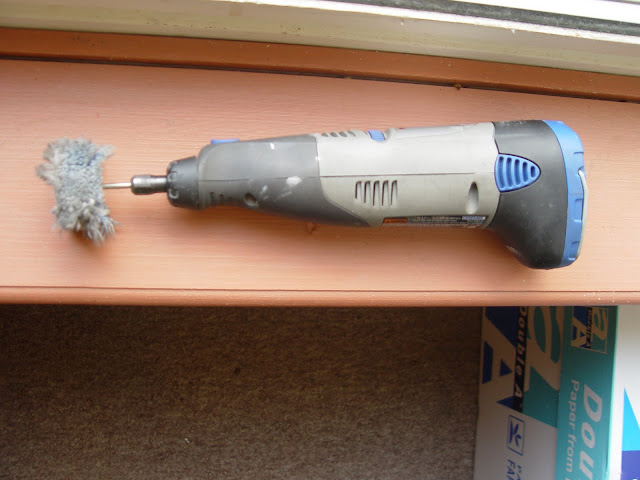
The little hand held buffer in the pic, with 6 or 8 pieces of Levi material attached to the mandrel will work wonders on that stabilized handle.

Just my 2cents, Fred

Nathan, Do you have any pics of the whole knife I would really like to see.

DSC00979.JPG
 
Last edited:
Thanks Fred. I guess I ought to take some proper photographs of it.

I have applied some Renaissance wax to it, but the pictures I posted earlier of the shiny wood are "as buffed" stabilized wood.

I buff with green, then white, then pink. If I were just doing the wood, pink by itself would work.

I hate buffers, but I don't know any other way to put a high polish to wood like that.
 
Thanks Fred. I guess I ought to take some proper photographs of it.

I have applied some Renaissance wax to it, but the pictures I posted earlier of the shiny wood are "as buffed" stabilized wood.

I buff with green, then white, then pink. If I were just doing the wood, pink by itself would work.

I hate buffers, but I don't know any other way to put a high polish to wood like that.

First, what I can see of that knife looks amazing!

How about buffing on belts? I really have a fear of buffing wheels. I've used em, but would rather do another way, I like the idea from Fred.
 
Buffing wheels are not as nightmarishly dangerous as some will claim. Yes, they demand a real measure of respect, but a careful approach, common sense and most of all, focus, will get you through years of buffing just fine. Buffs do a great job polishing because they are so soft and blend so well. I don't think you'd have nearly the success trying to buff a handle with a belt.

Fred's idea is indeed a good one if you don't like the power of a bench type buffer.
 
Back
Top