Grinder/Knife Making Questions

Joined
Jul 7, 2015
Messages
105
Hello, everyone, good day to you. I am looking at getting a nice grinder this summer so I can start practicing stock removal. I really want to make knives, and this has always seemed to be an accurate and well-working method. The main problem for me is how much you ought to know before getting yourself into this.

First off, what grinder should I use? I know there are many answers, but I'm specifically looking for something under 600 dollars that generally works well and that wouldn't need to be replaced even after a long time of grinding. I have looked into Grizzly and Coote grinders, and the Coote ones seem better from what I have heard. Does what belt size you get (2x48 vs. 2x72) matter all that much? How much does contact wheel size matter (I'm not planning on doing much if any hollow grinding)? How difficult or expensive is it to rig up the right motor? What accessories or add-ons are really helpful? Do Coote grinders work well for most needs in the knife making process? Any information on or experience with Coote grinders shared would be greatly appreciated.

Other various questions that would help me start up: What type or shape of grind is easiest for a beginner to start practicing with? What steels are there that are inexpensive, readily accessible, easy to work with, and easily heat treatable? I know heat-treating is a whole different issue that is very difficult to get right in a home-made shop, but I would really like to learn how to do simple heat treating well with basic tools. I have experimented around with a small coal and firebrick forge rigged to a leaf blower, but it was anything but regulated or precise. I am thinking of having some metal piping in there so the blade isn't directly on the coals to get more even heat distribution. Do you know what oil would work well for quenching? Lastly: any hints, tips, or tricks about ANYTHING at all in the knife making process that help produce a quality and functional knife? I know there is so much info around and so many methods, but anything you would like to share with me could help a lot.

Another thing: I hope I'm not posting this in the wrong area of the forum, but I didn't see a "post thread" button in the knife maker section. Please bare with me, I am pretty inexperienced with this stuff.
 
Hi 7.....I was in the same boat as you up until about 2 months ago or so. I chose knife making to keep me occupied in retirement after spending 40 years in the electronics/automation and teaching professions. I chose to go with the Coote grinder, but be forewarned, you're not going to get away with a $600 investment. I'll be ordering mine within the next month or so and plan on getting all of the options with it...check the accessory page on the Coote website. The total cost is going to come in just north of $1000 including shipping. That doesn't include the motor/pulley or motor/VFD setup that you're also going to need. For now I've got a motor/pulley setup worked out that will give me 8 different belt speeds from about 1500fps to 4500fps. I plan on converting to a VFD after I put 220V in the shop. The cost of the motor (leeson 1HP), pulleys and some other misc. hardware adds about another $250 to the price tag. So all told, I'll have invested about $1300 into the grinder. Happy Grinding! Oh....and if you want to wind up with a million dollars making knives, start out with 2 million! :D
 
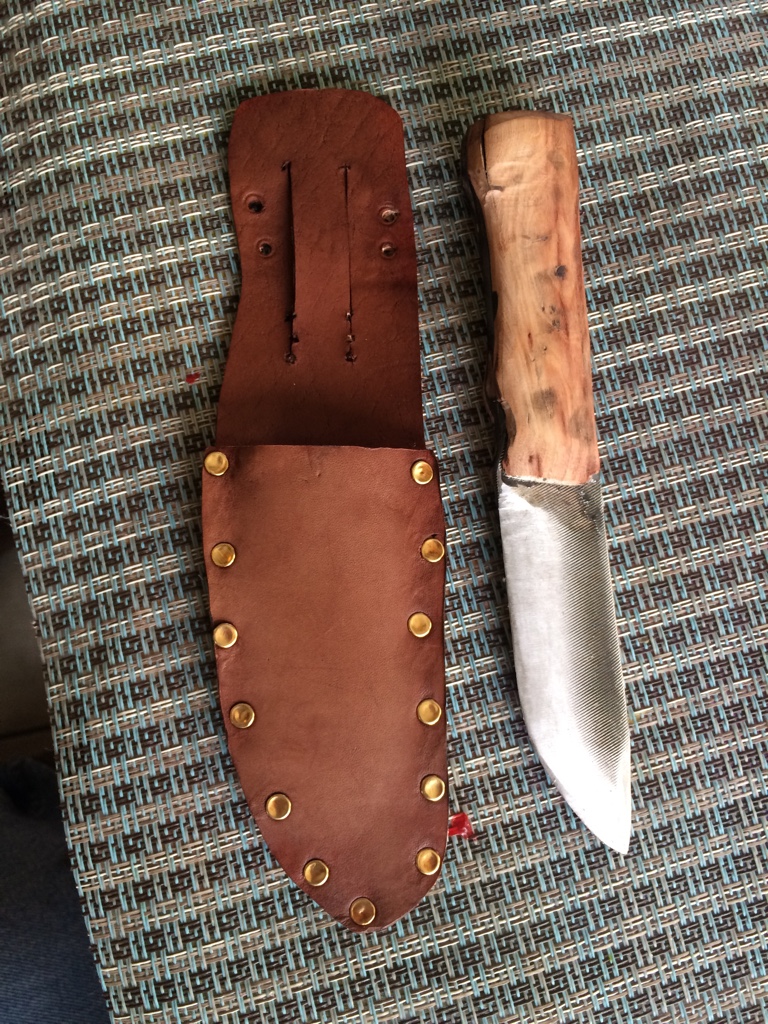
72b3832f8cc746ffa26d6b5f2f1b8c3d.jpg
this was done with your basic hardware store skill brand grinder with a 24 grit aluminum oxide wheel and sharpened on a craftsman belt sander. Just putting to perspective it's more the tool user than the tool that makes it possible


Sent from my iPhone using Tapatalk
 
Indeed he did. It can be done however. I have since built a 2x72, but this is the last knife i made on my 1x30 harbor freight $30 belt grinder. It the 6th knife I ever made. I have no previous machining or metal working experience. In fact, before I started making knives I didn't own a file. What I DID do however, was come do a lot of research and reading, and came to bladeforums knifemakers section, humble and hat in hand to seek advice. I then LISTENED to the advice and tried to implement it to the best of my abilities. That is all.
number%206_zpsht038r8e.jpg
 
Read the stickies at the top of Shop Talk, then post your question - click on thread starter. The price of a 2x48 belt is about the same as a 2x72 belt plus there seems to be a better selection of 2x72 belts. Also, check out previous threads...this is a reoccurring question with lots of opinions and options.
 
Do you have the skill and resources to build your own? I built one that is totally awesome for around the price you are looking to spend. I made sure I would never outgrow it. You would probably be smart to list features and capabilities you want to be able to do with it. That would help you narrow down the field some. This is a link to some images of it. http://imgur.com/a/e3VdB I saw Entrek knives grind video and said that is what I want my sander to be capable of. I am very glad I went the way I did. It works well for me.
 
A good steel to start with would be 1084. You can quench in canola oil and get good results. One thing to think about when searching for a grinder is if the motor runs off 220 or 110. Get a 2x72 if you can, it will make getting belts easier. As for what attachments you will need, I would suggest starting off with a flat platen. You can add stuff as you need it later. Also, don't let the lack of a grinder stop you from making a knife, you can make knife with a hacksaw, files and sandpaper.
 
The 2x72 is more cost effective for belts than the shorter belts. Generally, the longer the built the more value they are because of how long they last versus cost. You'll find more variety in 2x72 as well.

Your grinder setup should reflect what kind of knife you want to make and what you want to do with it. If you are just trying to make a knife that can be done with hand tools or any cheap grinder. I've seen some impressive knives made on the 1x30. If you want to make folders or flippers you are going to need a better grinder setup with tooling rest that can adjust, different types of contact wheels imcluding small wheels.

I agree that the users skill is a huge determinate, but the wrong equipment or insuffiecent equipment will greatly limit you from being able to do somethings.
 
A Wilmont little buddy grinder with a 1.5hp motor is about $1100 all in. Comes with flat platen and tool rest and is solid.
 
GhJC8Lg.jpg


I picked up this new Northridge Tool 1x72 a few weeks ago for $1650. It is my first 2x72 do I have nothing to compare it to, but after a year and a half of using Harbor Freight 1x30s, I'm in love. :-)
 
Before making your first knife, are you sure you want to invest that much in a grinder? As other posters have said, try making a knife or two with a hacksaw and a file, to see if you enjoy it.

I started with a file on my first couple of knives (which were garbage, but fun to make). I then moved up to a Harbor Freight belt sander, which set me back only $50.00, and helped me get a feel for grinding. Now, I'm having good results with a Craftsman 2x42, which cost less than $200.00 but is a big step up. If I keep going with this hobby I might someday invest in a serious grinder. Meanwhile, I have a belt sander to use on non-knifemaking projects when I need it.
 
I will agree with Sprayman; unless you have other hobbies or applications that a 2x72 might be useful for, you might try just making a couple by hand and seeing if the bug really bites you.

As for grinders that are at or under the $600, you might look at the Sling grinders from Polar Bear Forge. It's also possible to build a NWGS for that kind of money as well. FWIW, I would recommend a 2x72 over anything else if you can swing it, as you'll have the most options available for abrasives.
 
And don't count out those 1x30s for $50 to get your feet wet. I used them for almost a year and a half and didn't know what I was missing until I got the 2x72. I made all kinds of knives watching technique progress with the help of the great people here. They were an awesome way to learn. Here are a few $50 grinder knives I've done with no jigs. All can use improvement, and I try to do something different with each Grind, but I'm having fun and enjoying it. :-)

KA4OnXP.jpg


34XMerz.jpg
 
Indeed he did. It can be done however. I have since built a 2x72, but this is the last knife i made on my 1x30 harbor freight $30 belt grinder. It the 6th knife I ever made. I have no previous machining or metal working experience. In fact, before I started making knives I didn't own a file. What I DID do however, was come do a lot of research and reading, and came to bladeforums knifemakers section, humble and hat in hand to seek advice. I then LISTENED to the advice and tried to implement it to the best of my abilities. That is all.
number%206_zpsht038r8e.jpg

Thus is a beautiful blade! Sorry to bring us off topic, but I just had to say that. :-)

Jeff
 
Some good advice so far to be sure--but I have another approach, based on my own experience, I sort of echo the folks who said to try and make a knife or two before stepping all the way up to a top-end belt grinder--don't really know why we call them grinders, they are belt sanders, pure and simple. Soooo---I would recommend getting a 1x30 and a decent assortment of belts, and make a few knives with that, and figure out if you want to keep making. You should be able to get away with a good selection of belts and a 1x30 for under $150, under $80 including belts if you go the Harbor Freight route. For a 1x30 that I can vouch for as a good machine is the Rikon: http://www.ebay.com/sch/i.html?_odk...der.TRS0&_nkw=rikon+1x30+belt+sander&_sacat=0
The first listing is for the Rikon, and even though the guy is high on shipping the overall price for this machine new is good 85.00 + freight If you look at the other sanders, it is pretty obvious that lots of folks sell the exact same cheap one-at lots of different prices- and they really are all exactly the same.

As for other options and belts, check out a few pages following this one on Amazon: http://www.amazon.com/s/?ie=UTF8&ke...qmt=b&hvbmt=bb&hvdev=c&ref=pd_sl_49n2fygfgi_b

You can always use a 1x30 around the shop, and dedicate it to sharpening or polishing or something if you decide and add a bigger/better machine in the future.

I have made a few knives with only files and sandpaper--and a dremel to be honest--and I can tell you this approach can very quickly wear you out and leave you burnt out--I had a 1x42 Burr King, a serious belt sander, and I moved to that pretty quickly and made my next few knives on it--and then moved on to a variable speed 2x72, which I can tell you is where you want to end up.

I have a pretty darn good (if I say so myself) knowledge of the available grinders in the market, so if you have any questions feel free to PM me.

As to steel to start with, I will agree with the poster who recommended 1084--or 1095, these are pretty straightforward to heat treat, you can quench in most any vegetable oil, I use peanut, and get good hardness and then temper them for a couple 1 hour cycles in the oven at 400 degrees and end up with very good results.
The other couple of things I would recommend to get focused on are 1. Have a plan, and draw it out on paper, then maybe transfer it to cardboard or thin plywood, keep your first attempts clean and simple, 2. a flat grind from just under or to the spine is the easiest way to grind IMO--3. make sure you drill any holes needed--say pins or thong holes before heat treating your blade--4. pick a couple of scales for your first handle, I'd buy them form one of the BF's vendors, look under the listing for them. 5. The last thing I would strongly recommend is look at the YouTube from Nick Wheeler on hand sanding your blade--you will garner some expert advice on how to achieve a decent finish on you blades.

Good luck--Oh and be careful, this is where the addiction begins!!
 
Last edited:
Some good advice so far to be sure--but I have another approach, based on my own experience, I sort of echo the folks who said to try and make a knife or two before stepping all the way up to a top-end belt grinder--don't really know why we call them grinders, they are belt sanders, pure and simple. Soooo---I would recommend getting a 1x30 and a decent assortment of belts, and make a few knives with that, and figure out if you want to keep making. You should be able to get away with a good selection of belts and a 1x30 for under $150, under $80 including belts if you go the Harbor Freight route. For a 1x30 that I can vouch for as a good machine is the Rikon: http://www.ebay.com/sch/i.html?_odk...der.TRS0&_nkw=rikon+1x30+belt+sander&_sacat=0
The first listing is for the Rikon, and even though the guy is high on shipping the overall price for this machine new is good 85.00 + freight If you look at the other sanders, it is pretty obvious that lots of folks sell the exact same cheap one-at lots of different prices- and they really are all exactly the same.

As for other options and belts, check out a few pages following this one on Amazon: http://www.amazon.com/s/?ie=UTF8&ke...qmt=b&hvbmt=bb&hvdev=c&ref=pd_sl_49n2fygfgi_b

You can always use a 1x30 around the shop, and dedicate it to sharpening or polishing or something if you decide and add a bigger/better machine in the future.

I have made a few knives with only files and sandpaper--and a dremel to be honest--and I can tell you this approach can very quickly wear you out and leave you burnt out--I had a 1x42 Burr King, a serious belt sander, and I moved to that pretty quickly and made my next few knives on it--and then moved on to a variable speed 2x72, which I can tell you is where you want to end up.

I have a pretty darn good (if I say so myself) knowledge of the available grinders in the market, so if you have any questions feel free to PM me.

As to steel to start with, I will agree with the poster who recommended 1084--or 1095, these are pretty straightforward to heat treat, you can quench in most any vegetable oil, I use peanut, and get good hardness and then temper them for a couple 1 hour cycles in the oven at 400 degrees and end up with very good results.
The other couple of things I would recommend to get focused on are 1. Have a plan, and draw it out on paper, then maybe transfer it to cardboard or thin plywood, keep your first attempts clean and simple, 2. a flat grind from just under or to the spine is the easiest way to grind IMO--3. make sure you drill any holes needed--say pins or thong holes before heat treating your blade--4. pick a couple of scales for your first handle, I'd buy them form one of the BF's vendors, look under the listing for them. 5. The last thing I would strongly recommend is look at the YouTube from Nick Wheeler on hand sanding your blade--you will garner some expert advice on how to achieve a decent finish on you blades.

Good luck--Oh and be careful, this is where the addiction begins!!

Good advice but as someone who started with 1095 on his very first knife I would say go with 1084, it took me 3 attempts on my first heat treat to get a blade that was fully hardened.
 
Back
Top