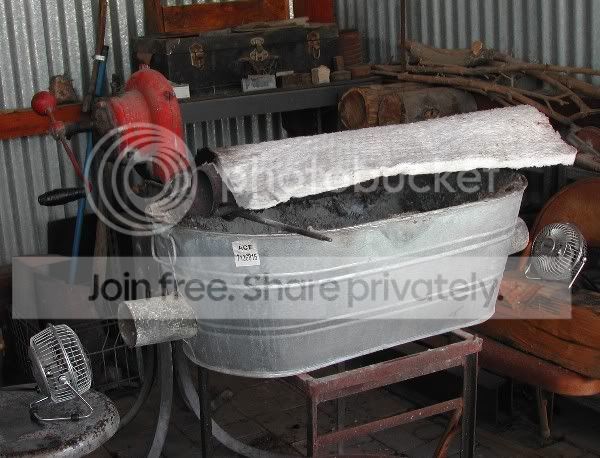
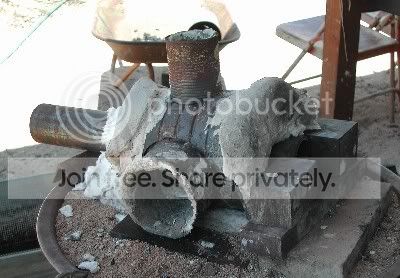
Smitty, any pipe is better than none, but if you can get one that has about 1/4 inch wall thickness, that would be ideal. You only need about an inch of clearance between the wall of the chamber and the pipe. If it is a close fit you may need to put a vent hole in the top for a better heat. You'll also want to put a hole at the back of the chamber so the pipe can pass through, which will leave enough space at the back of the muffle for a substantial wood chunk to create that contained reduction atmosphere inside the pipe, and give you plenty of time for a good soak. I usually plug the back with a small roll of thermal blanket (KAO wool), not too tight. You don't want to make the wood chunk too tight of a fit in the pipe either (like a plug), because there is the chance that pressure could build up behind the wood and shoot it out like a canon ball. However, as long as it's square or rectangle, (not round and tight), you are safe. The rolled thermal blanket plug at the back is also for safety. It would blow out fairly easy in case of any kind of explosion inside the muffle. I've been using a muffle furnace for about 10 years now and have never had an explosion, but thought I'd mention safety,... just in case.
Also, dont use a galvanized pipe. They put out some real nasty fumes.
Yes, suspend the muffle above the floor, so the flame can swirl around it.
As a side note,... You can also use a muffle inside of an electric furnace for contained reduction instead of a foil envelope. It makes it faster and easier to pull the blade out when its ready to quench.