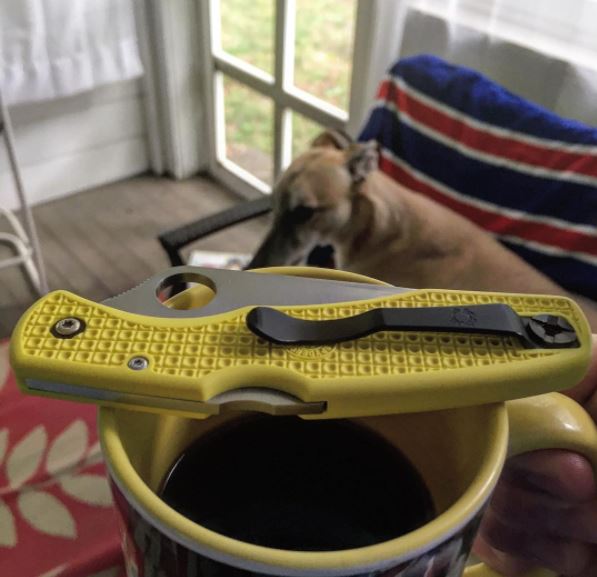
H1 serrations

Kind of want to get a pacific salt after this thread.

 
Kind of want to get a pacific salt after this thread.
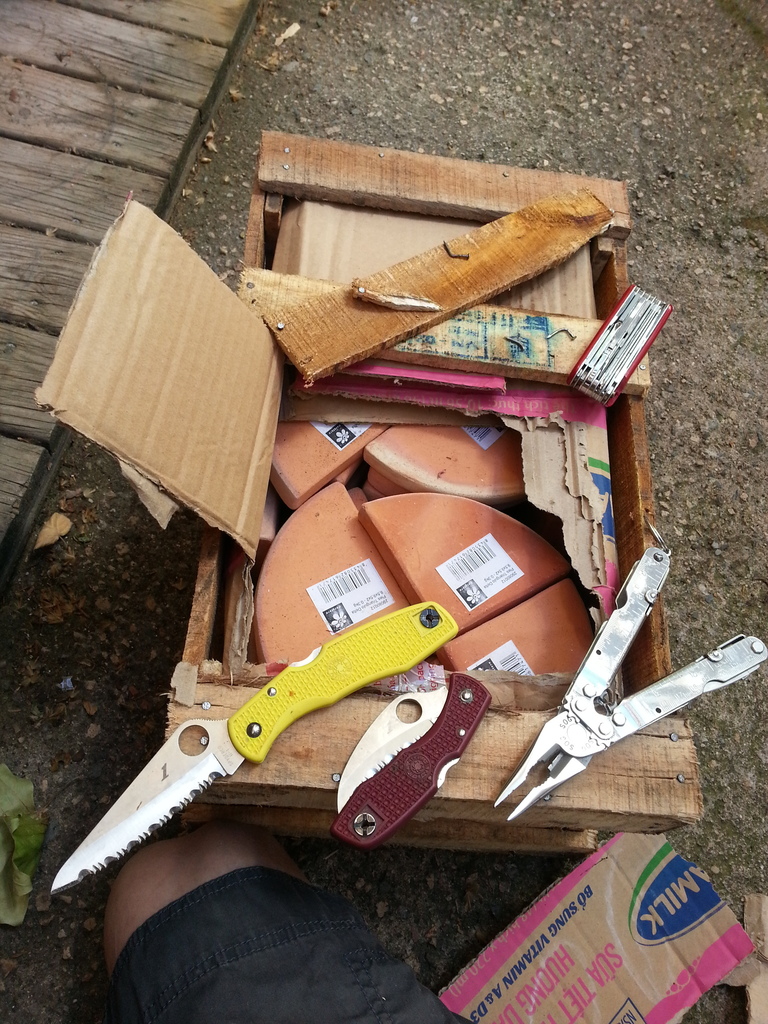
what? you still waiting?

AQlMcJ0.jpg


get one now, boy! :thumbsup:
 
Just got a salt 2, rit dyed it red & im in love. The serrated edge is everything everyone says it is, truly a pocket chainsaw. So awesome. If anyone is on the fence, just get one.
 
IMG_2625.JPG Don't hesitate!! A pocket chainsaw is excellent for a work knife!
Mine has been beat on quite a bit and has done anything I have asked of it!
Great knife that is well worth the $80!
Joe
 
Just got a salt 2, rit dyed it red & im in love. The serrated edge is everything everyone says it is, truly a pocket chainsaw. So awesome. If anyone is on the fence, just get one.

Sorry but no pics and it didn't happen.
 
I would bet m4 se would beat h1 se in catra testing, but there's things to me that make h1 more practical in se.

SE's seem more job specific relating to what is being cut, certain materials, rescue, etc.
SE's seem popular around water/salt water environments. SE's for emergency use might sit for weeks or more between uses. H1 guarantees you the same sharp edge no matter how long it sits, corrosive environment or not.
H1 is undoubtably tougher than m4, probably at any hardness. This makes fracture/breakage failure less likely with rough use.

All the above would influence my preference in rescue and emergency use.
As much as I prefer m4 99% of the time, SE H1 is probably more practical at times.

It's interesting that H-1 which is not even close to being a good steel for plain edges but yet seems to perform in superior fashion on serrated/Spyderedges. I've also thought about other blade steels that I personally believe would be good for Spyderedges. Now I believe M-4 might possibly be good for Spyderedges but I still believe that CTS-XHP would even be better.

I'm still patiently waiting to get my hands on one of Spyderco's serrated blades with LC200N. If one nitrogen based steel works great for Spyderedges then I can't help but believe that LC200N might just have the properties desirable for Spyderedges.
 
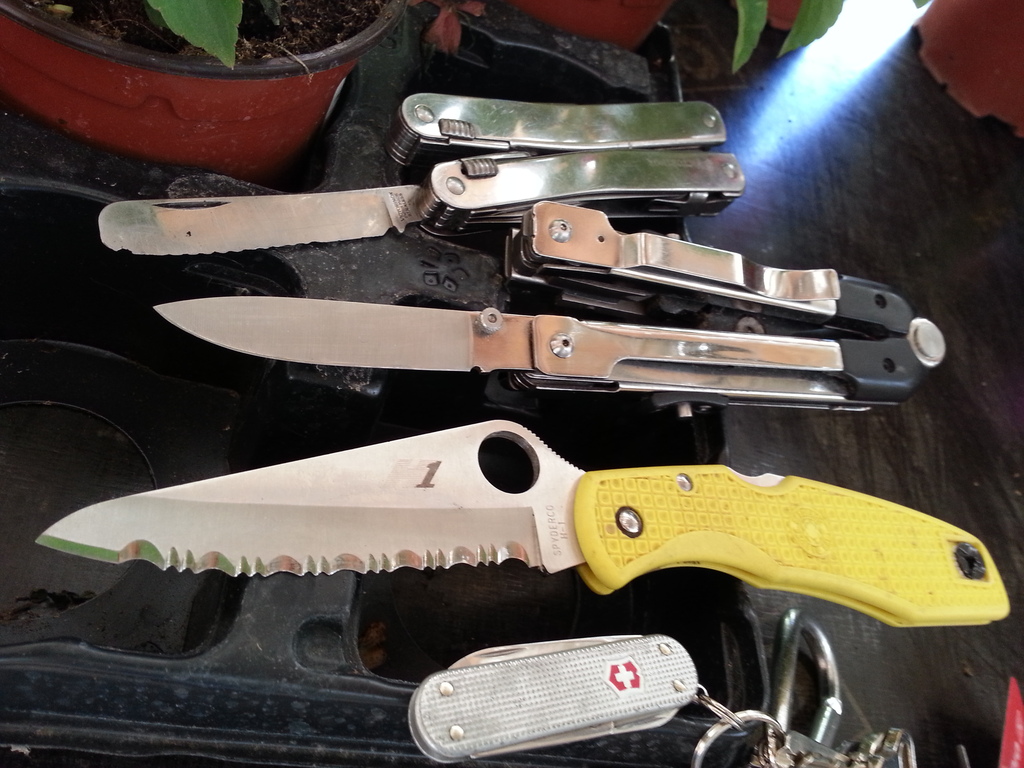
more today! The best serration patterns for ease of sharpening and tolerance to abuse: Spyderco and Victorinox
MiCeOnW.jpg

That's really interesting PEACENT that you bring up VICTORINOX knives as having decent serration patterns. The serrations on VICTORINOX knives are some of the most simple patterns I've ever seen but I must admit they are very effective. Now they aren't as good as Spyderco's and not even a close second IMO>> but they do a decent job with all things considered.

Also the culinary knife company J.A. Henckel also has some really nice serration patterns. For kitchen/culinary knives I really don't know of any other serrated knives better than they are >>however they aren't as good as Spyderco's.

With Spyderco being the undisputed king of serrated edges it makes me wonder why they don't explore other serration patterns?
 
I'm still patiently waiting to get my hands on one of Spyderco's serrated blades with LC200N. If one nitrogen based steel works great for Spyderedges then I can't help but believe that LC200N might just have the properties desirable for Spyderedges.

I'm curious if LC200N work hardens like H1 does. I don't have the numbers on or can I remember where I heard it from (Glesser?) but the spyderedge H1 reaches an RC of 66 or so at the edge. I believe the comment went something like, "we haven't found anything harder than a work hardened H1 spyderedge."

It's pretty impressive stuff but I always wondered what happened when you start losing the initial edge from use and sharpening, do you get back down to the softer material or do you send it to spyderco for a sharpening?
 
H1 is interesting, in that in SE it holds an edge very well, but I have bent/rolled serrations and even blade tips on H1 SE knives. They were fairly easy to fix on my Sharpmaker. They SEEMED softer than other steels' serrations, but they hold their edges a long time in use.

As for Victorinox's serrations, I love them. I like that the valleys aren't too deep and the peaks aren't too narrow and pointy. IMO, some Spyderco serrations are better than others. I strongly dislike overly-aggressive serrations that are too long/narrow/pointy and too deep in between. They hang up on whatever I'm cutting, and feel more prone to breakage.

Jim
 
So it seems grinding and sharpening (heat) is what work hardens H1. Got me thinking... what about a scandi ground H1 blade? That wide bevel being sharpened would create more heat than a traditional bevel right? Could possibly yield a harder PE blade? I'm just thinking out loud here :D
 
So it seems grinding and sharpening (heat) is what work hardens H1. Got me thinking... what about a scandi ground H1 blade? That wide bevel being sharpened would create more heat than a traditional bevel right? Could possibly yield a harder PE blade? I'm just thinking out loud here :D

Spyderco PE H1 knives are created the way they are to maximize the work hardening affect, it's why none are FFG like their non-H1 version. I think hollow ground is referenced as it puts the most "work" at the edge for a PE type. I don't think a PE can compare to the work needed to cut serrations though as there's just so much more work and surface area being worked over in that process vs a PE.
 
Last edited:
Back
Top