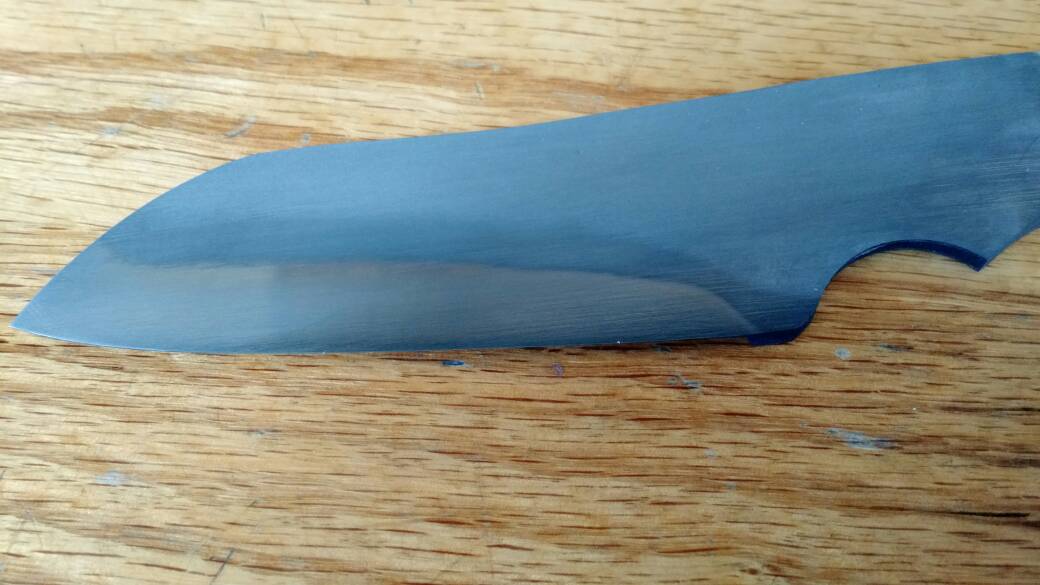
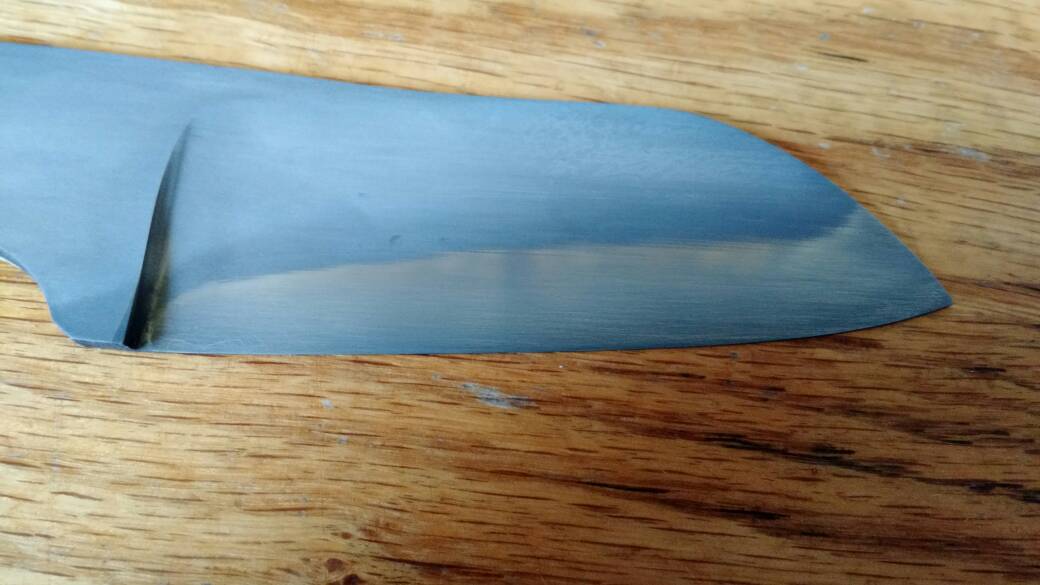
As said, 1084 isn't going to make a dramatic hamon.
You say 2000 grit, but the surface is covered with much coarser scratches. Go back to 220 or 400 grit and sand it to completely smooth - no scratches.
Go up to 600/800, and then 1000/2000 and use the Mother's again. If there isn't a suitable hamon showing, etch with 15:1 FC and polish with the Mothers just as much as is needed to get the contrast. Sometimes you have to polish only above or below the hamon, and sometimes you use different polishes on the two areas.
A trick on some faint hamons:
Hand sand and polish up to 2000 grit. The blade below the hamon should be shiny.
Paint the ha (hardened part below the hamon) with enamel paint or Dykem, and let dry. Paint it following the very bottom edge of the hamon. You may have to give it a quick etch to see the hamon. Just etch as little as is needed to find it.
Etch the ji (upper part above the hamon) in diluted FC until it is the way you want.
Clean up with Mother's or Flitz.
Remove the resist with solvent and clean up the blade.
This makes a bright and shiny ha and a darker and more matte ji.
Place tape on the ji while sharpening to avoid making marks on the darker surface. I often tape the bevels to within 1/4" of the edge when sharpening.
Another tip is to raise the clay where the steel is thicker. The reason the line on this blade drops down so low at the ricasso is there is much more steel there. That bleeds a lot more heat down toward the edge in cooling. If the clay was higher above that area, it would have made the line higher. On your blade, to get a guess of how the clay should have been shaped, draw and inverse the existing hamon as it goes back toward the tang - that is where the clay should have been for a straight line.