Handle Shaping Project

redsquid2

Rockabilly Interim Pardon Viscount
Knifemaker / Craftsman / Service Provider
Joined
Aug 31, 2011
Messages
3,124
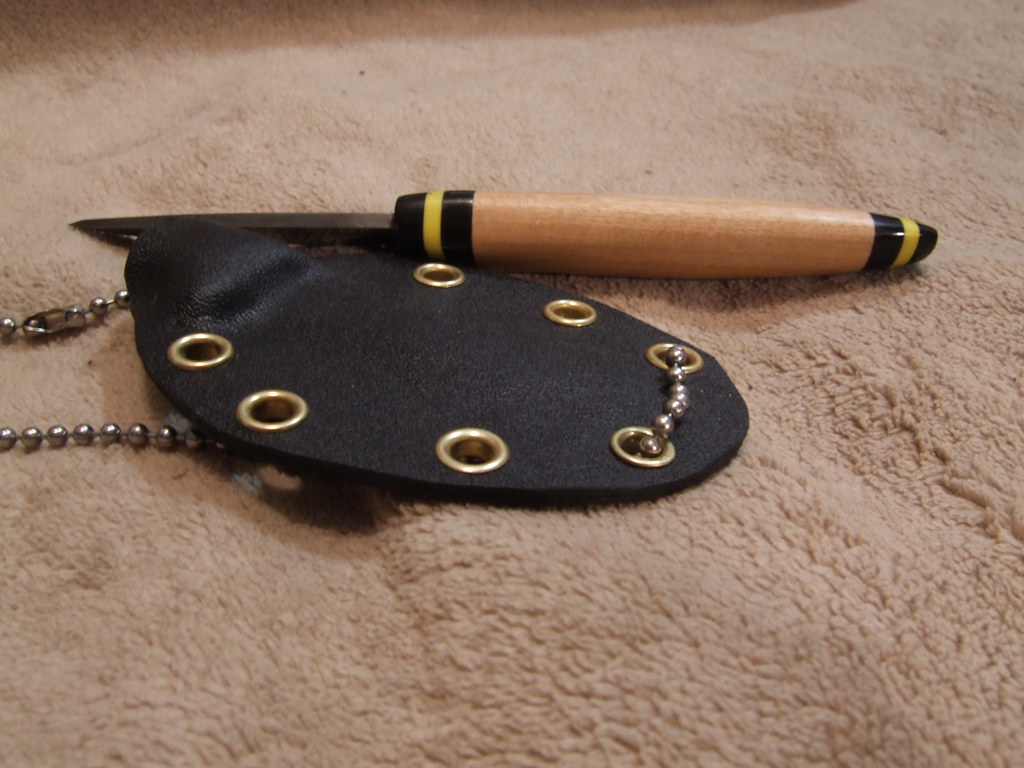
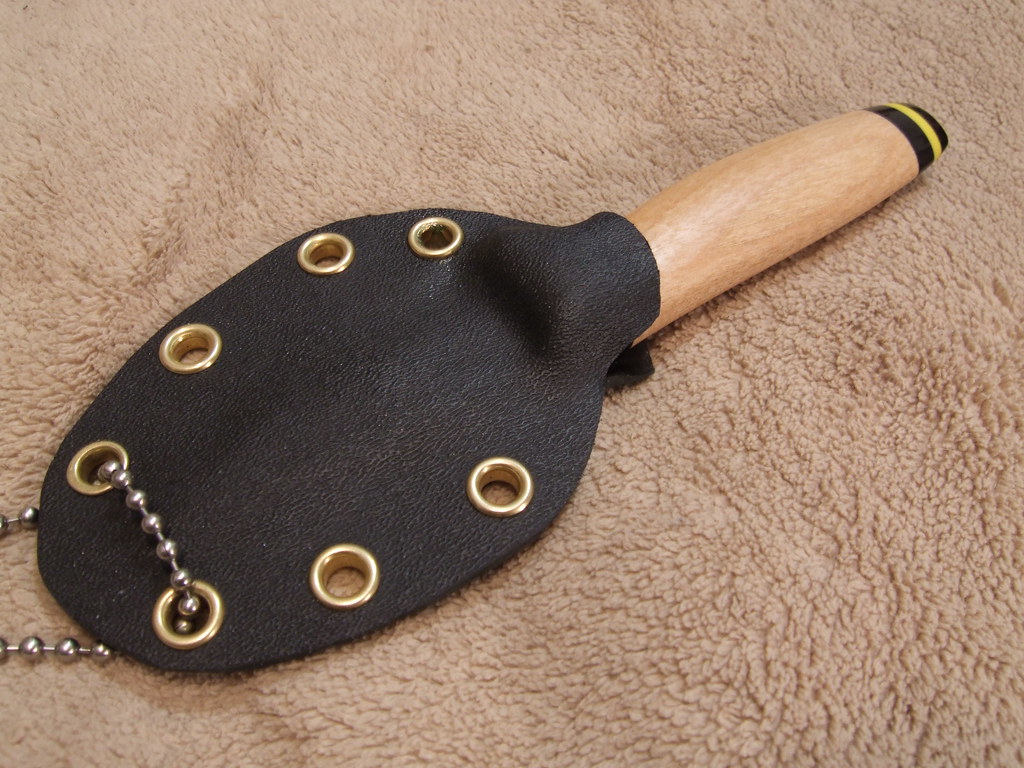
I like to take the production Scandinavian blades and make my own handles and sheaths.
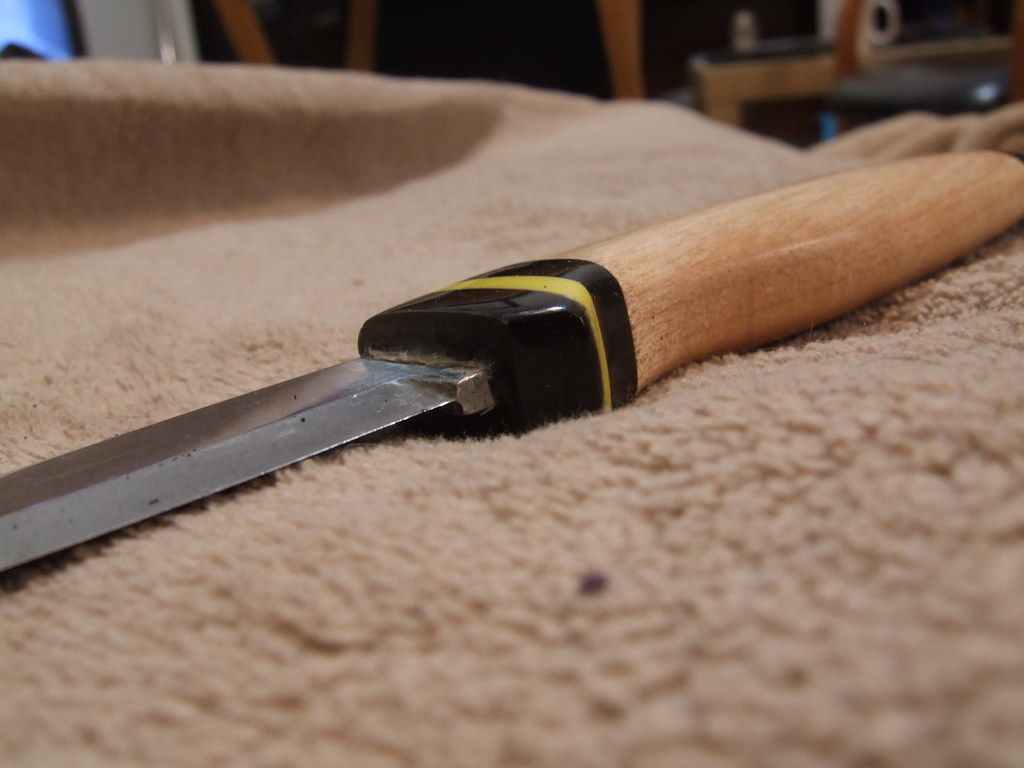
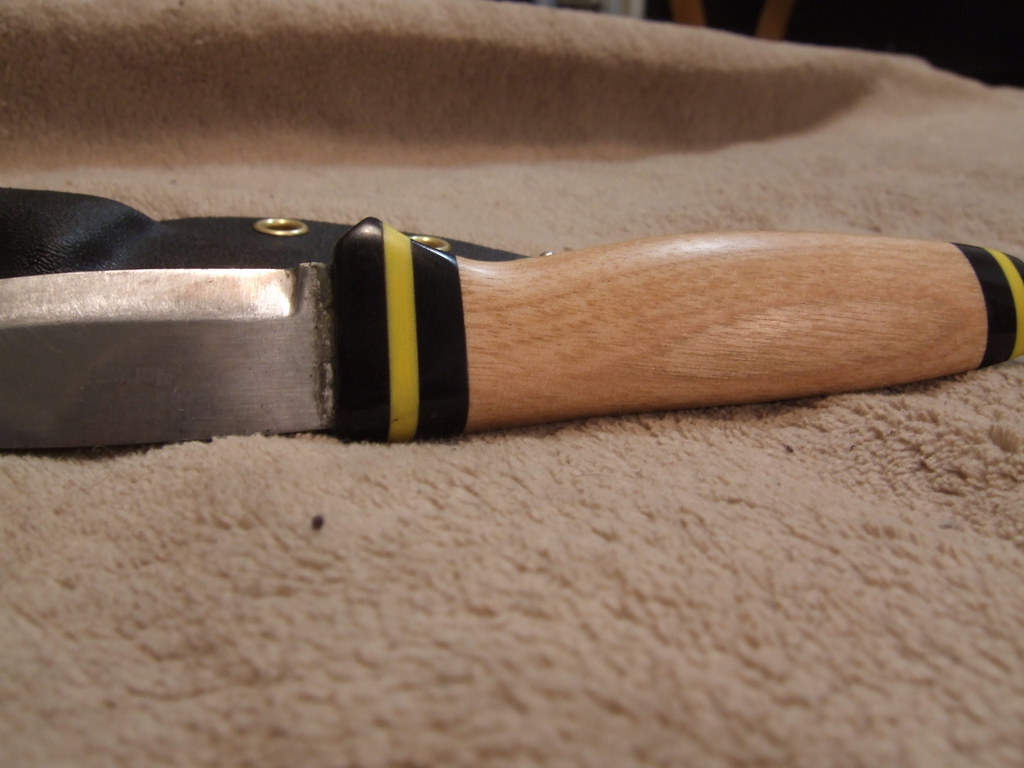
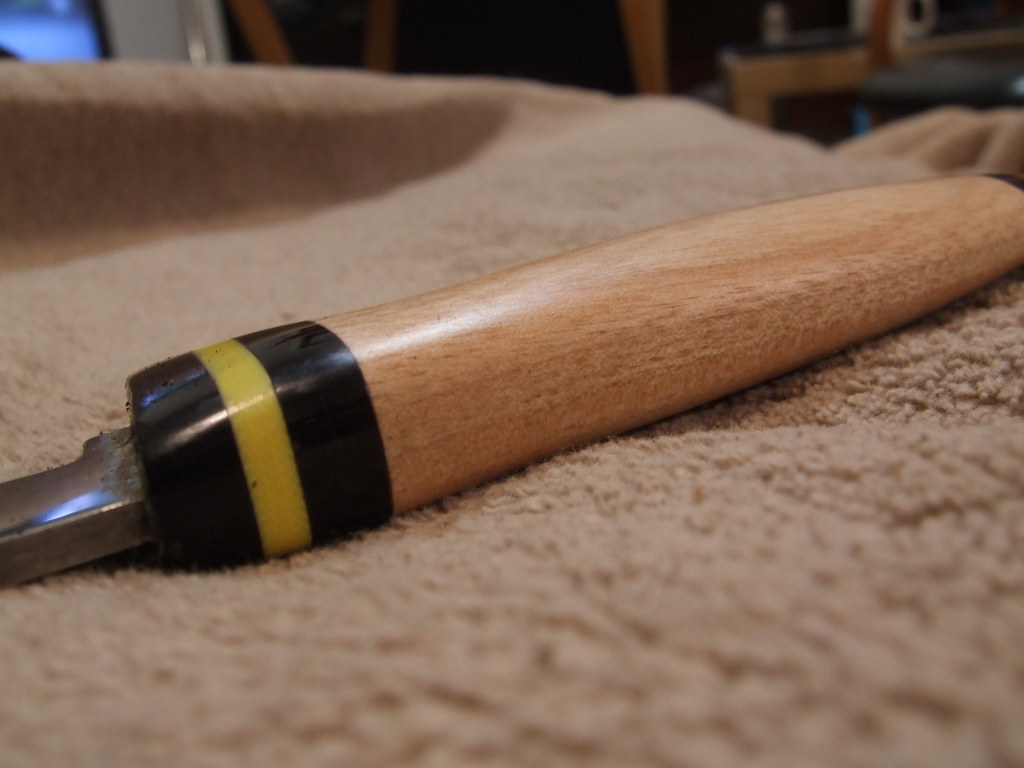
This one is maple, buffalo horn, and G-10.

I need to be more careful while buffing the buffalo horn; it takes practically no pressure at all, otherwise it will burn and gouge.

The tang does not go all the way through, so I secured the pommel with a 1/8" carbon fiber rod and epoxy.

That mess on the ricasso is a combination of epoxy and masking tape. Any suggestions on the best way to clean it up? Thanks.
6776241006_c80a9357c8_b.jpg


6776241546_b33ecdfc00_b.jpg


6922356497_5f9b1230ee_b.jpg


6776243678_722193ae79_b.jpg


6776244984_e46f2d8c20_b.jpg


--squid
 
I would try a good razor blade, cutting straight down to the blade first and then straight back until it comes loose. That should get the majority of it. You can likely get most of it off the steel that way, but I have found that acetone or something similar may also help.
 
A hard razor can scratch your blade

You can put a point on a piece of brass and make a chisel of sorts.

The softer brass will not scratch the steel blade.


After that acetone.
 
If ya have a Dremel tool they make a small brass brush that'll work for ya too. If ya have a light touch ya be able to clean up the front of that buffalo horn bolster too if that is some epoxy on there. Hard to tell from the pics. Try the acetone first, then the brass rod, then acetone and then finally the Dremel for any touchup. Nice work on the handle by the way.
 
You can find epoxy remover in hardware stores. Just be careful with the application so it doesn't leech into knife and loosen your handle-to-blade bond.
 
I use a combination of 2 things to scrap epoxy and tape goo.

Take a piece of aluminum, I use 1/4" x 1" and grind an angle on one end into a chisel. You can now use the aluminum chisel to gently scrape away the epoxy and tape goo.

I take a flat piece of copper and do the same

I also take a popsicle stick and to the same thing and scrub with the stick to remove even very stubborn small epoxy specks.

Good luck.

I just had to do that exact thing on a Tanto I just finished up on.
 
Last edited:
That handle looks really nice. I have a hard time keeping that area clean also. Of course the best thing would be to not let it happen in the first place (yea, right)(said with deep sarcasm), or to remove it before it sets and can just be wiped off with a rag and a little alcohol or acetone.

OK, I haven't been able to do either of those things myself but what I've been able to do is to CAREFULLY remove it after it has cured mostly, or almost. It seems easier to remove after it has set a couple of hours rather than overnight. Wearing a set of magnifiers (I'm 61 yrs old and the eyes don't work so good) I use a various things to get in there and get the gunk out. The Popsicle stick idea is good, and I should try making one of those brass or aluminim chisels. I use a dental pick to get deep into the corner. The magnifiers are super helpful to see what you're doing when you don't want to do too much. It ends up with a final wipe-down with acetone.

Ideally you won't have scratched the blade. SOMETIMES this happens though. I've been able to keep it looking good by carefully wet sanding that portion with the final sandpaper I used.

Nice job and good luck.

- Paul Meske
 
As said, carefully cut straight down with an X-acto #11 blade. The piece will pop off when the razor blade gets to the knife blade. DON'T try and cut or scrape it off from the blade face....or you will get scratches.

Once the excess pops off, clean the area with a chop stick or Popsicle stick pushing a small pad of paper towel that is dampened with acetone. This should clean it all nicely.

It may be necessary to do some touch up wet sanding or hand buffing to even the finish up at the joint. Go slow.

PROJECT
Making a set of bronze chisels and cutters is a good project for those who plan on doing a lot of handle work and guard soldering. The key is to sharpen the chisel/cutter every time you use it. A dull tool will be you worst enemy...especially of it is also a soft tool. You can take a bronze graver chisel and cut the excess solder away from the guard and blade in a bright and neat line. Bronze will cut epoxy the same way. Use the square face burnisher along the guard/blade joint to make the transition perfect. The chisels are for cutting away larger amounts of solder and epoxy. Don't underestimate the sharpness of a bronze tool...Wjile it won't scratch the steel, it will cut you and soft things like wood....so use it with care.
Get a 24" piece of 1/4" square or round bronze stock, and make a set of four chisels. Put pretty handles on them.
One with a 1/4" flat chisel face
One with a 1/2" chisel face ( forge it wider)
One with a 45-60° angled face ( graver)
One with a square face at 90° to the shank (scraper/burnisher). Make the corners and edges sharp, not rounded.
 
Back
Top