
Heat treating a laminated chisel ground knife. Done!

Joined
Apr 14, 2012
Messages
663
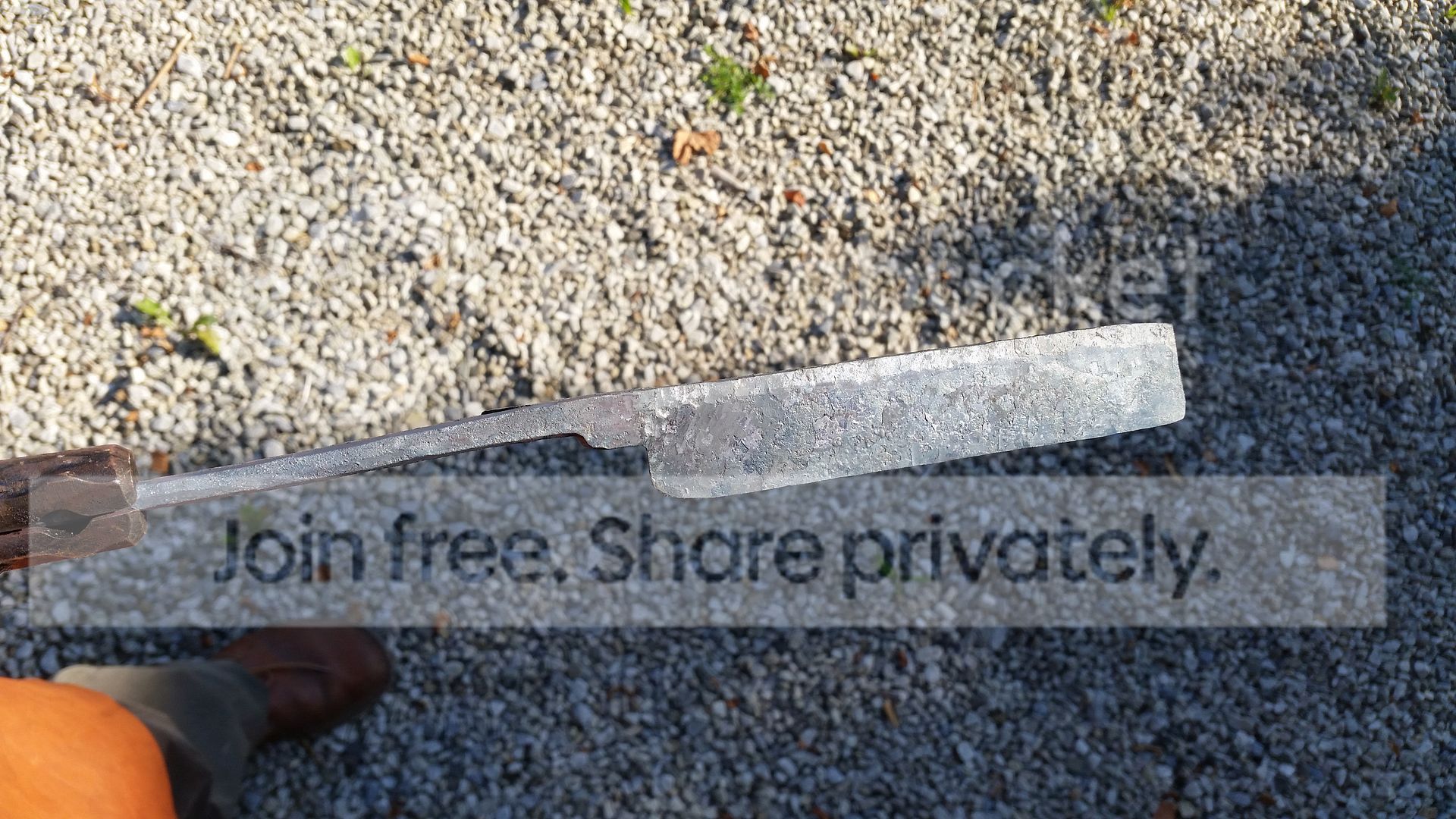
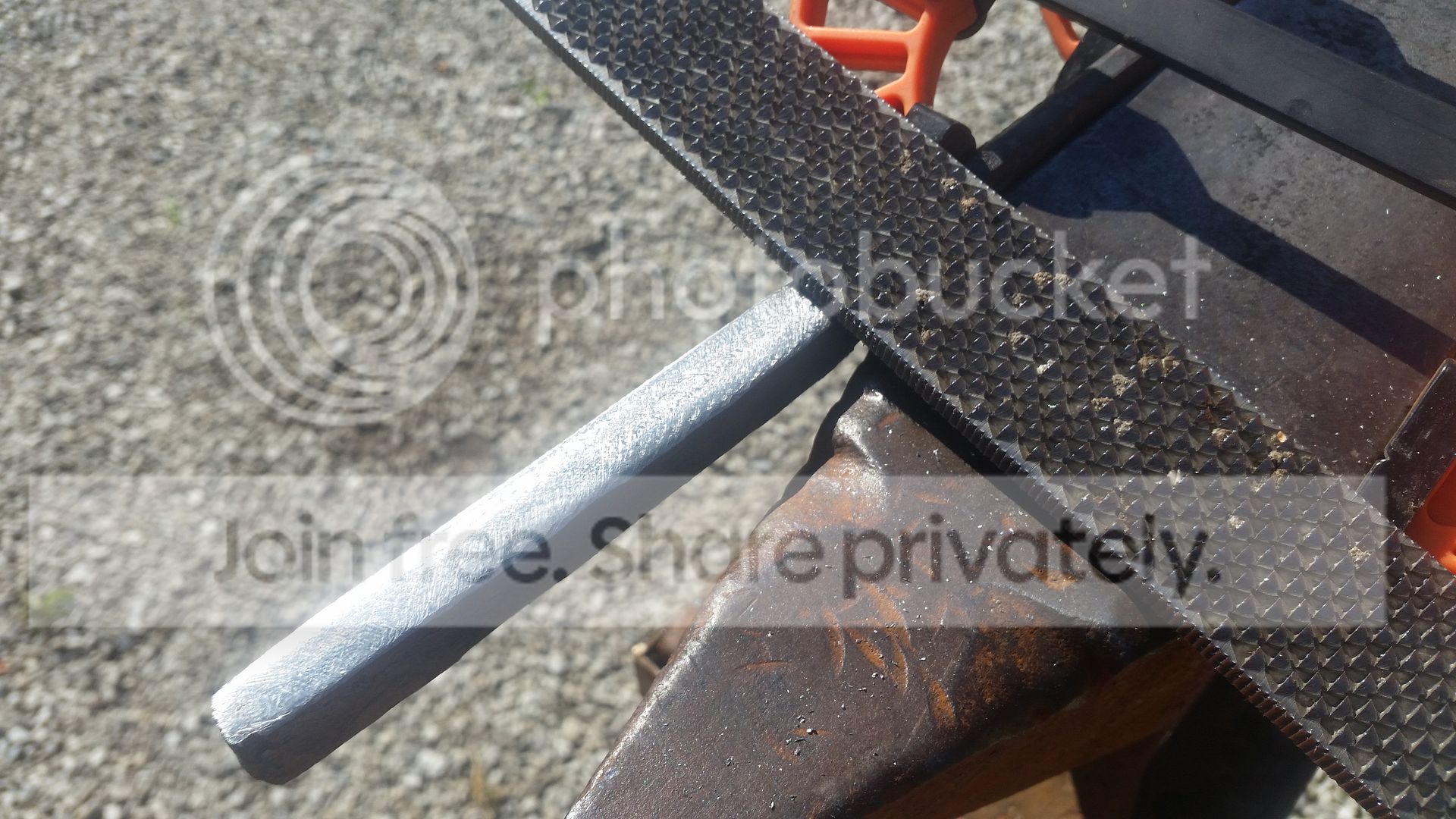
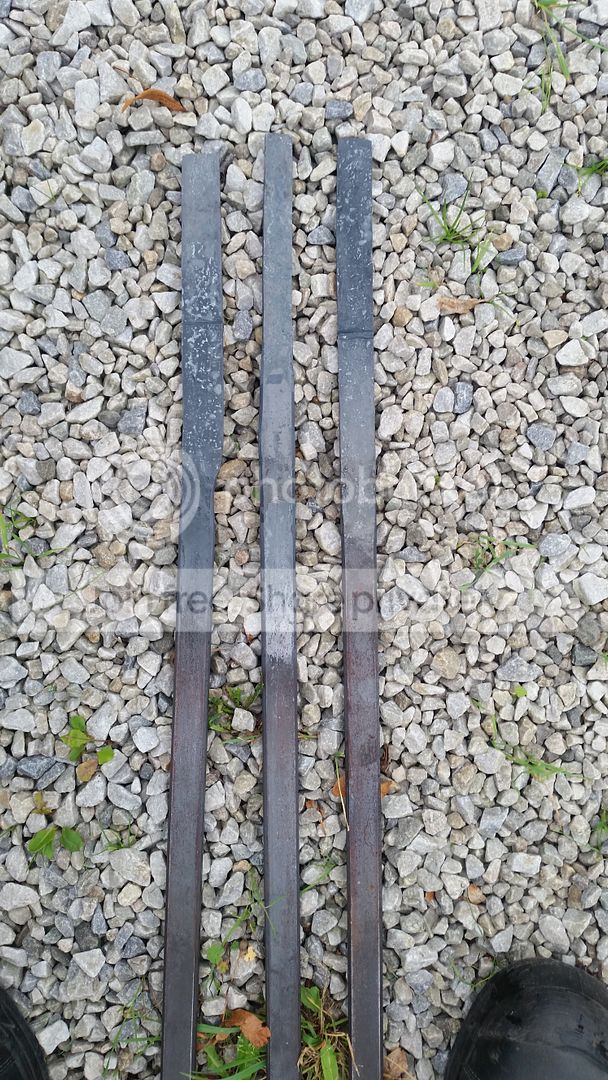
I drew out some stock horse shoe steel (~0.10% C) and laminated it with a sandvik 15lm steel (~1074). This perticular billet was a two layer billet. 15lm on the back and mild steel in front. I forged a smal chisel shaped knife like a smal usuba (6" long cutting edge and 1/3" thick att the back). The question is now how to heat treat it in a back yard forge to minimise the risk fore wraping and proppelering due to the asymmetrical layout? Edge is still about the thicness of a smal coin.


Last edited:
Proper preparation is your friend.

I'm assuming you're using a forge instead of an oven for your heat source? If you had an oven I'd suggest a subcritical soak, followed by a couple of normalizing cycles, but since the soak is probably not an option I'd think you'd be fine with a couple of normalizing cycles before going for your quench. Especially with the thick spine you're describing.
 
You are right, no oven. But a smal industrial heat treating forge. It's basically a one brick forge but built profsionaly.

 
I've never tried this but i know that japanese smiths take into account the fact that there laminated chisel grind knives will warp and but a bend in the opposite direction of the anticipated warp. How much of a bend? I have no clue. I will tell you that I made mono steel chisel grind knives that warped because of the edge being too thin. I have also had laminated kiridashi warp even before a bevel was ground in.

-Jeff
 
Chances are it will warp being a bimetallic strip with different expansion rates. Straighten the blade with a hammer while it is at a tempering heat.
 
Another way to straighten it would be with 3 pins in your vice. Put 2 on the inside of the bend and 1 on the other side on the apex. As stated straightening at a tempering heat will reduce the risk of cracking. Tighten tour vice slowly when doing this


Sent from my iPhone using Tapatalk
 
Haha, 705! That is exactly what I did this morning before reading your post. I felt like a genius, bot I guess the idea is around. :)

During the normalisation the tip traveled 1/2" from hot to cold.


Heat up before quench.


Still hot after edge qunch.


Last edited:
Straight out of the oven after the second tempering. Straighening the back. By moving the sticks you can determine how acute the corection will be and also make asymetrical bends. I have a feeling that the time left in the vice also affect the results (I cant remeber this from engineering school).


Adjusting the edge.


Fore realy local adjustments the side with two sticks can be switced to leather.

Sucsess!

 
I do a stress relief temper, then I use a piece of angle iron, coins, and two small c-clamps. I put the coins under the high spot on the bow, and clamp the blade to the angle iron. Now temper at the desired temp. I've corrected blades that came out like hockey sticks like this.
 
Back
Top