Photos Hello, newcomer from Barcelona

Joined
Feb 15, 2026
Messages
8
Hi everyone,

I am a new axe collector, though I have been collecting European knives for several years. To be honest, one hobby led to the other by pure chance.

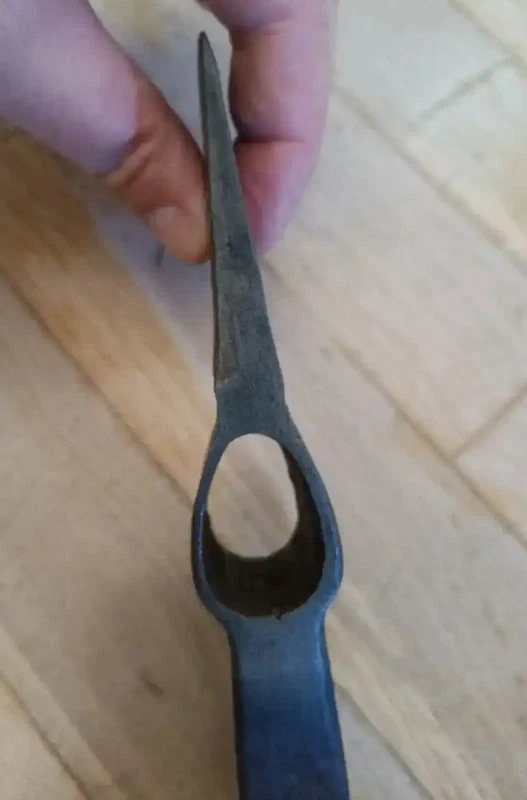
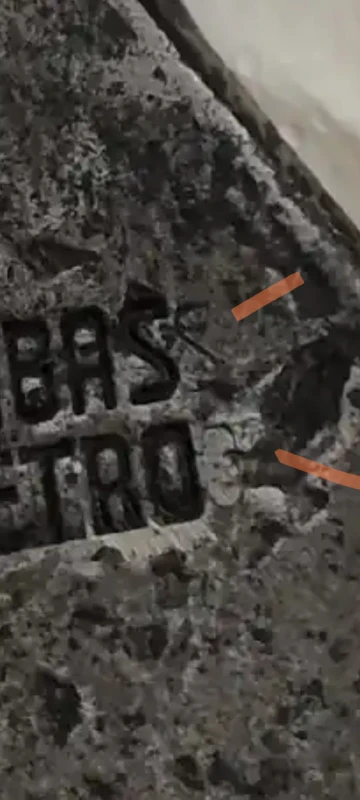
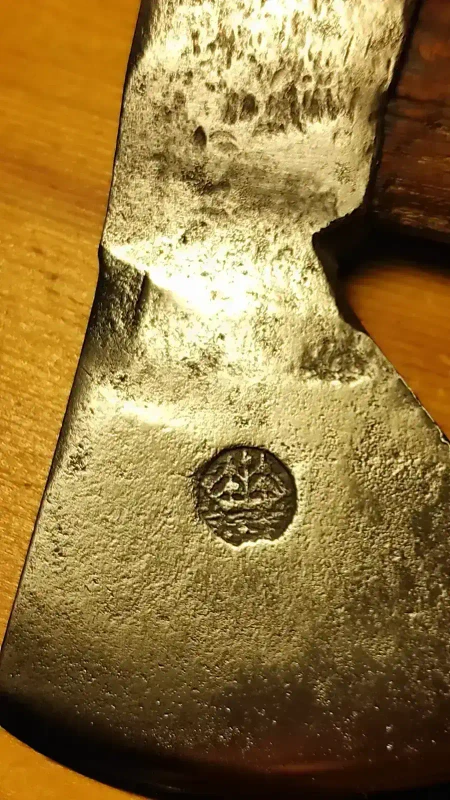
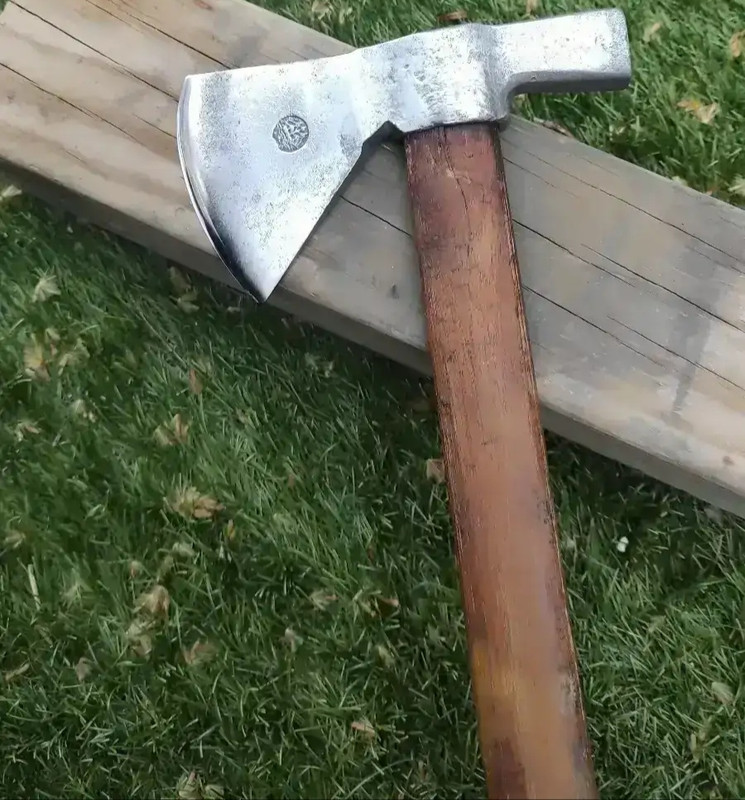
I would like to show you my first two pieces, which I believe date back to the first half of the 20th century. The first one is a Basque-style axe (Ferrerias Vizcaínas). I have consulted with one of the leading experts and active blacksmiths in my country, and he identified this as an axe designed for work on Spanish Navy ships.

This piece is made of iron with a carbon steel insert (pre-industrial method). Notice how similar it is to a tomahawk. The Basque people traded very similar axes with Native Americans in the past..."
IMG_20260218_120506.webp

IMG_20260307_203406.jpg

IMG-20260215-162533.webp


The next one is a Piedmontese axe from the commune of Netro, and it is about to be sharpened. This is also a traditional axe from the early 20th century (according to AI analysis)...

IMG_20260306_181803(1).webp

IMG_20260306_190340(1).webp

Screenshot_2026_03_07_18_12_58_043_edit_com_miui_gallery.webp


Have I made a good start to my collection? I would love to hear any comments or insights from you experts regarding these two axes.
 
Welcome, and congrats on getting into axe collecting! Ugaldie Ugaldie may have some information for you regarding your examples. I have little experience with Spanish patterns, only some experience with Italian onces, but the first one is very similar in form to Italian carpenter axes so I could certainly see them being useful in naval settings during the age of sail, but I could also imagine it having been simply a standard carpenter's axe; I don't have the experience of the fellow you consulted with, though, and will take his word for it! The other is a nice example of the Piemonte style, indeed. Very nearly looks like Rinaldi's current production, though clearly a little older! If it's at all like Rinaldi axes it should be nice and hard and probably rings like a bell if you flick it with a finger. Very nice!
 
Welcome, and congrats on getting into axe collecting! Ugaldie Ugaldie may have some information for you regarding your examples. I have little experience with Spanish patterns, only some experience with Italian onces, but the first one is very similar in form to Italian carpenter axes so I could certainly see them being useful in naval settings during the age of sail, but I could also imagine it having been simply a standard carpenter's axe; I don't have the experience of the fellow you consulted with, though, and will take his word for it! The other is a nice example of the Piemonte style, indeed. Very nearly looks like Rinaldi's current production, though clearly a little older! If it's at all like Rinaldi axes it should be nice and hard and probably rings like a bell if you flick it with a finger. Very nice!
Hi! Great to meet you.

Regarding the Basque naval axe: let me explain. This is indeed a carpenter's pattern, and the original design and manufacturing were Spanish (from the 16th century through the early 20th). Due to its build quality and utility, the French and English began to copy it, followed later by the Germans, Italians, and others. This isn't just my opinion; it’s well-documented. It is also documented that the Spanish Basques introduced this pattern to North America. In fact, France, Spain, and Germany were the primary origins of carbon steel technology.

As for the Italian axe, I know less about its metallurgy. I do know that Netro was a major production hub from the early 1900s until the 1960s, but not much else.

If you ever need information on Spanish axes or knives, I have access to reliable sources. For my Basque axe, I consulted the Jauregui family—some of the last true artisan axe makers remaining in Spain and Europe. They actually have an identical piece in their private collection. These were specific commissions from the Spanish government for the Navy.
 
Hi! Great to meet you.

Regarding the Basque naval axe: let me explain. This is indeed a carpenter's pattern, and the original design and manufacturing were Spanish (from the 16th century through the early 20th). Due to its build quality and utility, the French and English began to copy it, followed later by the Germans, Italians, and others. This isn't just my opinion; it’s well-documented. It is also documented that the Spanish Basques introduced this pattern to North America. In fact, France, Spain, and Germany were the primary origins of carbon steel technology.

As for the Italian axe, I know less about its metallurgy. I do know that Netro was a major production hub from the early 1900s until the 1960s, but not much else.

If you ever need information on Spanish axes or knives, I have access to reliable sources. For my Basque axe, I consulted the Jauregui family—some of the last true artisan axe makers remaining in Spain and Europe. They actually have an identical piece in their private collection. These were specific commissions from the Spanish government for the Navy.
I haven't seen any North American trade axes (from the Basque region) with hammer polls on them. Many conventional axes, yes, but not any with such an adaptation to them.
 
I haven't seen any North American trade axes (from the Basque region) with hammer polls on them. Many conventional axes, yes, but not any with such an adaptation to them.
Hi! It’s true that the 'standard' Basque axe of that era—the ones used by woodsmen and villagers—did not have a poll. You are correct about that. However, the naval version (the sailor’s axe) did have one, as the back was designed for driving wooden pins or nails.

These were the axes that first reached North America through the ships and the natives who encountered them. The French and English carried them as well. You have to imagine a battle between Spanish and English galleons; everything that was standard issue equipment could become a weapon. At that time, my country was what the USA is today: a colonial power (with all the good and bad that entails).

Modern metallurgy arrived in North America with the Europeans, which is where the 'Tomahawk' we all imagine today comes from. There are also other influences, such as Asian axe patterns that Europeans encountered and adapted during their colonial adventures.
After the Vikings, the Basques were among the first Europeans to make contact with the indigenous peoples of North America. Years ago in New York, I saw an exhibition on this very subject. There are even native groups in Canada who still use words of Basque origin in their language.
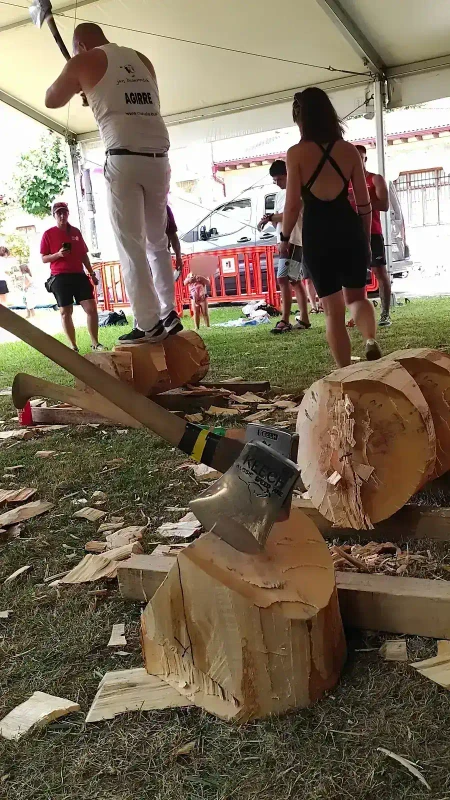
IMG-20250815-162514.webp


Traditional Basque wood-chopping sport (using both Australian and Basque pattern axes)
 
Last edited:
Hi! It’s true that the 'standard' Basque axe of that era—the ones used by woodsmen and villagers—did not have a poll. You are correct about that. However, the naval version (the sailor’s axe) did have one, as the back was designed for driving wooden pins or nails.

These were the axes that first reached North America through the ships and the natives who encountered them. The French and English carried them as well. You have to imagine a battle between Spanish and English galleons; everything that was standard issue equipment could become a weapon. At that time, my country was what the USA is today: a colonial power (with all the good and bad that entails).

Modern metallurgy arrived in North America with the Europeans, which is where the 'Tomahawk' we all imagine today comes from. There are also other influences, such as Asian axe patterns that Europeans encountered and adapted during their colonial adventures.
After the Vikings, the Basques were among the first Europeans to make contact with the indigenous peoples of North America. Years ago in New York, I saw an exhibition on this very subject. There are even native groups in Canada who still use words of Basque origin in their language.
I wish i spoke Spanish. I could imagine there were15th century Spanish wrecks recovered. There have to be some pictures of tools recovered.
 
I wish i spoke Spanish. I could imagine there were15th century Spanish wrecks recovered. There have to be some pictures of tools recovered.
You’re right! There is a wealth of underwater archaeology in Spain. One of the most famous examples is the San Juan (1565), a Basque whaling galleon found in Red Bay, Canada. The Canadian and Spanish archaeologists recovered many tools there, including axes that look remarkably like the ancestors of the modern Basque pattern.

If you are interested, I can look for some specific archival photos from the Albaola museum or the Spanish Navy's archives (Museo Naval de Madrid). Those 16th-century shipwrecks are the 'missing link' between European medieval axes and the American trade axes we know today.


IMG_20250817_164756.webp

IMG_20250817_164340(1).webp

IMG_20250817_165154.webp

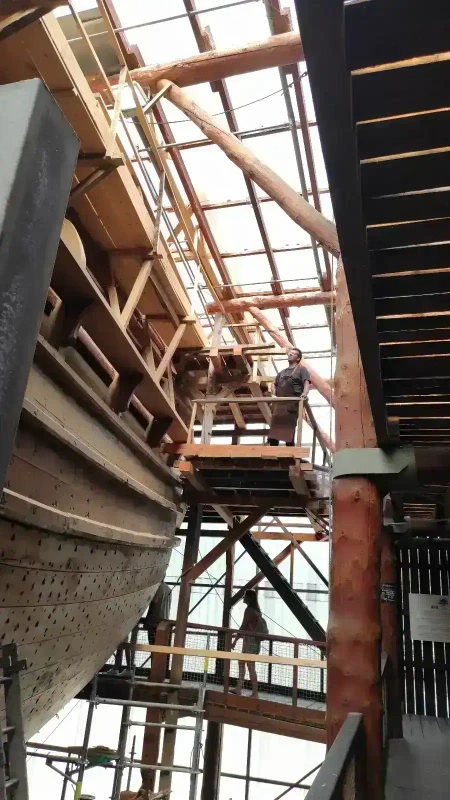
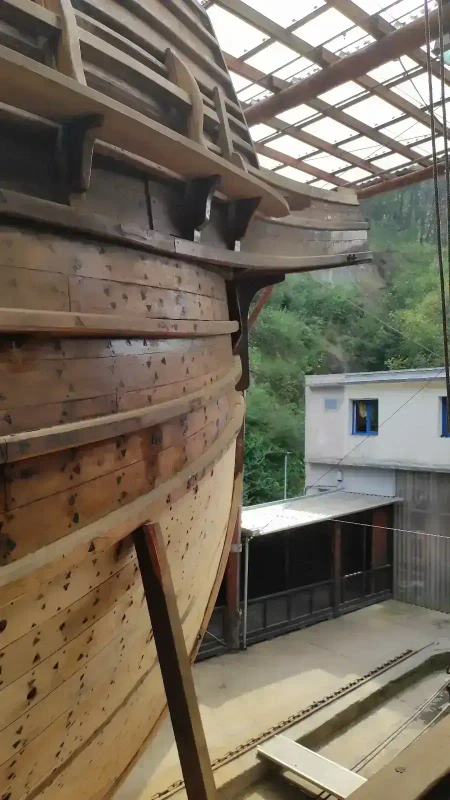
I was lucky enough to see the construction of a period ship this summer, which will sail to Canada to commemorate Basque whaling history and the trade exchanges with indigenous peoples.

I actually bought this axe for 15 euros on a second-hand app just to cut down a tree in my garden, and then curiosity got the better of me and I wanted to know its history. My brother lives in the Basque Country (Spain), and one thing led to another. I’m a teacher, so I guess I just love learning new things! 🤣
 
Last edited:
You’re right! There is a wealth of underwater archaeology in Spain. One of the most famous examples is the San Juan (1565), a Basque whaling galleon found in Red Bay, Canada. The Canadian and Spanish archaeologists recovered many tools there, including axes that look remarkably like the ancestors of the modern Basque pattern.

If you are interested, I can look for some specific archival photos from the Albaola museum or the Spanish Navy's archives (Museo Naval de Madrid). Those 16th-century shipwrecks are the 'missing link' between European medieval axes and the American trade axes we know today.
That would be great!! thanks
 
That would be great!! thanks
Since I have some free time today, I’ll look that up for you online. I live in Barcelona. And, as I mentioned, if you ever need information about Spanish knives or axes, I’m happy to help. I can assure you there are some truly beautiful pieces with centuries of history behind them. Europe is a small place!

On my end, I’m looking forward to learning more about American knives, which are highly valued here in Spain... Would you mind showing me some?
 
Hi! It’s true that the 'standard' Basque axe of that era—the ones used by woodsmen and villagers—did not have a poll. You are correct about that. However, the naval version (the sailor’s axe) did have one, as the back was designed for driving wooden pins or nails.

These were the axes that first reached North America through the ships and the natives who encountered them. The French and English carried them as well. You have to imagine a battle between Spanish and English galleons; everything that was standard issue equipment could become a weapon. At that time, my country was what the USA is today: a colonial power (with all the good and bad that entails).

Modern metallurgy arrived in North America with the Europeans, which is where the 'Tomahawk' we all imagine today comes from. There are also other influences, such as Asian axe patterns that Europeans encountered and adapted during their colonial adventures.
After the Vikings, the Basques were among the first Europeans to make contact with the indigenous peoples of North America. Years ago in New York, I saw an exhibition on this very subject. There are even native groups in Canada who still use words of Basque origin in their language.
IMG-20250815-162514.webp


Traditional Basque wood-chopping sport (using both Australian and Basque pattern axes)
I would have to see known surviving examples positively identified from the period before accepting as fact that the first axes that made it to America had hammer polls. To the best of my knowledge it was much more common for dedicated hammers or mallets to be used on ships of the period, and I have never seen archeological evidence of hammer-polled axes of any kind in or around America that are dated to the early colonial period. If you know of any such examples, it would certainly alter my understanding of the development of the tool over time. All hammer-polled axes in North America of any national origin that I'm aware of are from significantly later on. :)
 
I would have to see known surviving examples positively identified from the period before accepting as fact that the first axes that made it to America had hammer polls. To the best of my knowledge it was much more common for dedicated hammers or mallets to be used on ships of the period, and I have never seen archeological evidence of hammer-polled axes of any kind in or around America that are dated to the early colonial period. If you know of any such examples, it would certainly alter my understanding of the development of the tool over time. All hammer-polled axes in North America of any national origin that I'm aware of are from significantly later on. :)
I'll try to find it on the museum's website. I am going to Madrid and Toledo in April, and I will definitely stop by and take some photos. The Jauregui family told me that this axe is in the Naval Museum of San Sebastian (near Bilbao) with its original handle—short and curved—and it is officially cataloged as military equipment (Shipwrights).
 
Back
Top