help, anylize what im doing wrong

Joined
May 22, 2007
Messages
273
I have made all my knives on a budget of about $0, using things i have, and getting lucky acquiring tools. so i have used leaf springs that i can get for free as far as blade material, until recently i wanted to use something that will show an edge quench line, so i scrounged one of those haro (sp?) disks made of 1080 (correct me if im wrong). my point is, i know an easy solution to eliminate variables in used steel would be to buy new steel, but im not making any money now so, its not an option yet.

my problem lies with the 1080, 3 out of 4 blades have gone PING when i quenched them, and i was hoping to get some insight to fix this.

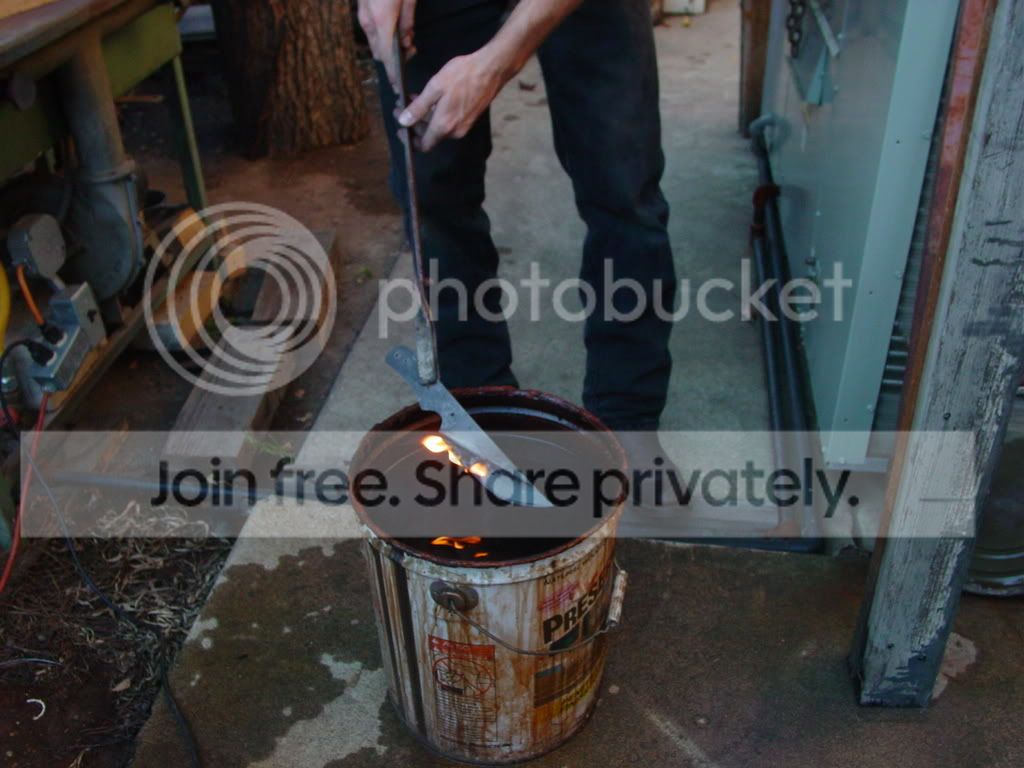
Im using used motor oil (free!) around 100 degrees or so. quenching for 3-5 seconds, interrupting for 2 ish, then a few more seconds, and it starts to cool. seems to be cracking the second time i quench it. what should i be doing?

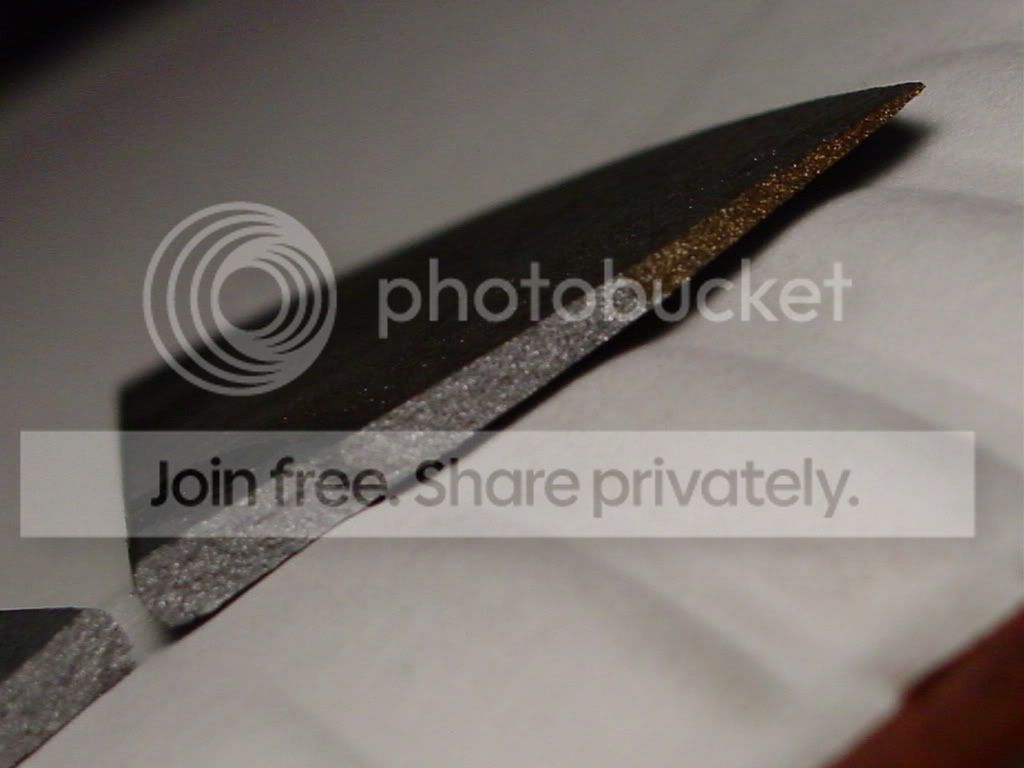
below are pics to show the grain of the one i broke off. i have nothing to compare it to, so how does it look? you can see the color of the temper at about 420 where it was cracked.

any help, suggestions, or comments welcome. im trying to read all i can find on this in the mean time. thanks.
-Lou
Me, smiling stupidly, like nothing will go wrong when i quench....

DSC07896.jpg

interrupting the quench...
DSC07903.jpg

grain...
DSC07925.jpg

DSC07926.jpg

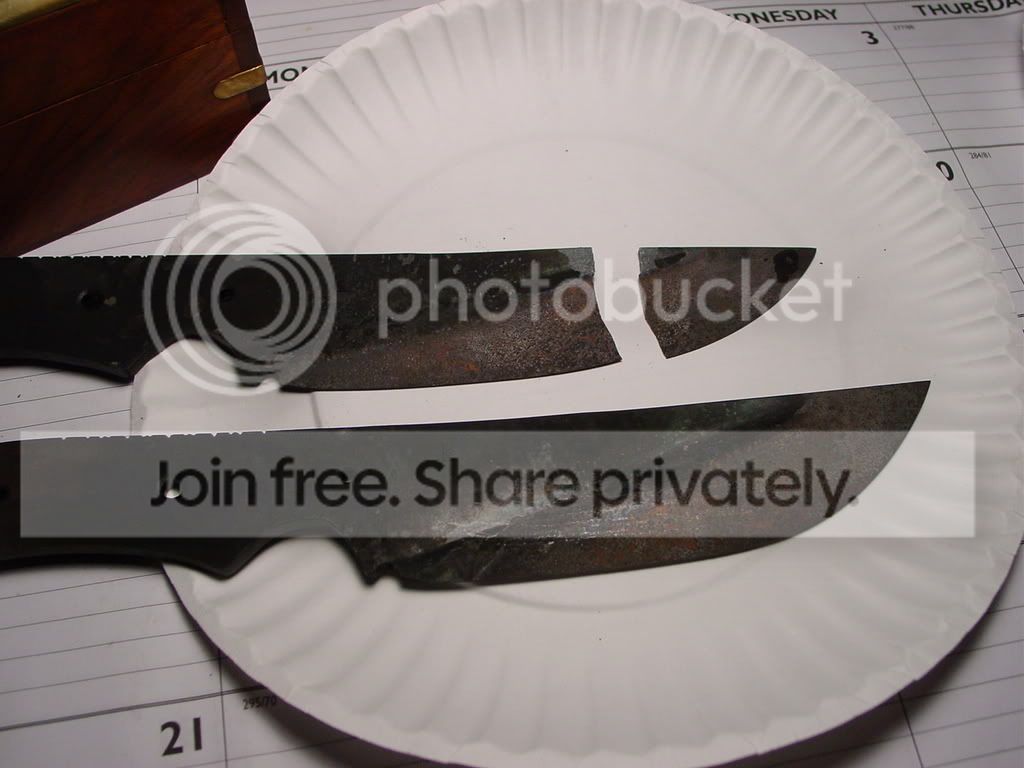
they both cracked in almost the same place. the other im going to sharpen and cut some things, wood, concrete, steel. get an idea how hard the edge is. the one i broke took allot of force, and it wasnt a clean snap, more like snap and pull it the rest of the way, cause the core was connected at the spine, if that means anything.
DSC07928.jpg
 
I'd have to say the blade was too hot when you quenched it. Try this process next time use a magnet on the end of a rod, when the magnet no longer sticks to the blade, quench then, also motor oil is a good quench, (stinky but it works) I've had nothin but leaf springs, in my forge and I quench in water, I've yet to have one go ping!
 
iv always heard to go a good couple clicks hotter than non magnetic to get it fully hardened, and iv always quenched 5160 in oil and theyre screaming hard, maybe i'll do a test blade in water.
 
if the steel truly is 1080 that's just about an eutectoid steel that means you're at critical temp right at non magnetic, taking it higher will just cause a lot of grain growth. From the discoloration in the crack, it looks like some of the cracks may have been there before the quench.
 
discoloration is a dark yellow from tempering. darker than usual cause i threw them in the oven and forgot about them cause i was angry at them. if thats true then i may be quenching too hot. any more thoughts? Ed Fowler? help?
 
You never mention normalizing.
What grit are you taking the knife to before quench?
Mace
 
Looks like coarse grain, probably too hot at quench. You only need about 50 deg. F. above non-magnetic for most steels. If you do your quenching at late evening or early morning you can see the color change most times. I use a magnet, but I also watch the color change. Make sure your light conditions are as close to the same everytime, slight differances in ambiant light will make the steel change colors.

Spring steel could be one of several steels, and even if it's listed as 1080, it depends on what melt. The same alloy from batch to batch can vary wildly. It seems in the last few years the tolarances on the alloy content of a lot of metals has opened up. The best way is to buy new materials of a known value. It can be good to learn on scrap though, and can be a lot of fun.

Use a rare earth magnet from an old computer harddrive and wire it to a handle. I normaly use tie wire and attach it to my forge so it's out of the heat blast but within easy reach of the blade.

Anouther posibility is that you overheated while forging. Did you normalize and aneal? The trick that works for me forging is to keep the blade temp down to barely above non-magnetic while forging and the last couple of forging heats I'm rite at just barely magnetic. Most steels I normalize at least three times, followed by at least one anealing cycle, depending on the steel. If your quenching at criticle and still getting cracks it could be that your overheating while forging and not doing enough normalizing cycles.

A not on blade hardness, I've over heated blades and had them glass hard, and be slightly harder than blades that wern't overheated. The properly hardened blades were very hard, but noticably less hard than the overheated blades. The trick is to get maxamum hardness while keeping the grain small.
 
i use the cultivator discs you are talking about. the steel is 1075 if john deere made them. the ones i use have this serial # on them ss0032 and this number n214190. you had your blade way too hot. notice the pitted appearance. if you have an cutting torch, turn the oxygen down so you have a soft flame. in a dark room or at night is the best time to do this btw. heat the edge till it gets to a slightly bright orange then quench the edge. i would experiment with some scrap pieces till you get used to the color that gets the rockwell you want.
 
im going to try normalizing 4 times, i did two and then annealed.
mace, the grit is one thing that occurred to me, im taking it to a 120 grit i think. the finer of the two belt grits i have. ill check if it matters. but i think im going to go finer on the next try, it was definitely to rough, im just used to 5160, cause iv never had problems with stress risers in 5160...

my new plan is, more normalizing, then anneal, grind and then do a much finer finish before hardening, and harden just after critical temp. am i missing anything?

and like i said, i cant use new steel for now, but i will when i have the funds :) w2 looks fun.
-Lou
 
It looks over heated. As Mace mentioned normalizing will help refine the coarse structure your seeing. I leave my edges a little thicker when edge quenching because of the added stress.
 
I believe better heat control will solve most of the problem.
Try this:
Normalize
Heat to just above non-magnetic
full quench quench in warm oil

If that works right, then you know it was a heat problem.

As for the interrupted quench, you may be creating a lot of stresses. the simple steels 1075-1095 are shallow hardening and do better with a single quench. I would use a clay coat to get a hamon and do a full quench.
Stacy
 
discoloration is a dark yellow from tempering. darker than usual cause i threw them in the oven and forgot about them cause i was angry at them. if thats true then i may be quenching too hot. any more thoughts? Ed Fowler? help?

I was actually refering to the dark spot further up the blade in the thicker area =)
 
LK, I take my blades to 120 before quench....maybe you missed a deep scratch. By the looks of your pics I would say you over heated the blade too.
Also looks a little thin in my opinion.
Good luck.:thumbup:
Mace
 
Justin Mercier, thats a shadow, thanks though :)
Thanks for all the help, it seems i was overheating, it was definitely too far over critical temp. im going to try doing it after dusk to see if i can catch the color change too. i really appreciate all the help, this site is an amazing resource. being able to consult the most masterful experts in the field is invaluable! iv come a long way thanks to you guys :)
-Lou
 
If you haven't done so yet let me suggust you read up on some metallurgy. There are some online books and you can find some in the library. I happen to have and like "Metallurgy Theory and Practice" by Dell Allen.

There are a number of potential problems. The first that comes to mind is stress fractures in the steel before you started. That is a potential problem with all used steel. The other big problem with used steel is that without an analysis you never are sure what steel you have. Harrow disks are typically plain carbon around 1070.
If you are forging then forging too cold can induce stresses or fractures, as long as you are not burning the steel hotter is better (generally). When you grind then deep scratches can be stress risers and lead to fractures.

ron
 
I'll throw one in that hasnt been mentioned yet. It looks like from your pictures that you are quenching with the blade horizontal. Hold the blade vertical when quenching. If the blade goes in flat, then that side cools much quicker than the top, and you're going to get warpage, at best. I also agree that the blades appear overheated. If you're using spring steel, or disks, break one before heating it to see how fine the grain should/can be when broken after quenching.
 
Actually, the problem here is obvious.

So obvious I can't believe no one has seen it.

Your horseshoe is hanging points down, spilling all your luck.


(on a serious note, I do remember when I was visiting and we forged that first 5160 blade of mine, I cam home and read up on the scale, and it seemed to point to too much heat being the culprit there, too.)

Yall have GOT to see this forge, too. Lou has picked up a full shop natural gas forge that's pretty amazing. really puts out a LOT of heat.


And I should go play with it some more :)
 
dont forget afterward to put it in your home oven at 350-400 degrees for 2-3 hours to draw it back and temper to about 62 RC on 1075-1095.
 
Back
Top