Im trying to practice freehand putting a primary bevel onto my stock removal knife. Since i dont want to overheat it i have to take it away from the belt sander frequently. I want a crisp plunge line but i dont see it happening with how im going after it. Any advice? When i move onto 1084 will i have more luck just keeping it steady and only rotating to get the right bevel per side?

-
The BladeForums.com 2024 Traditional Knife is available! Price is $250 ea (shipped within CONUS).
Order here: https://www.bladeforums.com/help/2024-traditional/
You are using an out of date browser. It may not display this or other websites correctly.
You should upgrade or use an alternative browser.
You should upgrade or use an alternative browser.
Help with primary bevel plunge line
- Thread starter TJ88
- Start date

- Joined
- Dec 5, 2013
- Messages
- 1,180
It just takes practice. I've probably ground 200 blades at this point and the plunge is still the most difficult part to get right. One of the most important things I would suggest is learning how to put the blade onto the belt without grinding. Basically, learning how to let it coast flat on the belt with no pressure. Once you've got enough control to do that, things start to get easier. When I work my plunges, I'm cutting with one edge of the belt and the other edge is coasting or just ever so slightly off the blade. I never had any luck with the technique of allowing a J-flex belt to wrap over the edge of the platen or wheel. It always flared the bottom of my plunges so I stick with heavier belts (Blaze & Gators) and just run them right at the edge of the platen/wheel. After each pass in the plunge, I allow the blade to make full contact with the belt and do a full or partial pass toward the tip with light pressure.
Bob
Bob

- Joined
- Feb 6, 2010
- Messages
- 1,427
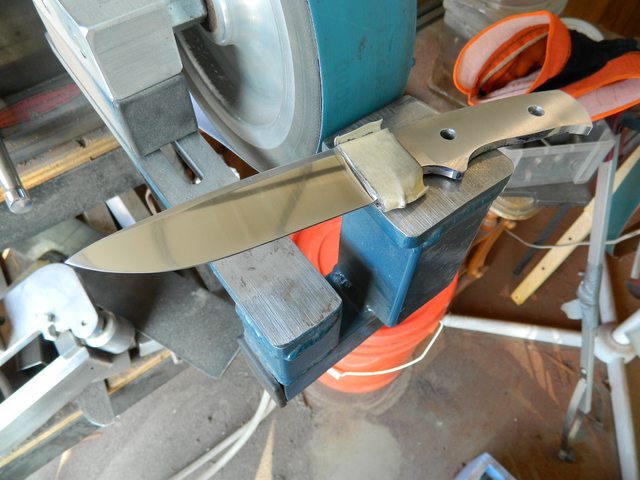
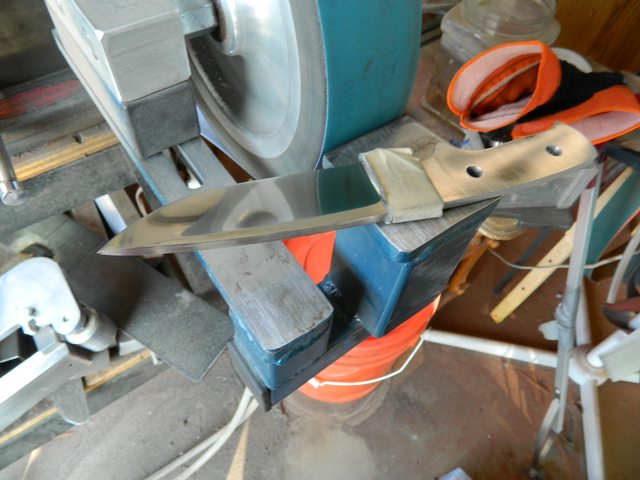
When I started to hollow grind blades I watched the video by Johnny Stout called the "Art of Hollow Grinding" and he used masking tape wrapped several times around blade blank at the plunge line. He used the tape as a guide and sort of a stop to keep from grinding too far back into the plunge and keep both sides the same. I think he meant to do this this until you are experienced at hollow grinding but I still do this on almost every blade even though I probably don't need to. This might help with your plunge lines. Larry

- Joined
- Feb 17, 2009
- Messages
- 7,309
Do what Larry says
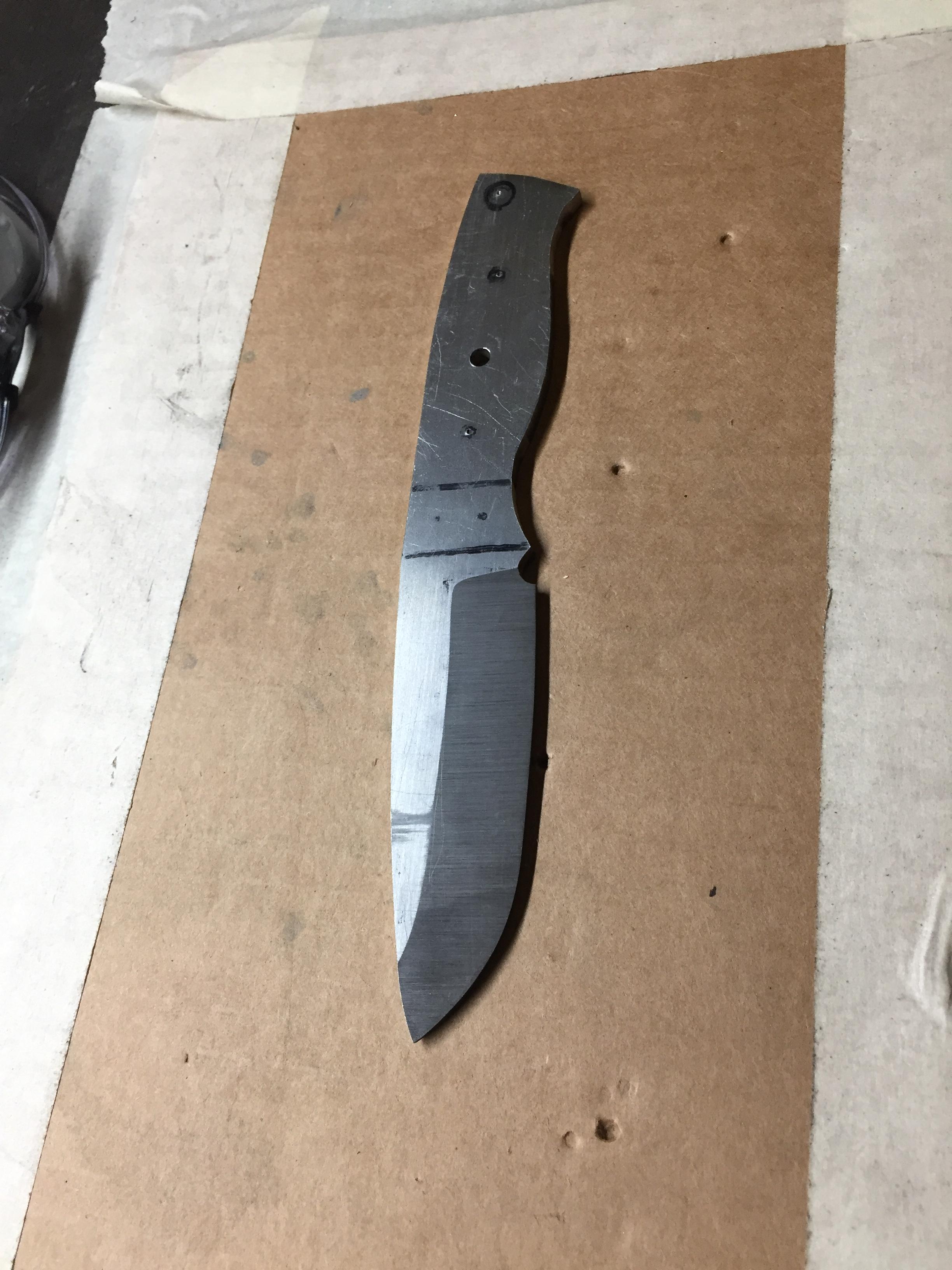
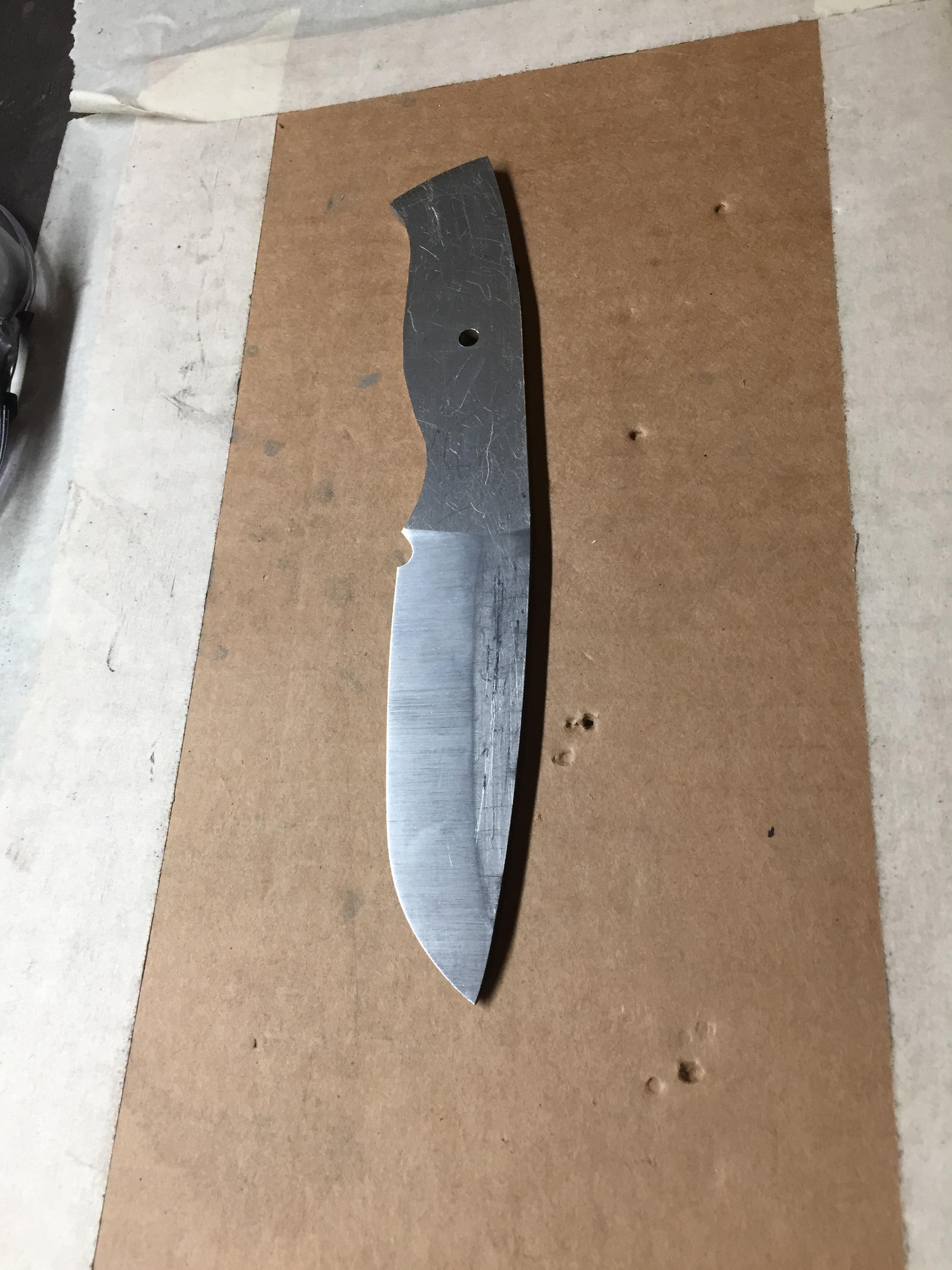
also I recommend starting about 1/4" ahead of where you want the plunge. When you have the primary set, the start at the real plunge line and gently sculpt it until it meets the top of the bevel.
also I recommend starting about 1/4" ahead of where you want the plunge. When you have the primary set, the start at the real plunge line and gently sculpt it until it meets the top of the bevel.

- Joined
- Apr 2, 2016
- Messages
- 114
My experience has been exactly the same as RangerBobTX. Sometimes I use the metal clamp from the bubble jig to establish the plunge lines. It is something I still struggle with from time to time.
- Joined
- Dec 5, 2013
- Messages
- 1,180
I thought about making some kind of clamp to keep the grind from going too far. I think ill just have to experiment. Thanks for the advice guys.
You can buy a carbide faced filing guide that will help keep your plunges even. I sometimes use one if I'm cleaning up my grinds on the disc. Mine is an Uncle Al's; Bruce Bump sometimes posts them for sale as well.
Bob

- Joined
- Oct 1, 2013
- Messages
- 901
I thought about making some kind of clamp to keep the grind from going too far. I think ill just have to experiment. Thanks for the advice guys.
As mentioned the carbide face file guides really help when you start out free hand.
Are you hollow or flat grinding? They each have a very different feel for freehand grinding. I struggled a lot earlier on with freehand grinding on a wheel until it all clicked, and by clicked I mean I ground over 50 practice knives. I grind at a high rpm for most of the bevels and turn down the speed to below 50% for when I go to the plunges. I do sweeping plunges so it takes a lot of patience and you have to really learn how to engage the blade back to the wheel to get the nice transitions. I only hang about 1/8" off with a j flex belt after about 220 grit. I leave about .1-.2" to work the plunges.
Just keep practicing, it's one of the skills that only comes with time.

- Joined
- May 21, 2000
- Messages
- 6,312
You could try using a file guide to keep your plunges even.
I simply scribe a line along the edge where the plunge should be.
Start grinding well ahead of where your plunge should be, and work your way back.
I simply scribe a line along the edge where the plunge should be.
Start grinding well ahead of where your plunge should be, and work your way back.
Im going for more of a hollow grind. Like i said the really difficult part is this knife is my 1st and its a stock removal so i have to constantly let it cool off some before i go back to the belt. My next knife wont be stock removal so i think it will go better. Ill look into the file guides.
- Joined
- Feb 17, 2009
- Messages
- 7,309
its a stock removal so i have to constantly let it cool off some before i go back to the belt. .
Your belt may be past its prime.
Put on a brand new belt and you will be surprised how much the heat will decrease while grinding.

- Joined
- Nov 28, 2014
- Messages
- 1,864
Stock removal or forging you will have to keep the blade cool if it's already been heat treated. If you have not already heat treated it then overheating it will not hurt.......for the most part. Grind, dunk in water, grind, dunk in water, grind, dunk in water.....