Help with wiring 1-phase 220v to Euro rainbow of wires....

Joined
Oct 24, 2013
Messages
906
:confused:
I have L1, L2, and Ground.... and then I popped open this on/off station and I have a rainbow of different colors....

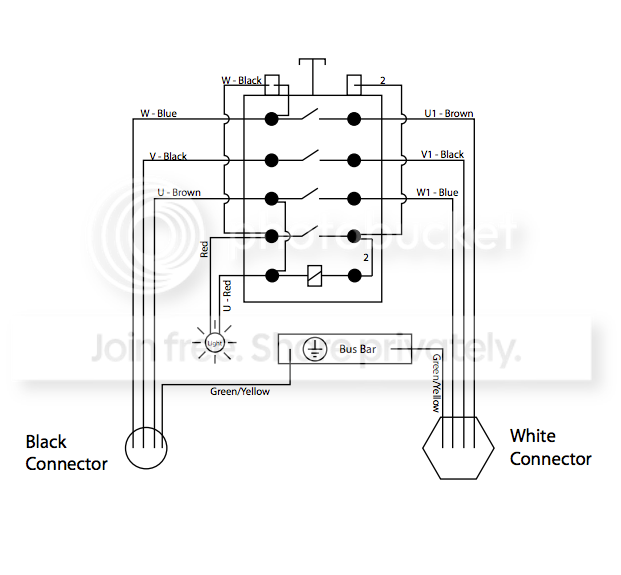
Assuming the white connector is the input, I have 2 hot leads (L1 +L2) to attach to;

U1- Brown
V1- Black
W1- Blue


ScreenShot2014-11-27at93609PM_zps5c0ffcdd.png


Then I have the black connector, which the following connections that go to (what I believe) goes to the motor:

W- Blue
V- Black
U- Brown

I'm going out to the shop right now to snatch up the wire diagram for the motor... I hope I have no more colorful surprises....


Thank you in advance. Life savers that respond.....

I mix with electricity like lemmings mix with cliffs.... :thumbup:
 
I am assuming that you are trying to use this with the single phase motor you mention. the wiring diagram that you posted is for a three phase circuit. u, v, w, being the line in. u1, v1, & w1 being the motor/load side of the circuit. you can use this starter in a single phase line by using only two of the contactors. you will have to first determine what voltage the starter coil is 120/220 then make sure to supply the correct voltage to it so it will close the contacts. Make sure you are not trying to connect a single phase motor on a three phase power supply
 
Last edited:
Thanks Mr. Burke!

I'm connecting a Single Phase 220v power to a Single Phase motor. I'm using an ON/OFF switch that's apparently 3-Phase (wiring configuration above) as the switch to turn my grinder on and off... So no worries on the possible danger of hooking up a single phase to a 3-phase power supply....

you will have to first determine what voltage the starter coil is 120/220 then make sure to supply the correct voltage to it so it will close the contacts.

I'm confused by this line so I attached a specifications table of the motor. I believe the answer is 220 because the motor is 230/460....

So assuming that it's 220, do I just not connect the third lead, or do I attach;

L1 to W

L2 to (V and U)

?

... I revised this as I see the WVU as input...


2fcc1664-94ed-49d8-94a9-1b37aa47fc42_zpsc93a69d4.png


I appreciate your help immensely, thank you for your time Mr. Burke.
 
Last edited:
I'm just going to do two of the contactors and leave the other unattached... I'm not sure this would benefit the circuit, but connecting the neutral to a hot just sounds like bad ju ju....
 
there is a small electro magnetic coil in the starter that when you press the start button energizes and pulls the contactors closed to provide electricity to the load/motor. when the contacts close there is another circuit that holds the points closed using the same coil that closed the points when the start button was pressed. pressing the stop button opens this circuit which opens the contacts. this electromagnetic coil is referred to as the start coil. it is located behind the contacts in the starter. Some starters use 220 volt coils and some use 120 volt coils. only important in that if you hook a 110/120 volt coil to 220/240 volt power it will fry the coil.

from the diagram above connecting T1 to U and T2 to W, and ground to ground, T1 and T2 is the power coming from your breaker. Now connect L1 from the motor to U1 in the starter and L2 to W1 and ground to ground. this should get you up and running.

How ever I am not a licensed electrician in any country or state and accept no responsibility for you or your equipment. I strongly suggest that you have a licensed electrician confirm or refute my advise before connecting this to electricity and turning on your equipment. should you ignore this advice you do so at your own risk.

have fun
Bill
 
there is a small electro magnetic coil in the starter that when you press the start button energizes and pulls the contactors closed to provide electricity to the load/motor. when the contacts close there is another circuit that holds the points closed using the same coil that closed the points when the start button was pressed. pressing the stop button opens this circuit which opens the contacts. this electromagnetic coil is referred to as the start coil. it is located behind the contacts in the starter. Some starters use 220 volt coils and some use 120 volt coils. only important in that if you hook a 110/120 volt coil to 220/240 volt power it will fry the coil.

from the diagram above connecting T1 to U and T2 to W, and ground to ground, T1 and T2 is the power coming from your breaker. Now connect L1 from the motor to U1 in the starter and L2 to W1 and ground to ground. this should get you up and running.

How ever I am not a licensed electrician in any country or state and accept no responsibility for you or your equipment. I strongly suggest that you have a licensed electrician confirm or refute my advise before connecting this to electricity and turning on your equipment. should you ignore this advice you do so at your own risk.

have fun
Bill

Rgr that, I'll wear thick rubber boots, avoid puddling water, and have a fire extinguisher at the ready when I find someone else to flip the switch.... :D


Many thanks to you Mr. Burke
 
Mr. Burkes assessment will get you running. Typically, L1, L2 are line voltage terminals(the feed) and terminals labeled "T" like T1, T2 are load terminals. Your motor is multi voltage. It can run single phase 240 or single phase 480 volt. Make sure motor is wired low voltage (220/240V).
 
Mr. Burkes assessment will get you running. Typically, L1, L2 are line voltage terminals(the feed) and terminals labeled "T" like T1, T2 are load terminals. Your motor is multi voltage. It can run single phase 240 or single phase 480 volt. Make sure motor is wired low voltage (220/240V).

Thank you for the clarification, I'll report back with results... if I'm still kickin...
 
Mr. Burkes assessment will get you running. Typically, L1, L2 are line voltage terminals(the feed) and terminals labeled "T" like T1, T2 are load terminals. Your motor is multi voltage. It can run single phase 240 or single phase 480 volt. Make sure motor is wired low voltage (220/240V).

thanks from me also Odog, I did not include this not wanting to put too much information in my post and confuse more. It is good that it is stated in a separate post though so more attention is brought to the info posted
 
I have been following this discussion, and all Bill says is correct.

The motor should be on its 220VAC terminals.
You don't need to use the "V" wires at all.
The 220 volt wires go to "W" and "U".
The motor leads go to "W" and "U".
Ground bus is ground for input and motor.

The remaining question is - what voltage is the starter rated for? It is three phase, which isn't a problem, but the voltage rating is critical.

If the starter is for three phase 208-240VAC, then the coil is activated by approx. 220 volts. This is drawn phase-to-phase on three phase, and line to line on single phase.
If the switch is 440 Volts, it will not work on 220 volts single phase. The electromagnet will not get enough voltage to "latch".


Question - Is there a reason you are using this starter switch in place of a standard two pole single throw switch. Normally, for 220VAC single phase, there is no need for a contactor below 20 amps per leg. That would be any motor 3HP or lower.
 
I have been following this discussion, and all Bill says is correct.

The motor should be on its 220VAC terminals.
You don't need to use the "V" wires at all.
The 220 volt wires go to "W" and "U".
The motor leads go to "W" and "U".
Ground bus is ground for input and motor.

The remaining question is - what voltage is the starter rated for? It is three phase, which isn't a problem, but the voltage rating is critical.

If the starter is for three phase 208-240VAC, then the coil is activated by approx. 220 volts. This is drawn phase-to-phase on three phase, and line to line on single phase.
If the switch is 440 Volts, it will not work on 220 volts single phase. The electromagnet will not get enough voltage to "latch".


Question - Is there a reason you are using this starter switch in place of a standard two pole single throw switch. Normally, for 220VAC single phase, there is no need for a contactor below 20 amps per leg. That would be any motor 3HP or lower.


Honestly answer as to why I'm using this is simply because I picked up two of these units for $11 / each. I have a lot of wood working equipment that has been neglected for some time and I'm hoping to bring the back to life. a lot of the buttons sun rot and all kinds of nastiness throughout their guts, mainly mud dobber nests over a couple decades. I figured might as well use one on the grinder because I was procrastinating. It's enclosure seemed pretty tight and it had a light too, which I thought would be pretty neat.
 
IMG_0192_zpsf715fc38.jpg


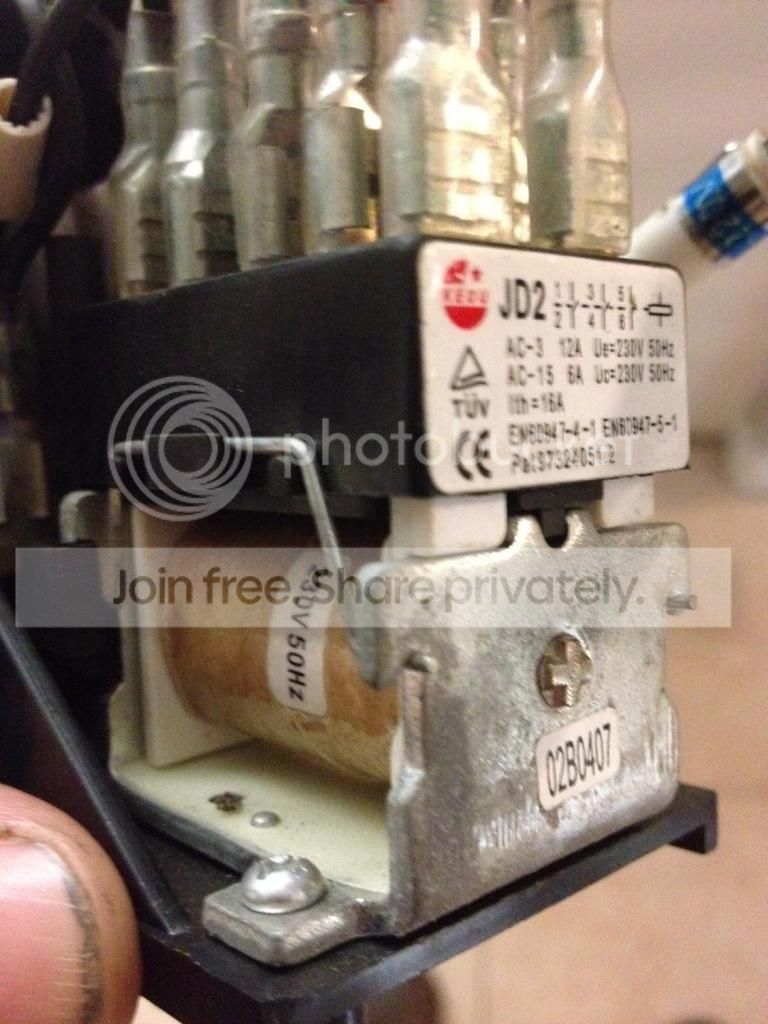
Got a nice pic of the unit which should either; 1) get the nod of acceptance; 2) cause someone to spit coffee on their laptop and frantically reply.

I recognized the specs match the 230v question, so I think I'm good to go... Thanks again gents!
 
Some starters use 220 volt coils and some use 120 volt coils. only important in that if you hook a 110/120 volt coil to 220/240 volt power it will fry the coil.

Bill


So, I fried a coil.....

I'd mention that I purchased 2 of these switch stations.... http://www.surpluscenter.com/Electrical/Switches/Pushbutton-Switches/230V-16A-PUSH-BUTTON-START-STOP-STATION-SWITCH-11-3352.axd

Even posted a pic verifying that what I had fit the application.... Well, I just assumed that the other one, the one I hadn't dismantled, would be good to go...

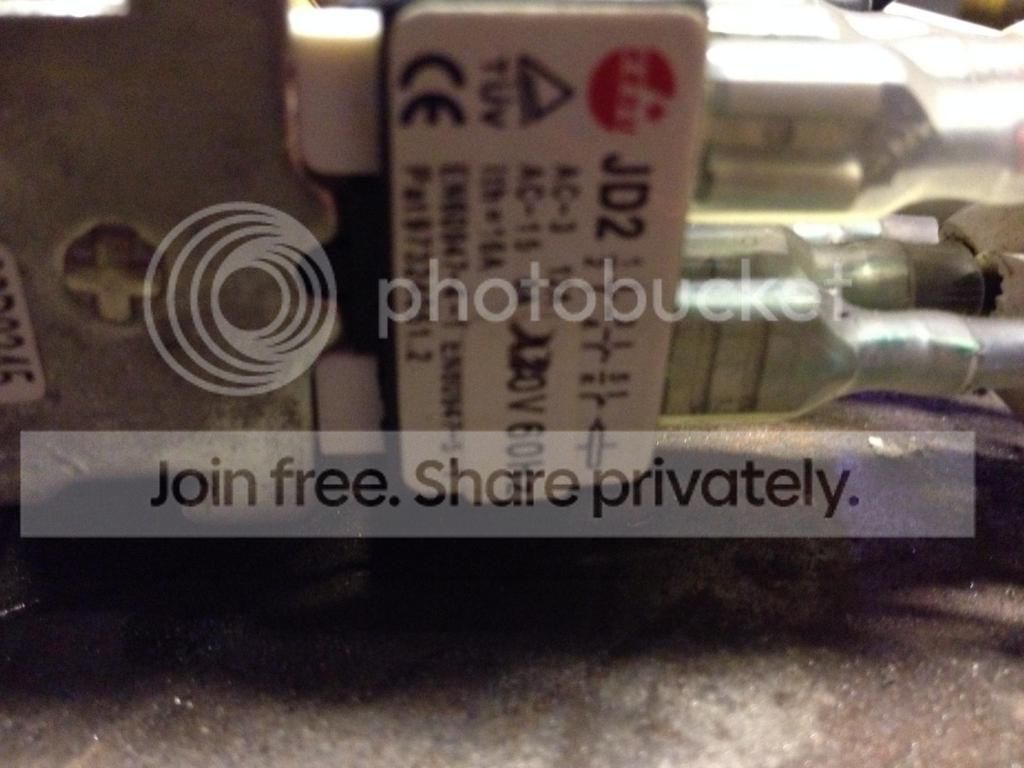
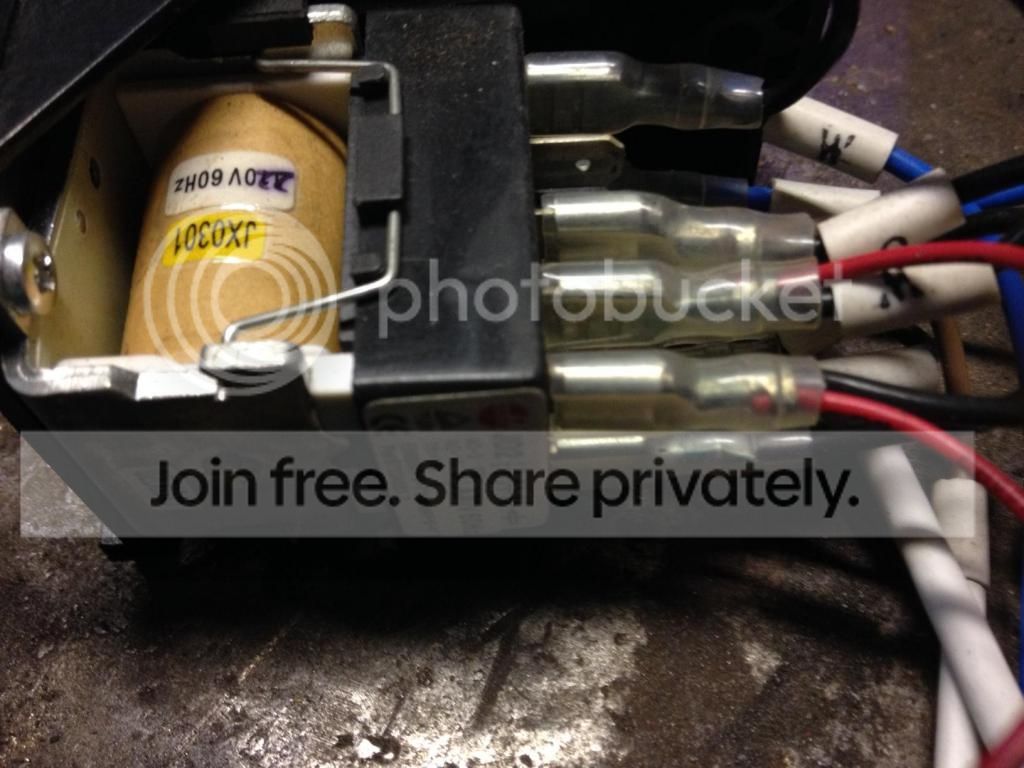
Well this is what I discovered after the fizzle / smoke....

IMG_0194_zps301d022f.jpg


IMG_0195_zpscdca0646.jpg


Someone made some spec changes with a pen!!!
 
that sucks. you might call them and see if they (surplus center) will replace it. the starter itself is probably still good but I doubt that you will be able to find a new coil for 15 bucks.
 
Back
Top