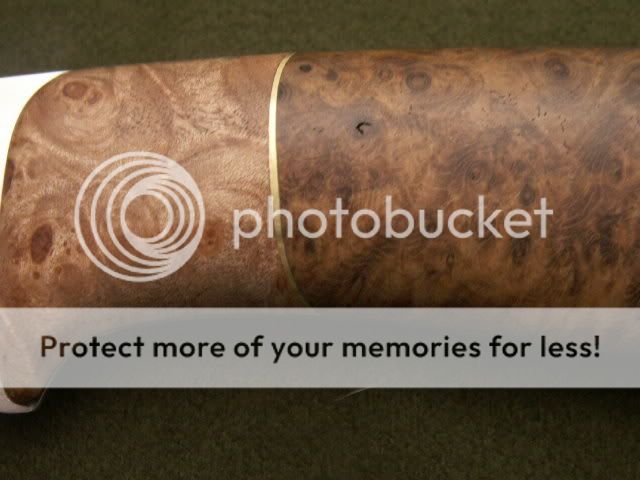
hiiden tang handle--stabilize???

Joined
Jun 16, 2008
Messages
1,699
i know ive been starting quit a few threads- so sorry if im getting on your nerves.---I definetly know the value of having wood stabilized--especially soft wood. But i also feel in the last year or so everyone ( except those of you that did not )seems to have the opinion that everything needs to be stabilized--that can be. I also felt like this ,but now im thinking do hardwoods really need to be stabilized , especially for a hiiden tang knife. With scales its much more apparent when there is shrinkage and warpage over time but i feel with a hiiden tang there is much less of a chance of something going wrong over time. As far as how wood feels being stabilized versus not- i feel the unstabilized wood feels better and has more of a grip. I am not knocking stabilized wood--i have a bunch of it and i love it, but i dont think it should be used in every situation. thanks marekz
 
I'm not going to say never use it, but it sure saves you problems in the long run. I'm no expert, by no means, but from my experience, I've completely changed over.
 
has anyone ever had a complaint from a customer about the "feel" of the stabilized handle?-thanks marekz
 
marekz
I am a convert to stabalized wood. I used to think that hardwoods didnt really benefit from it, and working with wood all my life I wasnt crazy about the look either. However I once I gave it a try Ive never looked back. Of course some woods dont need to be stabalized because they contain too much natrual oil etc. (cocobolo is a prime example) with these woods I use them as is.

If you havent tried using stabilized wood I recommend you at least try it once and then make up your own mind. I have never had anyone complain once they understood the benefits (no shrinkage, warpage, cracking etc.).

Sean
 
I bought a hidden tang bowie with unstabilized handle that had sat at the makers for years and still cracked due to (most likely) changes in my environment and his. Plus a couple of full tang knives with now exposed tangs due to shrinkage. This really made me consider the importance of stabilization.
 
I like the look and feel of a nice oiled hardwood like birdseye maple or curly walnut; unfortunately it's pretty difficult to keep them looking really nice if they're used much. I hate the thought of paying extra for nice figured wood and knowing in a year or two much of its beauty will be hard to see. The slight difference in the feel of stabilized wood is worth it to me. I think it makes it less nerve-wracking to put a guarantee on the knife, as well.

I guess it's up to the customer; if someone wanted oiled wood, I would tell them my misgivings but I wouldn't refuse to use it.
 
Look and feel of stabilized wood ?Typically they are polished and buffed .If you don't want the shiney wood which is fairly slick to handle ,remove the shine by going over it with 600 grit wet/dry paper and water. That's what I do with mine !
 
0000 steel wool does a good job of knocking down the shine for a more natural look after sanding it to whatever grit you were looking at. I love showing this example. Sanded to 1000 and hit with the 0000 and teak oil.

Jeep6.jpg
 
Me, if it can be stabilized I'll have it stabilized, unless it's a primitive or a hawk. But you did hit the nail on the head about hidden tange knives, if done rite there's a lot less to go wrong with them.
 
Back
Top