History of the Tube

Joined
May 7, 2011
Messages
3,426
Hi folks,
from my sweet holiday spot, and probably generated by Charlie's thread, one question comes out of the remote corners of my poor knife culture and I submit it to you, hoping that you can enlighten me.
For those who were misled from the title: no, the question is not about London's underground transportation :D
When I started wandering about this subforum, knife tubes were a novelty to me; knives (traditional or not) in Europe are sold in boxes or cases, and when I got my first GEC the tube looked new and somehow weird to me. It didn't seem like the most natural package for a knife, but then I thought there could be some reason for it. I never asked though.
Then I got other US made slipjoints: Case, Canal Street, a Queen-made Winchester, Schrade, and none of them came in a tube, only GEC knives.
So the question is: is the "tube package" something ancient in traditional cutlery, or something once common (and now brought back by GEC), or just a modern thing? and is there any particular reason for this package, that makes it somehow "better" than a box or case?
Thank you for your answers :)

Fausto
:cool:
 
Fausto, I believe it's a GEC innovation, sort of visual Trademark for them from their start in 2006 (so many interesting knives in just a handful of years!)

I was surprised by it, very unusual. At first I though superannuated toilet-roll core...:D:D But that's ridiculous! It has some definite advantages: novel not used by others as far as I can tell, strong less likely to crush, excellent to put different art-work/labels on (many of them are very nice), the inclusion of the wax paper reeking of factory is another master touch!

Frankly, most other knife companies have very lack-lustre boxes (which usually get crushed in transit) e.g. CASE, Böker, Rough Rider. Queen/Schatt do have much better quality boxes with some pretty labels. So the tube (undergrounds excepted) is not Traditional as far as I can tell, but certainly authentic.

Thanks, Will
 
It has some definite advantages: novel not used by others as far as I can tell, strong less likely to crush, excellent to put different art-work/labels on (many of them are very nice), the inclusion of the wax paper reeking of factory is another master touch!

To your list (with which I agree), I'd add: inexpensive. They can (and do!) cut the tubes to whatever length indicated for longer knives; the tube stoppers are universal, fitting both ends of any tube. Some cardboard, some stickers, and they're good to go. :)

~ P.
 
There's a line of Scandinavian knives that uses a tube at least sometimes, but otherwise I hadn't heard of tubes for boxes.
 
I remember when they first started out, Bill Horn at Cumberland was one of the first purveyors of their knives and he really gave the packaging a workup before the knives were released. He touted it as "something completely different and unique, you'll be AMAZED!" or something to that effect. It was a good selling point, and most folks really took to it (except for those who liked to stack their boxes and got annoyed with the tubes rolling around on their shelves LOL). Good memories :-)

Eric
 
the inclusion of the wax paper reeking of factory is another master touch!


Thanks, Will

The smell was the first thing I noticed when I opened my first knife. It reminded me so much of my Dad. He worked in factorys all his life doing maintenance on machines.

Funny how a scent can bring back a flood of memories.
 
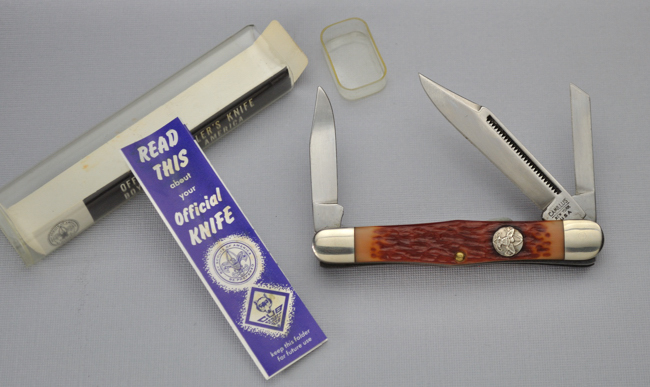
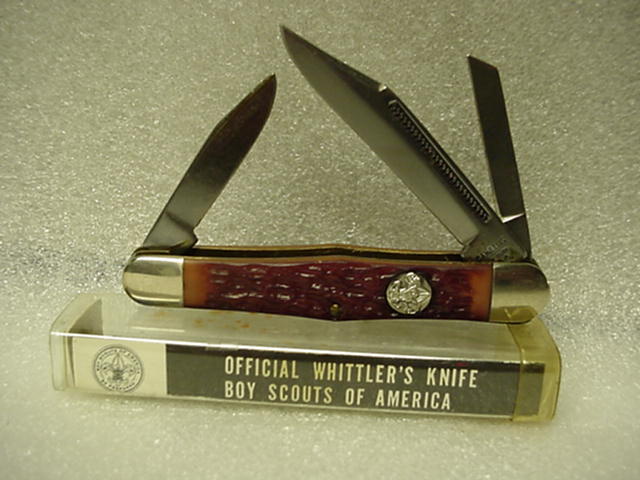
I don't recall ever seeing any tubes like GEC uses. I do remember some Camillus knives coming in small clear tubes that were barely bigger than the knife that was inside.

Here are a couple images taken from another website about BSA knives. They are not mine.

CAMW3h.1.jpg
CAMW3H.jpg


I am not aware of any company that used knife tubes as their main method of packaging.
 
Thank you for your answers!
It's good to learn that it's just a modern introduction (and somehow a GEC trademark) rather than an old feature. All the advantages that Will and Sarah pointed out make sense to me, but only in 2013. Fifty years ago, when people just bought a knife cause they needed it, and factories needed less marketing (and managed it differently, I suppose), the tubes wouldn't have been that good :)

Fausto
:cool:
 
Fausto, you're right about that. Around fifty years ago factories sold most of their knives to retailers and hardware stores in boxes that contained a half dozen paper wrapped knives. When you bought one, you just got the knife, which generally went right into your pocket :)
Here's an example; there were 1/2 dozen of these Ulster #10 barlows packed in this box, each one wrapped in clear "Ulster" logo'ed plastic:


72d9u1.jpg


Eric
 
The smell was the first thing I noticed when I opened my first knife. It reminded me so much of my Dad. He worked in factorys all his life doing maintenance on machines.

Funny how a scent can bring back a flood of memories.

Scent is the sense most closely linked to memory. I have exactly the same thing for the same reason, takes me back to the smell of my dad and uncles when I was a boy, and later as an apprentice doing much the same.

I think the tubes are a great idea; practical, innovative, and inexpensive :thumbup:
 
I don't recall ever seeing any tubes like GEC uses. I do remember some Camillus knives coming in small clear tubes that were barely bigger than the knife that was inside.

Here are a couple images taken from another website about BSA knives. They are not mine.

CAMW3h.1.jpg
CAMW3H.jpg


I am not aware of any company that used knife tubes as their main method of packaging.

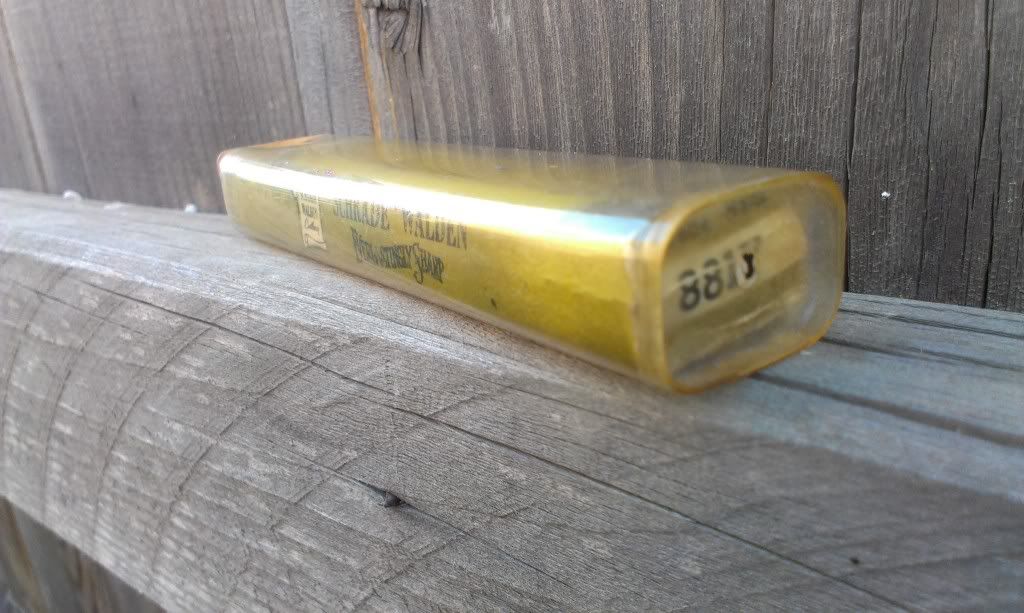
Interesting. Schrade used a similar tube.

I've seen examples of new old stock where the tube was clear.

IMAG1354_zpse47cc79d.jpg


Very cool!
 
The smell was the first thing I noticed when I opened my first knife. It reminded me so much of my Dad. He worked in factorys all his life doing maintenance on machines.

Funny how a scent can bring back a flood of memories.

That is so true. Although it works just as strongly for bad memories unfortunately.
I myself was working on a new system of knife storage prior to my first GEC. I was using toilet rolls and gaffer taping the ends with
milk carton lids. Then I discovered Plano Tackle boxes.
Just think-if they hadn't innovated the tube why would we need the Tube Topper Popper?
Thus nature balances itself.
 
Last edited:
Drills and milling cutters commonly come in cardboard tubes, at least they used to. If someone experienced in a factory/machine shop setting went looking around for a way to store or ship knives, the tube idea would be a natural.
 
A VERY long time ago, the Barry Wood swing folders were shipped in clear plastic tubes, I had a couple of those, this is back in 1973 or there abouts, should have bought more, hind sight is usually 20/20 :(

G2
 
That is so true. Although it works just as strongly for bad memories unfortunately.
I myself was working on a new system of knife storage prior to my first GEC. I was using toilet rolls and gaffer taping the ends with
milk carton lids. Then I discovered Plano Tackle boxes.
Just think-if they hadn't innovated the tube why would we need the Tube Topper Popper?
Thus nature balances itself.

Plano's cool, but I found a brand at the local sporting goods store that has dividers made of rust inhibiting plastic.

I was gonna buy the popper to spread my vegemite. Is there some other purpose for the thing I'm missing? I leverage my tp with a screwdriver, you know, the old fashioned way?
 
Back
Top