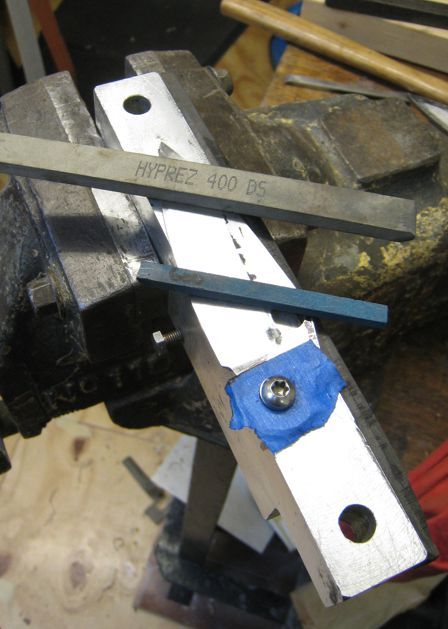
Ah ha! something I can answer!!! I made a little holder out of a bit of spare scrap aluminium. I modelled out where I wanted the pivot to be relative to the tip, tapped two holes for 10-32 screws that just fit through 3/16th pivot holes, or through 7/32 holes with a bit of shimming. Two more 1/8th holes for a removeable 3/4" length of pin to support the tip.
The first time I used this, the blade wasn't too deep. On the one pictured I had to bond a 1/4" thick bit of Micarta on to the leading edge of the base to give enough clearance for the blade spine.
The aluminium is a great heat sink for the first side, you don't have to dunk the blade at all, but the second side requires dunking every few passes, ideally in a shallow pan that does not wet the whole thing...not all my screws are stainless.
This was in fully treated RWL34. I ground a 45degree lead in just holding the blades by hand, but in retrospect I would like to make another jig for that to get the edge thickness more precisely defined.
Bevel grinding using a pretty simple angle control jig.
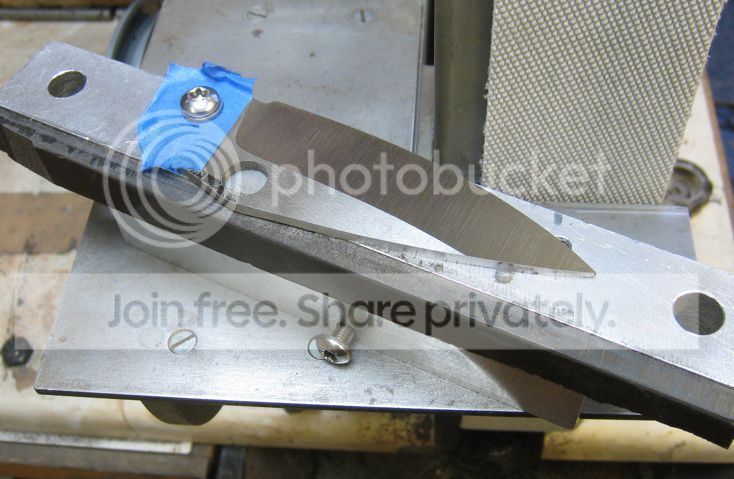
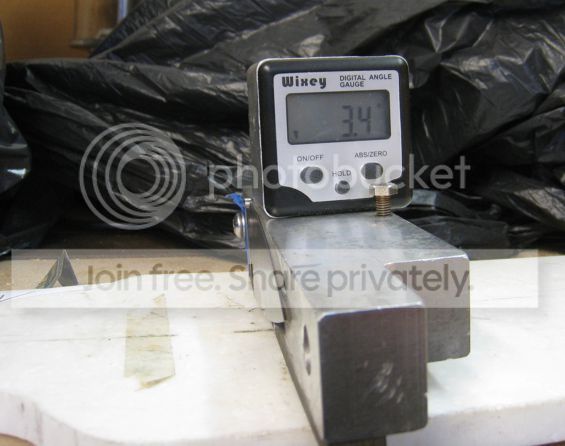
Twin screws control angle and you can really micro adjust, but I found out the hard way that the best course was to set an angle and leave it alone, not to keep adjusting as final shape is approached.
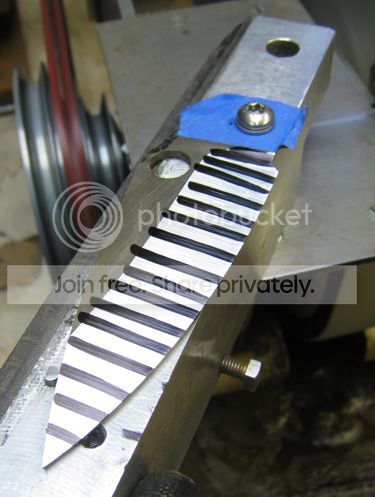
Marker pen really helped show where the belt was hitting
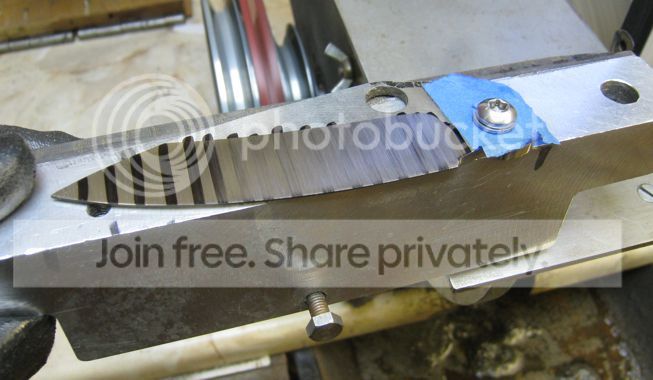
and after getting down to 400 grit, the jig made a handy holder for "sanding" with EDM stones to pick up any deep scratches.
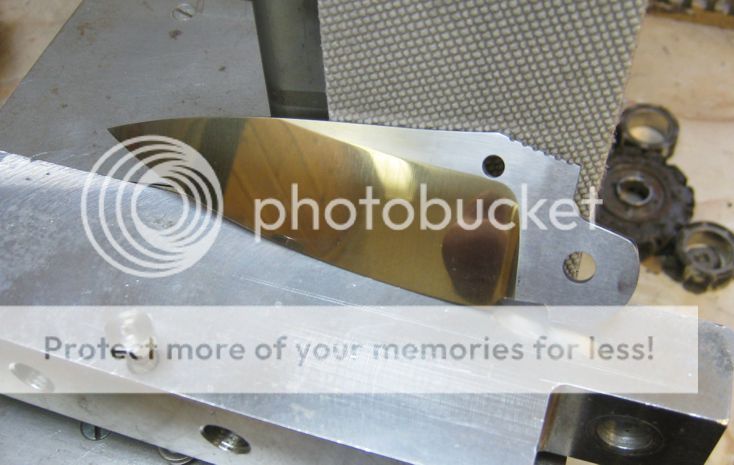
Back on the cork belts out to 800 grit gave a pretty good machine finish
 [/URL
[/URL
...and this is what I used to grind the radius on the tang. Very simple.
Checking the "jig" for grinding the radius with a dummy blade.
[URL=http://s289.photobucket.com/user/gps_deseng/media/Knives/Folders/IMG_0181.jpg.html]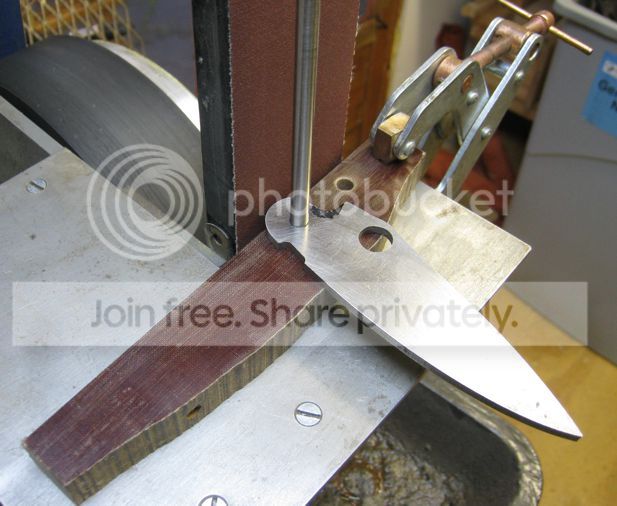
This system does limit the type of grind one can do, but with care even someone as out of practice and dexterously challenged as I can make a half decent job on their bevels and plunge.

Chris



 [/URL
[/URL


