How close is too close?

Joined
Oct 27, 2008
Messages
290
there has been a lot of threads recently and probably before about copies. and How close is too close? When does it become morally wrong and stealing. I'm not talking about build quality just the moral aspect.

It seems many people have greatly differing opinions on the subject, what is yours?

The aspect also becomes blurred since there are traditional styles that no one calls stealing such as the common slip joint patterns, bowie knives, most kitchen knives, etc No one says case steals from queen or boker steels from buck when the each make a very similar stockman model.

so what's your opinion?


personally as long as it doesn't have fake or misleading makers marks or lies about being an original design I'm not bothered very much by it. And if the design has been altered a bit so that it is easy to tell from the other companies design or model i have no problems at all.

As i look at it most knife designs are derivative of something else, i'm much less likely to buy a knife that copies a newish or unique design than one that is similar to an older design (ie more than 10-15 years old) or common looking. I believe that a company should benefit from it's r and d for a while and then the design should go open source so that it can be useful to more people and the first company will have to keep innovating.

i hope that we can keep this thread about stating your opinions and reasons and not become a violent argument
 
Its hard to say at what point a similar design becomes a copy but like pornography you’ll know it when you see it.
 
I think when you get to where sanremu is, then you are too close, I think this is the case because almost all of their knives are just copies of other knife designs from makers with 1 or 2 minor changes.
 
It all boils down to a matter of opinion. For some, they could care less about the issue, for others it's very important. It's that way in any industry. I used to sell (high-end) hardware, and this was just as touchy a subject there as it is here.

The simple truth is, there is a market for cheap, lesser-quality copies of good designs. That's why they exist. I think it sucks, but so be it.

thx - cpr
 
Recently posted in the Boker forum.

Real CLB designed Hyper by Boker.

BK-01BO550.jpg


United Cutlery knife...

XL1316.PNG


Slipjoints are in a class by their own it seems. Peanuts, Trappers, Congress, etc are "generic" names used to classify traditional slipjoint designs. Many are often used with traditional blade shapes like Wharncliffe, Spey, etc. and similar handle materials of bone, jigged bone, stag, delrin, etc. Thats why many of those look similar.
 
My unscientific method:
  • if I can't tell the difference in a glance, it's too close.
  • If I can't confidently say whether it's a copy or an inspired design without looking at the original, it's too close.

This view is probably unpopular here, but IMHO extremely cheap knock-offs (1/10 original price) actually helps the original. Why?
  • People who buy the extremely cheap copy is very unlikely to buy the original at 10X the price, so the original loses no market.
  • Availability of cheap knockoffs, as long as people know they're knockoffs, popularizes the original product. Think of it as a 3D advertising.
  • As knockoff buyers earn more money, they are very likely to buy the original. This is because they love the design, and by buying the original they're confirming that they have "arrived".

What you need to fear is mid range copies sold at a quarter to a half of the original price. At this price point it's no longer a knockoff: it's a very close counterfeit where only experts can tell the difference. This one will eat your market.
 
The Original post makes me wonder what craptastic Chinese knockoff factory he represents.

I thought it ironic as well, that the original poster is from the country that steals more designs than anywhere I could think of on EARTH!!! ....and knives are just one small part of it.

Peter
 
Obviously every one who lives in China is a representative of at least one rip off factory.:rolleyes:

I presume all you guys represent the same wide ass brush factory ?
 
My unscientific method:
  • if I can't tell the difference in a glance, it's too close.
  • If I can't confidently say whether it's a copy or an inspired design without looking at the original, it's too close.

This view is probably unpopular here, but IMHO extremely cheap knock-offs (1/10 original price) actually helps the original. Why?
  • People who buy the extremely cheap copy is very unlikely to buy the original at 10X the price, so the original loses no market.
  • Availability of cheap knockoffs, as long as people know they're knockoffs, popularizes the original product. Think of it as a 3D advertising.
  • As knockoff buyers earn more money, they are very likely to buy the original. This is because they love the design, and by buying the original they're confirming that they have "arrived".

What you need to fear is mid range copies sold at a quarter to a half of the original price. At this price point it's no longer a knockoff: it's a very close counterfeit where only experts can tell the difference. This one will eat your market.

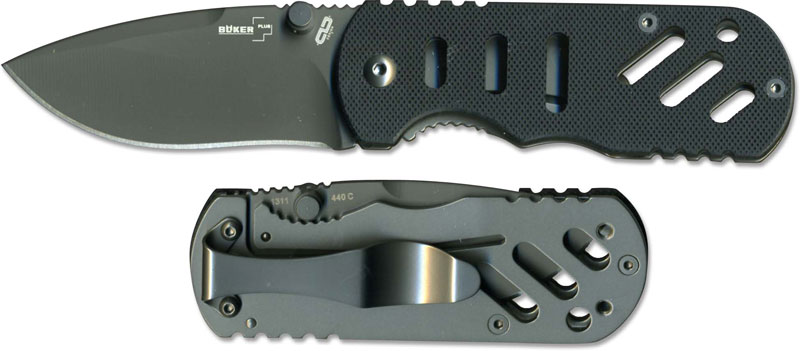
The original is losing market regardless. If I saw a Boker Subcom on ebay for $35, I'd think it's original. I recently bought a "Subcom" from "Boker" for about $4 shipped. Arrived late last week straight from China.

The thing is so close to the original my brother thought it was the real deal. I felt that the clip was a bit different, the action sloppy, and crappy blade coating put it in the POS pile.

By creating knockoff's and clones not only are you visibly degrading the brand name, but you're also giving ignorant people the view that this knife can be had cheaply, which most of them can't. This lowers their view of knives on a whole and thus degrades the entire industry.
 
How close is too close?

Imitation is said to be the sincerest form of flattery.

But it should not be an attempt at deception.

And at a guess it shows a lack of imagination.
 
As i look at it most knife designs are derivative of something else, i'm much less likely to buy a knife that copies a newish or unique design than one that is similar to an older design (ie more than 10-15 years old) or common looking. I believe that a company should benefit from it's r and d for a while and then the design should go open source so that it can be useful to more people and the first company will have to keep innovating.

Open source?? Kid this isn't software, and there is no GNU Public license. Making a knife takes skill and proper machinery, tolerances I cannot imagine, along with a lot of hard work and determination not found in the knock off business.

If you asked Boeing to take the wing design for the 777 and make it "open source" so that everyone could use it, they'd laugh you out the door. The skill required here is astronomical. You can't just "knock it off" and expect it to work.
 
I thought it ironic as well, that the original poster is from the country that steals more designs than anywhere I could think of on EARTH!!! ....and knives are just one small part of it.

I'm from Arizona btw i just live in china right now. So i'm not sure if you are wrong about US making the most fakes or wrong about me being from china. anyways you know what they say about making assumptions ;)

Quote:
Originally Posted by Rat Finkenstein
The Original post makes me wonder what craptastic Chinese knockoff factory he represents.

My thoughts exactly ......

If it makes you feel better i'm a teacher at an international school and have no relationship with any factory and no desire for you to buy or not buy anything.


josh k i understand you disagree but how close is to close in your opinion?
 
The original is losing market regardless. If I saw a Boker Subcom on ebay for $35, I'd think it's original. I recently bought a "Subcom" from "Boker" for about $4 shipped. Arrived late last week straight from China.

The thing is so close to the original my brother thought it was the real deal. I felt that the clip was a bit different, the action sloppy, and crappy blade coating put it in the POS pile.

By creating knockoff's and clones not only are you visibly degrading the brand name, but you're also giving ignorant people the view that this knife can be had cheaply, which most of them can't. This lowers their view of knives on a whole and thus degrades the entire industry.

I disagree.

If you can only afford to pay $4 for a gas station chinese knockoff knife, you're not gonna buy a $35 genuine knife. If you --like most people outside knife nut circle-- can't see why a pocket knife should cost more than $10, then you won't buy a $35 genuine subcom regardless to whether there are imitations around.

I still believe that as long as it's clearly identified as a knockoff of a particular brand, and the price (and quality) is far enough below the original, it actually serves to increase brand awareness of the original. People only copies established brands; when there are knives sold as "Kershaw Leek Repro", people suddenly knows that Kershaw is a premium brand.

But, this doesn't apply to brands that are already highly recognized like victorinox. They have nothing to gain, because everybody already knows what victorinox is.
 
I disagree.

If you can only afford to pay $4 for a gas station chinese knockoff knife, you're not gonna buy a $35 genuine knife. If you --like most people outside knife nut circle-- can't see why a pocket knife should cost more than $10, then you won't buy a $35 genuine subcom regardless to whether there are imitations around.

I still believe that as long as it's clearly identified as a knockoff of a particular brand, and the price (and quality) is far enough below the original, it actually serves to increase brand awareness of the original. People only copies established brands; when there are knives sold as "Kershaw Leek Repro", people suddenly knows that Kershaw is a premium brand.

But, this doesn't apply to brands that are already highly recognized like victorinox. They have nothing to gain, because everybody already knows what victorinox is.

By adding the element of a $4 knock off, you're creating a mindset that this knife can be had for a low price. Thus you are devaluing the brand.

You said that as long as "it's clearly identified as a knockoff of a particular brand, and the price & quality is far enough below the original". How will people outside of the knife community know what quality is if they only handle knockoffs? By illegally copying certain designs and mechanisms you are bluring the lines between the genuine product and a worthless copy.

How can knockoff's be clearly defined? As I said, except for the price, the pictures of the Subcom looked very close to the original. You would have to have an intimate, almost hands on knowledge of the original to spot the slight clip and jimping difference.

Knockoff's are designed to closely resemble, or even out right copy, higher end brands and won't ever come with a "This is a knockoff designed to increase brand recognition" stamp. People outside of the community might not notice that it is not a genuine product. Look at some of the CRKT knockoffs. Far lower in quality then the original, and now, a lot of non knife people I talk to think CRKT is shit for knives. You're increasing brand recognition while devaluing the brand at the same time. :thumbdn:
 
If the cheap knock-offs were only bought by people who wouldn't look at the originals because of the price, then why do the knock-off artists need to copy the originals so closely? Look at Frost knives in the Smokey Mountain catalog and you will see cheap knives that each have their own unique fantasy design elements. They are selling to people who don't know the major brands, so the need to look like them doesn't exist.

Knock-offs that closely copy legitimate original designs are deliberately fraudulent. Buying them is supporting theft of intellectual property.
 
If the cheap knock-offs were only bought by people who wouldn't look at the originals because of the price, then why do the knock-off artists need to copy the originals so closely? Look at Frost knives in the Smokey Mountain catalog and you will see cheap knives that each have their own unique fantasy design elements. They are selling to people who don't know the major brands, so the need to look like them doesn't exist.

Knock-offs that closely copy legitimate original designs are deliberately fraudulent. Buying them is supporting theft of intellectual property.

I think that's a good way of summarizing the whole issue. They copy the designs of others because they hope to capitalize on their success--in essence making the original brand do free advertising for their knock offs.

More power to you if you wanna make cheap knives---but make you OWN designs.
 
The Original post makes me wonder what craptastic Chinese knockoff factory he represents.

My thoughts exactly ......

I thought it ironic as well, that the original poster is from the country that steals more designs than anywhere I could think of on EARTH!!! ....and knives are just one small part of it.

Peter

DO NOT discuss the other posters. Discuss the knives and the business practices.
 
Back
Top