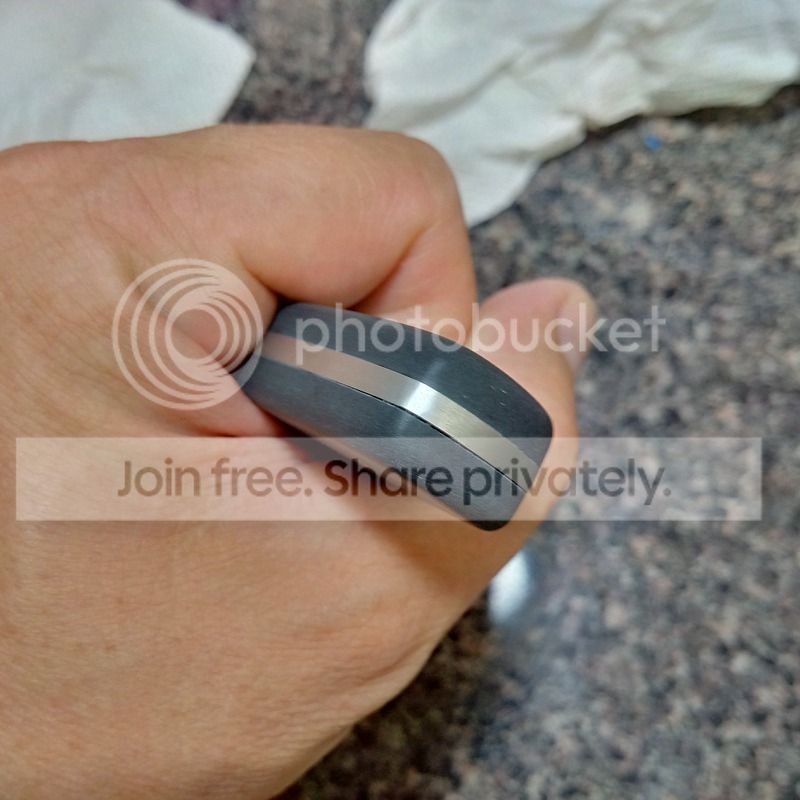
How do I fix this?

Joined
Feb 10, 2013
Messages
1,019
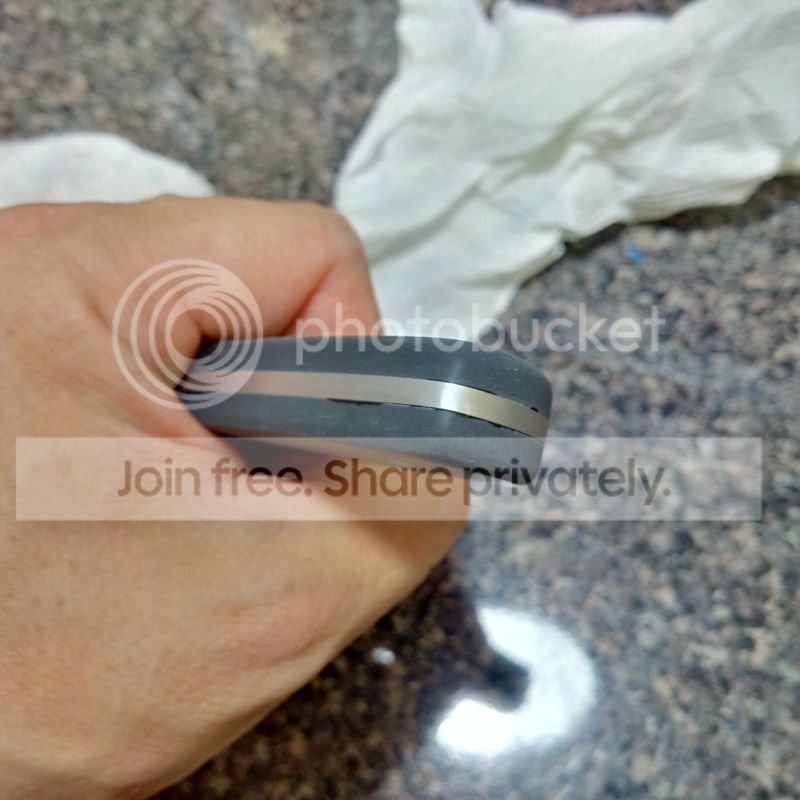
I was bead blasting this Warwood handle (75 pounds pressure with glass beads) and had a little inconsistency on the tang so I went back to even it out and took out some of the epoxy. It appears as if my tang is not totally flat. I wet the handle for the pic so the wetness would show the area that needs to be filled.
IMG_20150726_232647_hdr_zpsrpcvqwrb.jpg


What it looks like dry.

IMG_20150727_011018_hdr_zps4pzl8rt5.jpg


How can I fill this and still have the same finish, or will I need to fill it and go to a sanded finish?
 
Last edited:
Run thin CA glue run in the gaps. Let dry and repeat until it is filled. Re-sand. Don't blast so hard.
 
Thanks Stacy. Should I try to mix it with some dust from the same material or just put it in as is?
 
True enough. The next time should I try about 60 pounds pressure?


No, you need to be sure your tang is dead to nutz flat.

Also your prep for epoxy is often as important as the epoxy you use. Be sure that tang and slabs are degreased, roughed up and not touched again by your hands.
 
You should only apply enough pressure to hold the scales snugly in place. Small to medium spring clamps are all you need. The scales and tang should also be slightly relieved in the center, leaving about 1/8" flat perimeter around the edges. This will make a reservoir of epoxy to assure a firm bond. If everything is dead flat, all the epoxy will be squeezed out, making the joint fail easily with one tap.
 
I think you may be holding the blast tip to close too. I do some g-10 knives like that and finish the tang to about 320 grit,
then hold the blast tip back and just kind of dust the tang and handle to get the same texture as the rest of the knife.
but your knife looks like it has a gap between the scale and tang, like the scale wasn't flat or was warped when installed, still, if you held back on the blast tip I don't think you would have had those results, or at least not as bad.
 
Thanks for all the advice. I did have the nozzle really close to the tang when I was doing it so that definitely didn't help. I do sand my scales on a flat piece of material, but I could have messed that or the tang up. I have parts on the way for a disc grinder build so I'm hoping that will correct any issues I may have with flatness. Live and learn.
 
You should only apply enough pressure to hold the scales snugly in place. Small to medium spring clamps are all you need. The scales and tang should also be slightly relieved in the center, leaving about 1/8" flat perimeter around the edges. This will make a reservoir of epoxy to assure a firm bond. If everything is dead flat, all the epoxy will be squeezed out, making the joint fail easily with one tap.

I have been using C clamps so far so I will try this method.
 
Back
Top