How hard is it to start a fire in the wet ?

Joined
Apr 13, 2007
Messages
12,294
I'll get to the question about the fire shortly.

As the sun was making a feeble effort to come out I decided to take Maisy for a nice Fall walk !

PA200001.jpg


Plenty of leaves covered the ground adding to that nice Autumn feeling....
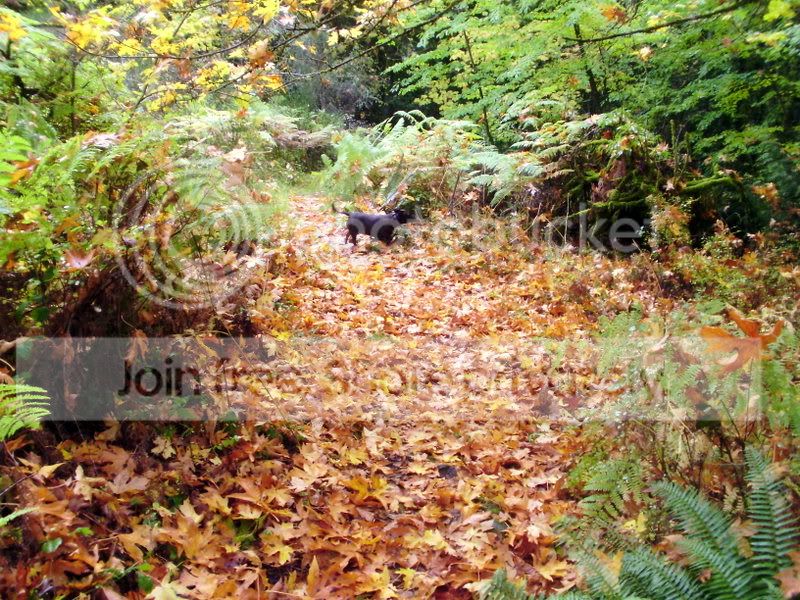
PA200005.jpg


PA200002.jpg


Just as I was checking out some tracks in the mud an animal came thuding through the bushes, it took me a few seconds to determine whether it was coming towards me or away from me.Bearing in mind that this spot was about 100 yards from where I found Cougar scat last year my heart started to race a little !!! By the time I realized that it was only a deer and grabbed for my camera the bugger had totally vanished, alas no pics !!!!
I did come across some tracks though that may well have been from him.....
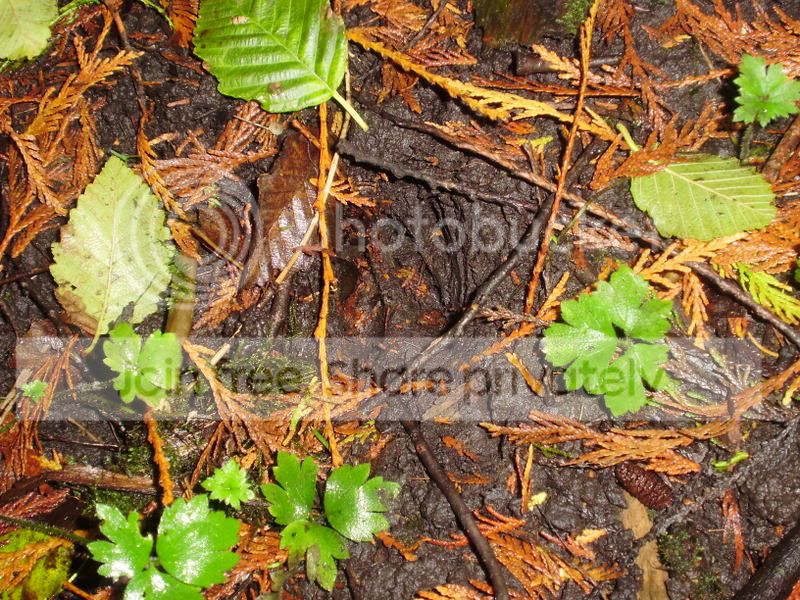
PA200012.jpg

We entered the Swamp area and choosing not to use my technique of first testing the ground with a stick, Maisy managed to sink herself up to her chest in mud and for a time it looked as if I would have to go and drag her out !!!
Her coat must have a Teflon coating cos this was taken shortly after and she appears quite clean !!!!
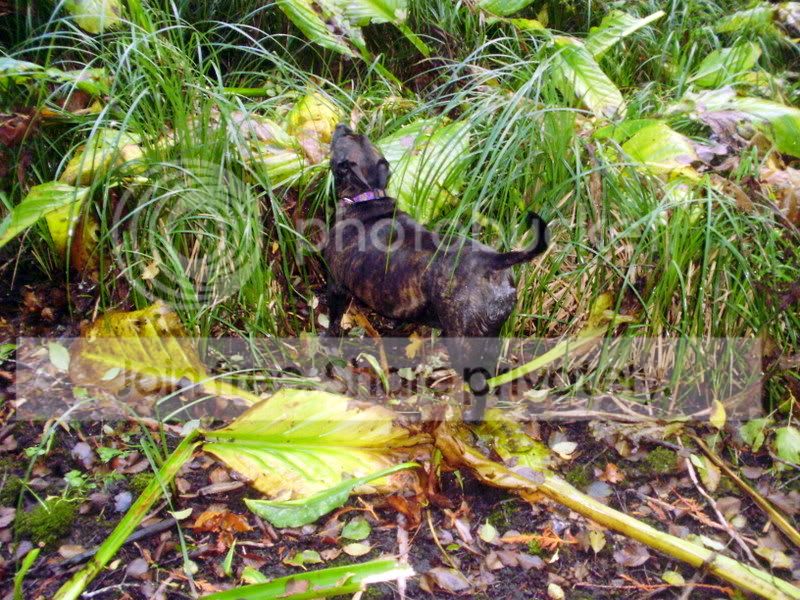
PA200006.jpg


Here is yours truly posing with my Bandicoot....

PA200016.jpg


It started to rain so we set off a little further....
PA200018.jpg
 
As the rain started to come heavy I decided to find out how hard it would be to start a fire in the wet using my ferro-rod.
I had a quick search around and managed to get some Ceder bark and Fatwood.

PA200021.jpg


Four strikes later and we had fire, so I guess the answer to the question is that it is quite easy !!!

PA200024.jpg


PA200022.jpg


As we headed back I came across some tinder that someone else had prepared, I'm guessing Deer !!!

PA200025.jpg


Back at the parking lot I poured a cup of tea and snapped you this pic of my latest addition to my kit, it's a Petzl Signal. Tiny little thing but is great on the back of your head if walking on any roads at night or even as a tiny back up light !!!
PA200027.jpg
 
looks like a nice day out, i know what you mean about the animal noises nearby...i have looked up to a large black bear before. but more often it is just a squirrel.

in my experience it isn't too hard to find (or use carried) dry tinder, the real trick is getting the next stage to catch, the kindling and intermediate sized wood before you get to stovewood and larger sized pieces.

by the way, email inbound in a minute.
 
Nice pics, and I enjoyed the story about the cougar. If only it were ..... :)

But I don't think starting up that fire is always that easy.

Sometimes that nasty wind can make life difficult when it is in combination with rain so that it is blowing your tinder around and also blowing the rain at an angle where it can be hard to shield. Also in these conditions, having your kindling at the ready is absolutely crucial and it could be difficult to protect it while you getting that flame to realize. My wife quickly found this out yesterday after getting so focused on her spark, that when she did get a flame going, she didn't quite have her tinder organized enough to keep that flame going.

I know you understand this quite well pit and don't doubt your ability to get a fire going if that is what you wanted to do. However, from a survival perspective, I think this could be a real challenge. I do notice, at least for myself, that I spend a great deal of practice getting a flame going and spend little time practicing turning that little flame into a fire.

Mostly this is logistics - it takes time investment to carry through all the way to a fire, isn't consistent with no-trace, and then there is the time it takes to put the fire out and ensure it is not a danger.

However, I have yet to test myself in getting a fire to go under the condition outlined in the OP. Thanks - because the topic serves as a reminder to me that I need to do this one of these days. i.e. pick a really crappy rainy, windy day and try to set up a fire in my backyard or something. I'm a bit curious as to whether I can or not.
 
So it's not to difficult to get a fire "started" in wet weather assuming you have fatwood or someother firestarting tinder ..... but how does one get the larger pieces going assuming the wood is soggy .... any tricks to the trade you guys out there might be willing to share ?????
 
So it's not to difficult to get a fire "started" in wet weather assuming you have fatwood or someother firestarting tinder ..... but how does one get the larger pieces going assuming the wood is soggy .... any tricks to the trade you guys out there might be willing to share ?????

That's where the fuzz sticks come in or even batoning your knife through larger sections to get to the dry inner !:thumbup:
 
Good deal man! It would have be even cooler to see a blazing fire going! :D Do you think you could have collected some bigger stuff that was dry enough?
 
So it's not to difficult to get a fire "started" in wet weather assuming you have fatwood or someother firestarting tinder ..... but how does one get the larger pieces going assuming the wood is soggy .... any tricks to the trade you guys out there might be willing to share ?????

Standing deadwood is dry in the middle, even in a thunderstorm. Of course when you most need a fire it will be the hardest to make, but still its all about preparation.

Firstly, before you get too cold and lose fine motor control. Find the wood in the form of standing dead wood. Split the wood with a wedge and baton that you can make in about 1 min if you are smart enough to have the right tools with you. Further split the wood to kindling thickness and up.

Take one of the kindling pieces and fit it to the arrow shaft taper tool or large diameter pencil sharpener you have with you. Make yourself a big pile of tinder. If you are prepared and have a small nylon stuff sack type bag you can let the shavings off the sharpener fall into that so they dont get wet off the floor. After a minute or so you have plenty of tinder to get the kindling going, just add larger pieces to that as you go.

Other things to consider are

Make a platform of sticks to build the fire on so that wet from the floor does not rob heat from your coals.

Build a quick rack next to your fire to place wood on so that they get dried out a little before they go onto the fire as fuel.

make sure you have enough wood to meet your needs, there is nothing worse than scrambling around trying to find fuel for the fire when its almost out.
 
[SNIP]
Back at the parking lot I poured a cup of tea and snapped you this pic of my latest addition to my kit, it's a Petzl Signal. Tiny little thing but is great on the back of your head if walking on any roads at night or even as a tiny back up light !!!
PA200027.jpg

Pitdog, can I offer a thought about this light? Personally, I'd only use it in an emergency situation. Some years ago a company came out with a similar device for bike riders and motorcyclists. It was made to go on the back of the head. I think it was called 'Cyclops' or something like that... can't remember...

Well, oddly enough, the number of people getting hit by cars turned out to be higher for users than for the non-users! A safety organization did a study and made an interesting report on the product. It seems there is this psychological effect called 'targeting' that occurs when drivers turn their heads to look at things. Without realizing it, they also steer into the same direction that they are looking!! Every bike rider has had the experience over and over again of thinking that car drivers are actively trying to run them off the roads. Turns out that this is just accidental targeting in action! The cage drivers turn their heads to watch the bikes, and wind up steering into the bikes! :(

The American Motorcycle Association recommends that if your bike breaks down and you have to pull it over to the side of the road, especially at night, that you NOT stand close to it, but rather move off 20 yards away to wait for assistance. When drivers look, they also turn...

I have a couple of small blinking lights, but since that report I only use them for scuba diving at night, attached to the primary of my regulator. Not quite as many drivers at 90 ft down! :D

Stitchawl
 
Standing deadwood is dry in the middle, even in a thunderstorm. Of course when you most need a fire it will be the hardest to make, but still its all about preparation.

Firstly, before you get too cold and lose fine motor control. Find the wood in the form of standing dead wood. Split the wood with a wedge and baton that you can make in about 1 min if you are smart enough to have the right tools with you. Further split the wood to kindling thickness and up.

Take one of the kindling pieces and fit it to the arrow shaft taper tool or large diameter pencil sharpener you have with you. Make yourself a big pile of tinder. If you are prepared and have a small nylon stuff sack type bag you can let the shavings off the sharpener fall into that so they dont get wet off the floor. After a minute or so you have plenty of tinder to get the kindling going, just add larger pieces to that as you go.

Other things to consider are

Make a platform of sticks to build the fire on so that wet from the floor does not rob heat from your coals.

Build a quick rack next to your fire to place wood on so that they get dried out a little before they go onto the fire as fuel.

make sure you have enough wood to meet your needs, there is nothing worse than scrambling around trying to find fuel for the fire when its almost out.

Thanks Dinkum
 
So it's not to difficult to get a fire "started" in wet weather assuming you have fatwood or someother firestarting tinder ..... but how does one get the larger pieces going assuming the wood is soggy .... any tricks to the trade you guys out there might be willing to share ?????

There is something we used to call 'squaw wood' that you can find in most forested areas, even Forest Park! If you look up at a tree from the base, there are usually several lower broken branches still attached to the tree, but dead! This is especially true with pine trees. Even in a humid area on a rainy day these broken branches are usually very dry, and if from pine, they are extremely resinous and burn well. In wilderness areas you should be able to find enough squaw wood to make a fire that will last several hours without having to move more than 100 feet from your campsite.

Stitchawl
 
Thanks Stich...I'll definitely file that away to memory. :thumbup:
I've always scrounged around looking for the dead stuff on the ground.
 
Not sure how to embed videos here, but this guy had no problem getting a nice little fire going in very wet conditions.

Edit: Here we go. I figured it out. :D

[youtube]uwwLJWYP1_Y[/youtube]

Notice his use of pine pitch.
 
That video was quite cool but IMO the area didn't look very wet, there was snow but but it all looked cold and dry. If you check out the ground in my fire pics you will see that it was saturated, what he shows in the video should still work though !
 
In my experience I think one of the big mistakes people make in building fires in the wet, or just building fires in general is to start the fire before you have enough stuff.

If it is really wet the first thing I do is start walking around looking for dead branch tips. Dead spruce tips if avail in your area are great, but any sort of limb hanging off the ground with dead sticks about the size of a pencil lead. you want a LOT of sticks if it's wet. Maybe like a bushel basket full.

Next you want some stuff maybe around as big as your little finger. Look for branches that have died and fallen from trees and hung in other trees.

Also at the base of big evergreens is a good place to look because they are somewhat protected from rain.

Then you want some stuff 1 to 2" in diameter and maybe take your knife or hatchet and split some of it in half.

Finally you want say 4 or 5 sections say 3" diameter and 2 to 3' long.

Then I get all the little fine stuff that even the tinder will get burning when wet going and add the other stuff.

If it is raining as soon as you can get your pots on and stuff to cook because the pots will keep the rain off the fire.

Oh yeah and if you are using an exsisting fire ring you may have to use rocks or split wood for a floor in it or your fire will cause the water in the old coals to become steam and keep screwing up your fire.

I go hiking with folks a lot and I usually let somebody else do the fire because a lot of people think they are great fire starters and keepers, and they have a sense of pride about it.

The only problem is generally these same people start the fire as soon as you make camp, and they think they main thing you do is poke and move wood around in the fire.

So there I am pumping water for the party, or cooking, or something else and after dark I have to grab the hatchet and wonder the woods to get wood to keep the damn fire going.:thumbdn::mad:

So usually when I am doing it myself I spend probably 75% of my time getting the right amounts and sizes of fuel and stockpiling it and then starting the fire at dark so I can keep it going into the night rather than immediately starting a fire and poking it.

An exception to this is my friend Bill. When we are hiking I do the cooking. When we hit camp he drops his pack or sometimes even before we get to camp he starts picking choice peices up. He keeps it going totally and is not into poking and moving stuff as much as he's into adding fuel.
 
That video was quite cool but IMO the area didn't look very wet, there was snow but but it all looked cold and dry. If you check out the ground in my fire pics you will see that it was saturated, what he shows in the video should still work though !

Yup!

My recent thread a fire was started IN the rain, with needles and sticks from the ground.

Now I cheated and used a PJCB, but the same could have been done with fuzz sticks and some pine pitch. I didn't use a match either.

Good work Pitdog.
 
So usually when I am doing it myself I spend probably 75% of my time getting the right amounts and sizes of fuel and stockpiling it and then starting the fire at dark so I can keep it going into the night rather than immediately starting a fire and poking it.

How does the saying go? Gather as much wood as you think you'll need - then double it.

Probably triple it isn't a bad idea.
 
Back
Top