I would have to vote for the 2x42 idea knife making is very enjoyable I would hate to see you get discouraged with it trying it that way. As stated a file would be better. I tried to profile my first knife with a drimel and ended up using a file and hack saw

-
The BladeForums.com 2024 Traditional Knife is available! Price is $250 ea (shipped within CONUS).
Order here: https://www.bladeforums.com/help/2024-traditional/
You are using an out of date browser. It may not display this or other websites correctly.
You should upgrade or use an alternative browser.
You should upgrade or use an alternative browser.
How hard would it be to grind a whole knife, start to finish, with a dremel
- Thread starter Rsq
- Start date

- Joined
- Oct 30, 2002
- Messages
- 3,974
Knock yourself out, if you really want to, because it appears that you really do. Wear eye protection and a filter mask as those abrasive discs can and often do shatter, and the dust they give off is bad news for your lungs.
Files will still be more consistent and probably faster (and WAY cheaper) in the long run.
--nathan
Files will still be more consistent and probably faster (and WAY cheaper) in the long run.
--nathan

Bill DeShivs
Knifemaker / Craftsman / Service Provider
- Joined
- Jun 6, 2000
- Messages
- 12,963
Dremels and the like are actually specialists' tools. Most people do not understand the concept of the rotary tool, and Dremel's advertising doesn't help. According to them you can do anything with a rotary tool. I have been using them for almost 40 years-and they are very limited. Within the scope of what they do they are great tools. Making knife blades is not within that scope.
As stated, using a file is a much better use of your time, money, and effort.
As stated, using a file is a much better use of your time, money, and effort.

Stacy E. Apelt - Bladesmith
ilmarinen - MODERATOR
Moderator
Knifemaker / Craftsman / Service Provider
- Joined
- Aug 20, 2004
- Messages
- 38,721
As one who has a flex shaft in his hand about four hours a day, I can say that it would be foolish to try it even with a flex shaft. A flex shaft is like a dremel on steroids, and would be many times harder on both you and the tool. So, if you want a tip - buy a $10-15 file 

Erin Burke
KnifeMaker...ish
- Joined
- May 19, 2003
- Messages
- 1,330
Looks like somebody needs a new BFF!
(Hint: The last "F" stands for file.)
You've gotten some good advise here. Read up on draw filing and buy a few good files... you'll be amazed how quickly and cleanly you can remove metal when draw-filing with a 16" bastard. I know I was ( <-- recent convert ).
Erin
(Hint: The last "F" stands for file.)
You've gotten some good advise here. Read up on draw filing and buy a few good files... you'll be amazed how quickly and cleanly you can remove metal when draw-filing with a 16" bastard. I know I was ( <-- recent convert ).
Erin

- Joined
- Dec 2, 1999
- Messages
- 9,910
This thread reminded me to buy a couple hundred more sanding rolls. Thanks!
HAHAHAHAHAHAHAHAHA!!!!!!!
Isn't it the only tool Bruce Bump uses??


- Joined
- Feb 5, 2010
- Messages
- 3,911
Files are vastly underrated knife making tools. I'd recommend files over belt sanders for beginners any day. I have a flex-shaft dremel with the higher power motor, but I use it infrequently, and only when I'm doing something that I'll eventually finish with files or sandpaper. It;s virtually impossible to get a smooth surface with a dremel... far easier with files and sandpaper.
By the way, though I know it's heresy to say so among real knifemakers, you can get by with CHEAP files from swap meets and flea markets. I get old files (Nicholson among them) for fifty cents to a dollar at these shows... got a drawer full of them, all shapes and sizes. I always have the right file and two or three spares of every size and shape. Files rock.
By the way, though I know it's heresy to say so among real knifemakers, you can get by with CHEAP files from swap meets and flea markets. I get old files (Nicholson among them) for fifty cents to a dollar at these shows... got a drawer full of them, all shapes and sizes. I always have the right file and two or three spares of every size and shape. Files rock.
- Joined
- Apr 13, 2011
- Messages
- 394
I have buckets of files from auctions, I made my first knife from 1/4" 01 maybe 8" long with files and sandpaper, it took me almost a year, off and on of course. After that I found an old Black and Decker belt sander at a yard sale for 20$ or so, that sped things up. Basic blade profiling though, angle grinder all the way, you could remove a ton of material really fast with them, even a cheap one.


- Joined
- Oct 17, 2007
- Messages
- 4,307
Bad idea for the blade. It is acceptable for handle but again not the best choice. If you want something easily available, versatile and inexpensive - use an angle grinder (even a cheap one would be OK - and they start from 40-60 dollars in retail: http://rona.ca/shop/shop?storeId=10001&catalogId=10051&page=1&langId=-1&keywords=angle+grinder) and a belt sander (also easily available fro under 100 buck: http://rona.ca/shop/~sander-6-a-belt-sander-skil-235506_!belt-sander_shop). You will sure find Dremel useful, but using it from start to finish is time-comsuming (that is understatement) and not cheap in terms of tools you will use up and will have to replace. Do not do it.
I've got a tool shop brand that I paid $20 for brand new. It's not the highest quality you'll find, but it works.
The biggest thing I have against dremel (when it comes to metal shaping anyway) is how quicking I wear out the discs, drums, stones, and whatever else I'm sticking in the chuck. By the time you by enough bits and drums to shape a knife, you'll wish you have spent the money on a couple of good files.
- Joined
- Nov 8, 2009
- Messages
- 1,533
Making a knife with a Dremel should be slightly easier than making a Dremel with a knife.
My advice is to design a small skinner or EDC-size knife, get some 1/8" blade stock and some files, and an angle grinder if you can swing it (IIRC you can get a Ryobi at Home Depot for around 30$), and see how that comes out.
My advice is to design a small skinner or EDC-size knife, get some 1/8" blade stock and some files, and an angle grinder if you can swing it (IIRC you can get a Ryobi at Home Depot for around 30$), and see how that comes out.
Start working with files together with a decent vise to hold your work, then look for somekind of a belt sander. If the knifemaking bug bites you while working with files the belt sander will be your next step in setting up your knifeshop.

- Joined
- Feb 4, 2011
- Messages
- 1,429
This thread reminded me to buy a couple hundred more sanding rolls. Thanks!
Mostly inside curves but great for contouring handles. Heres a fine example of what they can do. The barrel is about the only part that didnt get the dremel or foredom used.
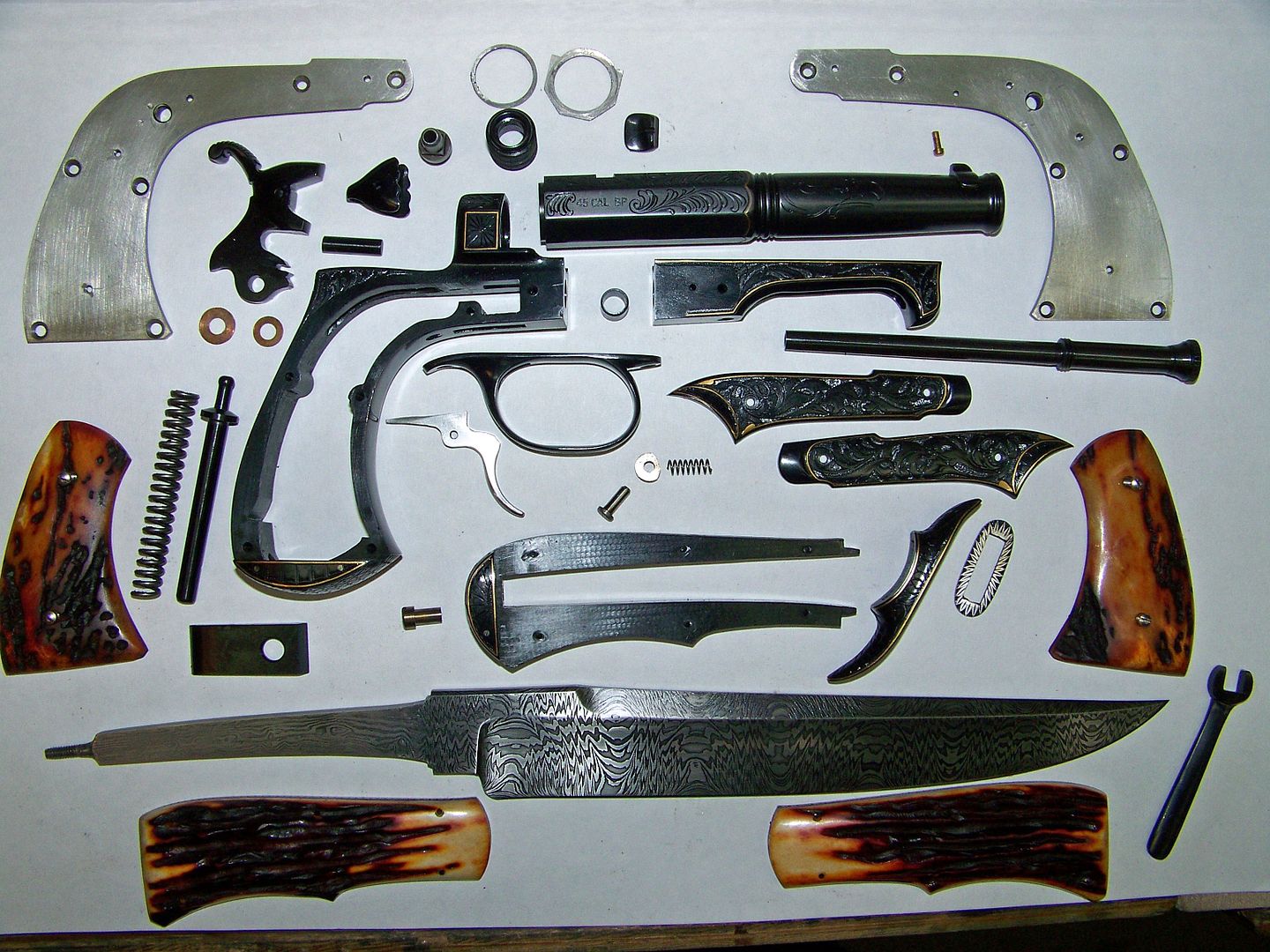
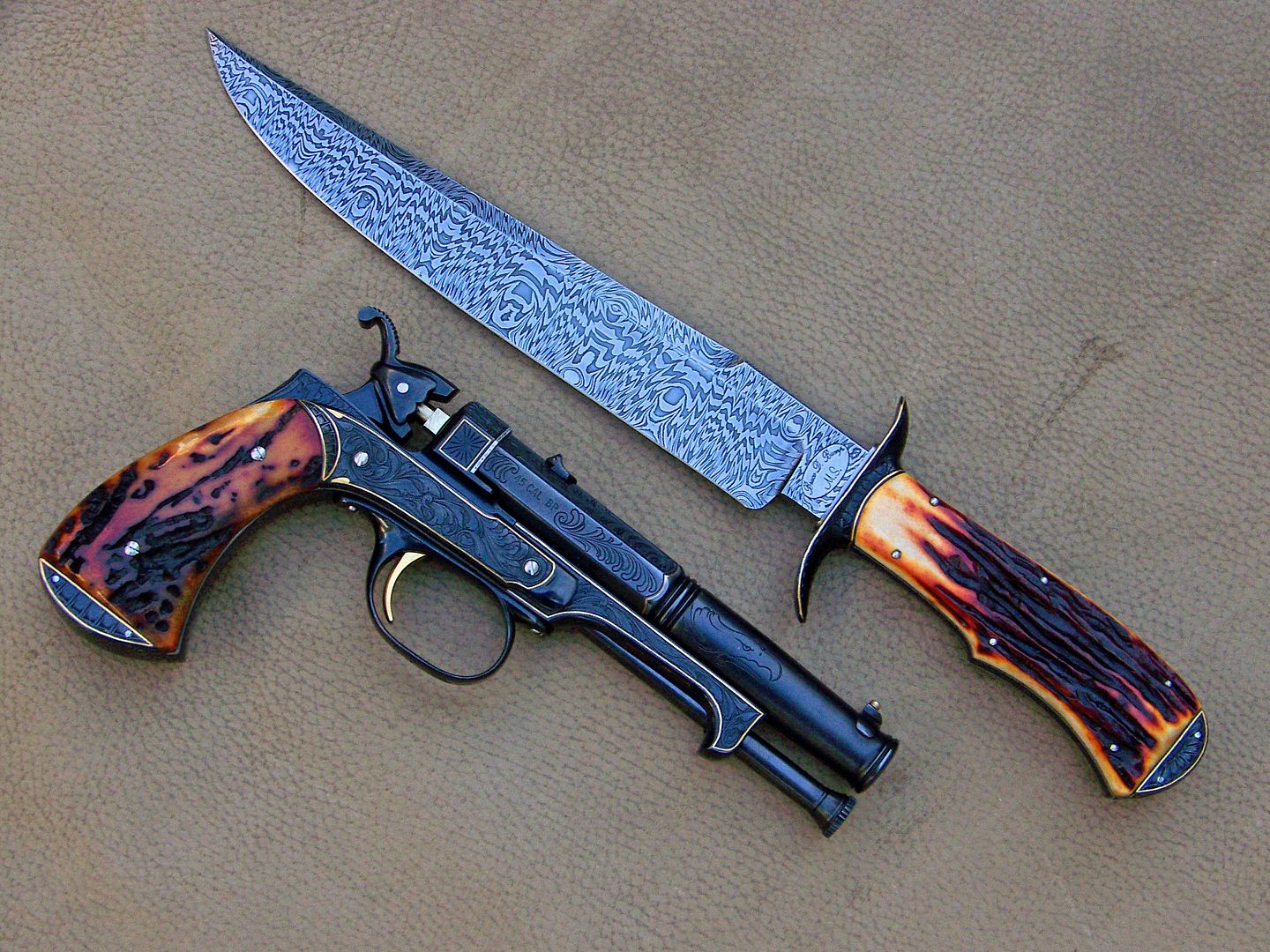
Now I want one.... lolPatrice Lemée;9437948 said:You did ALL that with a Foredom!!!.........
*runs out the door to buy a dozen*

Bill DeShivs
Knifemaker / Craftsman / Service Provider
- Joined
- Jun 6, 2000
- Messages
- 12,963
You can use a rotary tool on most anything. Almost everything that leaves my shop has been touched by one.
Making large parts with one is very difficult.
Making large parts with one is very difficult.

- Joined
- Sep 28, 2005
- Messages
- 4,527
I've used mine to profile, and if you are patient and want to save space go for it. I have curvy designs and therefore do not fit well in 2" bars. As a result I buy 6" sheets and cut out by dremel and drill holes for the most part (always seems that there is some leftover for the hacksaw). An angle grinder wastes too much metal for my layout, and I'm not in business of selling knives as primary income, so saving material is key. I profiled more than 30 blades with mine before the shaft died, but the motor is still fine. Keep an eye out for cheap sales on cutting disks, and start with 3/32" or thinner- my hunters hatchet in 1/4" O1 took 6 hours to profile. Oh to have a nice bandsaw....
- Joined
- Oct 30, 2002
- Messages
- 3,974
Holy crap. I just don't have type of patience, Kris. Keep your eyes open for a cheap portaband like they have at harbor freight. I got mine on sale, and it's still going.
--nathan
Keep your eyes open for a cheap portaband like they have at harbor freight. I got mine on sale, and it's still going.--nathan

james terrio
Sharpest Knife in the Light Socket
- Joined
- Apr 15, 2010
- Messages
- 22,618
Making a knife with a Dremel should be slightly easier than making a Dremel with a knife.
Classic!