- Joined
- Jun 25, 2007
- Messages
- 898
Work in progress, I need more pictures.
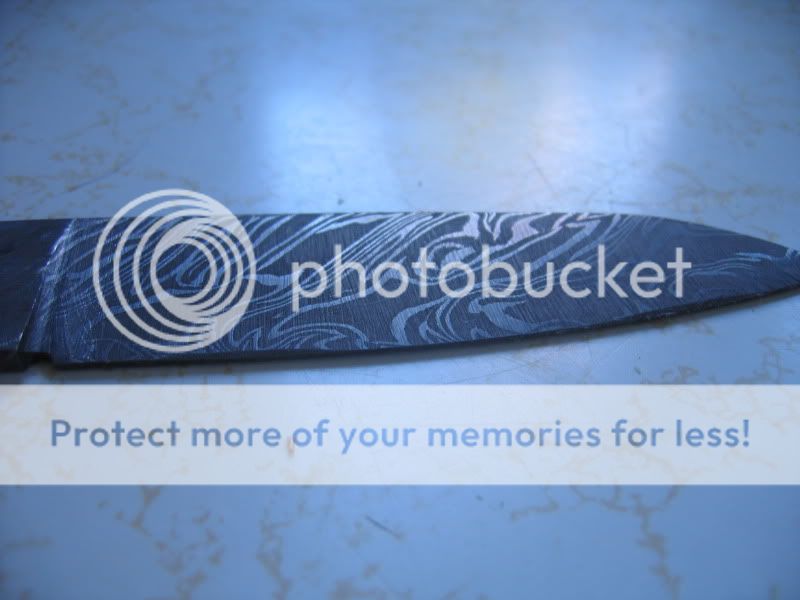
This is both to show how I make my damascus and to educate new makers on different methods.
First I start with a whole bunch of 1084v and 15n20 cut into 8 inch sections.
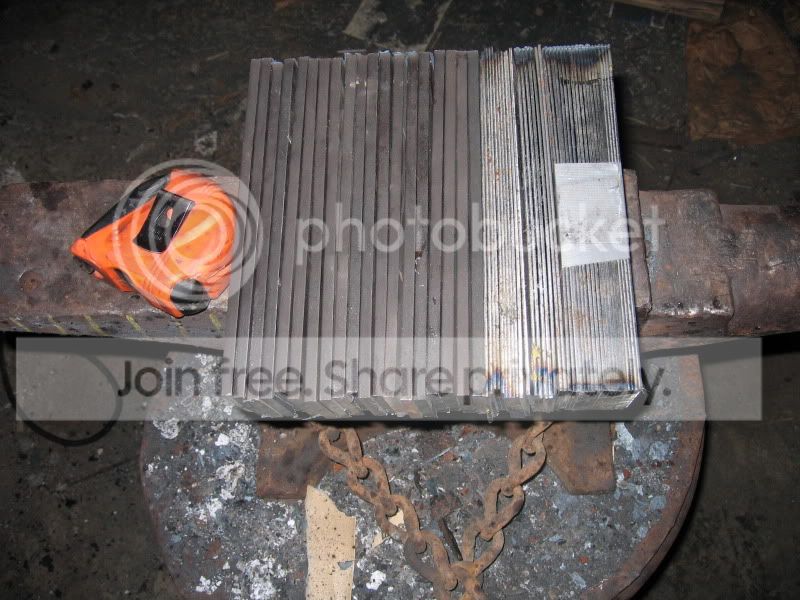
I then arrange the steel in an alternating order with two pieces of 15n20 in every other layer and 1 layer of 1084 in the other, with a total of 9 layers. The center layer is a full length bar of 1084 so I have a handle to hold onto. The steel is then lined up closely and clamped in place.
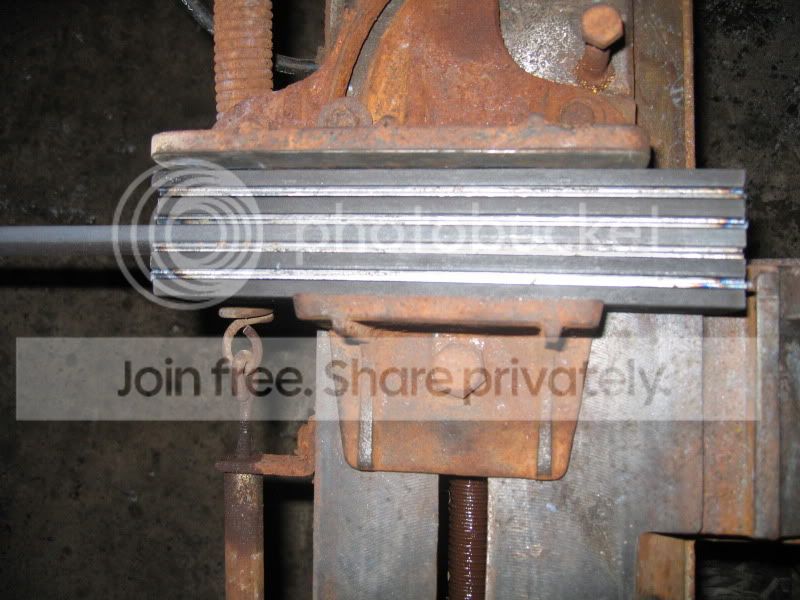
I then put a strong bead down each side to hold the billet together until it is forge welded.
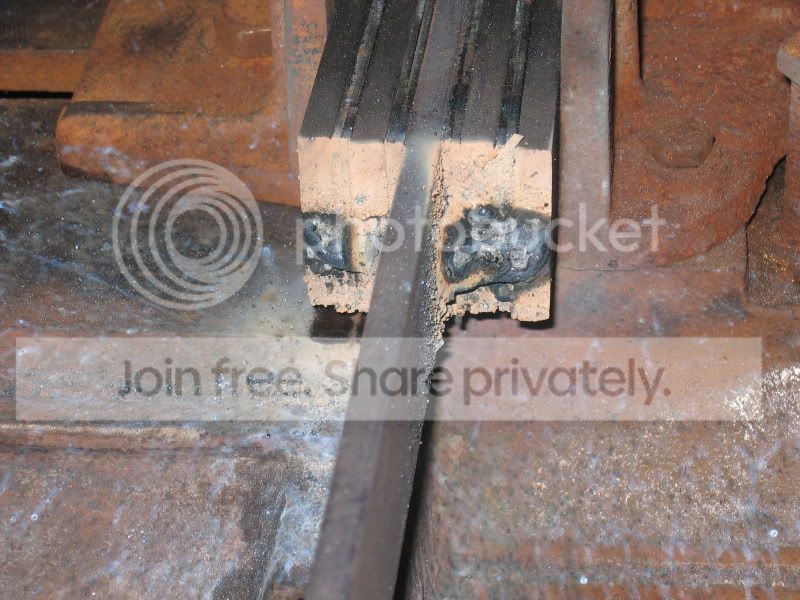
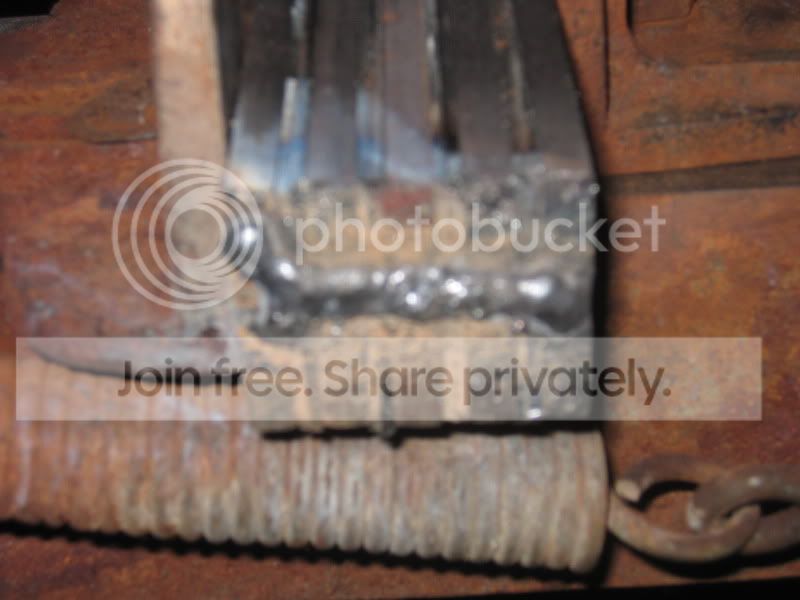
Welding section to come soon.
After the welds are completed I grind off any lines on the side of the billet that are a sign of an un-welded piece of steel, caused by minor misalignment in the pieces of steel.
Picture to be added soon.
After grinding and through inspection of the billet I draw the billet out to 3/8"-1/2" thick on the power hammer.
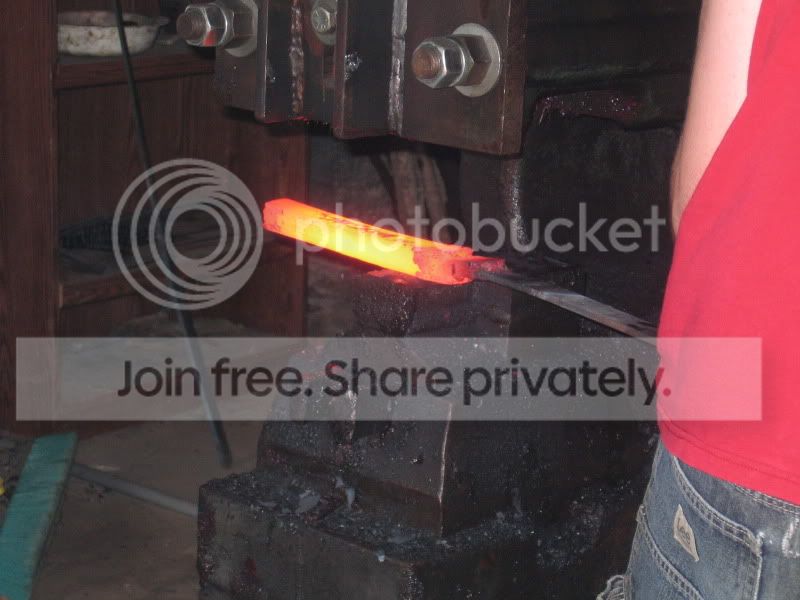
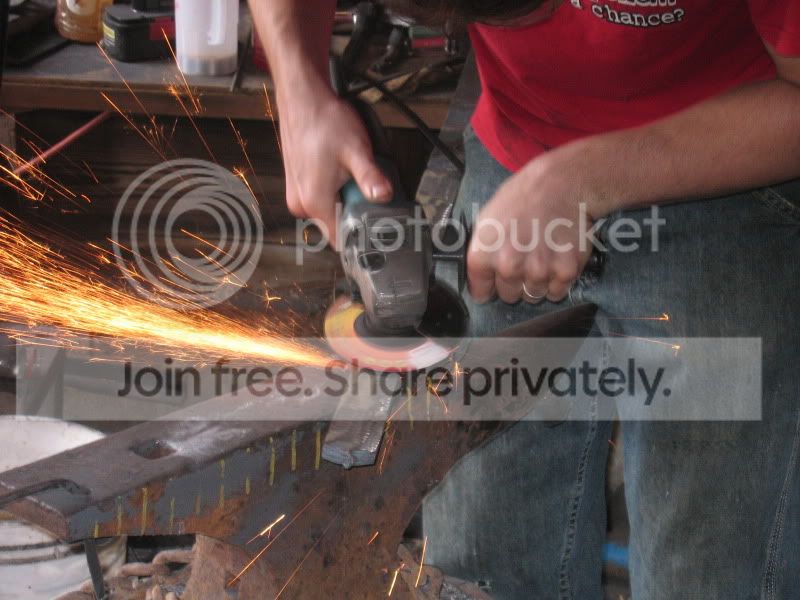
Once the billet is cool I grind both sides with the angle grinder to remove all forging pits and examine the bar for defects. This removes the pits that could trap flux and create minor cold shuts that would not be visible to the smith.
I then cut off the far end of the billet to remove the arc weld and defects normally found on the end of the bar. This is a problem with hot cutting and folding because the defects are simply put back into the billet rather than removed.
Need picture
After cutting off the end I examine the other end of the bar and detrmine a safe distance from the end to be used for the next step.
need picture
I then divide the bar into five equal parts but only cut off four so the fifth bar remains attached to the handle. The bars are then stacked and welded with a vertical bead on each end.
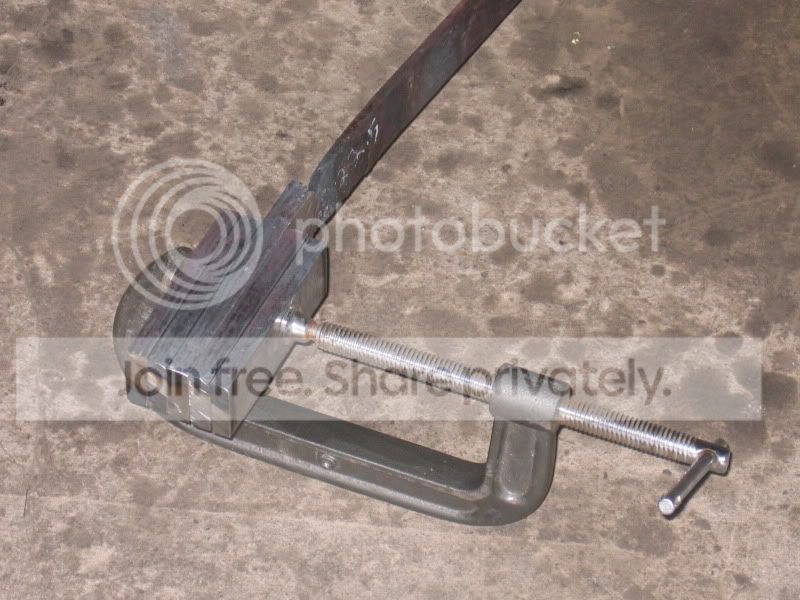
The billet is then ground even on each side.
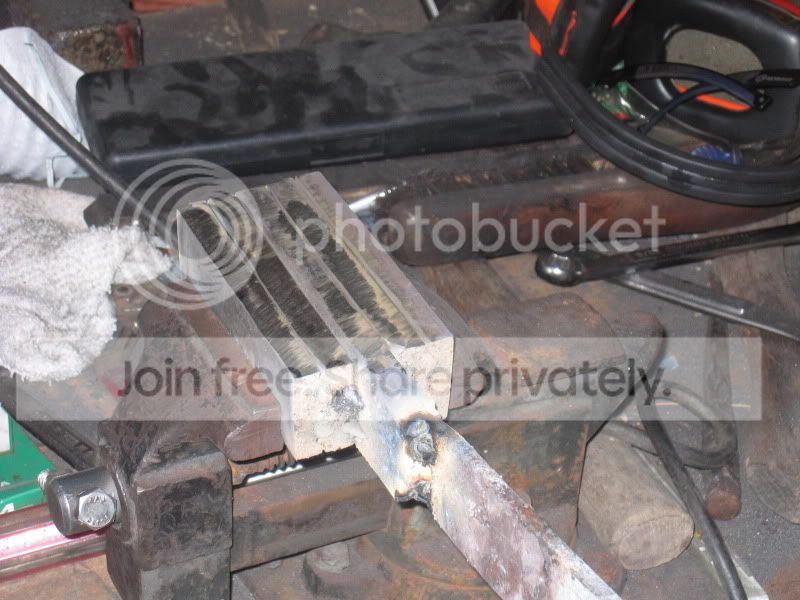
After forge welding the bar is again ground on each side to remove the over lapping steel that is not welded and to be thoroughly examined before it is drawn out.
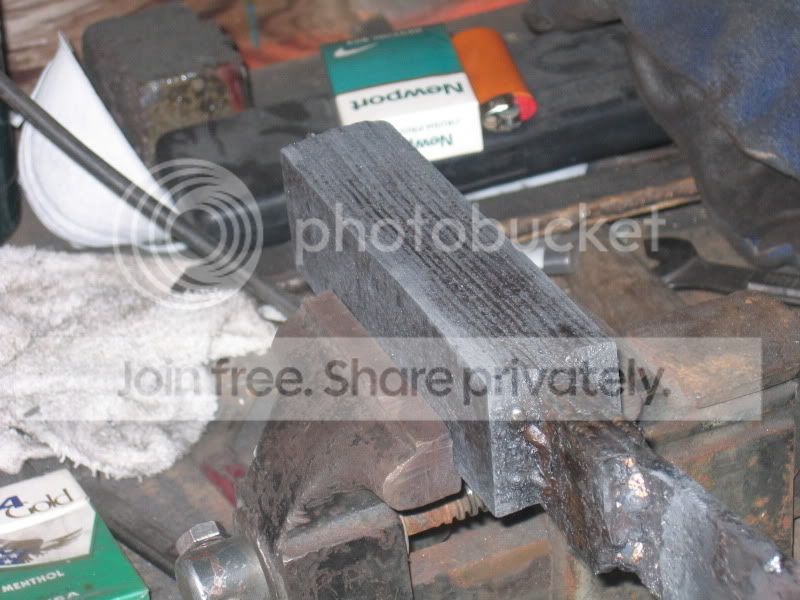
These steps are then repeated until I achieve the desired number of layers. I then create pattern, via crushed w's, drilling, grinding, twisting, and other methods.
I will try to remember my camera the next few days so I can get more pictures and I'll add more details soon.
This is both to show how I make my damascus and to educate new makers on different methods.
First I start with a whole bunch of 1084v and 15n20 cut into 8 inch sections.
I then arrange the steel in an alternating order with two pieces of 15n20 in every other layer and 1 layer of 1084 in the other, with a total of 9 layers. The center layer is a full length bar of 1084 so I have a handle to hold onto. The steel is then lined up closely and clamped in place.
I then put a strong bead down each side to hold the billet together until it is forge welded.
Welding section to come soon.
After the welds are completed I grind off any lines on the side of the billet that are a sign of an un-welded piece of steel, caused by minor misalignment in the pieces of steel.
Picture to be added soon.
After grinding and through inspection of the billet I draw the billet out to 3/8"-1/2" thick on the power hammer.
Once the billet is cool I grind both sides with the angle grinder to remove all forging pits and examine the bar for defects. This removes the pits that could trap flux and create minor cold shuts that would not be visible to the smith.
I then cut off the far end of the billet to remove the arc weld and defects normally found on the end of the bar. This is a problem with hot cutting and folding because the defects are simply put back into the billet rather than removed.
Need picture
After cutting off the end I examine the other end of the bar and detrmine a safe distance from the end to be used for the next step.
need picture
I then divide the bar into five equal parts but only cut off four so the fifth bar remains attached to the handle. The bars are then stacked and welded with a vertical bead on each end.
The billet is then ground even on each side.
After forge welding the bar is again ground on each side to remove the over lapping steel that is not welded and to be thoroughly examined before it is drawn out.
These steps are then repeated until I achieve the desired number of layers. I then create pattern, via crushed w's, drilling, grinding, twisting, and other methods.
I will try to remember my camera the next few days so I can get more pictures and I'll add more details soon.
Last edited: